%20%20--%3E%0A%3Csvg%20version%3D%221.1%22%20id%3D%22Layer_1%22%20xmlns%3D%22http%3A%2F%2Fwww.w3.org%2F2000%2Fsvg%22%20xmlns%3Axlink%3D%22http%3A%2F%2Fwww.w3.org%2F1999%2Fxlink%22%20x%3D%220px%22%20y%3D%220px%22%0A%09%20width%3D%2239px%22%20height%3D%2240px%22%20viewBox%3D%220%200%2039%2040%22%20enable-background%3D%22new%200%200%2039%2040%22%20xml%3Aspace%3D%22preserve%22%3E%0A%3Cpath%20fill%3D%22%23FFFFFF%22%20d%3D%22M38.5%2C7H28.2v26h10.3V7z%22%2F%3E%0A%3Cpath%20fill-rule%3D%22evenodd%22%20clip-rule%3D%22evenodd%22%20fill%3D%22%23FFFFFF%22%20d%3D%22M26.1%2C25.5c0%2C5.8-4.1%2C7.5-12.9%2C7.5C3.9%2C33%2C0%2C31.2%2C0%2C25.2v-1.1h11.6%0A%09v2.4c0%2C0.7%2C0.1%2C1.4%2C1.2%2C1.4c1%2C0%2C1.2-0.4%2C1.2-1.3v-0.9c0-1.6-0.9-1.6-3.5-2.2C2.2%2C21.7%2C0%2C19.7%2C0%2C15.3v-0.9C0%2C9.3%2C5.5%2C7%2C12.9%2C7%0A%09c10.2%2C0%2C12.8%2C2.6%2C12.8%2C7.4v1.8h-11v-2.9c0-0.6-0.4-1.1-1.2-1.1c-0.6%2C0-1.2%2C0.4-1.2%2C1.1v0.9c0%2C1.5%2C0.9%2C2%2C3.3%2C2.5%0A%09c8%2C1.6%2C10.5%2C3.3%2C10.5%2C7.5V25.5z%22%2F%3E%0A%3C%2Fsvg%3E%0A)
Manny Machado’s Slow Start Speaks to a Growing Issue for Older Hitters
In this story:
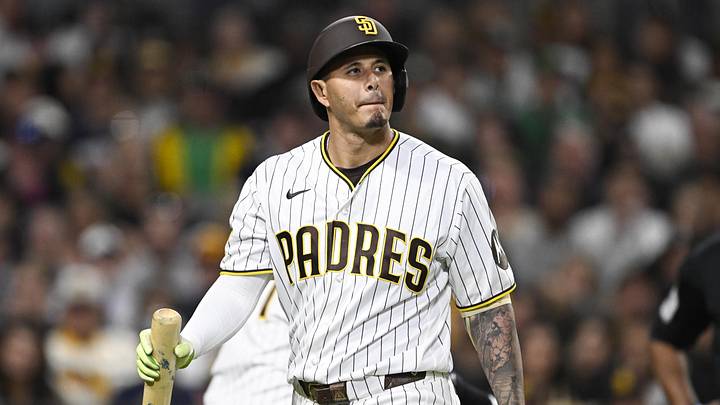
Don’t dismiss the recent observations of a .169-hitting Manny Machado as just an anti-analytics rant. He spoke truth to a trend I’ve been watching grow this season: this is the worst time ever to be a hitter in your 30s.
The Padres third baseman did say, “I just wish we can get analytics out of the way. I think there’s too many stats out there. Too many stats, way too many numbers.” Such comments drew the bulk of the attention.
The more important message is that analytics and technology have changed pitching so quickly that the older hitters are getting left behind. It used to be that players aged 31–35, who could tap into their experience of seeing thousands of pitches, were more reliable than young hitters. That’s not the case anymore. The youngest hitters, 25 and under, are outhitting the 31–35 group, .244 to .233.
Players aged 31–35 are finding it more difficult to get a hit than at any time in the history of the game, Deadball Era included.
Worst Batting Average Since 1898, Ages 31-35
Year | Age 31–35 | Relative to League |
|---|---|---|
2026 | .233 | -.009 |
1917 | .239 | -.010 |
1909 | .240 | -.004 |
2022 | .242 | -.001 |
2024 | .243 | Same |
Older hitters hit with a method called “chunking,” in which they break down the huge storage of information in their heads to actionable nuggets. The shape of a pitch, the expectation of a pitch based on count and situation ... all of it provides a reservoir on which to draw. Machado has seen 31,263 major league pitches. That’s a huge cache. The problem is that much of it is less applicable to today’s patterns and types of pitches.
The more resonant quote from Machado was this:
“I’ve noticed 15 years of a lot of fastballs. When I came up, it was 91, 92, 93 maybe. Now it’s just 101. ... “The game’s evolving, man. It’s definitely getting harder to play. It’s definitely getting more strategic.”
Several teams that leaned into early-30s players are paying the price. Among them are Machado’s Padres, who have given the most plate appearances to 31–35 hitters and received a combined .205 average and .628 OPS from them, well below league averages. The Phillies (.227, but with decent slug), Rangers (.216) and Angels (.215) also are among the 10 teams most invested in older hitters getting a poor return.
The game has changed too quickly for many older hitters. Let’s use the arc of Machado’s career to measure those changes. We can compare the pitching that Machado saw in 2013, his first full season, when he led the league with 51 doubles (still a career high), to '26.
Category | 2013 | 2026 |
|---|---|---|
Fastball use | 55% | 53% |
Fastball mph | 92.1 | 95.6 |
Pitches 98+ mph | 27 | 261* (prorated) |
Fastballs ahead count | 62% | 59% |
Breaking pitches | 27% | 31% |
Breaking pitches mph | 82.0 | 84.3 |
Platoon advantage | 31.6% | 22.6% |
Vertical release | 6.15 | 5.61 |
Here is how to interpret those numbers, which help explain why this is the worst time ever for a hitter in his 30s.
1. Fastball velocity has gone up 3.5 mph.
Machado has less time to react as he is aging. The difference in velocity equates to the pitcher getting six or seven inches closer to the plate. (Does not include cutters.)
2. Elite velocity has become an everyday occurrence.
In 2013 Machado saw a pitch as fast as 98 mph only once a week. Now he sees them 10 times more often.
3. “Fastball counts” are decreasing.
In 2013, Machado saw a fastball when ahead of the count 62% of the time. Those challenge heaters have dropped to 59%.
4. More spin.
Four-seamers to Machado have dropped from 35% to 31%. That entire decline has been made up by breaking pitches, which have increased from 27% to 31%. Those breaking pitches are nastier. They have more spin, more shapes and more velocity than before.
As much as fastball properties have changed, nothing has made hitting more difficult than the varieties and preponderance of spin. Machado is getting devoured by spin this season. He is hitting .113 and slugging .225 against breaking pitches, both career worsts. He has only four extra-base hits on 328 breaking pitches.
5. More pitchers.
In 2013 Machado took 31% of his plate appearances against relief pitchers. This season he sees relievers 40% of the time. In any meaningful situation, the opposing manager is going to match up his best right-handed reliever against Machado. That means a steep decline in how often Machado hits against lefthanders. His platoon advantage has shrunk from 32% to 23%.
6. More difficult attack angles.
The average release point that Machado saw from pitchers dropped from 6.15 to 5.61, about 6 ½ inches.
Finally, let’s look at how during Machado’s career the gap between younger and older hitters has widened:
Year | BA Ages 20–29 | BA Ages 30–39 | Difference |
|---|---|---|---|
2013 | .254 | .252 | -.002 |
2026 | .244 | .233 | -.011 |
In those years, plate appearances for players in their 30s has declined from 28.5% to 27%. Hitting has grown more difficult across the board, but as Machado is learning, it is more challenging for the older hitter who has seen the game change quickly.
More MLB from Sports Illustrated
 Add us as a preferred source on Google
Tom Verducci is a senior writer for Sports Illustrated who has covered Major League Baseball since 1981. He also serves as an analyst for FOX Sports and the MLB Network; is a New York Times best-selling author; and cohosts The Book of Joe podcast with Joe Maddon. A five-time Emmy Award winner across three categories (studio analyst, reporter, short form writing) and nominated in a fourth (game analyst), he is a three-time National Sportswriter of the Year winner, two-time National Magazine Award finalist, and a Penn State Distinguished Alumnus Award recipient. Verducci is a member of the National Sports Media Hall of Fame, Baseball Writers Association of America (including past New York chapter chairman) and a Baseball Hall of Fame voter since 1993. He also is the only writer to be a game analyst for World Series telecasts. He lives in New Jersey with his wife, with whom he has two children.