%20%20--%3E%0A%3Csvg%20version%3D%221.1%22%20id%3D%22Layer_1%22%20xmlns%3D%22http%3A%2F%2Fwww.w3.org%2F2000%2Fsvg%22%20xmlns%3Axlink%3D%22http%3A%2F%2Fwww.w3.org%2F1999%2Fxlink%22%20x%3D%220px%22%20y%3D%220px%22%0A%09%20width%3D%2239px%22%20height%3D%2240px%22%20viewBox%3D%220%200%2039%2040%22%20enable-background%3D%22new%200%200%2039%2040%22%20xml%3Aspace%3D%22preserve%22%3E%0A%3Cpath%20fill%3D%22%23FFFFFF%22%20d%3D%22M38.5%2C7H28.2v26h10.3V7z%22%2F%3E%0A%3Cpath%20fill-rule%3D%22evenodd%22%20clip-rule%3D%22evenodd%22%20fill%3D%22%23FFFFFF%22%20d%3D%22M26.1%2C25.5c0%2C5.8-4.1%2C7.5-12.9%2C7.5C3.9%2C33%2C0%2C31.2%2C0%2C25.2v-1.1h11.6%0A%09v2.4c0%2C0.7%2C0.1%2C1.4%2C1.2%2C1.4c1%2C0%2C1.2-0.4%2C1.2-1.3v-0.9c0-1.6-0.9-1.6-3.5-2.2C2.2%2C21.7%2C0%2C19.7%2C0%2C15.3v-0.9C0%2C9.3%2C5.5%2C7%2C12.9%2C7%0A%09c10.2%2C0%2C12.8%2C2.6%2C12.8%2C7.4v1.8h-11v-2.9c0-0.6-0.4-1.1-1.2-1.1c-0.6%2C0-1.2%2C0.4-1.2%2C1.1v0.9c0%2C1.5%2C0.9%2C2%2C3.3%2C2.5%0A%09c8%2C1.6%2C10.5%2C3.3%2C10.5%2C7.5V25.5z%22%2F%3E%0A%3C%2Fsvg%3E%0A)
Ballpark Quirks: How Fenway Park's iconic Green Monster was born
Ballpark Quirks: How Fenway Park's iconic Green Monster was born
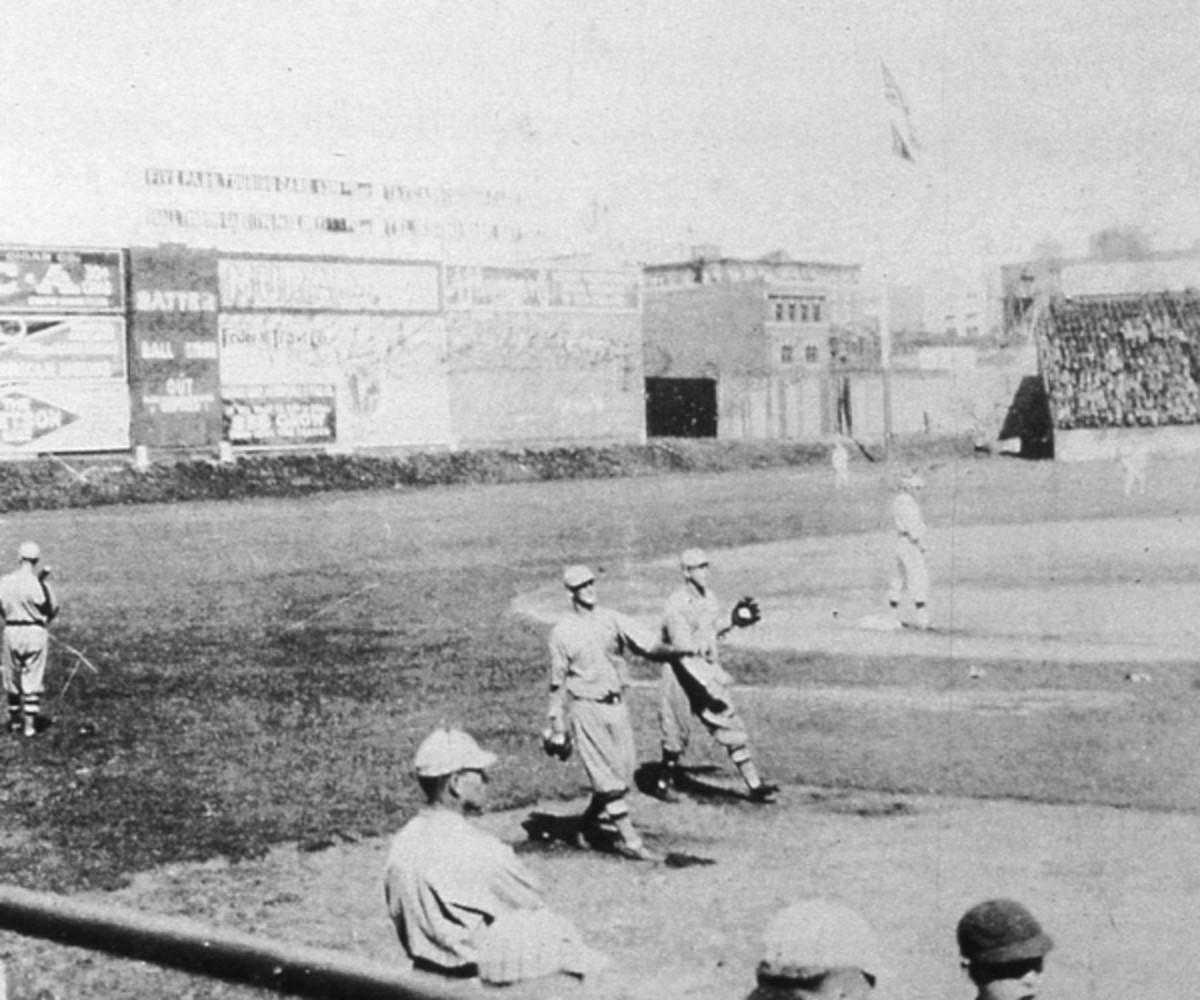
Warm up activity in left field before a 1918 World Series contest in October in Fenway Park in Boston. In the background is the famous left field wall. (Photo by Mark Rucker/Transcendental Graphics, Getty Images)
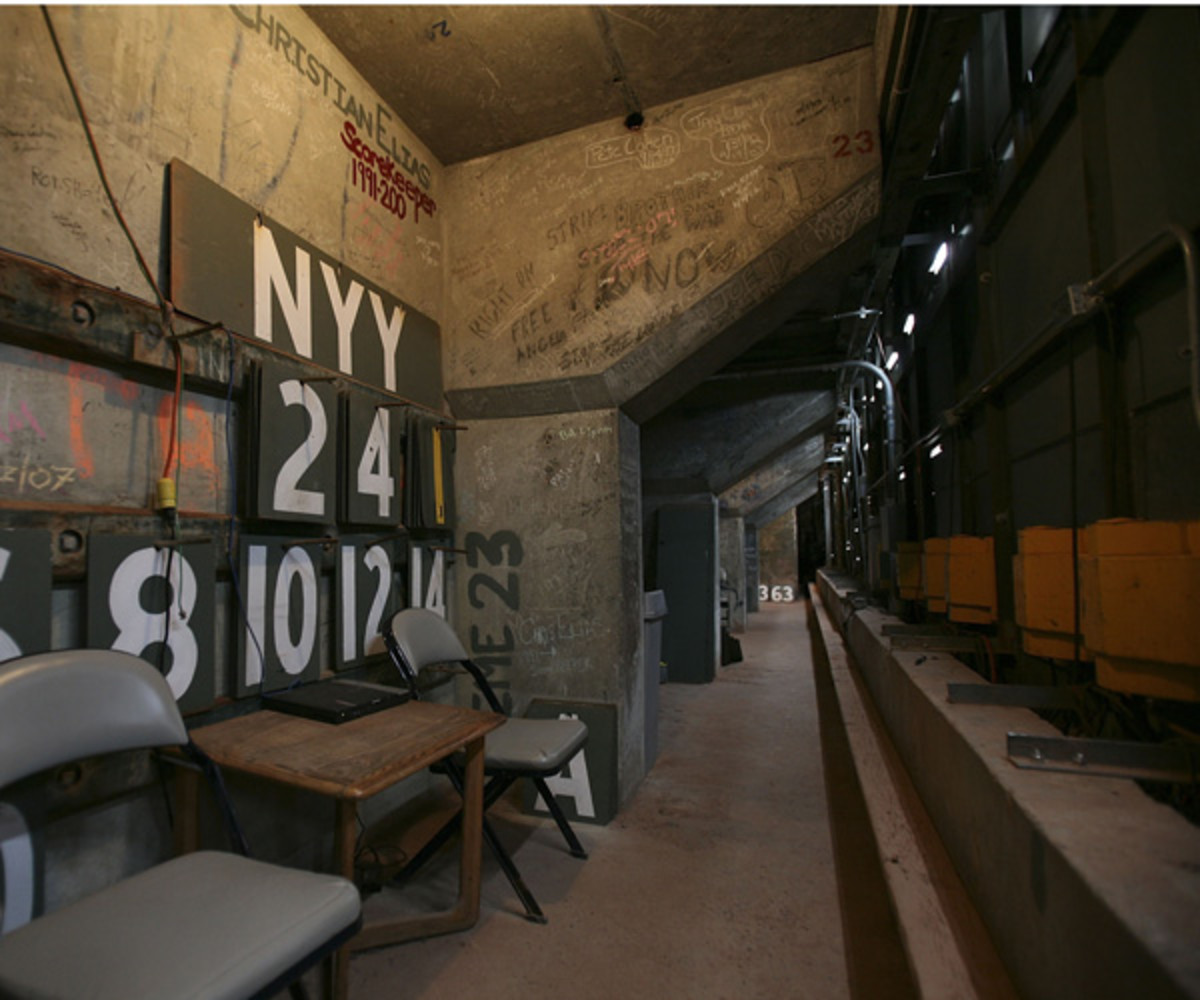
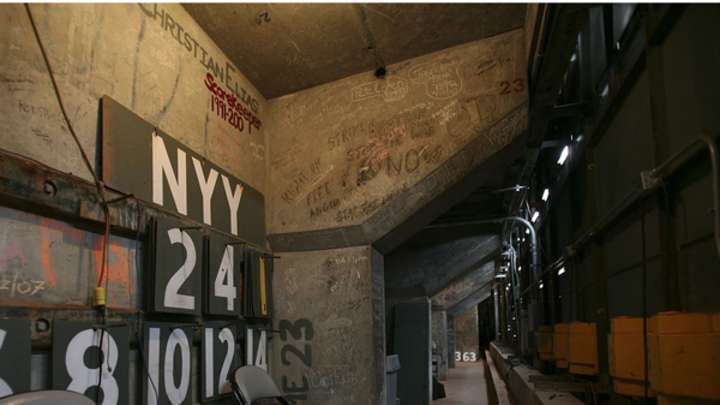
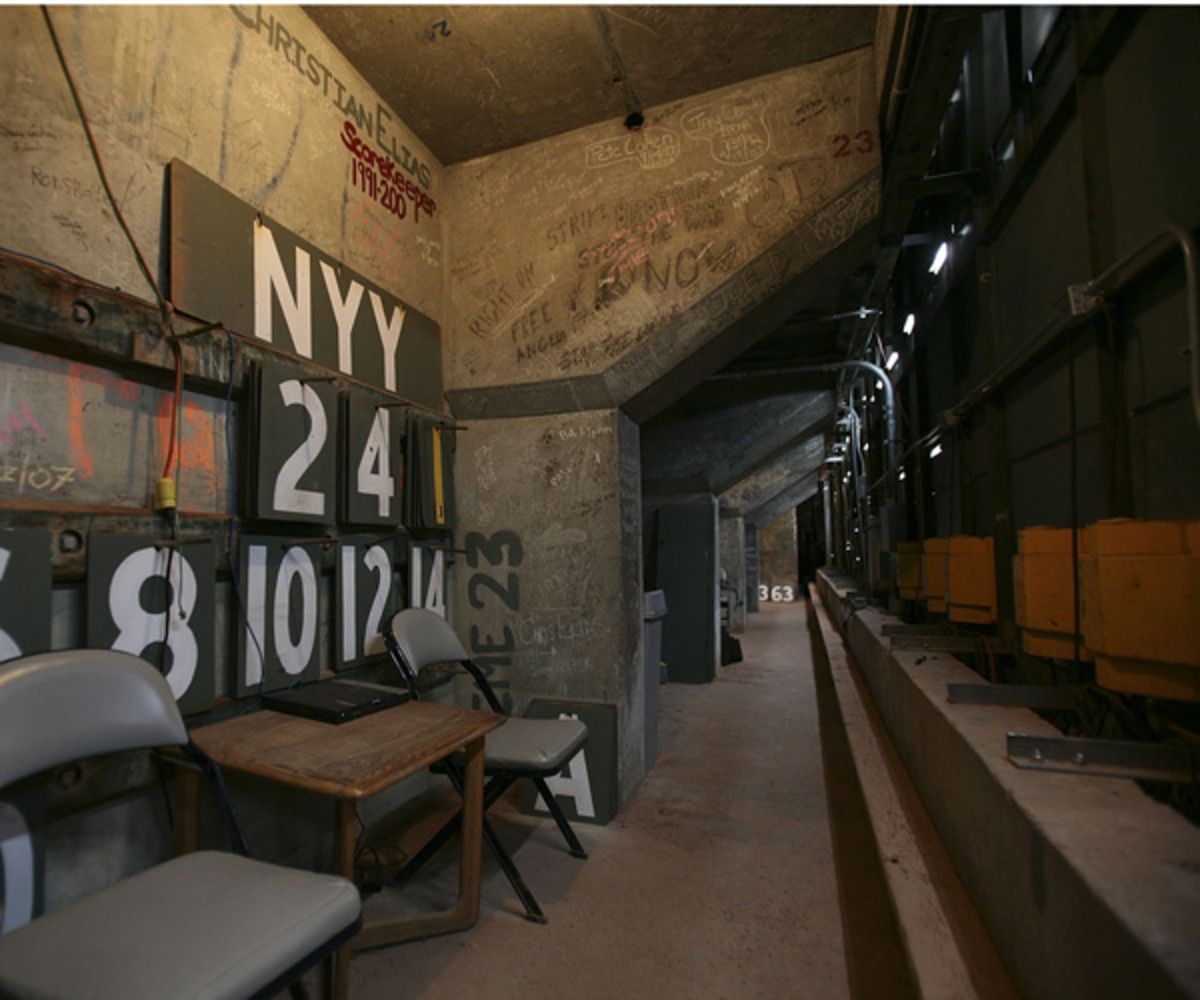
A view of the numbers used for the manual scoreboard are seen in the room behind the green monster (Photo by Jed Jacobsohn/Getty Images).
(Photo by Mark Cunningham/MLB Photos via Getty Images)
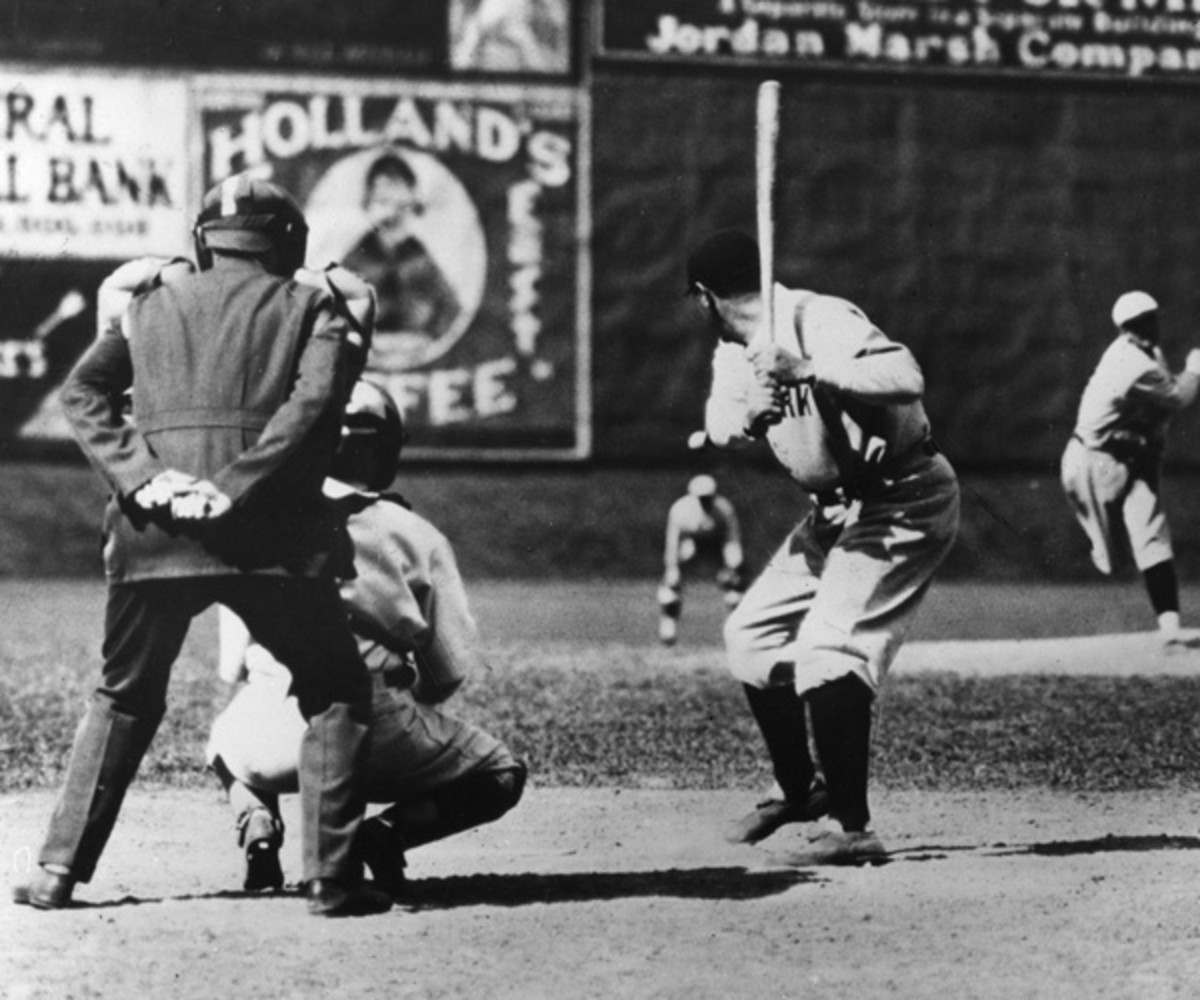
Babe Ruth, New York Yankees outfielder, readies to swing during a game against the Boston Red Sox at Fenway Park in 1926 (Photo by Mark Rucker/Transcendental Graphics, Getty Images).
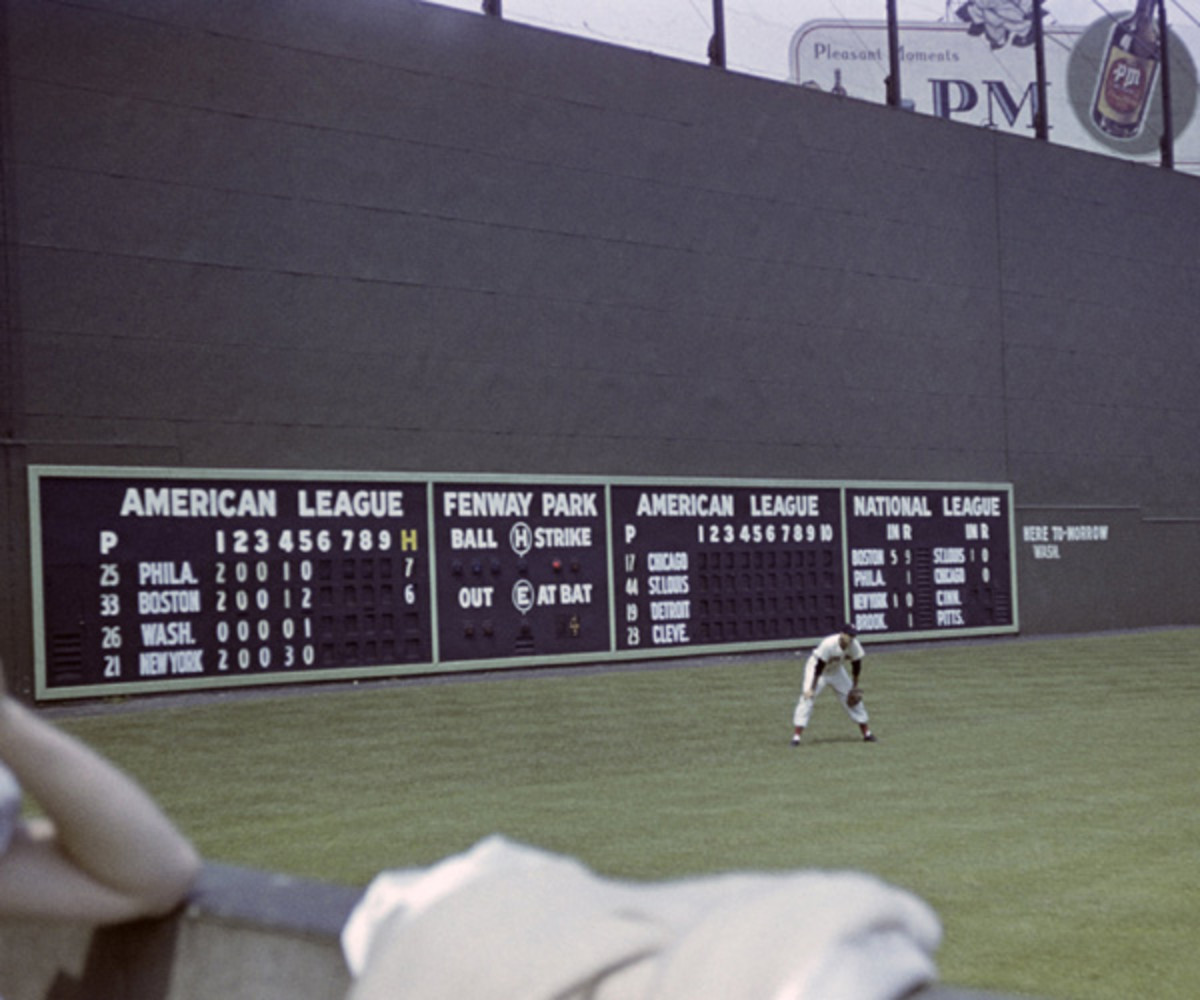
Outfielder Ted Williams #9 of the Boston Red Sox is ready in his position during a game on July 4, 1947 against the Philadelphia A's at Fenway Park in Boston, Massachusetts. (Photo by: Diamond Images/Getty Images)
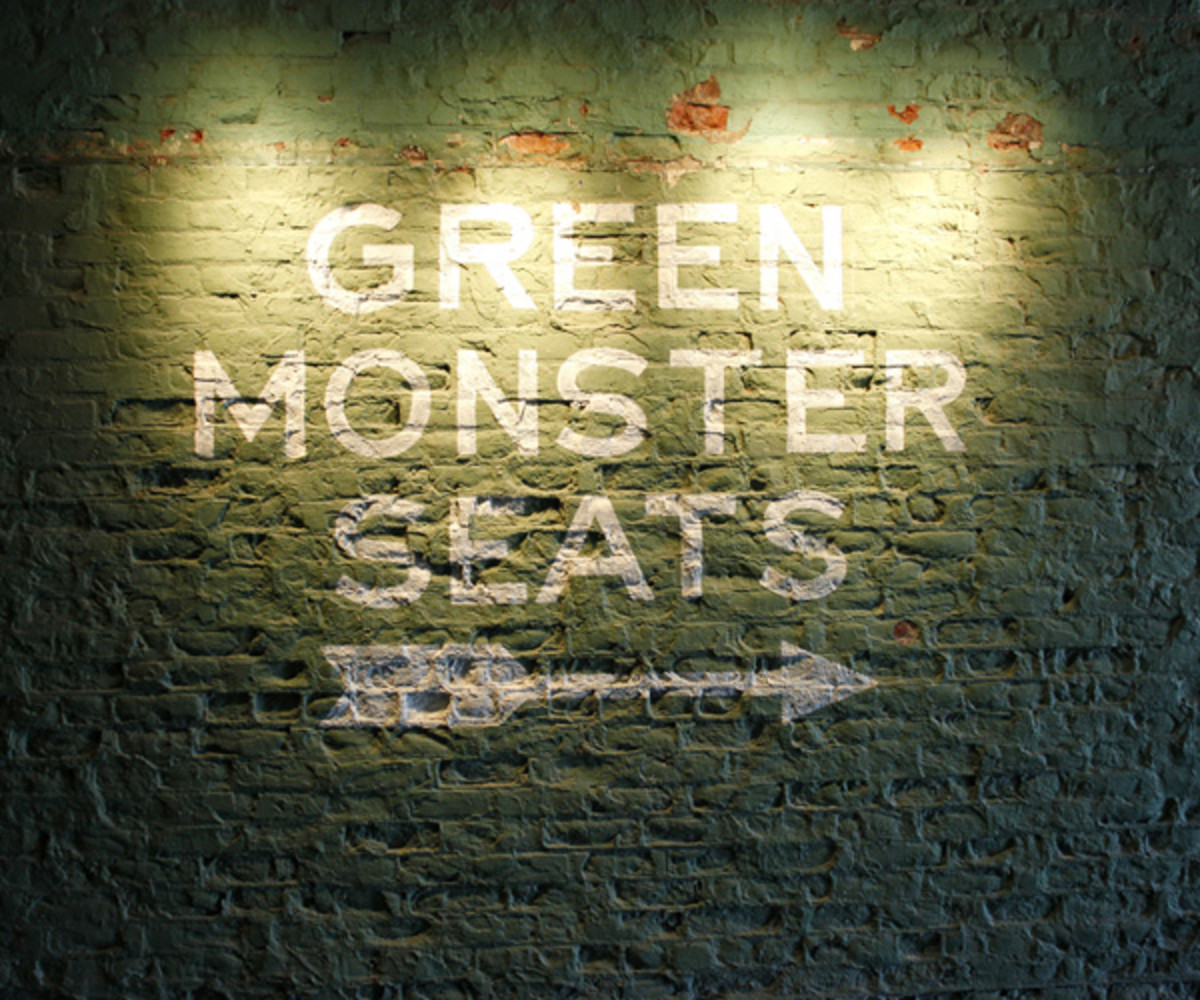
(Photo by Joe Robbins/Getty Images)
Ballpark Quirks is a new series on the distinctive features and oddities that make up each of MLB's 30 parks. First up: Boston's Fenway Park, and the Green Monster.
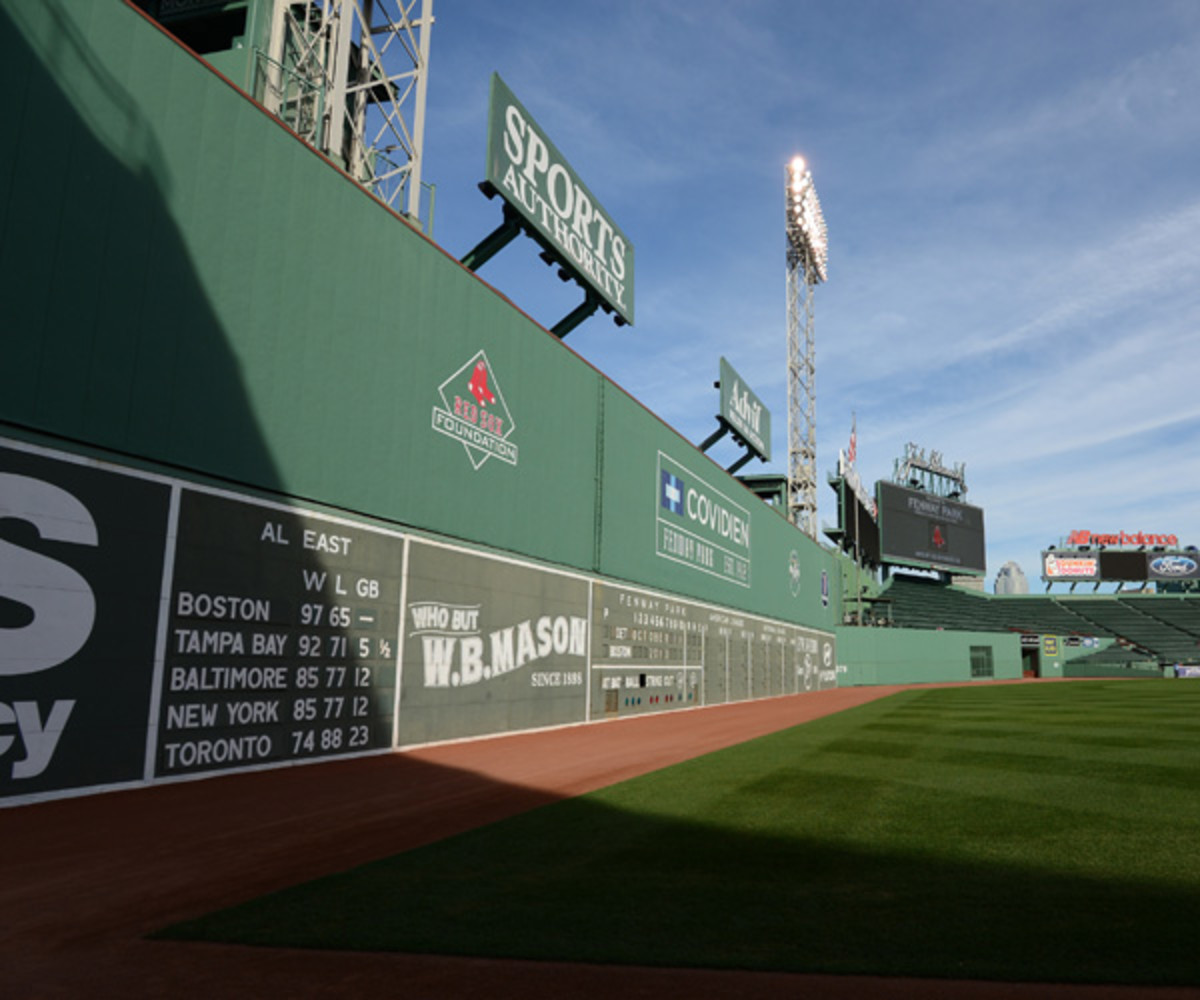
Thirty-seven feet and a pair of inches, built first out of wood, then concrete and tin and now hard plastic. We know it now as the Green Monster, stretching 231 feet across Fenway Park’s leftfield (three of those feet are in foul territory), but the monster we love didn’t start as a piece of ballpark nostalgia. It started simply as a wooden fence.
With Boston’s ballpark situated on a quirky nine-acre lot within the Fenway neighborhood, original owner John I. Taylor wanted to create a little business-minded privacy between leftfield and Lansdowne Street behind it. No free in-game peeks here. So he built a wall . . . on a 10-foot-tall embankment.
When Fenway went up in 1912, Taylor used an embankment later dubbed Duffy’s Cliff with a fence atop it to delineate the edge of the park from leftfield to the centerfield flagpole. It wasn’t until a fire destroyed much of the park in 1933 that "The Wall," as it was known then, really started to take a modern—if you want to call it that—shape.
With reconstruction ongoing throughout the Osborne Engineering-designed stadium, crews leveled out Duffy’s Cliff and replaced the fire-loving wooden fence by building the root of what we see today with a concrete-and-tin wall for a 1934 debut.
But the Green Monster wasn’t really born—at least the moniker—until 1947, when advertisements were scraped off the highest outfield wall in baseball and painted green to match the rest of Fenway. It was only then we had a real Green Monster for the first time. In 1975, a hard plastic took over, giving it the motif we have now.
In reality, the 1930s marks the most crucial point in Green Monster history. That decade provided the concrete base of the wall, which hides thousands of player signatures strewn within it, almost a rite of passage for players at Fenway Park. That same structure also serves as the home to the 127-slot hand-operated scoreboard—which also debuted in 1934—that makes up the lower portion of the wall.
The '30s proved crucial in Green Monster lore for other reasons. It was in 1936 that a 23-foot-tall net went up above the wall, trapping home run balls from damaging Lansdowne businesses beyond MLB’s smallest park. But the only way to retrieve those run-producing balls was by climbing a metal ladder—installed in fair territory, mind you—up to the top of the wall. When Red Sox ownership wised up to the allure of the Monster and installed 269 seats atop the Green Monster in 2003, the ladder ceased any useful function. But it remains there today, still a threat to provide a powerful ricochet.
On each step along Fenway’s evolution, the Green Monster paced in stride. Baseball lovers know the Green Monster is more than just 37-plus feet of concrete and plastic. Nostalgia tells us that.
Tim Newcomb covers stadiums, design and gear for Sports Illustrated. Follow him on Twitter at @tdnewcomb.
 Add us as a preferred source on Google
Based in the Pacific Northwest, Tim Newcomb covers stadiums, sneakers, design, training and technology across all sports.