
Tigers Have a Zach McKinstry Problem That Won't Be Easy to Solve
In this story:
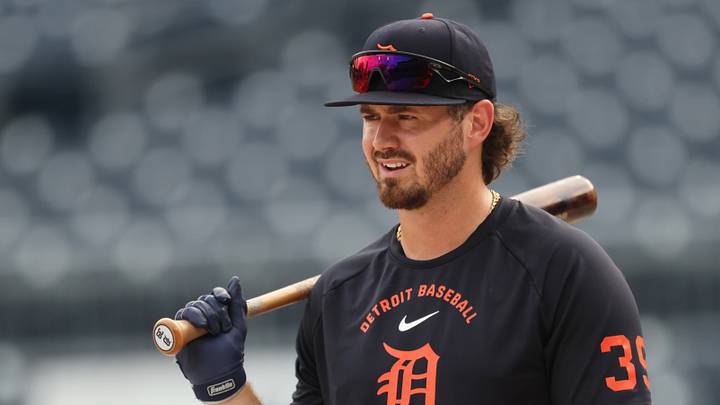
The Detroit Tigers ended their six-game losing streak Tuesday, but Zach McKinstry’s night provided no individual relief. The veteran utility player went 0-for-4 with one strikeout in a 4-1 victory over the Tampa Bay Rays.
The Tigers should not evaluate McKinstry based on one game, especially since his final line did not tell the whole story. Two of his outs were line drives that left the bat at 97.7 mph and 103.5 mph, according to the game’s StatMuse play-by-play, but both went directly to Tampa Bay outfielders.
Still, those encouraging swings did not change the larger picture. McKinstry went hitless in eight at-bats over the first two games of the series and entered Wednesday batting .218/.301/.321 with four home runs and 26 RBI across 107 games.
McKinstry Hasn’t Repeated His Breakout

Detroit saw McKinstry deliver the best campaign of his career in 2025. He earned his first All-Star selection and won the American League Silver Slugger Award for utility players after producing a .259/.333/.438 slash line with 12 home runs.
His ability to play almost anywhere made the offensive breakout even more valuable. MLB credited McKinstry with a 113 OPS+ while highlighting his starts at second base, third base, shortstop, and both corner-outfield positions.
The Tigers have not received the same production in 2026. McKinstry’s current .622 OPS and 77 wRC+ are significant declines, while his 19 stolen bases from last year have dropped to one. A left hip and abdominal injury that sent him to the injured list in April provided some context, but he has remained active since May 5.
McKinstry, 31, has still offered defensive flexibility, particularly as Detroit deals with injuries and a constantly changing lineup. Versatility has value, but it becomes harder to carry when it comes with below-average offensive production.
Detroit’s Decision Is About Future Opportunities

The Tigers signed McKinstry to a one-year, $4.2 million contract before this campaign. He remains under club control through 2027 and will be eligible for his final year of arbitration, according to MLB’s breakdown of Detroit’s arbitration agreements.
That leaves Detroit with three realistic options: tender McKinstry another contract, explore his trade value, or allow him to become a free agent. His salary could rise through arbitration despite his decline because the process considers career history, playing time and past accomplishments.
The decision also cannot happen in isolation. Kevin McGonigle, Hao-Yu Lee and Colt Keith need regular opportunities, while Max Clark has entered the Major League outfield picture. Every start given to McKinstry could eventually take development time away from a younger player expected to contribute beyond 2027.
The Tigers should respect what McKinstry accomplished in 2025 without letting it guarantee him a spot next year. His remaining games still matter, and Tuesday’s hard contact offered some hope, but Detroit must make its final decision based on the player he is now—not the awards he earned last season.
 Add us as a preferred source on Google
Alvin Garcia is a Puerto Rico-born sportswriter and U.S. Army veteran. He has covered Major League Baseball since 2022, producing breaking news, game coverage, analysis, roster stories and player features for national and team-focused publications. His previous work has appeared at Heavy, The Sporting News, Athlon Sports, Yardbarker, and FanSided. Garcia brings a data-informed, fan-focused approach to his coverage.