%20%20--%3E%0A%3Csvg%20version%3D%221.1%22%20id%3D%22Layer_1%22%20xmlns%3D%22http%3A%2F%2Fwww.w3.org%2F2000%2Fsvg%22%20xmlns%3Axlink%3D%22http%3A%2F%2Fwww.w3.org%2F1999%2Fxlink%22%20x%3D%220px%22%20y%3D%220px%22%0A%09%20width%3D%2239px%22%20height%3D%2240px%22%20viewBox%3D%220%200%2039%2040%22%20enable-background%3D%22new%200%200%2039%2040%22%20xml%3Aspace%3D%22preserve%22%3E%0A%3Cpath%20fill%3D%22%23FFFFFF%22%20d%3D%22M38.5%2C7H28.2v26h10.3V7z%22%2F%3E%0A%3Cpath%20fill-rule%3D%22evenodd%22%20clip-rule%3D%22evenodd%22%20fill%3D%22%23FFFFFF%22%20d%3D%22M26.1%2C25.5c0%2C5.8-4.1%2C7.5-12.9%2C7.5C3.9%2C33%2C0%2C31.2%2C0%2C25.2v-1.1h11.6%0A%09v2.4c0%2C0.7%2C0.1%2C1.4%2C1.2%2C1.4c1%2C0%2C1.2-0.4%2C1.2-1.3v-0.9c0-1.6-0.9-1.6-3.5-2.2C2.2%2C21.7%2C0%2C19.7%2C0%2C15.3v-0.9C0%2C9.3%2C5.5%2C7%2C12.9%2C7%0A%09c10.2%2C0%2C12.8%2C2.6%2C12.8%2C7.4v1.8h-11v-2.9c0-0.6-0.4-1.1-1.2-1.1c-0.6%2C0-1.2%2C0.4-1.2%2C1.1v0.9c0%2C1.5%2C0.9%2C2%2C3.3%2C2.5%0A%09c8%2C1.6%2C10.5%2C3.3%2C10.5%2C7.5V25.5z%22%2F%3E%0A%3C%2Fsvg%3E%0A)
World Baseball Classic Extra Innings Rules Explained
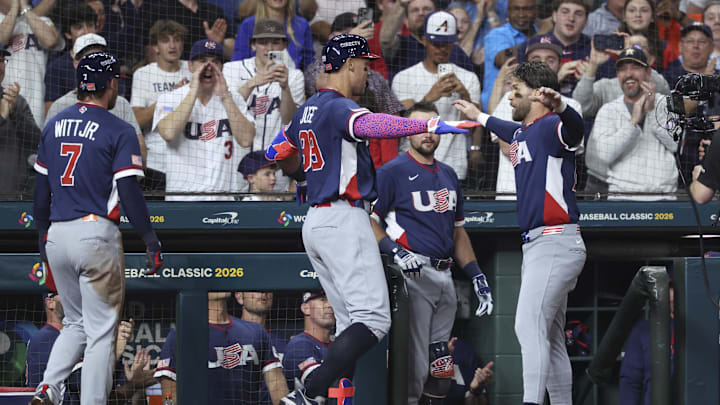
The World Baseball Classic is in full swing, with teams inching towards the end of pool play and the beginning of the knockout round, where games begin to take on a whole new level of importance.
That said, it feels like a good time to give everyone a quick refresher on one of the most important rules in the WBC: the extra innings rule. What happens if there's free baseball in the WBC?
Is there a ghost runner in extra innings in the World Baseball Classic?
Yes. The ghost runner, or automatic runner placed on second base, is a part of extra innings in the WBC. For any inning beginning with the 10th, the batting team begins the frame with a runner on second base. As is the case in MLB, the runner will be the hitter who precedes the inning's leadoff batter in the lineup. In other words, the batter who made the last out in the previous inning.
Has the ghost runner rule ever been a part of the World Baseball Classic?
Yes, the rule was first implemented in the WBC back in 2023. The rule was a factor in two pool play games in that year's tournament: a 5-4 Colombia win over Mexico and a dramatic 6-3 win for Italy over Cuba.
Why did MLB first implement the ghost runner rule and what does it mean for the WBC games?
The rule was first implemented during the pandemic-shortened 2020 season in an effort to shorten games and protect pitchers' arms. Notably, the ghost runner rule is not a part of MLB's postseason rules. The rule was kept as a permanent part of regular-season games since 2021, as it—along with the pitch clock—helped shorten game times on average. Additionally, fewer games with long extra innings meant that teams had to navigate fewer roster crunches in the days after such contests, particularly when it came to their bullpens.
The idea is similar in the WBC. Teams must carry a minimum of 14 pitchers and can make use of Designated Pitcher Pools, up to six pitchers who are eligible to replace one of four pitchers on a team's active roster in one or more consecutive rounds. But there are strict limits to how many pitches hurlers can throw per round, as well as mandates for how much rest they must have in between appearances depending upon the number of pitches thrown.
As such, it simply wouldn't be possible for WBC teams to navigate games with long extra innings, given the time constraints of the tournament's schedule, as well as the pressure it would put on managers from a roster and pitcher usage standpoint.
To put it simply, any free baseball played in the WBC will be for a good time, but not a long time.
More MLB on Sports Illustrated
 Add us as a preferred source on Google
Tim Capurso is a staff writer for Sports Illustrated, primarily covering MLB, college football and college basketball. Before joining SI in November 2023, Capurso worked at RotoBaller and ClutchPoints and is a graduate of Assumption University. When he's not working, he can be found at the gym, reading a book or enjoying a good hike. A resident of New York, Capurso openly wonders if the Giants will ever be a winning football team again.
Follow TimCapurso