%20%20--%3E%0A%3Csvg%20version%3D%221.1%22%20id%3D%22Layer_1%22%20xmlns%3D%22http%3A%2F%2Fwww.w3.org%2F2000%2Fsvg%22%20xmlns%3Axlink%3D%22http%3A%2F%2Fwww.w3.org%2F1999%2Fxlink%22%20x%3D%220px%22%20y%3D%220px%22%0A%09%20width%3D%2239px%22%20height%3D%2240px%22%20viewBox%3D%220%200%2039%2040%22%20enable-background%3D%22new%200%200%2039%2040%22%20xml%3Aspace%3D%22preserve%22%3E%0A%3Cpath%20fill%3D%22%23FFFFFF%22%20d%3D%22M38.5%2C7H28.2v26h10.3V7z%22%2F%3E%0A%3Cpath%20fill-rule%3D%22evenodd%22%20clip-rule%3D%22evenodd%22%20fill%3D%22%23FFFFFF%22%20d%3D%22M26.1%2C25.5c0%2C5.8-4.1%2C7.5-12.9%2C7.5C3.9%2C33%2C0%2C31.2%2C0%2C25.2v-1.1h11.6%0A%09v2.4c0%2C0.7%2C0.1%2C1.4%2C1.2%2C1.4c1%2C0%2C1.2-0.4%2C1.2-1.3v-0.9c0-1.6-0.9-1.6-3.5-2.2C2.2%2C21.7%2C0%2C19.7%2C0%2C15.3v-0.9C0%2C9.3%2C5.5%2C7%2C12.9%2C7%0A%09c10.2%2C0%2C12.8%2C2.6%2C12.8%2C7.4v1.8h-11v-2.9c0-0.6-0.4-1.1-1.2-1.1c-0.6%2C0-1.2%2C0.4-1.2%2C1.1v0.9c0%2C1.5%2C0.9%2C2%2C3.3%2C2.5%0A%09c8%2C1.6%2C10.5%2C3.3%2C10.5%2C7.5V25.5z%22%2F%3E%0A%3C%2Fsvg%3E%0A)
March Madness is great, but a better game than the NBA? No way

A well-aged pro hoops chronicler such as myself is liable to get a "what's wrong with the NBA?" question at any time during the year, but the advent of March Madness seems to throw the inquiry into sharp relief.
"Why is college basketball so much better than the NBA?" someone asked me during the Q&A period following a recent speech I made.
I took a deep breath, having heard some form of the question about a 100 times, and waded into those turbulent waters with one toe.
"You'll have to tell me what you mean by better," I said.
"You know, better players, better games, more excitement, more interest, all that stuff," he said. "Just a better product in general."
I hemmed and hawed and finally offered my opinion that contemporary college basketball is, in fact, the inferior product of the two, and by the audible gasp that went through the room I might as well have opined: "You know, I'm in favor of euthanizing kittens. Especially the cute ones."
There is probably no good time during the year to criticize college basketball, our sports pet rock, but least of all during the NCAA Tournament, which provides us with three full weeks of national harmony, a kind of end-of-the-year awards banquet to which all are invited.
And let me emphasize this at the outset: I absolutely buy in. I love the rituals that are constructed around the event. My friends and I make our picks at one house, watch the first weekend at another, munch hot dogs during the championship game at a third. My youngest son, Chris, and his companion, Jill, don't watch a minute of college basketball during the regular season but show up during the first week to offer analyses and predictions with the surety of courtside commentators. If you don't love March Madness, you should check for a heartbeat.
But excitement, office pools, bracket-busting, student cheering sections, pep bands, that old rah-rah spirit, the hoarse-voiced yelping of Dick Vitale and an over-caffeinated Gus Johnson don't necessarily make a great product; they make for a great show. Enthusiasm shouldn't be conflated with mastery. There was much analysis over the past week about how teams spurned by the selection committee (Colorado, Virginia Tech and my favorite, Harvard) didn't have much argument, and that is absolutely the case: If you couldn't get into this field of 68 you're just not very good. And if you did get in and you're 18-14 Michigan State, you're just not very good either.
(That still shouldn't excuse the mealy mouthed explanations of committee chairman Gene Smith, the Ohio State athletic director who seemed to be auditioning for a state department public relations position when questioned by CBS about the exclusions. Gene, these are not exactly deliberations about the war in Afghanistan. Say something.)
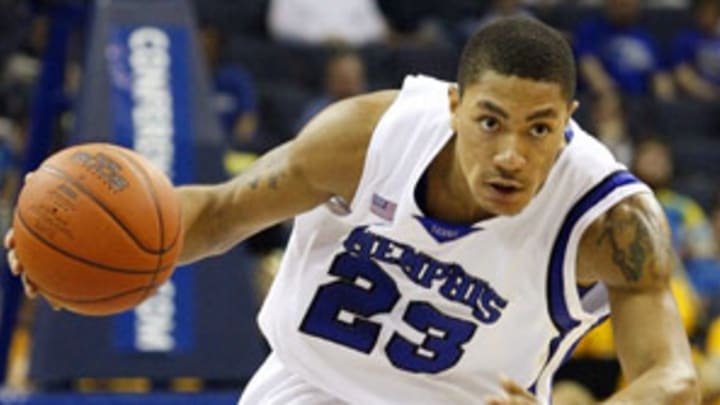
It's beyond obvious that the dearth of upperclassmen has hurt the college game. I would've loved to have seen a Memphis team run by senior point guard Derrick Rose in this year's field, or how far a skinny senior named Kevin Durant would've taken Texas in last year's tournament. If you want to blame the NBA for that, go ahead -- most players with NBA chops will chase the money the moment they turn 19. But don't stare at the screen and think that you're actually watching cohesive teams led by players like Rose and Durant. They're gone, as are most great players after two years, and with them go much of the consistency, fluidity and sixth-sense communication that produce great teams.
None of this means that the NBA doesn't have problems, the absence of true rivalries and the aesthetically unpleasing sight of too much offensive isolation being two of them. You hear that endlessly, and it's true. But three things in particular tend to get sold in bulk during the Tournament, and everyone seems to buy in bulk. They are:
• Defensive intensity. I was watching Jimmer Fredette coast around in BYU's supposed vaunted zone a couple of weeks ago. Hands up, glide, glide back, shuffle a little, drift into the lane, glide. It was basically a 15-second vacation that was repeated again and again. That is no criticism of Fredette, a remarkable player, who as far as I can tell will play well at the next level. But the idea that better defense is played in college than in the NBA is utter nonsense.
• Team play and unselfishness. True, there is not as much clearing out and isolation as there is in the pro game. But the best players take the most shots in college and in the pros, and the typical college team just doesn't have many options. It's safe to brand Kobe Bryant and Kevin Durant as "volume shooters," but each takes only about 23 percent of his team's shots. Fredette takes 33 percent of BYU's and Kemba Walker takes 30 percent of UConn's.
• Coaching brilliance. At about 5 p.m. on Friday, Duke's Mike Krzyzewski will be walking across the court at the Time Warner Arena in Charlotte to humbly shake hands with Hampton coach Ed Joyner after trouncing his team. At the same time, Frank Vogel, the largely unknown coach of the Indiana Pacers, will be trying to figure out how to stop Rose, Carlos Boozer, Luol Deng and the rest of the Chicago Bulls for a game he will most likely lose. By the end of the evening, Vogel will have coached twice as hard as Krzyzewski, endlessly looking to exploit matchup advantages, tweaking set plays during timeouts, designing one more way to defense a high screen-and-roll against the crafty Rose. But it will be Krzyzewski who is celebrated as the master, and who the hell is Frank Vogel?
Look, Coach K has earned his rep over two decades of March Madness. He's a great coach, and the tournament will be a great show because it always is. I can't wait to open the first beer, lob the first insult about my friends' picks, or get Jill's first observation, which might be something like: Belmont will beat Wisconsin because they're also a horse race.
Enjoy it. Celebrate it. But at the same time don't stare at the glorious mosh pit that is March Madness and pretend you're watching the ballet.

Special Contributor, Sports Illustrated As a member of the Basketball Hall of Fame, it seems obvious what Jack McCallum would choose as his favorite sport to cover. "You would think it would be pro basketball," says McCallum, a Sports Illustrated special contributor, "but it would be anything where I'm the only reporter there because all the stuff you gather is your own." For three decades McCallum's rollicking prose has entertained SI readers. He joined Sports Illustrated in 1981 and famously chronicled the Celtics-Lakers battles of 1980s. McCallum returned to the NBA beat for the 2001-02 season, having covered the league for eight years in the Bird-Magic heydays. He has edited the weekly Scorecard section of the magazine, written frequently for the Swimsuit Issue and commemorative division and is currently a contributor to SI.com. McCallum cited a series of pieces about a 1989 summer vacation he took with his family as his most memorable SI assignment. "A paid summer va-kay? Of course it's my favorite," says McCallum. In 2008, McCallum profiled Special Olympics founder Eunice Shriver, winner of SI's first Sportsman of the Year Legacy Award. McCallum has written 10 books, including Dream Team, which spent six seeks on the New York Times best-seller list in 2012, and his 2007 novel, Foul Lines, about pro basketball (with SI colleague Jon Wertheim). His book about his experience with cancer, The Prostate Monologues, came out in September 2013, and his 2007 book, Seven Seconds or Less: My Season on the Bench with the Runnin' and Gunnin' Phoenix Suns, was a best-selling behind-the-scenes account of the Suns' 2005-06 season. He has also written scripts for various SI Sportsman of the Year shows, "pontificated on so many TV shows about pro hoops that I have my own IMDB entry," and teaches college journalism. In September 2005, McCallum was presented with the Curt Gowdy Award, given annually by the Naismith Memorial Basketball Hall of Fame for outstanding basketball writing. McCallum was previously awarded the National Women Sports Foundation Media Award. Before Sports Illustrated, McCallum worked at four newspapers, including the Baltimore News-American, where he covered the Baltimore Colts in 1980. He received a B.A. in English from Muhlenberg College in Allentown, Pa. and holds an M.A. in English Literature from Lehigh University. He and his wife, Donna, reside in Bethlehem, Pa., and have two adult sons, Jamie and Chris.