%20%20--%3E%0A%3Csvg%20version%3D%221.1%22%20id%3D%22Layer_1%22%20xmlns%3D%22http%3A%2F%2Fwww.w3.org%2F2000%2Fsvg%22%20xmlns%3Axlink%3D%22http%3A%2F%2Fwww.w3.org%2F1999%2Fxlink%22%20x%3D%220px%22%20y%3D%220px%22%0A%09%20width%3D%2239px%22%20height%3D%2240px%22%20viewBox%3D%220%200%2039%2040%22%20enable-background%3D%22new%200%200%2039%2040%22%20xml%3Aspace%3D%22preserve%22%3E%0A%3Cpath%20fill%3D%22%23FFFFFF%22%20d%3D%22M38.5%2C7H28.2v26h10.3V7z%22%2F%3E%0A%3Cpath%20fill-rule%3D%22evenodd%22%20clip-rule%3D%22evenodd%22%20fill%3D%22%23FFFFFF%22%20d%3D%22M26.1%2C25.5c0%2C5.8-4.1%2C7.5-12.9%2C7.5C3.9%2C33%2C0%2C31.2%2C0%2C25.2v-1.1h11.6%0A%09v2.4c0%2C0.7%2C0.1%2C1.4%2C1.2%2C1.4c1%2C0%2C1.2-0.4%2C1.2-1.3v-0.9c0-1.6-0.9-1.6-3.5-2.2C2.2%2C21.7%2C0%2C19.7%2C0%2C15.3v-0.9C0%2C9.3%2C5.5%2C7%2C12.9%2C7%0A%09c10.2%2C0%2C12.8%2C2.6%2C12.8%2C7.4v1.8h-11v-2.9c0-0.6-0.4-1.1-1.2-1.1c-0.6%2C0-1.2%2C0.4-1.2%2C1.1v0.9c0%2C1.5%2C0.9%2C2%2C3.3%2C2.5%0A%09c8%2C1.6%2C10.5%2C3.3%2C10.5%2C7.5V25.5z%22%2F%3E%0A%3C%2Fsvg%3E%0A)
Building in Brooklyn: How Sean Marks Brought the Nets Back from the Abyss

Sean Marks, the seven-foot New Zealand expat and general manager of the Brooklyn Nets, has grown to appreciate small victories. So within seconds of us sitting down in his Sunset Park, Brooklyn, office in the second week of September, Marks is on the phone with his wife, hoping to dispel a claim I heard from another SI writer about his playing days in Portland.
“Hey babe, you’re on speaker here. I’m doing an interview. Rohan said that in Portland you used to drop me off at games in a minivan...?” Marks says.
Marks’s wife, Jennifer, overcoming her initial confusion at 1) being alerted she’s on speaker with someone she doesn’t know named Rohan and 2) being told her husband is in the middle of an interview, laughs with a sense of relief.
“That’s not true!" She responds. "We never had a minivan. It’s embarrassing that I have that reputation.”
Marks, satisfied to prove that he didn’t actually roll up to NBA games in something like a Honda Odyssey, thanks his wife for her numerous contributions and hangs up. Immediately, he switches back into head-of-the-franchise mode.
“She’s the real GM,” Marks says. “It’s the people who support me who make all the sacrifices so I can go play fantasy basketball.”
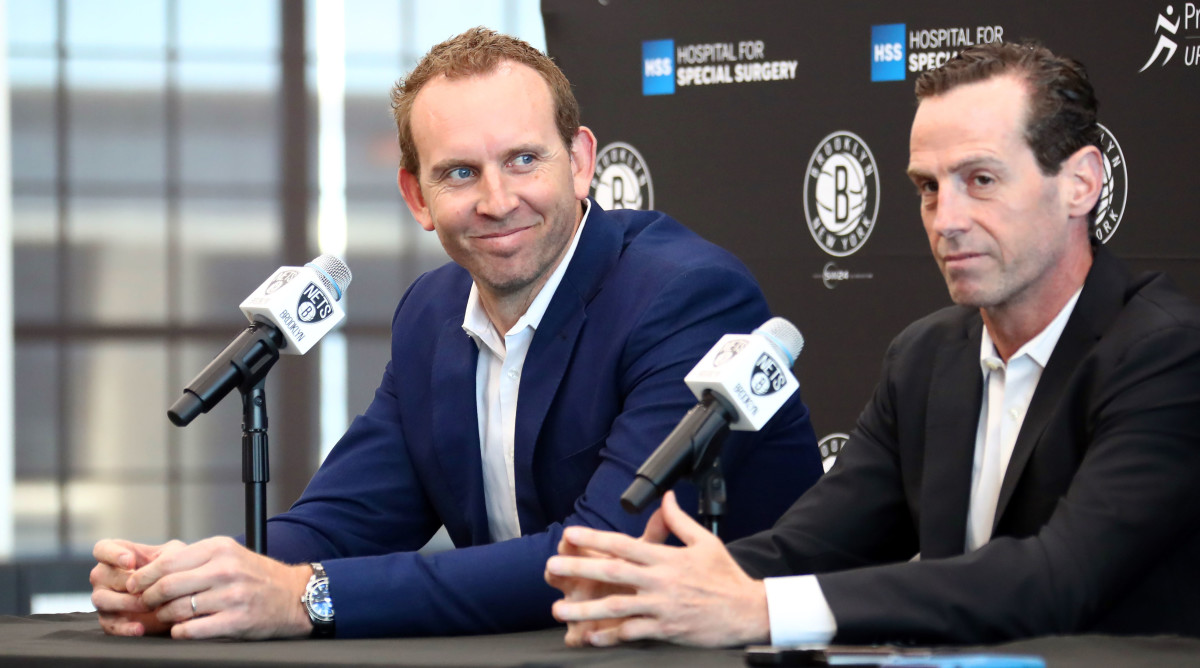
The Nets, when Marks took over general manager duties in February 2016, were far from a fantasy. If anything, they were dystopian. Brooklyn was a barren wasteland, devoid of draft picks, All-Star potential, and hope. When Marks accepted the job, the toolbox—as he likes to call it—was empty. The Nets’ absurdly one-sided 2013 trade with the Celtics left the franchise without its own first-round pick from 2014 through this summer. Boston has since gone on to build a budding juggernaut, while Brooklyn spectacularly flamed out until Marks’s arrival. Upon starting the job, Marks was asked to turn around a team that had scarce young talent, a glut of veterans, and a few tumbleweeds rolling through the office.
Fast-forward two-and-a-half years later, the Nets are being listed by Jimmy Butler as one of his preferred destinations in a trade out of Minnesota. In a short period of time, Brooklyn has gone from afterthought to potential superstar landing spot, a testament to the current regime’s commitment to playing the long game.
On his first day, Marks didn’t immediately set up shop at his desk and start making phone calls in hopes of a quick fix. Instead, he gathered his staff into a conference room and made sure everyone was well introduced to one another over a team meal. Breaking bread became just as important as breaking the curse of the Celtics trade.
“Culture was something we could control,” Marks says of his initial days on the job. “We were going to try to have a lot of fun along the way. That was going to be a priority. We knew there were going to be dark days. If we lost five games in a row, how are we controlling this? What’s the perception? What are we giving off? For two years, we were navigating that. It may not be stuff in the public eye, but we celebrated small wins along the way.”
For Marks, small wins were more than just proving he had more swag than a minivan dad. His biggest goal in the office was to foster a collaborative culture. That buzzword—culture—is a nebulous term thrown out by rebuilding teams to cover up for the losses on the court. For Marks, culture is something he paid special attention to during his 12-year playing career.
“I was fortunate to be coached by Pat Riley in Miami, and see how he motivates a team, the stories he tells, the player care in Miami,” Marks says. “In San Antonio, Pop was an iconic coach and leader, who kept everything in perspective. He’d always say, ‘This is just a game of basketball, I’m here to develop you as young men and women.’ I like to tell stories from where I was and give that little bit of perspective on why I think certain things will work.”
Six Degrees of the Jimmy Butler Trade Demand
Marks’s perspective is that of a self-described journeyman. He played for six teams from 1998 through 2011. He says the front office light went off when he was in San Antonio, and his relationship with Gregg Popovich and R.C Buford led him to becoming the team’s G-League GM in 2012. Marks then moved to the bench as one of Pop’s assistants for a year before returning to the front office as the Spurs' assistant GM in 2014. Within two seasons, Brooklyn tabbed Marks to lead its turnaround.
As the Nets began their overhaul on the court, Marks charted progress internally. He appreciates the Devil’s Advocate, and he’s emboldened by a staff that has healthy disagreements. According to Marks, he knew his desired culture had set in when members of his front office would “stand up for what they believed in” during meetings on how to steer the franchise. Of course, a neatly run front office could only do so much. Shortly after he took over, Marks had one goal in mind: Acquire a first-round pick.
It’s the wheeling and dealing where Marks deserves the most credit. He’s taken risks, like trying to pry away restricted free agents (didn’t work on Tyler Johnson, it kinda worked on Allen Crabbe), or gambling on mercurial talent like D’Angelo Russell. The Nets may have been missing assets for a rebuild, but they had parts to sell off that weren’t completely absent of value.
“As much as another franchise may have leverage over us in one regard, us giving up a veteran player may benefit them,” Marks explains. “We’ve got the player they need. We’ve got the expiring contract they need. We’ve got this cap space, which we’ve obviously been active and aggressive with.”
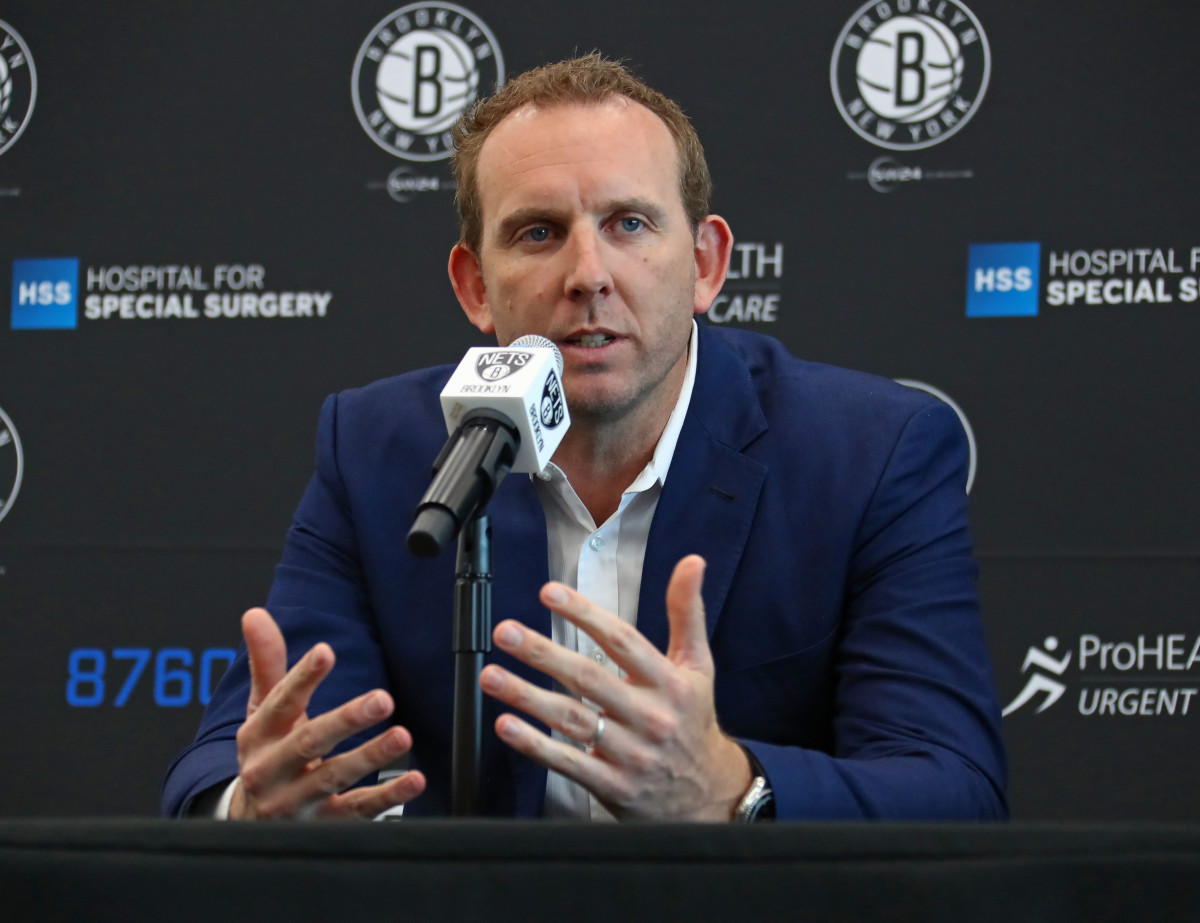
Marks’s machinations got the Nets back into the draft. In 2016, he traded Thaddeus Young for the rights to Caris LeVert. The next summer, the team selected promising young center Jarrett Allen with a pick acquired from the Wizards. This season, Brooklyn absorbed DeMarre Carroll’s contract from the Raptors and used Toronto’s pick to select Dzanan Musa in June.
LeVert and Allen may never turn into superstars, but they were exactly the kind of building blocks the team was lacking when Marks took over. It also helps that Kenny Atkinson, without the burden of having to tank, could push his young roster day in and day out. Atkinson’s methods have already yielded surprising development from the likes of Spencer Dinwiddie and Joe Harris, two cast-offs who’ve found a home in Brooklyn—and are on team-friendly deals that could work around All-Stars.
“I would have loved a first-round pick. I don’t know if anyone here would say it’s a blessing,” Marks says when asked about the benefits of not tanking. “But Kenny knows how to coach one way. And he’s going to compete. And whether you give him this roster or that roster, All-Stars or first-round picks, he’s going to coach to win. He’s going to develop players. And that’s going to continue as long as we’re here for.”
The flurry of moves in Brooklyn since 2016 has given the organization a level of flexibility that seemed impossible a few seasons ago. Next summer, the Nets only have about $44 million in committed salary, which means they could have up to $65 million in cap space. If Marks can trade Crabbe for no future salary, Brooklyn would be just short of having three max salary slots. In 2019, Marks will also be able to decide if he wants to make Russell a one-year qualifying offer, let him walk in restricted free agency, or let him walk from the jump. Allen, Levert, Harris and Shabazz Napier are all useful, and will all be around on small contracts.
Why the Nets, Knicks and Clippers Make (Some) Sense for Jimmy Butler
What exactly makes the Nets attractive for a loaded free-agent class? A star who signs in Brooklyn would basically be given carte blanche to form his own superteam, provided he can recruit others to sign with him. The Nets may not be historically great, but New York still has an attraction, and Marks is quickly earning respect.
“I’ve never put a timeline on anything,” Marks says of Brooklyn's crawl toward contention. “How do we maintain flexibility so we don’t get locked in? So that’s what we’ve worked for, to have these tools. There’s a little bit too much put on next summer. We could have to switch directions before then. I hate to limit ourselves and say we’re all in for July. Who knows what could happen before then?”
Who knows what could happen? Like, say a four-time All-Star hinting he wouldn’t mind a trade to your organization?
The nature of the NBA in 2018 is to look ahead. Most people in and around the league expect the Warriors to win another championship this season, a feeling that only became more prevalent after Golden State signed Boogie Cousins. Especially for a rebuilding outfit like the Nets, their fans probably enjoy looking ahead as much as if not more than watching the actual games. Marks hasn’t turned the fortunes around just yet, but he’s finally armed with cap room and, for the first time, his own first-round pick. Brooklyn’s 180-degree turnaround over the last few seasons has already earned Marks plaudits, and like any person smart enough to keep expectations low, he quickly dismisses any praise.
“Believe me, that does not even register. That’s the least of my concerns,” Marks says of his reputation. “To be brutally honest, we have so far to go. We have to keep our eye on the prize here. If we ever rest, that’s going to be our downfall. For Kenny and I, if you’re not going to compete, if you don’t have a chip on your shoulder, then you’re probably not going to survive here. We all knew what we signed up for. But it’s those challenges that make it fun.”
There Are No Winners in the Jimmy Butler Saga
Marks is right—the Nets have a long way to go. But that the franchise is even an option for premier talent is an incredible departure from the Mad Max-like paucity of resources the team had in the wake of the Celtics boondoggle. The flexibility the front office has built up is commendable. And yet, it will mean nothing if the team can’t cash in on it at some point.
“Ultimately, it’s a star-driven league. You’re never going to compete for a championship without having franchise-caliber, top-tier talented players,” Marks says. “That top tier, however many of them you have on your team, has to be willing to sacrifice. Finding the right group that wants to sacrifice, that’s the tricky thing. Are they really willing to take a backseat? Give up court time? Financial? Statistics? They have to be willing to be part of something bigger than themselves.”
For years, it would have been laughable for a Nets employee to even suggest that top players should sacrifice to come play in Brooklyn. The stark turnaround under Marks now means it’s at least plausible that superstars would assemble east of the, uh, East River. Small victories were at one point the lifeblood of the Nets’ front office. After a shorter-than-expected stay in the abyss, the big victories are seemingly finally on the horizon.
 Add us as a preferred source on Google
Rohan Nadkarni covers the NBA for SI.com. The Mumbai native and resident fashion critic has written for GQ.com, Miami Herald and Deadspin.