%20%20--%3E%0A%3Csvg%20version%3D%221.1%22%20id%3D%22Layer_1%22%20xmlns%3D%22http%3A%2F%2Fwww.w3.org%2F2000%2Fsvg%22%20xmlns%3Axlink%3D%22http%3A%2F%2Fwww.w3.org%2F1999%2Fxlink%22%20x%3D%220px%22%20y%3D%220px%22%0A%09%20width%3D%2239px%22%20height%3D%2240px%22%20viewBox%3D%220%200%2039%2040%22%20enable-background%3D%22new%200%200%2039%2040%22%20xml%3Aspace%3D%22preserve%22%3E%0A%3Cpath%20fill%3D%22%23FFFFFF%22%20d%3D%22M38.5%2C7H28.2v26h10.3V7z%22%2F%3E%0A%3Cpath%20fill-rule%3D%22evenodd%22%20clip-rule%3D%22evenodd%22%20fill%3D%22%23FFFFFF%22%20d%3D%22M26.1%2C25.5c0%2C5.8-4.1%2C7.5-12.9%2C7.5C3.9%2C33%2C0%2C31.2%2C0%2C25.2v-1.1h11.6%0A%09v2.4c0%2C0.7%2C0.1%2C1.4%2C1.2%2C1.4c1%2C0%2C1.2-0.4%2C1.2-1.3v-0.9c0-1.6-0.9-1.6-3.5-2.2C2.2%2C21.7%2C0%2C19.7%2C0%2C15.3v-0.9C0%2C9.3%2C5.5%2C7%2C12.9%2C7%0A%09c10.2%2C0%2C12.8%2C2.6%2C12.8%2C7.4v1.8h-11v-2.9c0-0.6-0.4-1.1-1.2-1.1c-0.6%2C0-1.2%2C0.4-1.2%2C1.1v0.9c0%2C1.5%2C0.9%2C2%2C3.3%2C2.5%0A%09c8%2C1.6%2C10.5%2C3.3%2C10.5%2C7.5V25.5z%22%2F%3E%0A%3C%2Fsvg%3E%0A)
Adam Silver Reveals New Lottery Rules Would Allow NBA to Change Draft Order to Punish Tanking Teams
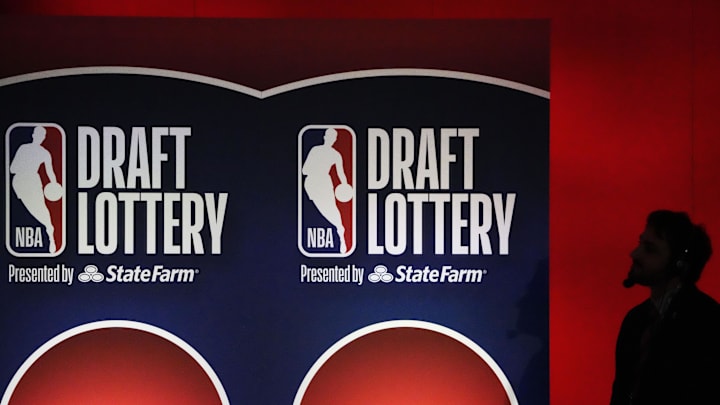
What will likely be the final version of this NBA draft lottery setup took place on Sunday. With lottery reforms set to be voted on (and expected to be passed) later this month it’s all but certain last weekend was the last time we’ll see a lottery draw in which the worst three teams had the best odds to land the top pick. Perhaps fittingly, it worked as intended for the first time in a while; the Wizards won the first pick after finishing the regular season with the worst record.
Now eyes turn fully towards May 28, when the NBA Board of Governors will vote on the “3-2-1” proposal that would be implemented starting next year and running through 2029. That setup will give the worst three teams decreased odds to win the lottery in order to disincentivize being as bad as possible. Instead the teams who finish 4-10 at the bottom of the standings will have better odds to earn the No. 1 pick. It’s a dramatic change that comes with great risk of punishing the wrong teams, but one that fits the NBA’s vision of avoiding the blatant tanking we saw this year at all costs.
Speaking on the matter on Wednesday, commissioner Adam Silver revealed that the new rule changes would also grant the league quite a bit of power to discipline teams who still try to tank. Specifically, if the rule change passes, the NBA will have the ability to change the draft order at their whim in order to combat tanking.
“What we’ve essentially done, and we have a proposal we’ll be be bringing to our team owners at the end of May, that is to create flat odds so that you have no particular incentive to be bad,” Silver said to Stephen A. Smith. “There’s even something we’re calling draft relegation that, if you’re one of the bottom three teams in the league, you actually have worse odds than teams that (finish) fourth up until (the teams that) make the playoffs. We’re still playing a little bit with the system there.
“And also, ultimately, additional authorities for the league office. That if we do see that type of behavior where there’s a sense that teams aren’t going all-out to win, we can actually take away draft lottery balls, change the order of the draft. Teams have to know it’s not just about a financial fine, which they may think is worth it in order to get a top pick, but it will directly impact their ability to get a top draft pick.”
ESPN had previously reported the league would have “expanded” authority to punish teams for tanking in this manner but this is the first time Silver is confirming it publicly. As it stands the NBA only has the ability to levy hefty fines for conduct detrimental to the team, as we saw earlier this year when the Jazz were penalized $500,000 for tanking.
It’s a significant note amid the slew of changes that would flow from approving the new lottery system.
NBA’s ability to change draft order due to tanking is a risky rule
The rabid anti-tanking crowd should be quite pleased by this potential rule change. Allowing the NBA to be much more heavy-handed in penalizing tanking will, in theory, serve as another preventative measure. No team wants to be the first to get knocked down a few pegs in the lottery (or get their pick taken away entirely, as Silver’s quote would suggest his office has the power to do) for crossing the tanking line.
But where the tanking line lies is arbitrary. Utah got hit with a fine because it crossed that line by benching Lauri Markkanen and Jaren Jackson Jr. for the fourth quarter in multiple games where the team then blew a lead. But it was not the first time a tanking team had done that, and it wasn’t even the last time this season it happened. Yet only the Jazz got hit with that fine—and they even won one of the games they got fined for tanking for.
That isn’t to say they didn’t deserve it. It’s reasonable to accept that some teams are just bad, but nobody wants to see in-the-moment decisions made to maximize the chances of losing. However, it remains a fact that allowing the league to meddle with the draft order to this degree based on their opinion of whether a team is tanking too hard can lead to bad outcomes.
Without a way to establish what tanking too hard looks like there is a lot of room for interpretation, and not everyone agrees with the NBA’s interpretation of its own rules. Rick Carlisle publicly ripped the league only a few months ago for fining the Pacers because their lawyer “unilaterally decided Aaron Nesmith, who had been injured the night before and couldn’t hold the ball, should have played in the game.” The NBA later decried that as “inaccurate” but regardless of where the truth lies it shows how much gray area there is with these sorts of rules, where the league must determine if a team is putting its best foot forward without being involved in team operations until there’s a potential violation.
There’s a lot of different ways for this to go wrong. But all signs point to the rule changes being approved. So we’ll all find out for ourselves whether this worry is unfounded.
More NBA from Sports Illustrated
Listen to SI’s NBA podcast, Open Floor, below or on Apple and Spotify. Watch the show on SI’s YouTube channel.
 Add us as a preferred source on Google
Liam McKeone is a senior news writer for the NBA team at Sports Illustrated. He has been in the industry covering the NBA and other sports as a content creator starting in 2017. Prior to joining SI, McKeone worked for NBC Sports Boston and The Big Lead. In addition to his work as a writer, he has hosted the Press Pass Podcast covering sports media and The Big Stream covering pop culture. A graduate of Fordham University, he is always up for a good debate and enjoys loudly arguing about sports, rap music, books and video games. McKeone has been a member of the National Sports Media Association since 2020.
Follow liam_mckeone