%20%20--%3E%0A%3Csvg%20version%3D%221.1%22%20id%3D%22Layer_1%22%20xmlns%3D%22http%3A%2F%2Fwww.w3.org%2F2000%2Fsvg%22%20xmlns%3Axlink%3D%22http%3A%2F%2Fwww.w3.org%2F1999%2Fxlink%22%20x%3D%220px%22%20y%3D%220px%22%0A%09%20width%3D%2239px%22%20height%3D%2240px%22%20viewBox%3D%220%200%2039%2040%22%20enable-background%3D%22new%200%200%2039%2040%22%20xml%3Aspace%3D%22preserve%22%3E%0A%3Cpath%20fill%3D%22%23FFFFFF%22%20d%3D%22M38.5%2C7H28.2v26h10.3V7z%22%2F%3E%0A%3Cpath%20fill-rule%3D%22evenodd%22%20clip-rule%3D%22evenodd%22%20fill%3D%22%23FFFFFF%22%20d%3D%22M26.1%2C25.5c0%2C5.8-4.1%2C7.5-12.9%2C7.5C3.9%2C33%2C0%2C31.2%2C0%2C25.2v-1.1h11.6%0A%09v2.4c0%2C0.7%2C0.1%2C1.4%2C1.2%2C1.4c1%2C0%2C1.2-0.4%2C1.2-1.3v-0.9c0-1.6-0.9-1.6-3.5-2.2C2.2%2C21.7%2C0%2C19.7%2C0%2C15.3v-0.9C0%2C9.3%2C5.5%2C7%2C12.9%2C7%0A%09c10.2%2C0%2C12.8%2C2.6%2C12.8%2C7.4v1.8h-11v-2.9c0-0.6-0.4-1.1-1.2-1.1c-0.6%2C0-1.2%2C0.4-1.2%2C1.1v0.9c0%2C1.5%2C0.9%2C2%2C3.3%2C2.5%0A%09c8%2C1.6%2C10.5%2C3.3%2C10.5%2C7.5V25.5z%22%2F%3E%0A%3C%2Fsvg%3E%0A)
Jaylen Brown’s Ejection Shouldn’t Have Happened, and the NBA Knows It
In this story:
Ladies and gentlemen, welcome to San Antonio for Tuesday’s matchup between the Boston Celtics and the San Antonio Spurs, featuring Victor Wembanyama and Jaylen Brown, Jayson Tatum and De’Aaron Fox, Tyler Ford and Suyash Mehta.
Wait … who?
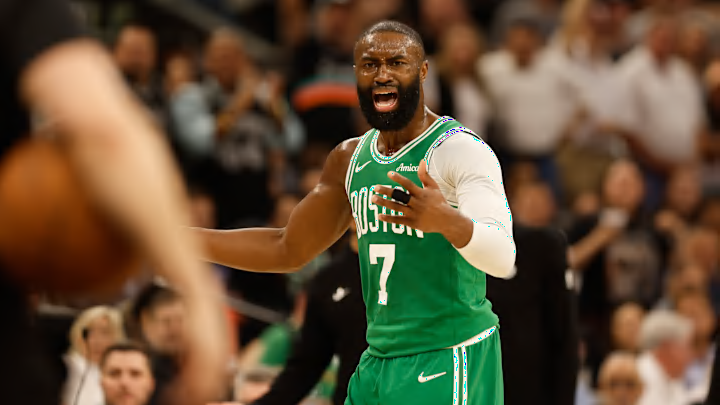
If you missed it, Ford and Mehta are the referees who tagged Brown with a pair of technical fouls late in the second quarter of the Spurs’ 125–116 win over the Celtics, ejecting Boston’s All-Star from the game. Brown was hot after a no-call on Stephon Castle caused a turnover, and he let Ford know it. When Ford T’d him up, Brown aggressively moved toward him. That’s when Mehta, from across the floor, hit him with another.
Goodbye, Jaylen.
Jaylen Brown receives two technical fouls in quick succession after arguing with the refs over a call and is ejected from the game. pic.twitter.com/XlvlABCMba
— NBA on NBC and Peacock (@NBAonNBC) March 11, 2026
Look: Brown came into this game a little prickly. In January, Boston shot four free throws in a 100–95 home loss to San Antonio. Brown popped off after the game, telling reporters “it’s the same s--- every time we play a good team. It’s, like, they refuse to make a call, then they call touch fouls on the other end.” The NBA dinged Brown with a $35,000 fine.
So Brown, who has an elephant-like memory, likely came into the game with a chip on his shoulder. He probably earned the first tech. And he put himself in the position for Ford to eject him when he went after him aggressively enough that multiple teammates had to hold him back.
But Ford didn’t eject him. That came from Mehta, the umpire, who injected himself into the situation from the basketball equivalent of right field. Ford told a pool reporter after the game that Brown was given the first tech “for aggressively pointing and using profanity and resentment to the no call.” The second, Ford said, was because Brown “aggressively approached a game official while pointing and using profanity.”
Minutes after getting tossed, Brown posted from the locker room, “This the s--- I be talking about.”
Did Brown earn the technicals? Sure, if it was a midseason game between Boston and the Brooklyn Nets. But it wasn’t. It was a nationally televised game between two of the top four teams in the NBA. It featured two MVP candidates in Brown and Wembanyama. Brown had eight points in 14 minutes and left with the Celtics holding a two-point lead. They ended up losing the game by nine.
More importantly, this wasn’t Mehta’s call to make. Ford was the crew chief. He was the one who T’d up Brown and he was the one taking his abuse. If Ford, the more experienced official, believed Brown had gone too far, he should have tossed him. Mehta, who was never involved in the play, should not.
That it was Mehta, not Ford, who tossed Brown, didn’t go unnoticed by Celtics coach Joe Mazzulla. “I just give a ton of credit to my high school principal,” said Mazzulla. “He had the balls to throw a student out. He didn’t leave it to the hall monitor.”
Yikes.
NBA referees generally do an excellent job. It isn’t easy to manage a game played at these speeds by these kind of athletes. And, as NBA commissioner Adam Silver reminded me last fall, a lot of how the game is called is dictated by the league. There are certain actions they have to call. Wave your hand at an official? That’s a tech. Clap at one? That’s another. Slap the stanchion in frustration. You are going to get whistled.
These are rules that are constantly evolving. For example: Silver said the league recognizes the need to allow players to show more emotion without fear of getting T’d up for it. “I think we may have gotten to a point where we had disallowed some of the spontaneous emotion on the floor and created some bright line leading to technicals that I think were not necessary to control the game and not the official’s fault,” said Silver. “I think that’s the league office’s fault.”
Brown needed to have a cooler head in that situation. But referees need to exercise more discretion, too. More than 19,000 fans packed the Frost Bank Center on Tuesday for what could have been an NBA Finals preview. They got nearly two quarters of it. After that, they got something else.
More NBA from Sports Illustrated
Listen to SI’s NBA podcast, Open Floor, below or on Apple and Spotify. Watch the show on SI’s YouTube channel.
 Add us as a preferred source on Google
Chris Mannix is a senior writer at Sports Illustrated covering the NBA and boxing beats. He joined the SI staff in 2003 following his graduation from Boston College. Mannix is the host of SI’s “Open Floor” podcast and serves as a ringside analyst and reporter for DAZN Boxing. He is also a frequent contributor to NBC Sports Boston as an NBA analyst. A nominee for National Sportswriter of the Year in 2022, Mannix has won writing awards from the Boxing Writers Association of America and the Pro Basketball Writers Association, and is a longtime member of both organizations.
Follow sichrismannix