%20%20--%3E%0A%3Csvg%20version%3D%221.1%22%20id%3D%22Layer_1%22%20xmlns%3D%22http%3A%2F%2Fwww.w3.org%2F2000%2Fsvg%22%20xmlns%3Axlink%3D%22http%3A%2F%2Fwww.w3.org%2F1999%2Fxlink%22%20x%3D%220px%22%20y%3D%220px%22%0A%09%20width%3D%2239px%22%20height%3D%2240px%22%20viewBox%3D%220%200%2039%2040%22%20enable-background%3D%22new%200%200%2039%2040%22%20xml%3Aspace%3D%22preserve%22%3E%0A%3Cpath%20fill%3D%22%23FFFFFF%22%20d%3D%22M38.5%2C7H28.2v26h10.3V7z%22%2F%3E%0A%3Cpath%20fill-rule%3D%22evenodd%22%20clip-rule%3D%22evenodd%22%20fill%3D%22%23FFFFFF%22%20d%3D%22M26.1%2C25.5c0%2C5.8-4.1%2C7.5-12.9%2C7.5C3.9%2C33%2C0%2C31.2%2C0%2C25.2v-1.1h11.6%0A%09v2.4c0%2C0.7%2C0.1%2C1.4%2C1.2%2C1.4c1%2C0%2C1.2-0.4%2C1.2-1.3v-0.9c0-1.6-0.9-1.6-3.5-2.2C2.2%2C21.7%2C0%2C19.7%2C0%2C15.3v-0.9C0%2C9.3%2C5.5%2C7%2C12.9%2C7%0A%09c10.2%2C0%2C12.8%2C2.6%2C12.8%2C7.4v1.8h-11v-2.9c0-0.6-0.4-1.1-1.2-1.1c-0.6%2C0-1.2%2C0.4-1.2%2C1.1v0.9c0%2C1.5%2C0.9%2C2%2C3.3%2C2.5%0A%09c8%2C1.6%2C10.5%2C3.3%2C10.5%2C7.5V25.5z%22%2F%3E%0A%3C%2Fsvg%3E%0A)
Cavaliers Meltdown: Three Coaching Blunders by Cleveland That Led to Epic Collapse vs. Knicks
In this story:
The Knicks are up 1–0 on the Cavaliers in the Eastern Conference finals thanks to one of the greatest playoff comebacks we’ve ever seen.
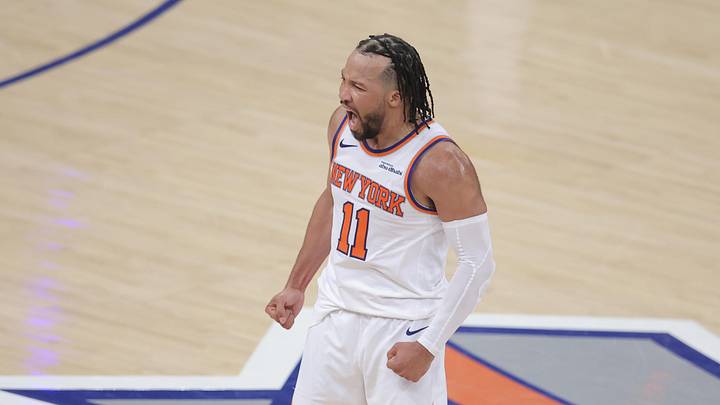
New York fell down by 22 to Cleveland with fewer than eight minutes to go. ESPN’s win probability for the Cavs was at 99.9% at that point. But the Knicks rallied. They got stops. They scored. What resulted was an avalanche of points from Jalen Brunson, key shots from Landry Shamet and clutch plays from the Mikal Bridges-OG Anunoby combo. Their steadfast refusal to give up was rewarded by the basketball gods when Sam Merrill’s go-ahead three-pointer rimmed out at the buzzer and New York crushed Cleveland in overtime to finish the job.
It was a truly remarkable game to watch unfold. It also couldn’t have happened without a few huge mistakes from the Cavaliers’ side—beyond just missing shots and playing poor defense.
Cleveland coach Kenny Atkinson made three significant blunders down the stretch of Game 1 that allowed the Knicks to pull off their epic comeback. Viewed another way, Atkinson’s errors directly led to his team’s complete and utter collapse, the kind of loss that can come to define an entire series. Brunson had to make all those shots and the New York defense had to execute nearly to perfection but none of that would have mattered if Atkinson hadn’t made choices that doomed his team.
What were those mistakes? Let’s break it down.
Not doing anything to stop the Knicks from attacking James Harden

The Knicks’ comeback was built on the foundation of finding Harden on defense and forcing him to defend Brunson. It was that simple. Every time down the floor they’d force whoever Harden was guarding to set a pick, because the Cavaliers were switching everything to avoid giving up wide-open shots. Brunson would then back out and get by Harden without any trouble, slicing into the paint to either score or find a teammate left undefended because Cleveland’s defense had to scramble.
That happened every single time down the floor for New York’s comeback. For seven minutes of the fourth quarter plus overtime, the Knicks didn’t try anything else. They didn’t have to. Atkinson let Brunson go to work for most of the fourth quarter; he eventually had the Cavs send a soft double at Brunson but at that point it was way too little, way too late.
Jalen Brunson Hunting James Harden pic.twitter.com/rlyEGCbdlf
— Coach Gibson Pyper (@HalfCourtHoops) May 20, 2026
After the game Atkinson was asked why he didn’t bench Harden with a double-digit lead to avoid giving New York easy opportunities and he steadfastly defended Harden instead.
“No. He’s been one of our best defenders in these playoffs,” Atkinson said. “I trust him. Smart. Great hands. Didn’t think about [benching him].”
In retrospect the coach obviously should have done that but even with the benefit of that hindsight it’s not a huge surprise Harden didn’t get yanked. That is a harsh decision to make with a superstar player, and the reality is that it’s a decision few coaches are willing to make.
But there are so many other ways Atkinson could have mitigated the damage Harden was doing to his defense. He could have directed the defense to refuse to switch and bet that an otherwise-competent unit featuring former DPOY Evan Mobley could figure it out. He could have borrowed one of the Knicks’ various strategies for covering Brunson’s issues on that end with show-and-recover schemes. He could have just started sending doubles immediately at Brunson after it became clear New York was dead-set on going after Harden over and over!
Instead, Atkinson did nothing. It was the definition of madness. He thought the outcome would be different despite mounting evidence to the contrary, and it doomed his team.
No timeouts during game-changing run
Timeouts can be wielded for all sorts of purposes in an NBA playoff game. But their primary use is to give a team a breather when things aren’t going well. Mistakes can compound very quickly on the hardwood and a timeout allows for an opportunity to reset. It doesn’t always work, of course, but it at least allows for the possibility that it can change the flow of the game.
So it was rather puzzling that Atkinson didn’t use a timeout as the Cavaliers blew their lead. After going up 22 points with 7:52 remaining, Cleveland gave up an 18–1 run to New York over the next four minutes. It was a constant barrage of Cavs misses followed by Knicks makes. And that whole time, Atkinson had two timeouts—yet he didn’t use one until the 3:30 mark, with the lead diminished to only five points.
As stated, a timeout when the lead got to 15 or even 10 wasn’t guaranteed to change the outcome. But it would have been objectively beneficial. It would have allowed Atkinson to draw up an out-of-bounds play that would break Cleveland’s scoring drought—which is exactly what happened when he did finally call timeout. He schemed up a great play to get Evan Mobley an open three. That would have been useful when the Cavs’ lead was still double-digits!
Even if that didn’t work a timeout would have allowed Harden to catch his breath after getting picked on for a long string of possessions, or allowed Donovan Mitchell to get his legs back under him after he seemed to be laboring. There were so many benefits that Atkinson missed out on because he neglected to use a timeout until the lead was nearly gone. And for what?
“I like to hold my timeouts,” he explained afterward. “I didn't want to have one timeout at the end of the game. One or two-point game, I try to hold them.”
That, right there, is the problem—it shouldn’t have been a one or two-point game. Atkinson held onto those timeouts in anticipation of blowing the lead instead of using them to protect it. And he didn’t even end up using his last one.
Letting Harden play iso ball

For all the deserved criticism Harden is hearing today because he was cooked to a crisp by Brunson, his offensive showing was exceptionally poor too. And it’s on Atkinson for not adjusting.
Maybe it was because Mitchell was waning or a little banged-up. Or because Harden wanted to make up for how things were going on the other end. Perhaps the 11-time All-Star just demanded the ball with the game coming down to the wire because that’s what superstars do. But regardless of the reason Harden took over Cleveland’s offense to play iso ball—and it was a disaster.
Harden took more shots than any of his teammates in that dreadful fourth quarter. He made one shot on six attempts and missed a trio of three-pointers. He did go to the foul line three times but missed two free throws. The worst part was that they weren’t really bad shots, for the most part; Harden tried to attack mismatches against Karl-Anthony Towns and Brunson. He just ... failed. And when Harden finally made a shot to put the Cavs up by two with 30 seconds left, he instantly gave those points back in allowing Brunson to tie it up.
The issue is that Atkinson watched that happen over and over again as the lead whittled down and didn’t try to change up the action. He didn’t try to get Mitchell more involved or run something to get Dean Wade or Merrill an open shot from beyond the arc. He seemed content to sit back and let Harden attack the defense the way he’s done his entire career with no thought to changing the process once the results showed themselves.
There are benefits to viewing basketball like that, but in the crunch of playoff hoops, there is no time to allow the process to play out if the results aren’t favorable. One could claim Atkinson proved himself right when Harden hit that go-ahead shot. But seven minutes of evidence screaming that Atkinson needed to go to someone else went unheard. By the time Atkinson’s faith in Harden paid off, it was far too late.
It was a disastrous effort by all involved on the visiting side Tuesday night. Atkinson had the ability to change the course of the game, though, and failed to use the tools at his disposal to do so.
More NBA Playoffs From Sports Illustrated
Listen to SI’s NBA podcast, Open Floor, below or on Apple and Spotify. Watch the show on SI’s YouTube channel.
 Add us as a preferred source on Google
Liam McKeone is a senior news writer for the NBA team at Sports Illustrated. He has been in the industry covering the NBA and other sports as a content creator starting in 2017. Prior to joining SI, McKeone worked for NBC Sports Boston and The Big Lead. In addition to his work as a writer, he has hosted the Press Pass Podcast covering sports media and The Big Stream covering pop culture. A graduate of Fordham University, he is always up for a good debate and enjoys loudly arguing about sports, rap music, books and video games. McKeone has been a member of the National Sports Media Association since 2020.
Follow liam_mckeone