%20%20--%3E%0A%3Csvg%20version%3D%221.1%22%20id%3D%22Layer_1%22%20xmlns%3D%22http%3A%2F%2Fwww.w3.org%2F2000%2Fsvg%22%20xmlns%3Axlink%3D%22http%3A%2F%2Fwww.w3.org%2F1999%2Fxlink%22%20x%3D%220px%22%20y%3D%220px%22%0A%09%20width%3D%2239px%22%20height%3D%2240px%22%20viewBox%3D%220%200%2039%2040%22%20enable-background%3D%22new%200%200%2039%2040%22%20xml%3Aspace%3D%22preserve%22%3E%0A%3Cpath%20fill%3D%22%23FFFFFF%22%20d%3D%22M38.5%2C7H28.2v26h10.3V7z%22%2F%3E%0A%3Cpath%20fill-rule%3D%22evenodd%22%20clip-rule%3D%22evenodd%22%20fill%3D%22%23FFFFFF%22%20d%3D%22M26.1%2C25.5c0%2C5.8-4.1%2C7.5-12.9%2C7.5C3.9%2C33%2C0%2C31.2%2C0%2C25.2v-1.1h11.6%0A%09v2.4c0%2C0.7%2C0.1%2C1.4%2C1.2%2C1.4c1%2C0%2C1.2-0.4%2C1.2-1.3v-0.9c0-1.6-0.9-1.6-3.5-2.2C2.2%2C21.7%2C0%2C19.7%2C0%2C15.3v-0.9C0%2C9.3%2C5.5%2C7%2C12.9%2C7%0A%09c10.2%2C0%2C12.8%2C2.6%2C12.8%2C7.4v1.8h-11v-2.9c0-0.6-0.4-1.1-1.2-1.1c-0.6%2C0-1.2%2C0.4-1.2%2C1.1v0.9c0%2C1.5%2C0.9%2C2%2C3.3%2C2.5%0A%09c8%2C1.6%2C10.5%2C3.3%2C10.5%2C7.5V25.5z%22%2F%3E%0A%3C%2Fsvg%3E%0A)
The Timberwolves Just Showed Off Their Simple Strategy for Taking on Victor Wembanyama
In this story:
The Timberwolves made it immediately clear in their Game 1 win over the Spurs that they would not be rolling over in the second round of the NBA playoffs.
Facing off against a defense led by Victor Wembanyama—the first player in NBA history to be named Defensive Player of the Year by a unanimous vote—the Wolves put up 35 points in the fourth quarter to finish off a 104–102 win on the road and draw first blood in the series.
How did Minnesota do it? Jaden McDaniels, who has not been shy about sharing his opinions on opposing defenses so far this postseason, broke down the Wolves’ plan of attack against Wembanyama after the game.
“You’ve just got to act like he’s not there,” McDaniels said. “He’s going to get blocks. He’s the tallest person in the world, so he’s going to get blocks. Just keep positionally attacking him and sometimes he might not be there. Sometimes he might catch you, but just keep going.”
Asked Jaden McDaniels what they learned about attacking the rim when Victor Wembanyama is on the floor.
— Dane Moore (@DaneMooreNBA) May 5, 2026
"You just gotta act like he's not there. I mean, he's gonna get blocks. He's the tallest person in the world." pic.twitter.com/0FYBQpZeyp
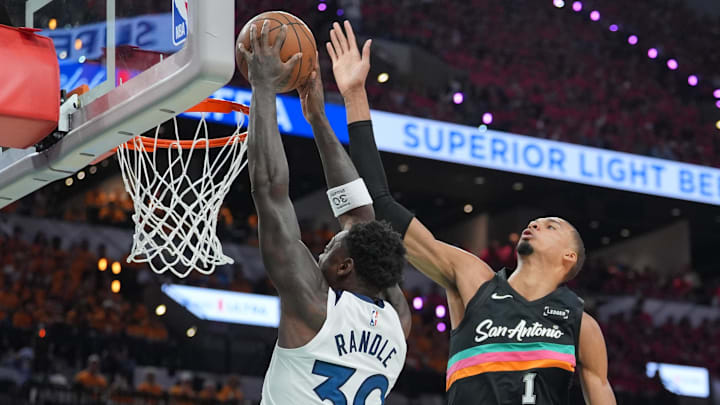
Wemby did get his blocks—he set a new record with 12 in a postseason game—but he undoubtedly would have traded every one of those blocks for three more points and the win in Game 1. Sure, the Wolves gave Wembanyama plenty of highlight-reel material, but the win is all that matters.
The Wolves’ plan to counter Wembanyama is just as McDaniels explained it: attack, attack, attack.
There is no easy answer to scoring points against a defense that is anchored by Wembanyama, but a relentless attack that forces him to make every play is about as good a plan as you can have. Too often, teams allow the idea of a rim protector like Wemby to keep them from scoring—the Wolves know this plenty well with Rudy Gobert as the centerpiece of their own defense. Rather than let fear of getting blocked turn into poorer shots, Minnesota dared Wemby to make every play.
“He gonna have to block it every time, I ain’t gonna stop going downhill. I told him that when he said a little something after he blocked my second one,” said Terrence Shannon Jr. after the game. “He’s gonna have to block it every time, man. I know he ain’t gonna block it every single time. I’m gonna dunk on him.”
too easy. pic.twitter.com/TbNCJ9IsNl
— Minnesota Timberwolves (@Timberwolves) May 5, 2026
Veteran Mike Conley echoed the sentiment. "I think it still has to be relentless. We just gotta make the right decisions,” he said. “He's going to block everything, so at some point we have to figure out how to get the ball to the corner, get the ball swung around a couple more times, and I think it will lead to easier opportunities for us. But we can't stop going to the rim."
Just as Conley said, the Wolves do not have the option to stop attacking the rim. Even if some of those attacks end up as volleyball spikes into the second row, those plays are what make it possible for the rest of the Minnesota offense to keep on moving as a unit. If the Wolves just conceded the lane to Wemby’s presence, suddenly they are far easier to cover for the rest of the Spurs defense.
The plan is something of an inversion of how some teams choose to handle an opponent’s best scorer. If you know that the likes of Luka Dončić or Kevin Durant is going to get his buckets no matter what, you can stem the bleeding by sticking to the plan and not allowing the gravity of those superstars to open up shots for the rest of their team.
In the Wolves’ case, they are not going to let the fact that Wemby can block more shots than any modern NBA player we’ve ever seen force them into an entirely new offensive scheme that allows the rest of the Spurs to better defend them on the perimeter.
The Wolves’ ability to stick to the plan was a sign of their playoff experience
On Monday night, the box score perfectly reflected the Wolves’ execution. Wemby got his—a triple-double of 11 points, 15 rebounds and 12 blocks is something we have simply never seen in the postseason—but Minnesota got the win.
As the series carries on, both sides will have to adjust. The Wolves can talk a big game about not letting the blocks get to them, but had the Spurs hit their three at the buzzer last night and left Minnesota with 12 blocks in their faces and a loss, you can be sure their comments might have been a bit less confident than they were with a 1–0 series lead.
Still, it only took one game for this series to flip in Minnesota’s favor. Sure, San Antonio was one of the best teams in the NBA all season, and sure, the Wolves were just getting superstar guard Anthony Edwards back from injury at not nearly 100%, but this Minnesota squad has reached the conference finals in two straight seasons. Listing the Wolves as massive underdogs to a Spurs side that has basically zero playoff experience felt like an immediate miscalculation as soon as Game 1 went final.
don't matter who's in front of him. 🤷♂️ pic.twitter.com/bSdLXd995U
— Minnesota Timberwolves (@Timberwolves) May 5, 2026
Wherever this series ends up, it should be fascinating—clearly the Wolves aren’t afraid of ending up on the wrong end of some monster plays, as they’re confident enough that they’ll have their own highlight reel footage soon to follow.
More NBA from Sports Illustrated
 Add us as a preferred source on Google
Tyler Lauletta was a staff writer for the Breaking and Trending News team at Sports Illustrated. Before joining SI, he covered sports for nearly a decade at Business Insider, and helped design and launch the OffBall newsletter. He is a graduate of Temple University in Philadelphia, and remains an Eagles and Phillies sicko. When not watching or blogging about sports, Tyler can be found scratching his dog behind the ears.
Follow tylerlauletta