%20%20--%3E%0A%3Csvg%20version%3D%221.1%22%20id%3D%22Layer_1%22%20xmlns%3D%22http%3A%2F%2Fwww.w3.org%2F2000%2Fsvg%22%20xmlns%3Axlink%3D%22http%3A%2F%2Fwww.w3.org%2F1999%2Fxlink%22%20x%3D%220px%22%20y%3D%220px%22%0A%09%20width%3D%2239px%22%20height%3D%2240px%22%20viewBox%3D%220%200%2039%2040%22%20enable-background%3D%22new%200%200%2039%2040%22%20xml%3Aspace%3D%22preserve%22%3E%0A%3Cpath%20fill%3D%22%23FFFFFF%22%20d%3D%22M38.5%2C7H28.2v26h10.3V7z%22%2F%3E%0A%3Cpath%20fill-rule%3D%22evenodd%22%20clip-rule%3D%22evenodd%22%20fill%3D%22%23FFFFFF%22%20d%3D%22M26.1%2C25.5c0%2C5.8-4.1%2C7.5-12.9%2C7.5C3.9%2C33%2C0%2C31.2%2C0%2C25.2v-1.1h11.6%0A%09v2.4c0%2C0.7%2C0.1%2C1.4%2C1.2%2C1.4c1%2C0%2C1.2-0.4%2C1.2-1.3v-0.9c0-1.6-0.9-1.6-3.5-2.2C2.2%2C21.7%2C0%2C19.7%2C0%2C15.3v-0.9C0%2C9.3%2C5.5%2C7%2C12.9%2C7%0A%09c10.2%2C0%2C12.8%2C2.6%2C12.8%2C7.4v1.8h-11v-2.9c0-0.6-0.4-1.1-1.2-1.1c-0.6%2C0-1.2%2C0.4-1.2%2C1.1v0.9c0%2C1.5%2C0.9%2C2%2C3.3%2C2.5%0A%09c8%2C1.6%2C10.5%2C3.3%2C10.5%2C7.5V25.5z%22%2F%3E%0A%3C%2Fsvg%3E%0A)
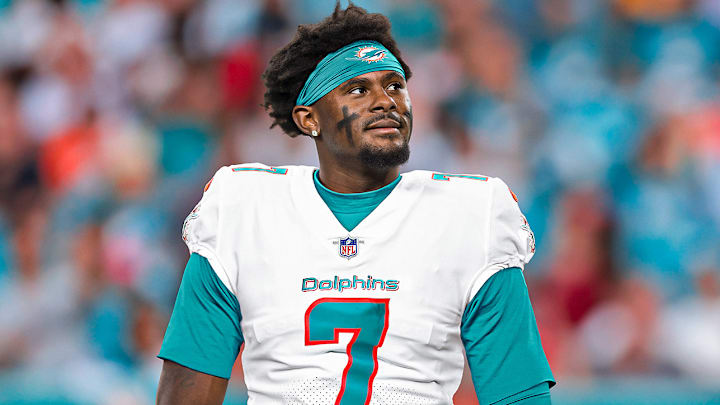
Malik Willis Is a Smart, Though Hopefully Short-Term, Signing for the Dolphins
In this story:
Free Agency 2026: Grading Every Major Move
We can all put aside the festive nature of the day and agree that, according to the laws of NFL Free-Agency Thermodynamics, Malik Willis almost certainly won’t be a member of the Dolphins two years from now.
And in most cases, that would be fodder for cynicism and giving an organization a wrist slapping, because allowing a team to get into this mess in the first place—having to spend tens of millions of dollars on an unproven commodity at the most important position in the sport—is the ultimate indication of not having a plan. Or, the previous plan having been so bad that the general manager gets replaced.
But this is not most cases. Maybe it’s an indication of the ship slowly starting to turn under new head coach Jeff Hafley and new general manager Jon-Eric Sullivan. Or, maybe it’s one of those serendipitous moments where the only option also turns out to be the intellectually correct one. Either way, signing Willis is the absolutely perfect usage of free agency for the Dolphins, as it imports a quarterback with upside and scheme familiarity (Dolphins offensive coordinator Bobby Slowik runs a version of the same offense Willis piloted in Green Bay) while not at a salary that would block the eventual development of the next franchise quarterback (a reported three years for $67.5 million, with $45 million guaranteed).
A new coaching staff cannot accept the posture of a dying squirrel at roadside, which the Dolphins began Monday doing. Paying Tua Tagovailoa the most dead-cap money in NFL history to compete for a backup job in Atlanta can no doubt be defeating. With that, settling for some post-30s veteran who can, at the very best, promise to non-dynamically run a skeleton version of the offense and turn the ball over less, while amassing financial ammunition for his post-career Jamba Juice franchise, is not the narrative tone a club wants to set after bringing in new leadership.
An existing personnel staff also cannot deny the fact that Miami’s best chances of finding stability at the quarterback position almost certainly rests in the 2027 draft (yes, next year’s) where, we’d expect, the team will have a high enough selection to be within grabbing distance of a few very good prospects.
If Willis plays well enough to turn that 2027 pick into the grist of a franchise-altering tradeback? Fantastic.
If Willis is only interesting enough to satiate a fan base through October of this year and is financially movable enough to get out of the way when Miami drafts his successor in 2027? Also fantastic.
Free agency is about understanding your team’s specific needs. The Dolphins need to appear as though the rest of the division has not relegated them à la Sheffield United, and Willis offers the chance to operate an offense that I think could uniquely stress the defenses within the AFC East.
The Bills and the Jets were two of the worst teams against quarterback runs last season. And, what doesn’t get talked about enough with Willis is his ability to succeed despite the failure of a run game around him. Yes, Willis’s best chances of success are when the scheme is intimately tied into play-action, but his best moments came when the run game around him lost efficiency.
That was especially clear in starts like the one Willis had against the Colts in 2024. The Packers’ run game was suspect at best and the offense hinged on late-down theatrics from Willis and a completion percentage over expectation of more than 20%. Similarly, in his next start against the Titans, it was Willis’s passing game that was ultimately more effective than a heavy-volume rushing attack.
In losing some of their more dynamic playmakers (including Tyreek Hill, who was released last month), the Dolphins are now redesigning their offense around a quarterback who can contribute to the fluidity of the offense with his run game instead of slowing it down. Tagovailoa had the fourth-worst EPA per rush in the NFL last season, making him about as dynamic in leaving the pocket as Matthew Stafford or Jared Goff. Mobility has long been considered the next evolution of the Shanahan offense—yet, interestingly enough, few of these teams have placed an importance on installing a quarterback with that skill set (though it is primarily the reason Kyle Shanahan went after Trey Lance in the draft).
None of that means Willis will be able to succeed in this way with the Dolphins. But it’s better than not trying and casting off a new regime to die before it even gets to Week 1.
More NFL From Sports Illustrated
 Add us as a preferred source on Google
Conor Orr is a Senior Writer for Sports Illustrated with more than 15 years of experience covering the NFL. His work has been cited in Best American Sportswriting and has won a PFWAA award. Prior to Sports Illustrated, he covered both the Giants and Jets for The Star-Ledger. Conor lives in New Jersey with his amazing wife and three children.
Follow author