%20%20--%3E%0A%3Csvg%20version%3D%221.1%22%20id%3D%22Layer_1%22%20xmlns%3D%22http%3A%2F%2Fwww.w3.org%2F2000%2Fsvg%22%20xmlns%3Axlink%3D%22http%3A%2F%2Fwww.w3.org%2F1999%2Fxlink%22%20x%3D%220px%22%20y%3D%220px%22%0A%09%20width%3D%2239px%22%20height%3D%2240px%22%20viewBox%3D%220%200%2039%2040%22%20enable-background%3D%22new%200%200%2039%2040%22%20xml%3Aspace%3D%22preserve%22%3E%0A%3Cpath%20fill%3D%22%23FFFFFF%22%20d%3D%22M38.5%2C7H28.2v26h10.3V7z%22%2F%3E%0A%3Cpath%20fill-rule%3D%22evenodd%22%20clip-rule%3D%22evenodd%22%20fill%3D%22%23FFFFFF%22%20d%3D%22M26.1%2C25.5c0%2C5.8-4.1%2C7.5-12.9%2C7.5C3.9%2C33%2C0%2C31.2%2C0%2C25.2v-1.1h11.6%0A%09v2.4c0%2C0.7%2C0.1%2C1.4%2C1.2%2C1.4c1%2C0%2C1.2-0.4%2C1.2-1.3v-0.9c0-1.6-0.9-1.6-3.5-2.2C2.2%2C21.7%2C0%2C19.7%2C0%2C15.3v-0.9C0%2C9.3%2C5.5%2C7%2C12.9%2C7%0A%09c10.2%2C0%2C12.8%2C2.6%2C12.8%2C7.4v1.8h-11v-2.9c0-0.6-0.4-1.1-1.2-1.1c-0.6%2C0-1.2%2C0.4-1.2%2C1.1v0.9c0%2C1.5%2C0.9%2C2%2C3.3%2C2.5%0A%09c8%2C1.6%2C10.5%2C3.3%2C10.5%2C7.5V25.5z%22%2F%3E%0A%3C%2Fsvg%3E%0A)
What Is a Fifth-Year Option in the NFL? Explaining Why Teams Do, or Don't, Exercise It
In this story:
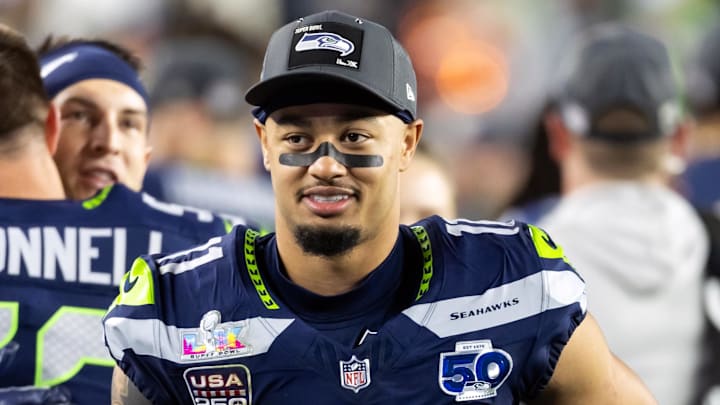
The Seahawks got a head start on ensuring star wide receiver Jaxon Smith-Njigba and cornerback Devon Witherspoon stick around for at least another year after exercising their fifth-year options last Friday.
Days later, the Seahawks agreed to a record-setting extension with Smith-Njigba. Witherspoon, who is also expected to land a substantial contract extension in the near future, is at least guaranteed to stay with Seattle through the 2027 season. They join Panthers quarterback Bryce Young as the only players from the 2023 draft class to have had their fifth-year options picked up thus far.
So, what is a fifth-year option? And when and why is it used? Here’s a closer look at what the NFL’s fifth-year option is:
What is the fifth-year option?
The fifth-year option is a contract option that allows teams to bring back players on their rookie deals. All drafted players are signed to four-year rookie contracts, with the fifth-year option only available for first-round picks.
Teams can exercise a player’s fifth-year option after a player’s third NFL season and have until early May to decide whether or not they'd like to do so. The fifth-year option is fully guaranteed, and pays players more than they earn annually in the first four years of their rookie deals.
How much do players make on their fifth-year option?
There are four different tiers for how much players get paid on their fifth-year options: basic, playtime, one Pro Bowl and multiple Pro Bowls. The players are then differentiated based on their position, though all offensive linemen are grouped together.
Per Over the Cap, the highest fifth-year option salaries go to players who have made multiple Pro Bowls (not as alternates). These players get paid at the rate of their position on the franchise tag. This salary is then followed by players who made one Pro Bowl, who get paid at the rate of the transition tag that season.
For players who did not make the Pro Bowl over their first three seasons, their fifth-year option pay fits into either the basic or playtime category. To qualify for playtime pay, athletes’ snap count must reach one of the following:
- They played 75% or more of the snaps in two of their first three seasons
- They averaged 75% or more of the snaps over all three seasons
- They played 50% of the snaps or more over their first three seasons
The playtime salary is determined by averaging the salaries of the third to 20th highest-paid players at their positions over the past five years, via Over the Cap. If an athlete does not qualify, they will fall into the basic category, the lowest level of pay for the fifth-year option.
As examples, Over the Cap notes that Smith-Njigba was slated to make $23.852 million on his fifth-year option after making one Pro Bowl over his first three seasons. Meanwhile, Witherspoon is set to earn $21.161 million on his fifth-year option after making three straight Pro Bowls to start his career.
Why do teams pick up or decline fifth-year options?
There are a number of reasons a team might pick up or decline a fifth-year option. For teams looking to keep a player long-term, picking up the fifth-year option is a natural choice as it ensures at least one more year under contract for that player. The fifth-year option also gives teams more time to agree to a contract extension with that player. Athletes on their rookie contracts become extension eligible after their third season, but sometimes it takes teams over a year to decide or agree to an extension with their player.
Outside of players a team absolutely wants to keep, the fifth-year option also gives teams more time to get a look at a player they are perhaps unsure about extending long-term.
Oftentimes, if a team declines a fifth-year option, it means the player has not lived up to expectations and the team is willing to let them head to free agency after four seasons. There are exceptions, of course. For example, the Ravens declined the option on center Tyler Linderbaum last year because the value was high for an interior offensive lineman. Perhaps the Ravens would like that decision back as Linderbaum, one of the best centers in the league, hit free agency and left for the Raiders.
More NFL from Sports Illustrated
 Add us as a preferred source on Google
Eva Geitheim is an NFL writer at Sports Illustrated. Prior to joining SI in December 2024, she wrote for Newsweek, Gymnastics Now and Dodgers Nation. A Bay Area native, she has a bachelor’s in communications from UCLA. When not writing, she can be found baking or rewatching Gilmore Girls.
Follow EGeitheim