%20%20--%3E%0A%3Csvg%20version%3D%221.1%22%20id%3D%22Layer_1%22%20xmlns%3D%22http%3A%2F%2Fwww.w3.org%2F2000%2Fsvg%22%20xmlns%3Axlink%3D%22http%3A%2F%2Fwww.w3.org%2F1999%2Fxlink%22%20x%3D%220px%22%20y%3D%220px%22%0A%09%20width%3D%2239px%22%20height%3D%2240px%22%20viewBox%3D%220%200%2039%2040%22%20enable-background%3D%22new%200%200%2039%2040%22%20xml%3Aspace%3D%22preserve%22%3E%0A%3Cpath%20fill%3D%22%23FFFFFF%22%20d%3D%22M38.5%2C7H28.2v26h10.3V7z%22%2F%3E%0A%3Cpath%20fill-rule%3D%22evenodd%22%20clip-rule%3D%22evenodd%22%20fill%3D%22%23FFFFFF%22%20d%3D%22M26.1%2C25.5c0%2C5.8-4.1%2C7.5-12.9%2C7.5C3.9%2C33%2C0%2C31.2%2C0%2C25.2v-1.1h11.6%0A%09v2.4c0%2C0.7%2C0.1%2C1.4%2C1.2%2C1.4c1%2C0%2C1.2-0.4%2C1.2-1.3v-0.9c0-1.6-0.9-1.6-3.5-2.2C2.2%2C21.7%2C0%2C19.7%2C0%2C15.3v-0.9C0%2C9.3%2C5.5%2C7%2C12.9%2C7%0A%09c10.2%2C0%2C12.8%2C2.6%2C12.8%2C7.4v1.8h-11v-2.9c0-0.6-0.4-1.1-1.2-1.1c-0.6%2C0-1.2%2C0.4-1.2%2C1.1v0.9c0%2C1.5%2C0.9%2C2%2C3.3%2C2.5%0A%09c8%2C1.6%2C10.5%2C3.3%2C10.5%2C7.5V25.5z%22%2F%3E%0A%3C%2Fsvg%3E%0A)
Bill Belichick’s Snub Is a Watershed Moment for the Hall of Fame
In this story:
First, a personal note and acknowledgement: My graveyard of poor takes is wider and more expansive than the New Jersey Pine Barrens (and contains nearly as many skeletons I’d wish to remain buried). On more occasions than I’d care to admit, some kind of personal animus may have driven an opinion piece down one fork in the road instead of the other, though I am always willing to point to the cold place in my heart from where it came. Regardless, on all of those occasions, the errors are uniquely my own. The damage is, more or less, self-inflicted with a name attached to it (truly, many of my co-workers pretend not to know who I am in public).
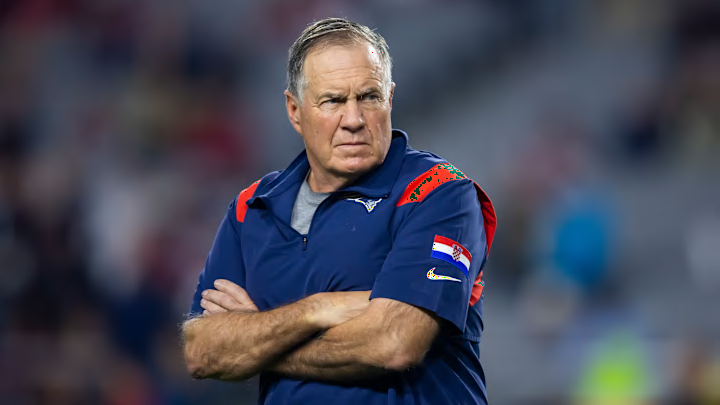
But what happened on Tuesday is different. Appropriate is presenting your own personal thoughts as to why Bill Belichick is not a Hall of Famer and then getting pelted by a sack of vegetables. Inappropriate is denying one of the three greatest coaches in NFL history—a statement that is immensely difficult to argue—entry into the Pro Football Hall of Fame on the first ballot and not immediately being prepared to defend it publicly and with gusto.
Reportedly, Bill Polian led the charge by convincing a not-insignificant number of voters that Belichick should have to wait a year for penance related to Spygate, a ludicrous idea in and of itself made more ludicrous by the fact that it was folded in anonymity (also a report that Polian denied when reached by Sports Illustrated, though cannot disprove if the votes remain anonymous). Again, it’s one thing to believe it. It’s another to form the groundswell of an ideological movement that embarrasses the Hall of Fame and further risks the ability of voters to be taken seriously as chroniclers of the sport.
Even if you removed Belichick’s record before he was accused in the Spygate scandal, which took place in 2007, he would have finished his career with 12 playoff appearances, four Super Bowl berths and three Super Bowl victories, atop one of the most historically significant stints as a coordinator in league history. A Super Bowl game plan that literally has its own display in Canton, Ohio.
And, while we’re talking about sign stealing—the legal version of which has become incredibly prevalent in the NFL due to its pervasiveness at the collegiate level and quarterbacks’ dependence on having a wealth of presnap information—there are now two sitting NFL head coaches associated with the largest illegal sign stealing scandal in NCAA history, a notion that I, an obsessive consumer of NFL content, have not seen many written protests about. If it’s truly that big of a deal, I would like to see the same energy applied to Jim Harbaugh. Instead, we celebrate the coach’s more playful, media-friendly personality like he’s the second coming of Norm Macdonald.
A few people associated with the process—and here’s a fine primer from Mike Sando of The Athletic—noted that Belichick may have missed due to flaws in the actual process itself. The coach and contributor category, in being blended with the senior category, forces those who are advocating for certain names to cross-prioritize. If this is the case, the process needs to be torn to the studs, even if the original intent was to fix the exclusivity issue that previously plagued the Hall.
Unfortunately, it’s going to be impossible to separate the nuances of a process with the far more flammable notion that football writers hate Belichick because he was terse at the podium.
Regardless of how you feel about the push and pull for credit between Belichick and quarterback Tom Brady, and regardless of how you feel about Belichick’s notoriously prickly personality and questionable post–New England life choices, and regardless of how all of this was adjudicated behind closed doors, it’s almost impossible to live in a world where this man is not worthy of Hall of Fame entry on the first vote. Belichick created the kind of meritocracy in which Brady was able to rise. Let’s be real: If Brady were taken in the fifth round by the Cardinals, would we be talking about the greatest player in NFL history?
This is a watershed moment for the Hall of Fame and, more so, a disastrous moment for a profession in which, no matter how hard we try and how earnest our efforts are, we inevitably find a serrated-edge rake to step on à la Sideshow Bob.
The NFL already punished Bill Belichick. It punished the Patriots. It is not our job to use the very limited powers at our disposal to punish him further for a scandal in which the fallout is a matter of conjecture—again, especially considering how successful Belichick was even after he got caught. If that were the case, then boy do we have a lot of revisionist history to attend to behind the hallowed walls.
If it’s a process issue, fix it tonight. If it’s an issue of misunderstanding, correct it now. If it’s an issue of personal scorekeeping and score settling, weed out the bad actors before it’s too late (it sure feels like it’s too late).
The Hall of Fame has, once again, failed to live up to its expectations. On a day like today, it deserves all of the figurative eggs splattered on its facade. There is no way to facilitate public trust when we can’t even tap in the cases that are right on the edge of the cup.
More NFL on Sports Illustrated
 Add us as a preferred source on Google
Conor Orr is a Senior Writer for Sports Illustrated with more than 15 years of experience covering the NFL. His work has been cited in Best American Sportswriting and has won a PFWAA award. Prior to Sports Illustrated, he covered both the Giants and Jets for The Star-Ledger. Conor lives in New Jersey with his amazing wife and three children.
Follow author