%20%20--%3E%0A%3Csvg%20version%3D%221.1%22%20id%3D%22Layer_1%22%20xmlns%3D%22http%3A%2F%2Fwww.w3.org%2F2000%2Fsvg%22%20xmlns%3Axlink%3D%22http%3A%2F%2Fwww.w3.org%2F1999%2Fxlink%22%20x%3D%220px%22%20y%3D%220px%22%0A%09%20width%3D%2239px%22%20height%3D%2240px%22%20viewBox%3D%220%200%2039%2040%22%20enable-background%3D%22new%200%200%2039%2040%22%20xml%3Aspace%3D%22preserve%22%3E%0A%3Cpath%20fill%3D%22%23FFFFFF%22%20d%3D%22M38.5%2C7H28.2v26h10.3V7z%22%2F%3E%0A%3Cpath%20fill-rule%3D%22evenodd%22%20clip-rule%3D%22evenodd%22%20fill%3D%22%23FFFFFF%22%20d%3D%22M26.1%2C25.5c0%2C5.8-4.1%2C7.5-12.9%2C7.5C3.9%2C33%2C0%2C31.2%2C0%2C25.2v-1.1h11.6%0A%09v2.4c0%2C0.7%2C0.1%2C1.4%2C1.2%2C1.4c1%2C0%2C1.2-0.4%2C1.2-1.3v-0.9c0-1.6-0.9-1.6-3.5-2.2C2.2%2C21.7%2C0%2C19.7%2C0%2C15.3v-0.9C0%2C9.3%2C5.5%2C7%2C12.9%2C7%0A%09c10.2%2C0%2C12.8%2C2.6%2C12.8%2C7.4v1.8h-11v-2.9c0-0.6-0.4-1.1-1.2-1.1c-0.6%2C0-1.2%2C0.4-1.2%2C1.1v0.9c0%2C1.5%2C0.9%2C2%2C3.3%2C2.5%0A%09c8%2C1.6%2C10.5%2C3.3%2C10.5%2C7.5V25.5z%22%2F%3E%0A%3C%2Fsvg%3E%0A)
Steve McMichael’s CTE Diagnosis Should Slow Talk of an 18-Game Season
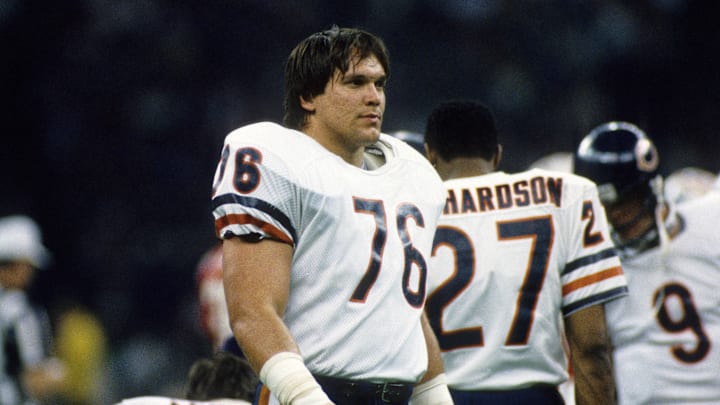
Another NFL legend has died with a confirmed diagnosis of CTE. Steve McMichael, or “Mongo,” a bearish, hulking defensive tackle who was enshrined in the Hall of Fame in 2024 and died almost a year ago, is now confirmed to have had chronic traumatic encephalopathy, the degenerative brain condition which has swept through the league’s retirees like a not-so-silent plague.
McMichael died after a yearslong battle with ALS, which, as McMichael’s wife, Misty, pointed out after the revelation of his CTE became public this week, is an all too common blend of ailments contracted by players whose brains have been studied posthumously. NFL players are four times more likely to have contracted ALS, also known as Lou Gehrig’s disease, than the general population.
Because of what we do not know about CTE, and because of our relative inability to cross that invisible red line in our American psyche and question why we do things the way that we do them (and, really, why we accept certain deaths and ailments and conditions as some cost of doing business … not just in football), we’re never going to get to the heart of the matter. At least enough to satisfy the idealist inside us all. The Football is Life Lessons crowd is always going to downplay the trauma. The Football is Trauma crowd is always going to downplay the beauty of the sport and, yes, the very real benefits of existing as part of a larger, unified culture. We can’t seem to view it the way we do a successful marriage, which is almost always messy and complicated and necessitating the acceptance of factors we would otherwise consider nonnegotiables.
The issue, just as it would be in a marriage, is a creeping indifference which seems to be dominating the conversation when it comes to its darkest components. A few years back, while reporting a piece on the legalization of the Guardian Cap, I talked to a player who, essentially, said that he felt he’d done all the damage he could possibly do to his brain and was ready to live with the consequences. Giants running back Cam Skattebo recently had to apologize for saying on a podcast that he believed CTE wasn’t real. We still have players at the height of their athletic skill retiring in steady streams.
When set against the backdrop of a push to extend the schedule another week, it feels as though the part of us that should hold onto the very real repercussions of football is dimming yet again. McMichael’s revelation should galvanize, or at least force a conversation about what an additional week of football is going to accomplish in the long term. It should not be the benchmark we identify as the moment people stopped caring altogether.
And while it’s fair to acknowledge that we don’t know how modern rule and practice changes will affect a later generation of football players—perhaps alterations to the kickoff, the addition of Guardian Caps, the limitations on practice time and so forth will decrease the pool of players who are posthumously diagnosed with CTE—it should be an almost universally accepted belief that more football in a sport that already has an impossible time keeping its best players on the field and in a space of physical and mental well being immediately after their careers are over will not help.
Defenders of the inherent dangers of football often cite driving as an example. We go into every trip in a motor vehicle aware of the fact that an accident is well above a statistically insignificant possibility. But there is nothing we do to actively make drives longer or more difficult. We pocket a GPS system that gets us off the road as quickly and efficiently as possible. We invest in self-driving or auto-piloted vehicles that are trained to halt at the emergence of a squirrel.
So, the proposal: Table the discussion and the dreadfully unsubtle push for another game until we can feel confident in the progress we’re making to create a healthier and more sustainable NFL. Allow the legacy of players like McMichael (a first-team All-Pro on the famed 1985 Bears’ defense) and the very clear wishes of his family and the countless other families that have donated the brains of their loved ones to be studied, to be the speed bump it was intended to be.
Again, the goal is not to abolish football or turn it into a shell of itself. The goal is to progress at a pace aligned with the realities of those who have to live a life after they’re finished and use that feedback to inform the product as it is. While I despise the football and war comparison, military enlistment declined at a steady rate for almost four decades after Vietnam, which may in no small part be due to the disillusionment that followed from observing those who returned (or didn’t). Part of McMichael’s story deserves to be, at the very least, a conversation piece as to why an 18-game regular season must wait. Not be abolished forever. Not be tabled indefinitely. But considered enough that we feel those who have sacrificed themselves before the matter are part of the conversation.
More NFL From Sports Illustrated
 Add us as a preferred source on Google
Conor Orr is a Senior Writer for Sports Illustrated with more than 15 years of experience covering the NFL. His work has been cited in Best American Sportswriting and has won a PFWAA award. Prior to Sports Illustrated, he covered both the Giants and Jets for The Star-Ledger. Conor lives in New Jersey with his amazing wife and three children.
Follow author