%20%20--%3E%0A%3Csvg%20version%3D%221.1%22%20id%3D%22Layer_1%22%20xmlns%3D%22http%3A%2F%2Fwww.w3.org%2F2000%2Fsvg%22%20xmlns%3Axlink%3D%22http%3A%2F%2Fwww.w3.org%2F1999%2Fxlink%22%20x%3D%220px%22%20y%3D%220px%22%0A%09%20width%3D%2239px%22%20height%3D%2240px%22%20viewBox%3D%220%200%2039%2040%22%20enable-background%3D%22new%200%200%2039%2040%22%20xml%3Aspace%3D%22preserve%22%3E%0A%3Cpath%20fill%3D%22%23FFFFFF%22%20d%3D%22M38.5%2C7H28.2v26h10.3V7z%22%2F%3E%0A%3Cpath%20fill-rule%3D%22evenodd%22%20clip-rule%3D%22evenodd%22%20fill%3D%22%23FFFFFF%22%20d%3D%22M26.1%2C25.5c0%2C5.8-4.1%2C7.5-12.9%2C7.5C3.9%2C33%2C0%2C31.2%2C0%2C25.2v-1.1h11.6%0A%09v2.4c0%2C0.7%2C0.1%2C1.4%2C1.2%2C1.4c1%2C0%2C1.2-0.4%2C1.2-1.3v-0.9c0-1.6-0.9-1.6-3.5-2.2C2.2%2C21.7%2C0%2C19.7%2C0%2C15.3v-0.9C0%2C9.3%2C5.5%2C7%2C12.9%2C7%0A%09c10.2%2C0%2C12.8%2C2.6%2C12.8%2C7.4v1.8h-11v-2.9c0-0.6-0.4-1.1-1.2-1.1c-0.6%2C0-1.2%2C0.4-1.2%2C1.1v0.9c0%2C1.5%2C0.9%2C2%2C3.3%2C2.5%0A%09c8%2C1.6%2C10.5%2C3.3%2C10.5%2C7.5V25.5z%22%2F%3E%0A%3C%2Fsvg%3E%0A)
Explaining How the Super Bowl Referees Are Chosen
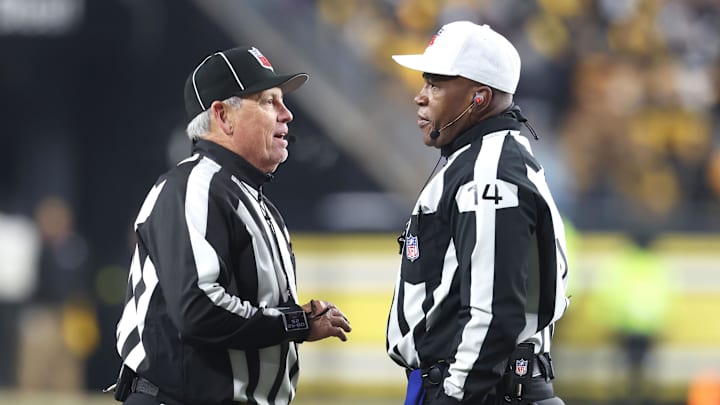
As we saw first-hand during the divisional round of the 2025 playoffs, an officiating call has the power to make or break an NFL game. And no NFL game is more important than the Super Bowl.
So of course, the NFL takes a little extra care in selecting the officials for the championship contest, lest a subject ruling or rookie mistake overshadow what is meant to be the highlight of most football players' careers.
Below, let's take a look at how that process goes down:
How are Super Bowl referees chosen?
The “audition process,” if you will, to become a Super Bowl referee starts at the beginning of the season. From that first snap on, the NFL is watching, analyzing and grading the performance of every official working every game. When it’s time to build the Super Bowl crew, the highest-rated individual at each position is then tapped to work the big game.
There is an added wrinkle there, though; each official must also meet the qualifications to work a championship game before they are selected. To referee a Super Bowl, an official must first have five years of NFL experience, three years of experience as an NFL referee specifically, and have worked one playoff game as a referee in a previous season. For all other officiating positions, an official needs five years of NFL experience and to have worked either one career conference championship or three playoff-qualifying seasons in the previous five years.
Who are the referees for Super Bowl LX?
Here's a look at the full seven-person officiating crew (plus the replay official) for Super Bowl LX on Sunday, Feb. 8:
Position | Name |
|---|---|
Referee | Shawn Smith |
Umpire | Roy Ellison |
Down Judge | Dana McKenzie |
Line Judge | Julian Mapp |
Field Judge | Jason Ledet |
Side Judge | Eugene Hall |
Back Judge | Greg Steed |
Replay Official | Andrew Lambert |
What is the job of each officiating position?
Per the NFL’s operations website, these are some of the general responsibilities for each on-field officiating position.
Note: Each official has responsibilities beyond what is listed below. For more information, click here.
Role | Position | General Responsibilities |
|---|---|---|
Referee/Crew Chief | The offensive backfield. | Wears the white cap; oversees everything related to the officials and maintains the pace of the game, etc. |
Umpire | Primarily stands opposite the referee. | Reviews equipment; counts offense on field; watches for offensive holding, etc. |
Down Judge | On sideline, directly on LOS (line of scrimmage). | Directs chain crew; watches for offsides and encroachment, etc. |
Field Judge | Defensive backfield. Same sideline as line judge, 25 yards down from LOS. | Watches receivers for illegal use of hands, etc.; watches DBs for penalties, etc. |
Side Judge | Same sideline as down judge, 25 yards down from LOS. | Acts as primary timekeeper if game clock malfunctions; watches receivers for illegal use of hands and fouls; counts defensive players on field, etc. |
Back Judge | Deep defensive backfield. 30 yards downfield. | Counts defensive players on field; keeps track of 40- or 25-second game clock and manages TV breaks |
Line Judge | Opposite sideline from down judge, looking down LOS. | Watches for offsides and encroachment; counts defensive players on field, etc |
More NFL on Sports Illustrated
 Add us as a preferred source on Google
Brigid Kennedy is a writer for the Features and Franchises team at Sports Illustrated. Before joining SI in November 2024, she covered political news, sporting news and culture at TheWeek.com before moving to Livingetc, an interior design magazine. She is a graduate of Syracuse University, dual majoring in television, radio and film (from the Newhouse School of Public Communications) and marketing managment (from the Whitman School of Management). Offline, she enjoys going to the movies, reading and watching the Steelers.