%20%20--%3E%0A%3Csvg%20version%3D%221.1%22%20id%3D%22Layer_1%22%20xmlns%3D%22http%3A%2F%2Fwww.w3.org%2F2000%2Fsvg%22%20xmlns%3Axlink%3D%22http%3A%2F%2Fwww.w3.org%2F1999%2Fxlink%22%20x%3D%220px%22%20y%3D%220px%22%0A%09%20width%3D%2239px%22%20height%3D%2240px%22%20viewBox%3D%220%200%2039%2040%22%20enable-background%3D%22new%200%200%2039%2040%22%20xml%3Aspace%3D%22preserve%22%3E%0A%3Cpath%20fill%3D%22%23FFFFFF%22%20d%3D%22M38.5%2C7H28.2v26h10.3V7z%22%2F%3E%0A%3Cpath%20fill-rule%3D%22evenodd%22%20clip-rule%3D%22evenodd%22%20fill%3D%22%23FFFFFF%22%20d%3D%22M26.1%2C25.5c0%2C5.8-4.1%2C7.5-12.9%2C7.5C3.9%2C33%2C0%2C31.2%2C0%2C25.2v-1.1h11.6%0A%09v2.4c0%2C0.7%2C0.1%2C1.4%2C1.2%2C1.4c1%2C0%2C1.2-0.4%2C1.2-1.3v-0.9c0-1.6-0.9-1.6-3.5-2.2C2.2%2C21.7%2C0%2C19.7%2C0%2C15.3v-0.9C0%2C9.3%2C5.5%2C7%2C12.9%2C7%0A%09c10.2%2C0%2C12.8%2C2.6%2C12.8%2C7.4v1.8h-11v-2.9c0-0.6-0.4-1.1-1.2-1.1c-0.6%2C0-1.2%2C0.4-1.2%2C1.1v0.9c0%2C1.5%2C0.9%2C2%2C3.3%2C2.5%0A%09c8%2C1.6%2C10.5%2C3.3%2C10.5%2C7.5V25.5z%22%2F%3E%0A%3C%2Fsvg%3E%0A)
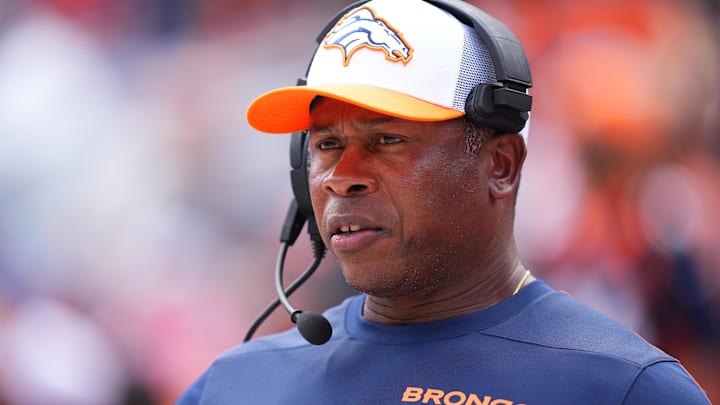
Why Vance Joseph Is Ready to Break a Trend in the Coaching Industry
In this story:
Marvin Lewis entered the 2014 season as head coach of the Bengals with his defensive back room sitting at a kind of emotional crossroads. One of his most important players was young but too coddled by his collegiate experience and had yet to break out in the NFL. Another was a veteran whose play needed to fall in line schematically, or else he’d run the risk of washing out of the NFL altogether.
This represented the totality of what the defensive back room offers to those talented enough to master its nuances: a kind of microcosm of the game’s most skilled yet also most difficult-to-reach players. Coaching this group is a job that requires the ability to create a perfectionist who is psychologically pliable enough to understand that a good pass defender can do everything flawlessly but still surrender a catch.
“Jim Caldwell told me a long time ago that it’s like those high-performance automobiles,” Lewis says today. “It’s high performance, high maintenance. And a lot of your better players, particularly when they’re young, they’re high maintenance. And you have to, as a position coach, as a coordinator, and then the head coach, you have to have the ability to reach those guys.”
For the task, Lewis appointed a coach who’d been put on his radar years earlier. Lewis watched the assistant from afar on other teams and in other jobs, knowing that the two might cross paths.
The Bengals ranked in the top three in both interceptions and passing touchdowns allowed in each of the next two seasons. The player whom Lewis felt was coddled—Dre Kirkpatrick, the team’s former first-round pick out of Alabama—tied a career high in interceptions one season, and set a high in solo tackles and passes defensed the second season. The player whom Lewis knew needed to change his playstyle—Adam “Pacman” Jones—allowed on average fewer than 60% of the passes thrown in his direction to be completed, according to PFF charting data from those two years. In those two years, Jones’s age-31 and 32 seasons, he made his lone All-Pro team and lone Pro Bowl.
After that, Lewis knew he wasn’t going to be able to hold on to his defensive backs coach, Vance Joseph, much longer.
“When you have him building like I did, then you’re so fortunate to see all sides of him,” Lewis says. “His ability to relate to the players and to deal with the hard to deal with.”
A decade later, Joseph, now 53, is riding into this head coaching cycle on the heels of two consecutive seasons as arguably the league’s best defensive coordinator. Since 2024, the Broncos have led the league in rushing success rate allowed, as well as dropback success rate by opposing quarterbacks. Denver’s EPA per play over that time ranks third behind only the Vikings and Texans.
Denver was second in net yards per passing play allowed and first in points per drive allowed in 2024 and, this season, is first in net yards per passing play allowed and third in points per drive.
Of the Broncos’ 14 wins this season, all but four featured Joseph’s defense holding an opponent under 20 points. Denver’s offense, which typically gets top billing due to Sean Payton’s reputation and Bo Nix’s star rise, is 18th in net passing yards per attempt and 19th in points per drive.
Denver is the 13th best red zone offense in the NFL this year. Defensively? It’s No. 1. The Broncos finished the season leading the NFL in sacks (68, four short of the Bears’ record of 72 from 1984) with more than 11 over the second-place Falcons. Three Broncos defenders made the Pro Bowl: Pat Surtain II, Nik Bonitto and Zach Allen.
It’s a résumé that has Joseph primed for a busy week of virtual interviews while the Broncos are enjoying a first-round bye. Having already been requested to interview for the Titans’ vacancy (which, per a source familiar with the situation, will take place Wednesday), Joseph, along with former Dolphins head coach and Vikings defensive coordinator Brian Flores, is good enough to challenge the idea that defensive coaches only get one shot at a head coaching gig. Joseph is the divisional thorn of the Raiders, another team with a head coaching vacancy, and a former defensive coordinator of the Cardinals, where in his final 12 matchups against divisional stalwarts Sean McVay and Kyle Shanahan, Joseph held those offenses to 20 points or fewer eight times (something Jonathan Gannon, who was let go on Monday, managed to do only three times in his three seasons as head coach). A person familiar with the situation expects Joseph to get interviews with the Giants, Raiders and Cardinals in addition to the Titans.
In short, ignore the Joseph comeback bid at your own peril.
“The man just wants to be a good football coach,” Lewis says. “He deserves an opportunity to become a head coach again.”
There’s 10:31 remaining in a Week 8 game between the Broncos and Cowboys.
Dak Prescott is in pistol with a fullback to his left and a running back behind him. George Pickens is out wide to his left, CeeDee Lamb is out wide to his right and Jake Ferguson is up and motioning toward Lamb.
Prescott is looking out at what has become Vance’s calling card in Denver; a kind of Kryptos puzzle that the coordinator has weaponized and turned into a hydra for opposing quarterbacks trying to process the field before the snap.
It’s a five-man front that is always shifting, with everyone capable of dropping back into coverage or, a little more than 25% of the time, outright blitzing (Denver is eighth in the NFL in percentage of defensive snaps with a blitz, making Joseph one of the more selectively aggressive coordinators in the NFL this season).
In this case, Prescott surveys the five-man front and, as he looks to Pickens shortly after the drop-back, Broncos outside linebacker Dondrea Tillman quickly shifts his feet from a stand-up rush posture to a drop-back stance and subtly drifts into the secondary. Because of the front, Prescott is likely assuming—and on this play behaved like—the Broncos are going to bring five- or even six-man pressure, or a fire zone look, a blitz out front of zone coverage on the back end.
Because of this, the Cowboys have what is called a “zone beater” attached to the play, which, in this case, is Lamb running a shallow drive route from the right side of the field to the left. Prescott realizes at the last minute that his initial read on the defense has betrayed him and quickly looks to Lamb for help salvaging the play against what the coverage has actually turned out to be.
The only problem? Tillman is standing right where Lamb is headed. Lamb has already given up on the route and stops altogether, realizing what has happened. Prescott, still itchy from the thought of a possible fire zone or blitz, heaves the ball into the space where he expects his receiver, right into Tillman’s arms.
As one coach familiar with Joseph’s work says, every snap contains pressure, real or imagined.
For this reason, Denver is ranked second in the NFL in percentage of quarterback drop-backs that contain some sort of duress (knockdowns, sacks, pressures and hurries). Observers say Joseph is at his most versatile, with more calls in his belt than ever before, though his best players say he has never been simpler, having pared down the system into something that is digestible enough for a quick installation but that gets to the overarching point of how to dominate defensively in the modern NFL: create enough smoke to defend against the pass on every down and simultaneously manage the fallout in the run game.
Joseph came to Denver after four seasons with the Cardinals. During the 2021 and ’22 seasons, Arizona was a top-seven unit, though his lasting impact on the division was acting as a perpetual annoyance for its best offensive minds.
One former member of McVay’s staff said of playing Joseph twice a season: “He is very sound, dialed in and hard to create explosives on, because he doesn’t give you opportunities to catch him chasing something.”

Joseph succeeded Gary Kubiak in Denver as head coach in 2017, a situation in which he had to manage the remnants of the Peyton Manning era ending and a cavalcade of attempted stopgap solutions, from Trevor Siemien to Brock Osweiler to Paxton Lynch to Case Keenum. While the defense came around and ended up a top-10 unit in both turnovers caused and points allowed, Denver’s offense ended up failing to show enough progress and Joseph was let go after just two seasons.
This is a story familiar to defensive head coaches, who often get siphoned into the quarterback-less jobs and forced to tread water without a life raft.
Kubiak and Joseph started working together nearly a decade prior, when Kubiak was the head coach of the Texans and leaned on Joseph in the same way Lewis did, as a secondary coach managing one of the league’s most temperamental positions.
“Whether Vance has a 21-year-old rookie or a 35-year-old vet, I mean, he has a way with these guys,” Kubiak says. “He just can relate to all of them, being a former player, all that stuff. So, he’s just a really, really good communicator.”
But now, Kubiak has a different perspective on Joseph, one that, he feels, makes Joseph an incredibly valuable commodity for a second-chance head coaching job. He put his thoughts together in a perfect Texas drawl, summing up a career and a life in a way that sounds simplistic but contains the multitudes that only a coach like Kubiak (himself fired as a head coach before getting a second chance and winning a Super Bowl) could understand.
“Vance has been through it,” Kubiak says. “You know what I mean?”
Through it certainly means the hiring and firing as a head coach. It means having to go spend the time immediately after that firing studying and downloading everything from Gary Patterson’s TCU defense to Brent Venables’s Clemson scheme to specialized pressures put on tape from Bowling Green to Toledo—all flourishes one can pick up on Joseph’s scheme today—when you feel like kicking rocks. It means eventually having to take a job with the Broncos as a coordinator and pass the office you once had as a head coach for the smaller one around the corner. It means, while in that job, with another roster in reconstruction, giving up 70 points one week, coming back to work the next day and, a few games after that, holding the eventual Super Bowl–champion Chiefs to just nine.
It means building a defense so sinister that it won’t matter who the quarterback is next time (though Joseph has been linked to Broncos passing-game coordinator and QB coach Davis Webb as a possible offensive coordinator candidate). It means, regardless of what is happening, returning to your roots as a communicator. As a person who can change people, even if everything else is burning to the ground.
This is the plight of the second-chance defensive coordinator. A series of unfair tests that are often rigged against those who want to keep trying to pass them. Becoming smarter, better, more efficient and more modern but realizing in what ways you need to remain yourself.
“All he’s done every year is just keep working for another opportunity in this crazy world of NFL football,” Kubiak says. “So when you look at how he’s gone about his business, he’s never wavered on his belief of who he is and what he stands for. And that’s why he’s ready for another opportunity.”
More NFL From Sports Illustrated
 Add us as a preferred source on Google
Conor Orr is a Senior Writer for Sports Illustrated with more than 15 years of experience covering the NFL. His work has been cited in Best American Sportswriting and has won a PFWAA award. Prior to Sports Illustrated, he covered both the Giants and Jets for The Star-Ledger. Conor lives in New Jersey with his amazing wife and three children.
Follow author