%20%20--%3E%0A%3Csvg%20version%3D%221.1%22%20id%3D%22Layer_1%22%20xmlns%3D%22http%3A%2F%2Fwww.w3.org%2F2000%2Fsvg%22%20xmlns%3Axlink%3D%22http%3A%2F%2Fwww.w3.org%2F1999%2Fxlink%22%20x%3D%220px%22%20y%3D%220px%22%0A%09%20width%3D%2239px%22%20height%3D%2240px%22%20viewBox%3D%220%200%2039%2040%22%20enable-background%3D%22new%200%200%2039%2040%22%20xml%3Aspace%3D%22preserve%22%3E%0A%3Cpath%20fill%3D%22%23FFFFFF%22%20d%3D%22M38.5%2C7H28.2v26h10.3V7z%22%2F%3E%0A%3Cpath%20fill-rule%3D%22evenodd%22%20clip-rule%3D%22evenodd%22%20fill%3D%22%23FFFFFF%22%20d%3D%22M26.1%2C25.5c0%2C5.8-4.1%2C7.5-12.9%2C7.5C3.9%2C33%2C0%2C31.2%2C0%2C25.2v-1.1h11.6%0A%09v2.4c0%2C0.7%2C0.1%2C1.4%2C1.2%2C1.4c1%2C0%2C1.2-0.4%2C1.2-1.3v-0.9c0-1.6-0.9-1.6-3.5-2.2C2.2%2C21.7%2C0%2C19.7%2C0%2C15.3v-0.9C0%2C9.3%2C5.5%2C7%2C12.9%2C7%0A%09c10.2%2C0%2C12.8%2C2.6%2C12.8%2C7.4v1.8h-11v-2.9c0-0.6-0.4-1.1-1.2-1.1c-0.6%2C0-1.2%2C0.4-1.2%2C1.1v0.9c0%2C1.5%2C0.9%2C2%2C3.3%2C2.5%0A%09c8%2C1.6%2C10.5%2C3.3%2C10.5%2C7.5V25.5z%22%2F%3E%0A%3C%2Fsvg%3E%0A)
Re-invented Ronaldo has Real Madrid on Champions League final cusp with hat trick

A hat trick from Cristiano Ronaldo put Real Madrid on the brink of a 15th Champions League final, as Zinedine Zidane’s side beat Atletico Madrid 3-0 in the first leg of their semifinal on Tuesday.
Strangely open early on, Atletico fell behind to a slightly controversial 10th-minute Ronaldo header and never got to grips with the game. Real then picked off its city rival twice on the break as Atletico was forced to chase the game. Next Wednesday’s second leg already feels like a formality as Atletico faces being put out of the Champions League by Real for the fourth consecutive season.
Watch: Cristiano Ronaldo scores hat trick for Real Madrid against Atletico in UCL semis
Here are three thoughts on a one-sided first leg:
Ronaldo is Real's match-winning star again
Ronaldo is not the player he used to be but, strangely, that has arguably made him a more effective player, at least in terms of scoring decisive goals. It would be hard to claim Ronaldo had exerted a consistent influence in Real Madrid’s last three Champions League games–he was even booed by the home fans during the home win over Bayern Munich–and yet he has scored eight goals in them. He is much more of a box player now than he used to be, much less of a dribbler, but he remains a devastating presence, an explosive minimalist, less a footballer than a box of goal potential waiting to be unlocked.
Ronaldo set Real Madrid on its way after 10 minutes with a powerful header, neck muscles rippling in the classic manner of an old-fashioned No. 9. His second came after 73 minutes. Karim Benzema showed great strength and poise, and when Ronaldo had a little good fortune as Filipe Luis’s half-challenge on him popped up nicely, he thrashed in a powerful right-footed finish. The third came with four minutes remaining as Lucas Vazquez got to the line and pulled the ball back for Ronaldo to drive in.
It was his 103rd Champions League goal and his 13th in semifinals, a barely credible record.
Given resources, league underachievement, assessing Real Madrid's true 'greatness'
Did Atletico Madrid gamble too much in pursuit of an away goal?
Diego Simeone had made clear in the build-up that he felt his side needed to score, to diminish the value of a possible Real Madrid goal at the Calderon in the second leg (a very real fear given it has not been held scoreless in its last 59 games), but as the home side dominated the early stages it seemed that thought process had led him to set Atletico up in a dangerously open way. The two center forwards, Kevin Gameiro and Antoine Griezman, both spent the first quarter of an hour high up the field waiting for a break. In that time, not only had Real Madrid scored, but goalkeeper Jan Oblak had been drawn into excellent saves to deny Dani Carvajal and Raphael Varane. As the pair dropped deeper, Atletico began to staunch the flow.
Carvajal was forced off at halftime after landing awkwardly after jumping for an aerial ball. He and Marcelo have been in superb form of late, and, without its regular right back, Real Madrid seemed diminished. Nacho, who has played at center back for much of this season, came on in his place, but the attacking threat on that flank dropped off. That perhaps emboldened Simeone to bring on Nicolas Gaitan after 58 minutes with Yannick Carrasco switching to the opposite flank as the more defensively minded Saul Niguez went off. But Atletico never imposed itself as an attacking threat and Real was a comfortable and deserved winner.
The secret meanings behind soccer crests
Aberdeen FC
In the crest of this Scottish club, the "A" in the center of the crest doubles as a goal, seen from the side, with a ball going over the line.
Atlético Madrid
A bear grazing at a strawberry tree has been a feature of the coat of arms for the City of Madrid since the 13th century. Seven stars represent the Ursa Major constellation, which itself represents a bear. This version of the crest will be in use starting with the 2017-18 season, coinciding with the club's move from the Vicente Calderon stadium to the Wanda Metropolitano.
FC Barcelona
As a club, Barcelona is often regarded as a symbol of Catalonian nationalism. As such, the red and yellow stripes of the Catalonia flag are featured in the upper right side of the crest. On the upper left is the cross of St. George, who is seen as the patron saint of the city of Barcelona. The St. George's cross is also commonly known as the flag of England.
Bayern Munich
The blue and white diamonds come from the flag of Bavaria, the region of Germany where Munich is located. The logo of German car company BMW features the same colors.
SL Benfica
In the background of the crest of this Portuguese club is a bicycle wheel. That's because an earlier incarnation of the club, known as Grupo Sport Benfica, was initially founded with cycling as the main focus.
Boca Juniors
Why are there so many stars? Because Boca Juniors adds one every time it wins something, and it wins a lot of things. At time of writing, there are 52 stars representing a variety of domestic, continental, and international titles. The blue and yellow colors date back to 1906, when the club's members decided to adopt the colors of the next ship to sail into Buenos Aires' La Boca port. The ship came from Sweden, and the color scheme of one of Argentina's most famous soccer clubs was born.
Bohemians Praha
Founded as AFK Vršovice, the Czech Republic squad adopted the kangaroo logo after a tour of Australia in 1927. After the successful tour, the club was awarded two kangaroos, which it donated to the Prague zoo.
Bournemouth
The head in the logo belongs to Dickie Dowsett, a forward who played for Bournemouth in the 1950s and 1960s. At time of writing, he is 85 years old.
Chivas de Guadalajara
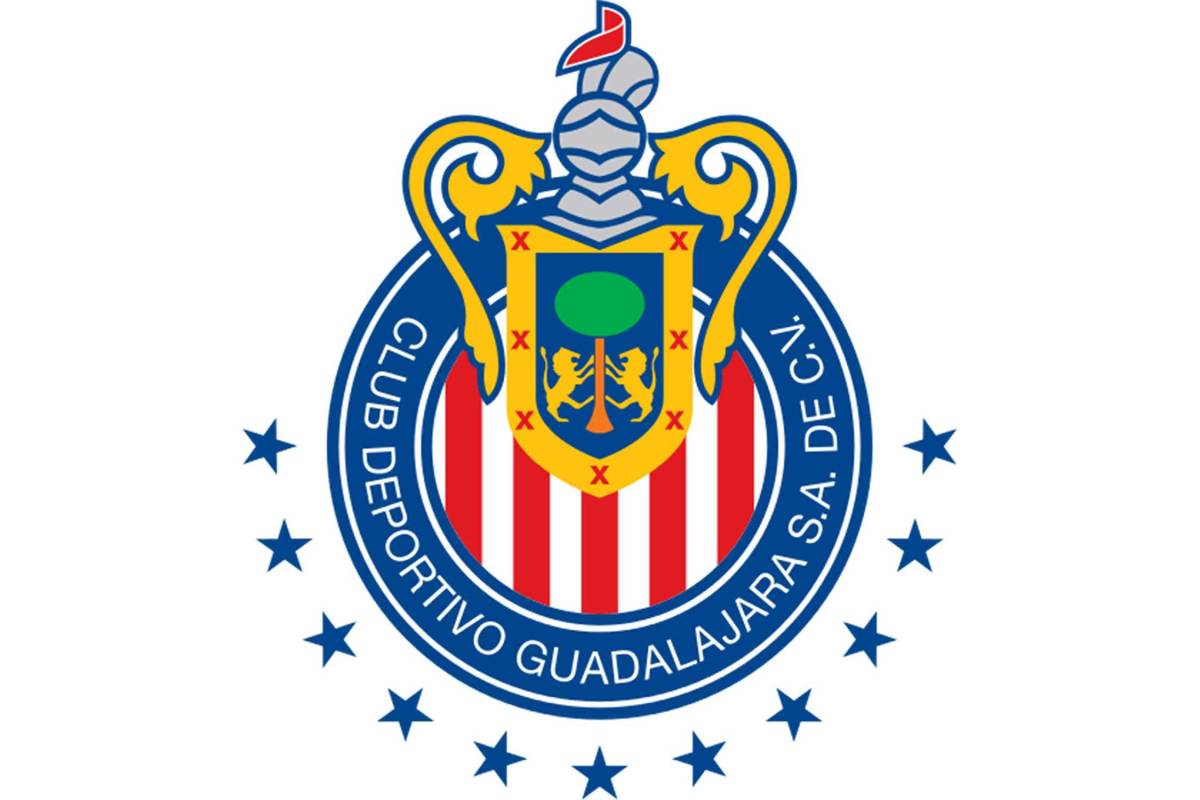
The crown and helmet come from the coat of arms of Guadalajara, granted to the city by Charles V in 1539. The red and white stripes are a reference to the flag of the Belgian city of Brugge, the hometown of club founder Edgar Everaert.
Columbus Crew SC
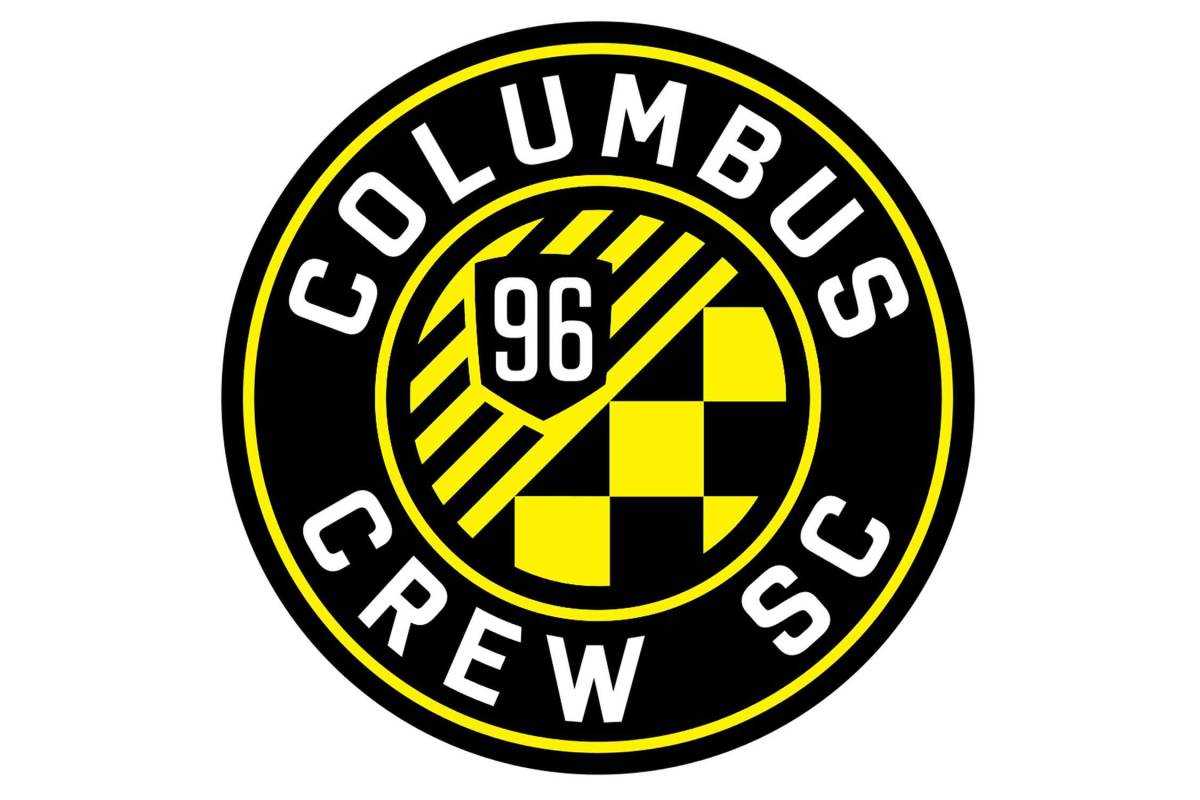
One of MLS's founding clubs, Crew SC re-made its logo in 2014. The circular shape represents the O in its home state of Ohio, nine stripes on the inside stand for the other nine inaugural MLS teams, and the "96" represents the club/league's inaugural year of play. The checkered design in the middle represents the flags waved by the club's supporters.
Dinamo Bucuresti
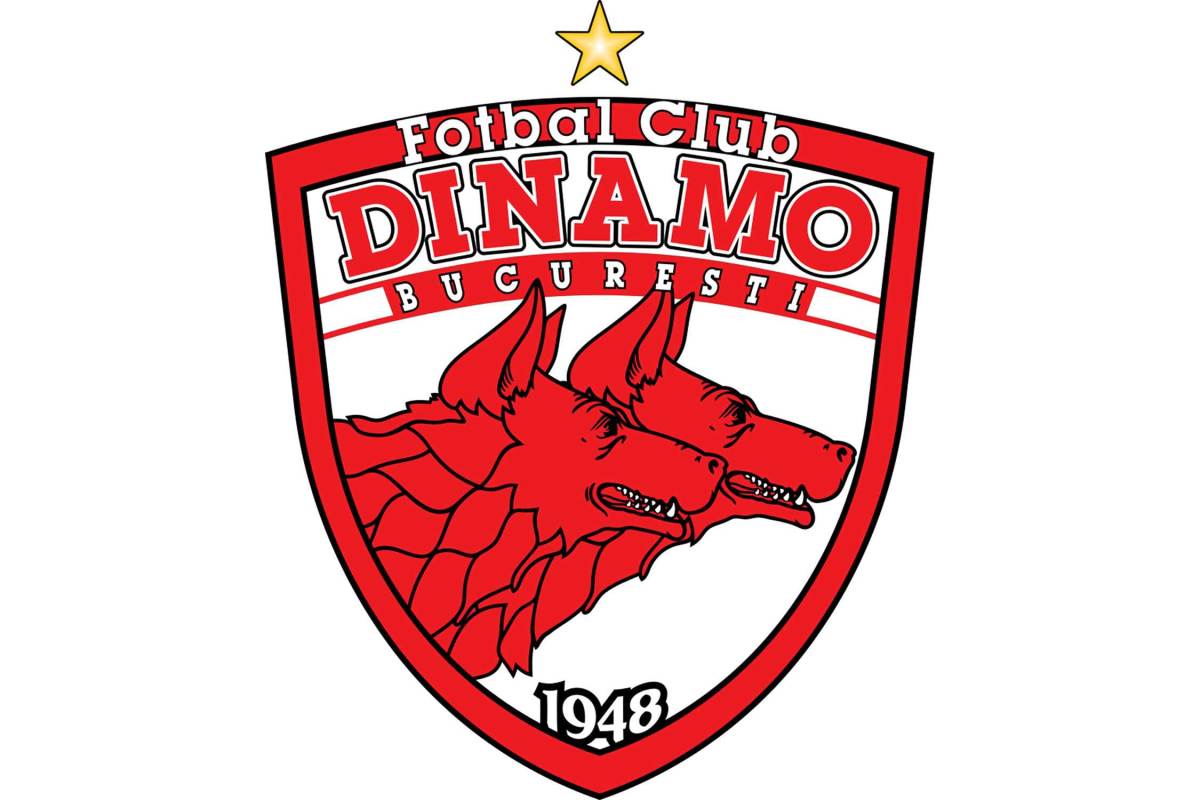
The two red dogs in the club's crest represent Radu and Ion Nunweiller, brothers who played for the club in the 1960s and 70s. Nicknamed the "Red Dogs," the Nunweillers made over 500 appearances for the club, winning six league titles between them. The whole team adopted the "Red Dogs" nickname afterward, and the club brought the dogs to its logo in 1998.
RCD Espanyol
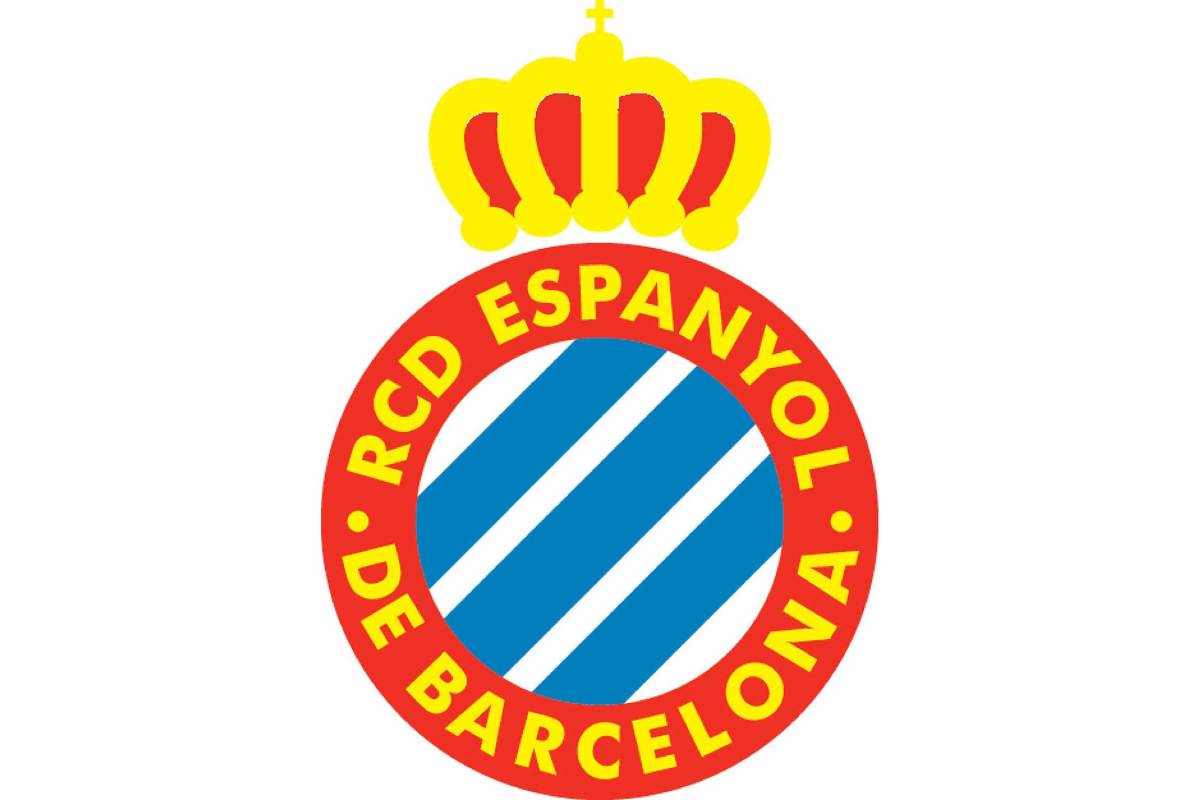
The three blue stripes on the crest of this Barcelona club come from the coat of arms of Roger de Lauria, an admiral that commanded the city's fleet in the 13th century and won many battles.
FC Cologne
In the crest for this German club, the black building in the center of the circle is the city's iconic cathedral–one of the largest in the world. The goat, named Hennes, is the club's mascot. The original Hennes was given to the club's player-coach Hennes Weisweiler during the city's carnival in 1950. He kept the goat, brought it to games, it was named after him, and the club is now on Hennes VIII.
KAA Gent
Buffalo Bill visited the Belgian city of Ghent in 1895 with the Barnum & Bailey Circus and was wildly popular, returning many times thereafter. The American Indian popped up as a symbol of the club in 1920 and has remained ever since.
Heart of Midlothian
Based in Edinburgh, Heart of Midlothian's crest features bricks around the edge of a familiar heart shape. The bricks are a reference to a mosaic built into the The Royal Mile, a famous walkway in the center of Edinburgh. The blue cross in the center recalls the flag of Scotland.
Kaizer Chiefs

Club founder Kaizer Motaung played for the NASL's Atlanta Chiefs from 1968-71. Upon returning to his home country of South Africa he founded his own club in Johannesburg, naming it after himself and his old NASL club. The logo of the club is very similar, if not identical, to that of the Atlanta Chiefs.
Minnesota United FC
One of the newer brands in American soccer, Minnesota United's crest has plenty of references to its club's state. The gray symbolizes the Iron Range, a collection of iron-mining districts in the state. The blue represents the Mississippi River, the star represents the North Star, and the bird featured in the center is the Loon–the state bird.
Stade de Reims
In between the S and R is a symbol meant to represent the "Smiling Angel," a famous sculpture at the Notre Dame de Reims cathedral.
Schalke 04
Surrounding the S (representing the name of the club) and the 04 (representing 1904, the club's founding year) is a large letter G. That stands for Gelsenkirchen, the city where Schalke 04 is based.
Sporting Kansas City
Eleven stripes on one side of the logo represent eleven players on the soccer field. The "SC" on the other side stands for Sporting Club (the team's ownership group), and is designed to look like the snake-and-cross symbol seen in medical applications because many of the owners came from the health care industry. The two sides are separated by an angle representing the border between the states of Missouri and Kansas. Kansas City itself sits roughly right on the point of that angle.
Sydney FC
The look of the logo is meant to mimic the distinctive exterior of the Sydney Opera House, which can also be seen in the background of the logo itself.
Troyes
The country of France is separated into 101 departments, each of which is numbered. That number is then used in zip codes, license plates and for other official uses. Aube, the department where Troyes is based, is No. 10, hence its use in the club's logo.
Sheffield Wednesday
The owl in the crest represents Owlerton, a suburban section of Sheffield where the club's home stadium is located. The club has also adopted the "Owls" as its nickname. The white rose is the white rose of Yorkshire, and can also be found in the logos of regional rivals Sheffield United and Leeds United.
West Ham United
Introduced in 2016, the shape of the new West Ham United crest is modeled after the hull of the HMS Warrior, the first ironclad ship in the British navy, commissioned in 1861. The ship was built by Thames Ironworks, which was the company that formed the club now known as West Ham United. A subtle reference to Thames Ironworks (TIW) can be seen on the hammers in the logo itself.
Did Ronaldo score another offside goal?
Perhaps it wasn’t as gratuitous as his second and third goals in the second leg against Bayern Munich, but there’s a strong argument that Ronaldo’s opening goal should also have been ruled out for offside. He was onside when he powered Casemiro’s cross past Oblak with a typically fine header, but the issue was in the previous phase of play. As Sergio Ramos crossed, Ronaldo was clearly offside.
Stefan Savic headed clear, but given Ronaldo was a couple of feet behind the defender, he was clearly interfering with play. Had Ronaldo not been there, Savic could conceivably have let the cross go, or taken the ball down. At the very least, he could have made his header in more comfort–and one of the reasons Savic couldn’t make a challenge on Ronaldo as Casemiro crossed was that he was still off balance from making that clearance.
Chelsea, Real Madrid clear title race hurdles; PSG slips; Bayern clinches another
That wasn’t the only refereeing decision that went Real Madrid’s way. Isco, having already been booked, caught Koke late just after the hour. Referee Martin Atkinson didn’t see it, but if he had, it could easily have been a second yellow card. Isco had been excellent to that point, but he was withdrawn for Marcos Asensio three minutes later. That perhaps hinted at the pecking order of the forwards, but it was surely also a response to the possible threat of a red card. That said, Atkinson was generally lenient and both Gaitan and Filipe Luis were also fortunate to avoid yellow cards. Regardless, Real Madrid was simply the better team. There may have been quibbles over individual moments, but it would be hard to claim they were decisive.
 Add us as a preferred source on Google
An accomplished author of multiple books, Jonathan Wilson is one of the world’s preeminent minds on soccer tactics and history.