%20%20--%3E%0A%3Csvg%20version%3D%221.1%22%20id%3D%22Layer_1%22%20xmlns%3D%22http%3A%2F%2Fwww.w3.org%2F2000%2Fsvg%22%20xmlns%3Axlink%3D%22http%3A%2F%2Fwww.w3.org%2F1999%2Fxlink%22%20x%3D%220px%22%20y%3D%220px%22%0A%09%20width%3D%2239px%22%20height%3D%2240px%22%20viewBox%3D%220%200%2039%2040%22%20enable-background%3D%22new%200%200%2039%2040%22%20xml%3Aspace%3D%22preserve%22%3E%0A%3Cpath%20fill%3D%22%23FFFFFF%22%20d%3D%22M38.5%2C7H28.2v26h10.3V7z%22%2F%3E%0A%3Cpath%20fill-rule%3D%22evenodd%22%20clip-rule%3D%22evenodd%22%20fill%3D%22%23FFFFFF%22%20d%3D%22M26.1%2C25.5c0%2C5.8-4.1%2C7.5-12.9%2C7.5C3.9%2C33%2C0%2C31.2%2C0%2C25.2v-1.1h11.6%0A%09v2.4c0%2C0.7%2C0.1%2C1.4%2C1.2%2C1.4c1%2C0%2C1.2-0.4%2C1.2-1.3v-0.9c0-1.6-0.9-1.6-3.5-2.2C2.2%2C21.7%2C0%2C19.7%2C0%2C15.3v-0.9C0%2C9.3%2C5.5%2C7%2C12.9%2C7%0A%09c10.2%2C0%2C12.8%2C2.6%2C12.8%2C7.4v1.8h-11v-2.9c0-0.6-0.4-1.1-1.2-1.1c-0.6%2C0-1.2%2C0.4-1.2%2C1.1v0.9c0%2C1.5%2C0.9%2C2%2C3.3%2C2.5%0A%09c8%2C1.6%2C10.5%2C3.3%2C10.5%2C7.5V25.5z%22%2F%3E%0A%3C%2Fsvg%3E%0A)
European Championship Moved to 2021, May Still Be Called Euro 2020
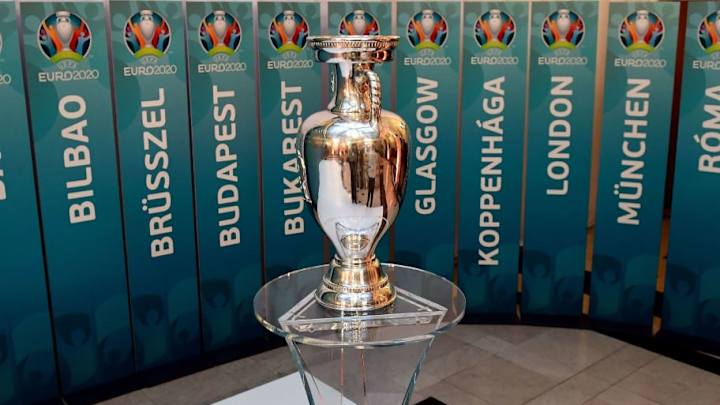
As part of the coronavirus pandemic that is causing just about every sports organization and league to restructure its calendar, UEFA pushed its European Championship by a year to 2021. But it still might known as Euro 2020.
UEFA appeared to make that clear on Friday, as it answered some lingering questions regarding its showpiece international event and the other loose ends left by the indefinite, virus-induced suspensions.
"We trust that all of our venues will remain the same, ensuring the tournament remains true to its original vision: staging a truly Europe-wide event that befits the Euro's 60th birthday. The tournament will still be known as UEFA Euro 2020," UEFA wrote in a statement that was then followed by a retraction.
With apologies for the earlier error, to be clear no decision has yet been made on the name of the rearranged EURO to be held in 2021.
— UEFA (@UEFA) March 20, 2020
The earlier tweet was sent by mistake.
The tournament was supposed to be staged this summer across 12 cities: London; Munich; Dublin; Rome; Amsterdam; Baku, Azerbaijan; Budapest, Hungary; Saint Petersburg, Russia; Bucharest, Romania; Bilbao, Spain; Glasgow, Scotland; and Copenhagen, Denmark. That is not expected to change. Any tickets purchased for Euro 2020 will be fully refunded, though fans who bought tickets will also have the chance to keep them for the postponed 2021 edition.
Due to moving the Euros, UEFA did indicate plans to reschedule the women's European Championship, which was supposed to be played next summer and has reportedly been pushed to 2022; the 2020-21 Nations League finals; and the U-21 European Championship. FIFA also acknowledged that the expanded Club World Cup that was supposed to be launched in the summer of 2021 will be pushed to a later date.
"We believe moving Euro 2020 is the best solution for European football," UEFA wrote. "We hope it will help all international and domestic competitions that are currently on hold to be completed.
"The consensus behind this approach, which bridges our 55 member associations, FIFPro and representatives of Europe's leagues and clubs, underlines the football community's unity in addressing the impact of COVID-19. In a time of unprecedented challenges, our sport is demonstrating its best qualities: strength, solidarity and tolerance."
 Add us as a preferred source on Google
Avi Creditor is a senior editor and has covered soccer for more than a decade. He’s also a scrappy left back.