%20%20--%3E%0A%3Csvg%20version%3D%221.1%22%20id%3D%22Layer_1%22%20xmlns%3D%22http%3A%2F%2Fwww.w3.org%2F2000%2Fsvg%22%20xmlns%3Axlink%3D%22http%3A%2F%2Fwww.w3.org%2F1999%2Fxlink%22%20x%3D%220px%22%20y%3D%220px%22%0A%09%20width%3D%2239px%22%20height%3D%2240px%22%20viewBox%3D%220%200%2039%2040%22%20enable-background%3D%22new%200%200%2039%2040%22%20xml%3Aspace%3D%22preserve%22%3E%0A%3Cpath%20fill%3D%22%23FFFFFF%22%20d%3D%22M38.5%2C7H28.2v26h10.3V7z%22%2F%3E%0A%3Cpath%20fill-rule%3D%22evenodd%22%20clip-rule%3D%22evenodd%22%20fill%3D%22%23FFFFFF%22%20d%3D%22M26.1%2C25.5c0%2C5.8-4.1%2C7.5-12.9%2C7.5C3.9%2C33%2C0%2C31.2%2C0%2C25.2v-1.1h11.6%0A%09v2.4c0%2C0.7%2C0.1%2C1.4%2C1.2%2C1.4c1%2C0%2C1.2-0.4%2C1.2-1.3v-0.9c0-1.6-0.9-1.6-3.5-2.2C2.2%2C21.7%2C0%2C19.7%2C0%2C15.3v-0.9C0%2C9.3%2C5.5%2C7%2C12.9%2C7%0A%09c10.2%2C0%2C12.8%2C2.6%2C12.8%2C7.4v1.8h-11v-2.9c0-0.6-0.4-1.1-1.2-1.1c-0.6%2C0-1.2%2C0.4-1.2%2C1.1v0.9c0%2C1.5%2C0.9%2C2%2C3.3%2C2.5%0A%09c8%2C1.6%2C10.5%2C3.3%2C10.5%2C7.5V25.5z%22%2F%3E%0A%3C%2Fsvg%3E%0A)
Every New Rule Confirmed for 2026–27 Premier League Season
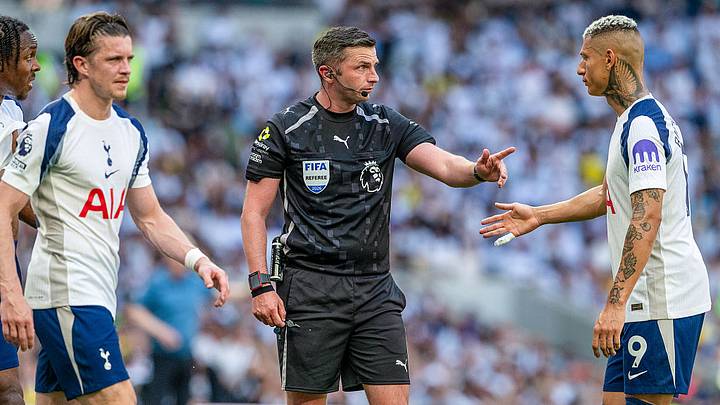
The Premier League is implementing an array of new rules for the 2026–27 Premier League season, all of which were initially trialed at this summer’s World Cup.
The majority of fresh regulations are being enforced to limit timewasting and frequent disruptions to the tempo of matches—a growing problem across recent campaigns in English soccer.
Attempts to thwart the dark arts should result in the ball being in play for more time every match, but without increasing the amount of stoppage time at the end of each half, as per BBC Sport.
With that in mind, here are all the new rules supporters need to be aware of for the 2026–27 season—and don’t worry, there are no hydration breaks!
New Rules for 2026–27 Premier League Campaign
Substitutions

Let’s begin with substitutions. A classic timewasting tactic employed by coaches and players should be snuffed out by the confirmed rule changes.
Next season, substituted players must leave the field within 10 seconds at the nearest point available.
Failure to do so will result in the substitute being forced to wait a minute before entering the pitch, and their team subsequently playing with 10 men. After a minute, the substitute must wait until the next stoppage in play to come on.
The time limit should prevent players from slowly wandering off the field to waste time, as well as stopping managers from making late substitutions in matches merely to disrupt the flow.
The only reason the new regulation will not be enforced is if a player is struggling with injury, or if there are safety concerns over them leaving the field at its nearest point.
Throw-ins

There will be a five-second countdown for players taking throw-ins next season, with that countdown beginning once the referee deems a player is intentionally halting play.
The referee will blow their whistle and demand the player hurry up to alert him to the beginning of the countdown, after which they will physically count down from five to zero using one hand.
If a player takes longer than five seconds after the countdown commences, the referee will blow their whistle again and give the throw-in to the opposing team.
However, it’s worth noting that this rule will not apply to players taking a long throw—unless they are considered to be purposefully taking too long—as this is deemed a genuine set piece tactic.
Goal Kicks

Goalkeepers are often guilty of delaying the restart at goal kicks, especially as matches progress toward the dying embers.
Players can already be booked for taking too long at a goal kick, but referees are now able to award the opposition a corner kick in that eventuality.
Also, there has been a clarification over potential handballs at goal kicks.
There have been multiple occasions previously in which a goalkeeper has passed the ball to his center back in the six-yard box, after which the defender handles the ball and attempts to take the goal kick again. Sometimes this has been punished with the concession of a penalty, while other instances have gone unpunished.
Moving forward, however, the goal kick is deemed to have been taken as soon as the goalkeeper or defender kicks the ball. After this point, a defender handling the ball will concede a spot kick, while a goalkeeper handling will surrender an indirect free kick.
Injuries and Timeouts

Last season, injured players who required treatment from their club’s medical team were made to leave the field for 30 seconds. That has now been upped to 60 seconds.
Not only this, injured players must now sit out for a minute if they prevent the referee from restarting the match, even if physios aren’t required to treat the condition. This doesn’t apply if the ball goes out of play naturally, though, such as for a goal kick or corner.
The new rule isn’t applicable if the player who committed the foul is booked or sent off. In this instance, the injured player can instantly re-enter the field.
Goalkeeper timeouts have proven increasingly frustrating over recent years. This involves a team’s stopper going down injured, thus slowing the play and allowing managers to offer their players tactical instructions.
However, this is no longer possible. If a goalkeeper requests medical aid, their manager must select an outfield player to leave the field for a minute within 10 seconds. If that time limit is breached, the captain will be forced to exit.
VAR Changes

There are several extra responsibilities for the Video Assistant Referee (VAR) next season.
Firstly, when a player is sent off for two bookable offenses, the second yellow card can now be assessed by the VAR. However, the only way the red card will be overturned is if the award of the foul was an obvious error, rather than due to any subjective debate over whether a yellow card was merited.
Secondly, the VAR can now review if a foul has been committed before a set-piece has actually been taken, but only if it directly leads to a goal, penalty or disciplinary action.
For example, if an attacking team scores from a corner but one of their players committed a foul before the cross was delivered, the VAR will recommend that the goal is disallowed and the corner is retaken.
Finally, the VAR is able to weigh in on cases of mistaken identity. For example, if the wrong team was penalized for a handball, that decision can be reversed.
 Add us as a preferred source on Google
Ewan Ross-Murray is a soccer writer for SI FC. He boasts years of experience following his First Class Honours in Journalism from the University of Leicester, producing a variety of content from match reports and news pieces to more extensive features on an array of topics. With Scottish, Welsh and English heritage, Ross-Murray’s soccer influences are far-ranging, but his primary focus is on the Premier League and Champions League.