%20%20--%3E%0A%3Csvg%20version%3D%221.1%22%20id%3D%22Layer_1%22%20xmlns%3D%22http%3A%2F%2Fwww.w3.org%2F2000%2Fsvg%22%20xmlns%3Axlink%3D%22http%3A%2F%2Fwww.w3.org%2F1999%2Fxlink%22%20x%3D%220px%22%20y%3D%220px%22%0A%09%20width%3D%2239px%22%20height%3D%2240px%22%20viewBox%3D%220%200%2039%2040%22%20enable-background%3D%22new%200%200%2039%2040%22%20xml%3Aspace%3D%22preserve%22%3E%0A%3Cpath%20fill%3D%22%23FFFFFF%22%20d%3D%22M38.5%2C7H28.2v26h10.3V7z%22%2F%3E%0A%3Cpath%20fill-rule%3D%22evenodd%22%20clip-rule%3D%22evenodd%22%20fill%3D%22%23FFFFFF%22%20d%3D%22M26.1%2C25.5c0%2C5.8-4.1%2C7.5-12.9%2C7.5C3.9%2C33%2C0%2C31.2%2C0%2C25.2v-1.1h11.6%0A%09v2.4c0%2C0.7%2C0.1%2C1.4%2C1.2%2C1.4c1%2C0%2C1.2-0.4%2C1.2-1.3v-0.9c0-1.6-0.9-1.6-3.5-2.2C2.2%2C21.7%2C0%2C19.7%2C0%2C15.3v-0.9C0%2C9.3%2C5.5%2C7%2C12.9%2C7%0A%09c10.2%2C0%2C12.8%2C2.6%2C12.8%2C7.4v1.8h-11v-2.9c0-0.6-0.4-1.1-1.2-1.1c-0.6%2C0-1.2%2C0.4-1.2%2C1.1v0.9c0%2C1.5%2C0.9%2C2%2C3.3%2C2.5%0A%09c8%2C1.6%2C10.5%2C3.3%2C10.5%2C7.5V25.5z%22%2F%3E%0A%3C%2Fsvg%3E%0A)
Four Things We Learned As Arsenal, Chelsea Set Very Different Premier League Records
The Dutch coach Co Adriaanse coined the term “scoreboard journalism” to lambast the concept of building a narrative around a match from nothing more than the tally of goals scored and conceded.
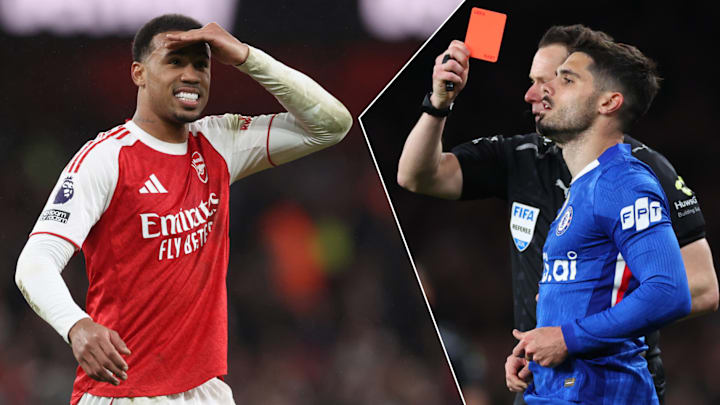
Looking at the top-line numbers it would be easy to write Sunday’s London derby off as a day of distinct highs and lows for Arsenal and Chelsea. While the Gunners climbed five points clear at the Premier League summit with a 2–1 win inspired by their record-equaling set-piece dominance, the Blues dropped to sixth after matching the nadir for red card collection.
Yet, those contrasting landmarks overlook the intricacies of an odd contest. For large swathes of Sunday's London derby at the Emirates, it was the visitors who looked the more impressive. The Gunners were once again stymied from open play and were very nearly beaten at their own set-piece game by Chelsea.
On this occasion it was Liam Rosenior who was left “bitterly disappointed” by the final result. Yet, Arsenal’s performance also offered plenty of cause for concern for Mikel Arteta, even if he wasn’t willing to admit it.
Arsenal’s Generational Strength Highlights Chelsea Weakness
You know what's next. pic.twitter.com/pOz00i471O
— Sports Illustrated FC (@SI_FootballClub) March 1, 2026
Soccer is a painfully unpredictable sport but it would not have taken a particularly gifted psychic to spin the yarn of Sunday’s opening goal. Arsenal’s set-piece superiority is revered around the world while Chelsea have a deceptively bad record from dead balls.
Four clubs had conceded more set-piece goals than the Blues heading into their trip to the Emirates but no side in the Premier League have recorded a higher expected goals tally from these scenarios, per Opta. Unlike other top-flight opponents, Arsenal are not a team to pass up these opportunities.
The Gunners’ strength from dead balls is generationally imperious. William Saliba’s opener was the ninth time this season the club have gone 1–0 up with a goal from a corner. Only one club in the competition’s history have ever taken the lead more frequently from these situations (Southampton in 1994–95).
In terms of total goals from corners, Arteta’s side have now equaled the all-time Premier League record of 16 in a season thanks to Jurriën Timber’s match-sealing second. “Look at the quality on the pitch—immense, but set pieces are still the ones that made the difference,” Arsenal’s manager admitted, inadvertently undermining his own ineffective attackers. “They are so good at that, and we are so good at that as well.”
Most Goals From Corners in a Single Premier League Season
Season | Team | Corner Goals |
|---|---|---|
1992–93 | Oldham | 16 |
2016–17 | West Brom | 16 |
2023–24 | Arsenal | 16 |
2025–26 | Arsenal | 16* |
* Season ongoing.
Familiar Chelsea Flaws Mask Signs of Promise

At 1–1 with three-quarters of the game elapsed, Chelsea were the team who looked most likely to add a second. Yet, that recurring concoction of set-piece deficiency and red mist soon undermined another encouraging performance. As Rosenior forcefully bemoaned postgame: “It’s the same story.”
Pedro Neto's bone-headed dismissal was Chelsea’s ninth red card of the season. Perhaps most damningly, nine different players have been sent off, suggesting this is a collective failing rather than one hot-head among the group. “That’s something I felt we had addressed,” Rosenior sighed, “we went 10 games without a red card, now two in two games and that’s a problem we need to solve and the set-play issue is something we need to keep working on.”
These painfully familiar failings clouded some fresh bursts of promise. As Rosenior rightly pointed out: “If we solve this problem, we have a great chance.”
Most Red Cards in Season by a Premier League Team Across All Competitions
Season | Team | Red Cards |
|---|---|---|
2008–09 | Sunderland | 9 |
2011–12 | QPR | 9 |
2025–26 | Chelsea | 9* |
1994–95 | Leicester | 8 |
1998–99 | Blackburn | 8 |
1999–00 | West Ham | 8 |
2008–09 | Newcastle | 8 |
2013–14 | Sunderland | 8 |
* Season ongoing.
When Chelsea traveled to the Emirates for the second leg of the Carabao Cup semifinal last month, Rosenior took a deliberately defensive approach. Hamstrung by injuries and a one-goal deficit from the first leg the incoming coach admitted that he played for a stalemate in the opening hour (which he got) before going for two goals over the last 30 minutes (which he didn’t).
Chelsea went on the front foot from the off on Sunday. Rosenior’s reshuffled backline didn’t look overly troubled while there was numerical superiority. Trevoh Chalobah was able to read Viktor Gyökeres’s telegraphed attempts to cut onto his stronger right foot while Mamadou Sarr hardly put a step out of place on his first Premier League start.
Rosenior arguably had his first-choice front five to choose from and deployed them in an interesting setup. Cole Palmer’s nominal left wing position actually took the form of a second center forward for large spells. The sly playmaker stepped up onto the backline only to drop into midfield, dragging one of Saliba and Gabriel with him.
Enzo Fernández, who had been awkwardly shunted onto that left flank at times in recent weeks, was restored to his central box-crashing berth in front of a complementary double pivot of Moisés Caicedo and Andrey Santos.
Missing Spark Doesn’t Sting Gunners—Yet

“I thought the set-up tactically was good,” Rosenior insisted with plenty of justification after the 2–1 reserve. “Arsenal didn’t cause any problems until set plays.”
That has been the tale of the Gunners’ season. There was a burst of open-play joy in the autumn yet the club’s attacking might has been inextricably tied to their set-piece fortunes. If the corners are not clicking, neither are Arsenal. Against Chelsea, they very much were.
Saliba and Timber combined to take Arsenal’s tally to 19 Premier League goals from set plays this term, comfortably the most in the division. More concerningly, only three clubs in England’s top flight have relied on dead balls for a larger proportion of the non-penalty goals their players has scored than the Gunners—a staggering 37% of Arsenal’s efforts this term have come via this (admittedly repeatable) medium.
Arsenal went into this weekend’s fixtures averaging just 1.1 open-play xG per game, a record good enough for only the fifth best attack in the league—by comparison, Manchester City rack up a league-leading 1.4 xG per game. Chelsea, whose backline comprised a teenage and a 20-year-old making his full Premier League, limited the Gunners to just 0.59 xG from open play.
The league leaders squeaked past Chelsea’s 10 men on this occasion—thanks in no small part to some heroic saves from David Raya—yet they surely can’t always be bailed out by dead balls. And if they are to forever rely on this aerial avenue, it creates an issue which the club’s legendary former midfielder Patrick Vieira vocalized over the weekend: “You expect more from Arsenal.”
Sanchez Guilty of Good and Bad Errors

The first leg of the Carabao Cup semifinal between these clubs at the turn of the year was defined by a pair of Robert Sánchez blunders. Chelsea’s goalkeeper seemed determined to add a few more this weekend, although there are different types of mistakes to commit.
Back in January, Sánchez’s failure to claim a high cross and a handling error presented the Gunners with two clear goals. The Spaniard was once again got caught under a corner for Arsenal’s second goal on Sunday.
Rosenior took the blame for his goalkeeper’s failings in the cup. “I’m asking Rob to do things that he hasn’t done before,” the English coach insisted. “When my players make mistakes, I’m accountable. That’s on me.” It was an unconvincing defense on that occasion—presumably Sánchez has been asked by other managers to try and catch the ball—but Rosenior was arguably guiltier on Sunday.
Before Sánchez’s blunder under the high ball, he was caught dawdling in possession on a glut of occasions in the first half. One of the major tactical trademarks of Rosenior’s Strasbourg spell was the demands placed upon his goalkeeper Mike Penders, who played a prominent role in buildups to overload the opponent’s press.
When a player is comfortable with this approach, it looks like the future of the sport: 11 outfielders forever trumping 10 cumbersome counterparts. Yet, if doubts start to creep into the mind of that all important figure in gloves, you become your own worst enemy.
Despite some notable nervy moments, it also worked on occasion for Chelsea. “They have so much quality, even when they use the keeper they can get out of situation with 10 men,” Arteta fretted postgame. Yet, much to Adriaanse’s eternal chagrin, those nuances will get swept away by the only thing most people care about: the scoreline.
READ THE LATEST PREMIER LEAGUE NEWS, ANALYSIS AND INSIGHT FROM SI FC
 Add us as a preferred source on Google
Grey Whitebloom is an Associate Editor for SI FC. He has more than half a decade of experience in sports media across all its various guises, from the fast-paced demands of news articles and match reports to in-depth research required for features. Whitebloom graduated with a First Class Honours from University College London and found himself named on the Dean’s List—which, despite his initial fears, was a form of praise rather than a punishment. He specialises in the Premier League and Champions League, while also boasting an extensive track record of La Liga coverage.