%20%20--%3E%0A%3Csvg%20version%3D%221.1%22%20id%3D%22Layer_1%22%20xmlns%3D%22http%3A%2F%2Fwww.w3.org%2F2000%2Fsvg%22%20xmlns%3Axlink%3D%22http%3A%2F%2Fwww.w3.org%2F1999%2Fxlink%22%20x%3D%220px%22%20y%3D%220px%22%0A%09%20width%3D%2239px%22%20height%3D%2240px%22%20viewBox%3D%220%200%2039%2040%22%20enable-background%3D%22new%200%200%2039%2040%22%20xml%3Aspace%3D%22preserve%22%3E%0A%3Cpath%20fill%3D%22%23FFFFFF%22%20d%3D%22M38.5%2C7H28.2v26h10.3V7z%22%2F%3E%0A%3Cpath%20fill-rule%3D%22evenodd%22%20clip-rule%3D%22evenodd%22%20fill%3D%22%23FFFFFF%22%20d%3D%22M26.1%2C25.5c0%2C5.8-4.1%2C7.5-12.9%2C7.5C3.9%2C33%2C0%2C31.2%2C0%2C25.2v-1.1h11.6%0A%09v2.4c0%2C0.7%2C0.1%2C1.4%2C1.2%2C1.4c1%2C0%2C1.2-0.4%2C1.2-1.3v-0.9c0-1.6-0.9-1.6-3.5-2.2C2.2%2C21.7%2C0%2C19.7%2C0%2C15.3v-0.9C0%2C9.3%2C5.5%2C7%2C12.9%2C7%0A%09c10.2%2C0%2C12.8%2C2.6%2C12.8%2C7.4v1.8h-11v-2.9c0-0.6-0.4-1.1-1.2-1.1c-0.6%2C0-1.2%2C0.4-1.2%2C1.1v0.9c0%2C1.5%2C0.9%2C2%2C3.3%2C2.5%0A%09c8%2C1.6%2C10.5%2C3.3%2C10.5%2C7.5V25.5z%22%2F%3E%0A%3C%2Fsvg%3E%0A)
How Wenger-Endorsed ‘Daylight Offside’ Rule, VAR Alternative Fared in First Usage
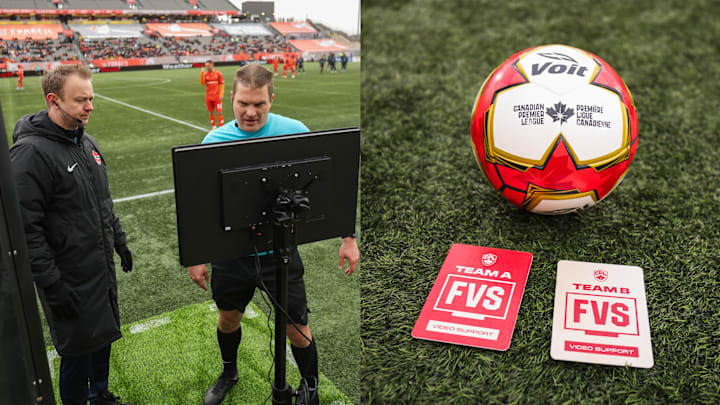
The Canadian Premier League launched its eighth season with Arsène Wenger’s “daylight offside” rule and the first look at Football Video Support in the professional ranks.
The former Arsenal manager, now FIFA’s chief of global football development, has championed the rule that says an attacking player is deemed onside if any playable part of their body—not the hands or arms—is level with, or further away from the goal line than the second-to-last defender.
An offside call is only made if there is visible space—the “daylight”—between the attacker and the second-to-last defender. The adapted rule is meant to encourage more goals and limit frustrations over marginal offside calls.
Its full impact won’t be felt for some time, and the first few games of the Canadian Premier League did not see a tight call that required Wenger’s onside law to be implemented.
FVS, Challenges Hold Up Play

The CPL’s first use of Football Video Support (FVS) was a dramatic addition, however, used six times across three matches and only overturning a single call.
A stripped-down version of the commonly used Video Assistant Referee (VAR) system, FVS lacks a separate video official and therefore does not automatically review every match-changing incident.
Instead, each manager has two challenge cards, similar to the NHL and MLB challenge-based systems, which they can wave to request a video review, which is then conducted on the field by the head referee using a monitor displaying the cameras available for broadcast.
Its first uses significantly delayed the matches and caused widespread frustrations.
The first goal of the season came on a challenged play, after Forge were awarded a penalty for a foul on Brian Wright. Ottawa challenged the decision and alleged that there had been an infraction earlier in the buildup.
Check this out!
— Canadian Premier League (@CPLsoccer) April 4, 2026
After @ForgeFCHamilton were awarded a penalty, @atletiOttawa issued the first FVS challenge in CPL history 📺
📹: @OneSoccer pic.twitter.com/LxvofWMQGb
The officiating crew spent over five minutes reviewing the replay, with their mics attached to broadcast but not audible inside the stadium, before confirming the penalty call which led to Forge’s first goal.
It was later used in Cavalry FC’s 2–1 win over Pacific FC, marking the first time a call was overturned with the system.
Cavalry forward Jay Herdman had been tackled by Pacific’s Tristan Marshall, and the initial call was given against Herdman, before Cavalry manager Tommy Wheeldon Jr. challenged for a penalty, eventually overturning the initial decision.
A historic moment in the CPL as the league’s first successful FVS challenge earns the @VWcanada Moment of the Match
— Canadian Premier League (@CPLsoccer) April 6, 2026
📺: @onesoccer | #CPLSoccer pic.twitter.com/qpYfHNugvt
“I think it puts more emphasis on the coaches working with the officials, versus the officials making the judgment on what they see,” Wheeldon Jr. said post-match. “So we challenged a couple of plays. We felt that on Herdman, it was a clumsy tackle and a knee to the face, and he hasn’t been able to adjust to the ball. So if that’s anywhere else on the pitch, it’s a foul. So we’re going to contest it. We got it right.”
That match ended on the longest review of the opening weekend, as Cavalry challenged for a red card following a scuffle in second-half stoppage time. The referee spent upwards of seven minutes reviewing the play before opting not to award a red card, before the match came to a close as the clock ticked into the 102nd minute.
READ THE LATEST SOCCER NEWS, ANALYSIS AND INSIGHT FROM SI FC
 Add us as a preferred source on Google
Ben Steiner is an American-Canadian journalist who brings in-depth experience, having covered the North American national teams, MLS, CPL, NWSL, NSL and Liga MX for prominent outlets, including MLSsoccer.com, CBC Sports, and OneSoccer.
Follow BenSteiner00