%20%20--%3E%0A%3Csvg%20version%3D%221.1%22%20id%3D%22Layer_1%22%20xmlns%3D%22http%3A%2F%2Fwww.w3.org%2F2000%2Fsvg%22%20xmlns%3Axlink%3D%22http%3A%2F%2Fwww.w3.org%2F1999%2Fxlink%22%20x%3D%220px%22%20y%3D%220px%22%0A%09%20width%3D%2239px%22%20height%3D%2240px%22%20viewBox%3D%220%200%2039%2040%22%20enable-background%3D%22new%200%200%2039%2040%22%20xml%3Aspace%3D%22preserve%22%3E%0A%3Cpath%20fill%3D%22%23FFFFFF%22%20d%3D%22M38.5%2C7H28.2v26h10.3V7z%22%2F%3E%0A%3Cpath%20fill-rule%3D%22evenodd%22%20clip-rule%3D%22evenodd%22%20fill%3D%22%23FFFFFF%22%20d%3D%22M26.1%2C25.5c0%2C5.8-4.1%2C7.5-12.9%2C7.5C3.9%2C33%2C0%2C31.2%2C0%2C25.2v-1.1h11.6%0A%09v2.4c0%2C0.7%2C0.1%2C1.4%2C1.2%2C1.4c1%2C0%2C1.2-0.4%2C1.2-1.3v-0.9c0-1.6-0.9-1.6-3.5-2.2C2.2%2C21.7%2C0%2C19.7%2C0%2C15.3v-0.9C0%2C9.3%2C5.5%2C7%2C12.9%2C7%0A%09c10.2%2C0%2C12.8%2C2.6%2C12.8%2C7.4v1.8h-11v-2.9c0-0.6-0.4-1.1-1.2-1.1c-0.6%2C0-1.2%2C0.4-1.2%2C1.1v0.9c0%2C1.5%2C0.9%2C2%2C3.3%2C2.5%0A%09c8%2C1.6%2C10.5%2C3.3%2C10.5%2C7.5V25.5z%22%2F%3E%0A%3C%2Fsvg%3E%0A)
Jose Mourinho’s Record vs. Real Madrid
When Real Madrid pivoted to José Mourinho in 2010, with the Portuguese’s stock at an all-time high, he was tasked by Florentino Pérez with one thing: stop Pep Guardiola.
It would take a battering in his first Clásico, mass psychological warfare, and the alienation of Madrid icons, but Mourinho would eventually stymie Barcelona’s mastery with a record-breaking La Liga triumph in 2011–12.
Mourinho, at his apex, relished the manifestation of footballing evil against the supposed "good guys" of Catalonia, but the division he’d ignited proved too much to bear after a third season in charge. Borussia Dortmund’s rout of Madrid in the 2012–13 Champions League semi-finals represented a shifting of the guard at the summit of the European game, and Mourinho was soon back to winning Premier League titles with Chelsea.
While there have been sporadic calls for Mourinho’s return in the decade or so since his departure, Real Madrid have seldom encountered their former manager. However, his history with Los Blancos dates back to his glorious Porto days.
Mourinho’s Results Against Real Madrid
Outcome | Number of Games |
|---|---|
Total | 6 |
Mourinho Wins | 1 |
Real Madrid Wins | 4 |
Draws | 1 |
Real Madrid 1–0 Porto (February 19, 2002)

Mourinho wasn’t even a month into the Porto job when he faced Real Madrid for the first time.
Porto struggled during the first half of 2001–02 under Octávio Machado, with Mourinho inheriting a side that sat bottom of their group in the second group stage of that season’s Champions League.
A trip to the Santiago Bernabéu was thus daunting for the Portuguese side, but they were seven minutes away from earning an impressive point before substitute Santiago Solari struck. Their stubbornness under Mourinho was clear from the outset, with Porto able to flummox a Madrid team that had been so free-scoring in the weeks leading up to the contest.
Porto 1–2 Real Madrid (February 27, 2002)

Porto were again impressive in the reverse fixture a week later, although Madrid were without the likes of Luís Figo and Zinedine Zidane.
Vincente del Bosque’s makeshift lineup, which included the usage of Guti as a withdrawn centre forward, got off to a brilliant start. Goals from Solari and Iván Helguera helped them into a 2–0 lead, but Porto were superior after Capucho halved the deficit before the half-hour mark.
Mourinho would later phase out the experienced forward and move him on after the 2002–03 campaign, but Capucho was one of the key figures of Mourinho’s first Porto team. Madrid held on for a hard-fought away win, and Del Bosque’s side would go on to conquer the continent courtesy of some Zidane magic in Glasgow.
Porto 1–3 Real Madrid (October 1, 2003)

Porto headed into 2003–04 as Portuguese and UEFA Cup champions, but there was no sense that Mourinho’s maturing side were capable of toppling the continent’s aristocracy.
That belief was further backed when Madrid defeated Porto 3–1 in their own backyard on Matchday 2 of the group stage. Porto had been held to a point by Partizan Belgrade in their Group F opener, and they were eventually overwhelmed by Madrid’s "Galácticos" after taking an early lead through a Costinha header.
Helguera and Solaria, far from superstars, were on the scoresheet again for the away side before Zidane sealed Madrid’s victory with a clever finish from a well-worked free-kick.
Real Madrid 1–1 Porto (December 9, 2003)

When the two teams met again at the end of the group stage, both have secured their spots in the round of 16. The unbeaten Madrid were group winners, while Porto failed to taste defeat after the opening matchday.
Still, the stars were out for what was really a dead rubber, and Mourinho was able to secure his first result against Los Blancos at the fourth time of asking. Solari once again found the net in this fixture, but his early strike was cancelled out by a Derleí penalty and the spoils were shared.
Porto’s second-place finish in Group F left them as big underdogs for their round of 16 clash with the mighty Manchester United.
Real Madrid 2–1 Man Utd (August 8, 2017)

Before Mourinho returned to Portugal with Benfica, he’d faced his former employers just once since his departure in 2013.
The Portuguese had garnered a lofty reputation for his capacity to adopt masterful game plans for one-off occasions, but never before had he lifted the UEFA Super Cup when his Manchester United side faced Real Madrid, European champions for the third time in four years, in 2017.
Mourinho masterminded United’s Europa League final triumph over Ajax, setting up this fixture in Skopje, North Macedonia.
Cristiano Ronaldo started on the bench for Zidane’s side, and wouldn’t feature until the 82nd minute. By that point, Madrid had seen their 2–0 lead halved by Romelu Lukaku—the Red Devils’s big-money signing of the summer—but they held out for another piece of silverware. As a result, Mourinho became the first manager in history to lose three UEFA Super Cup matches.
Nevertheless, the United boss said he left Skopje "optimistic and proud" for the season ahead.
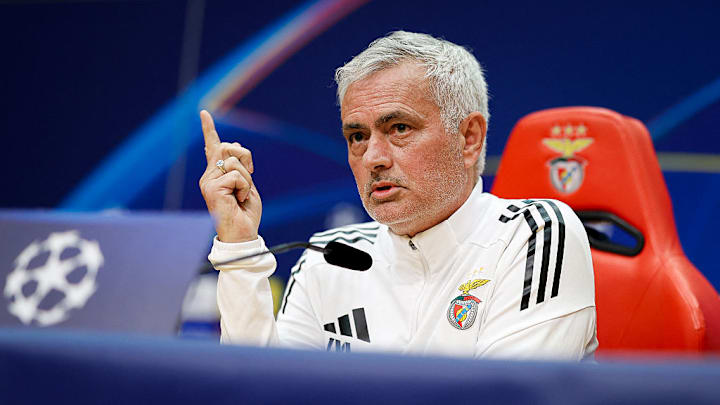
Benfica 4-2 Real Madrid (January 29, 2026)

At last, a first victory for Mourinho against his former employers—and in unbelievable circumstances.
Leading Benfica out against Madrid in the final round of league phase fixtures in the 2025–26 Champions League, Mourinho knew victory was realistically required to secure safe passage to the knockout phase. Conceding to Kylian Mbappé after half-an-hour dented those aspirations.
But Benfica fought back miraculously. By the time Mbappé bagged his brace just before the hour mark, the Lisbon side had scored three times, with Vangelis Pavlidis’s penalty sandwiched in between two efforts from Andreas Schjelderup. Defeat resulted in Madrid missing out on automatic progression to the last 16 but Benfica still needed one more goal to clinch their place in a knockout playoff.
After two Madrid red cards in stoppage time, the most incredible thing occurred. In the 98th minute, Mourinho sent goalkeeper Anatoliy Trubin up for a free kick and the Ukrainian powered home a header to clinch a 4–2 win and send his side into the knockouts on goal difference alone.
A victory well worth the wait.
READ THE LATEST SOCCER NEWS, TRANSFER RUMORS AND MATCH REACTION
 Add us as a preferred source on Google
James Cormack is a writer for SI FC. Opting against a football coaching undergraduate degree at the last minute, he instead decided to take on a six-month internship with 90min in 2019 and hasn't looked back. Cormack's current SEO focus means he tends to venture to the land of match previews and predicted lineups, but he also has a wealth of experience in news and feature writing. A passion for soccer's history and the European game often takes his work beyond the familiarity of the Premier League, but it's with Tottenham Hotspur where his strongest allegiance lies.