%20%20--%3E%0A%3Csvg%20version%3D%221.1%22%20id%3D%22Layer_1%22%20xmlns%3D%22http%3A%2F%2Fwww.w3.org%2F2000%2Fsvg%22%20xmlns%3Axlink%3D%22http%3A%2F%2Fwww.w3.org%2F1999%2Fxlink%22%20x%3D%220px%22%20y%3D%220px%22%0A%09%20width%3D%2239px%22%20height%3D%2240px%22%20viewBox%3D%220%200%2039%2040%22%20enable-background%3D%22new%200%200%2039%2040%22%20xml%3Aspace%3D%22preserve%22%3E%0A%3Cpath%20fill%3D%22%23FFFFFF%22%20d%3D%22M38.5%2C7H28.2v26h10.3V7z%22%2F%3E%0A%3Cpath%20fill-rule%3D%22evenodd%22%20clip-rule%3D%22evenodd%22%20fill%3D%22%23FFFFFF%22%20d%3D%22M26.1%2C25.5c0%2C5.8-4.1%2C7.5-12.9%2C7.5C3.9%2C33%2C0%2C31.2%2C0%2C25.2v-1.1h11.6%0A%09v2.4c0%2C0.7%2C0.1%2C1.4%2C1.2%2C1.4c1%2C0%2C1.2-0.4%2C1.2-1.3v-0.9c0-1.6-0.9-1.6-3.5-2.2C2.2%2C21.7%2C0%2C19.7%2C0%2C15.3v-0.9C0%2C9.3%2C5.5%2C7%2C12.9%2C7%0A%09c10.2%2C0%2C12.8%2C2.6%2C12.8%2C7.4v1.8h-11v-2.9c0-0.6-0.4-1.1-1.2-1.1c-0.6%2C0-1.2%2C0.4-1.2%2C1.1v0.9c0%2C1.5%2C0.9%2C2%2C3.3%2C2.5%0A%09c8%2C1.6%2C10.5%2C3.3%2C10.5%2C7.5V25.5z%22%2F%3E%0A%3C%2Fsvg%3E%0A)
World Cup Launching Pad: Which prospects are poised for stardom?
The days of World Cups being the true launching pad for breakout stars are waning in the era of globalized networks, widely televised matches and social media, but in Brazil there might be some players who could yet surprise us.
Some of the players below have won league titles or play for big clubs, but are not yet household names. They could be, though, very soon. Here's one player from each group to keep an eye on for now and the future:
Group A – Mateo Kovacic (Croatia)
Kovacic was only 18 when he made his Croatia debut, just a few months after joining Inter Milan for a reported €13 million in January 2013. And while his spell in Italy has not always been easy – he has had few first-team chances, and the signing of Hernanes from Lazio sidelined him further – his role in the Croatia team will be vital this summer.
Coach Niko Kovac has two options for where to play him: as the third midfielder in front of Luka Modric and Ivan Rakitic, though that leaves Croatia without a natural holding player, or on the wing, which is his more natural position.
Kovacic has just turned 20 and could use the World Cup as a chance to prove that Inter have been wrong to ignore him (and it has previous with the likes of Roberto Carlos and Andrea Pirlo). Former Croatian playmaker Zvonimir Boban has said: “He has the potential to become better than me.” This is the perfect time to show it.
Group B – Daley Blind (Netherlands)
Philipp Lahm is not the only player this season who has switched from fullback to midfield with resounding success. Ajax has just completed a fourth straight Dutch title victory and its player of the season was Blind, son of former club captain Danny, who moved from left back to a holding midfield position.
Ajax coach Frank de Boer played alongside Pep Guardiola at Barcelona and the pair share similar ideas from the dugout – both honed in part by Louis van Gaal, the current Holland boss. Blind’s role at Ajax was like that of Sergio Busquets in Guardiola’s Barcelona, as midfield enforcer with the ability to drop back and become an auxiliary center back.
Van Gaal’s Holland is now wrestling with a new system, a 3-5-2 to compensate for the loss of Kevin Strootman. And while Blind may not play the enforcer in that system, his ability on the ball could see him fill the Strootman void and take up a midfield position just like Lahm, the German captain. Many would expect to succeed and then follow his father’s footsteps and captain the national team too.
Group C – Serge Aurier (Ivory Coast)
Aurier has made quite a name for himself this season, with six goals and six assists from right-back for Toulouse. The form of the powerful defender has convinced Ivory Coast coach Sabri Lamouchi to ditch old favorite Emmanuel Eboue, and it looks likely that Aurier may also follow in Eboue’s footsteps at his next club: Arsenal is interested in signing him, and, with Bacary Sagna likely to leave, Aurier’s arrival at the Emirates is thought to be only a matter of time.
What would Arsenal be getting? An up-and-down fullback with energy to burn, but true the modern prototype player, Aurier is also versatile: he can play at center back if necessary (even Sagna played there a few times) and as a defensive midfielder too. Aurier gives hope to Ivorian worried about the end of this ‘golden generation’ – he is leading the charge for the new brigade.
Group D – Adam Lallana (England)
Lallana is a rarity in English football, as he can play with both feet and is tactically smart and versatile, but he lacks the pace that Roy Hodgson likes to have out wide. That's why the Southampton captain, reportedly the subject of a £20 million bid from Liverpool, could have a role as an impact sub, coning off the bench to find space between opposition lines, as he did in England’s March friendly against Denmark, a short cameo during which he set up the only goal of the game.
Gary Lineker has been leading the calls for his inclusion, writing in his own World Cup guide: “One player who has to start is Adam Lallana: I have been saying it all season, but he is a smart player who can really help the team.”
Lallana brought forward his wedding, originally planned for this June, to make the World Cup, and he reportedly skipped his bachelor party too, a week-long trip to Florida last week, in order to be fit for the World Cup. With that level of commitment, you’d hope he gets some playing time in Brazil. England will benefit if he does.
Group E – Frickson Erazo (Ecuador)
Center back Erazo is on the radar of European scouts after his performances for Flamengo helped the Brazilian club win the Carioca state championship this season. Compared to Benfica defender (who is now off to Zenit) Ezequiel Garay, Erazo also won the Ecuadorean league title with Barcelona SC in 2012. A tall and strong defender, Erazo gives the South American outsider solidity at the back, and could be a star in the making.
Group F – Ashkan Dejagah (Iran)
Dejagah only made his debut for Iran in February 2012, having played for Germany, the country in which he was raised, through the Under-21 level. Injuries and an initial lack of game time at Fulham had restricted his Iran game time, but his influence at both club and international levels has risen sufficiently to ensure that he will be one of Carlos Queiroz’s most important players.
Creative and at his best when surging into the box, he has been a useful goalscorer throughout a career that took in spells at Hertha Berlin and Wolfsburg before his move to west London. Two goals on his debut, in a qualifier against Qatar, confirmed the point, and further strikes against Thailand and Lebanon suggest that he could be a dangerous outlet in support of forward Reza Ghoochannejhad.
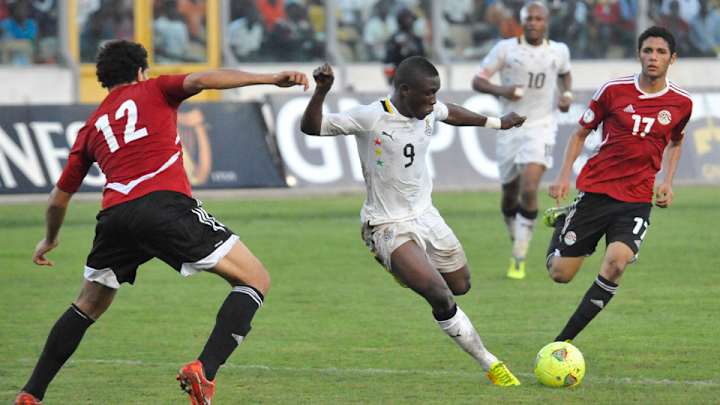
Group G – Abdul Majeed Waris (Ghana)
If you want a rags-to-riches World Cup tale, they don't come much better than Majeed Waris, a graduate of Ghana’s Right to Dream academy who has made it into the squad – via English non-league football – after a stunning six months at French club Valenciennes, where the flying winger scored nine goals in 14 games (not quite enough for the club to avoid relegation).
Waris always had an eye for goal – during his time at Hacken, he was the first player to ever score five goals in a Swedish top-flight game – and could solve a few problems for Kwesi Appiah, whose scoring options are limited to Asamoah Gyan up front.
A sign of how important Waris already is to the team was apparent in the first week of World Cup preparation: he limped off with an ankle knock and the serious faces and somber mood made it apparent that Waris is destined for big things. Currently owned by Russian club Spartak Moscow, if he carries on his current form – he has scored four international goals in his first nine appearances – then expect a big team to come in for him soon.
Group H – Islam Slimani (Algeria)
Center forward has historically been a problem position for Algeria, whose most recent World Cup performance was memorable for its dogged defense as it held England to a 0-0 draw. That could change soon after the emergence of Slimani, who burst onto the scene this qualifying campaign with five goals in five matches. He began the season as a sub at Portuguese over-achievers Sporting Lisbon, but his habit of scoring vital goals – as he did in the Cup against Benfica, and the winner against Porto – saw him dislodge Fredy Montero to become the starting striker.
Physical and strong, Slimani’s goalscoring record – nine goals in his first 17 international appearances – has put him on the radar of Premier League scouts and a few more goals in Brazil could add some clout to his transfer value (not that it should, as three games is barely a sample worth evaluating a player on, but that's another story).
GALLERY: 25 Players to Watch at the World Cup
25 Players to Watch at the World Cup
Cristiano Ronaldo, Portugal
The reigning Ballon d’Or winner just helped Real Madrid win its 10th UEFA Champions League title as well. His supporting cast isn’t as impressive as Lionel Messi’s with Argentina or Neymar’s with Brazil, so this tournament should be a chance for Ronaldo to see just how far he can carry a team.
Lionel Messi, Argentina
Despite his obvious talent and immense contributions in conquering Europe with FC Barcelona, Messi’s biggest criticism has always been a perceived lack of similar productivity with the national team. A World Cup on his home continent, with the best Argentina team of the last few cycles around him, should be an opportunity to break that streak.
Ángel di María, Argentina
The star of Real Madrid’s Champions League final triumph, di María is a tireless midfielder who combines an explosive change of pace with excellent dribbling ability to unlock defenses. His work rate allows him to continue at the same pace all game, long after opponents have dropped off.
Luis Suárez, Uruguay
Probably the most controversial and divisive player on the planet, there is no doubting Suárez’s ability despite the headlines he accrued in the past seasons. He was voted the best player in the English Premier League by his peers this season, showing the respect he receives among those who know him best.
Arjen Robben, Netherlands
Despite the criticism of being one-footed and a diver, Robben consistently produces for club and country. He’s not strictly a goal scorer, but he seems to pop up in the right place when his team needs one, including in the 2013 Champions League final for Bayern Munich when he scored the late winner — with his left foot, of course.
Neymar, Brazil
After dominating the Brazilian league, Neymar moved to play alongside Lionel Messi and FC Barcelona this season. Injuries and a slow learning curve stunted his productivity, but his new fans did get to see his ability in flashes. The Brazilian national team might be more in his comfort zone, marking a return to the nation he carried to the 2013 Confederations Cup win.
Wayne Rooney, England
Rooney’s productivity didn’t drop with Manchester United’s league and continental fortunes. He scored 19 goals in all competitions, eclipsing his previous season, and he coupled that with seven goals for England in its World Cup qualifying campaign.
Mario Balotelli, Italy
Balotelli has taken heavy criticism for his periodically immature outbursts and a supposed lack of discipline, but a return to Serie A with AC Milan also brought with it an outburst of goals. He scored 18 in all competitions in 2013-14, as well as two in Italy’s Confederations Cup effort last summer.
Andrea Pirlo, Italy
Pirlo may appear ageless, but his game has never been predicated on physicality. While his body gets older, his mind only gets sharper, allowing him to maintain his form as one of the world’s best playmakers. Pirlo can also smack in free kicks with the best of them, making him a threat in multiple phases of play.
Didier Drogba, Ivory Coast
This World Cup will be Drogba’s last stand on the international level. Compared to his club numbers, the 36-year-old’s national team goal-scoring record has been mediocre, his own form personifying a larger listlessness among his nation at the highest levels. He has one last chance to turn the narrative around.
Karim Benzema, France
The 26-year-old Real Madrid forward helped the Spanish side to a Champions League title, scoring 24 goals in all competitions, including five on Europe’s biggest stage. With compatriot Franck Ribery ruled out for the World Cup with a back injury, the onus falls even more on Benzema to lead Les Bleus’ attack.
Keisuke Honda, Japan
Honda finally moved to a big club in January, joining AC Milan from CSKA Moscow. He has been an important player for his national team since bouncing between the Dutch first and second tiers with VVV-Venlo, working his way up gradually and patiently. Honda will be Japan’s primary playmaker in Brazil.
Paul Pogba, France
In many ways, Pogba is similar to Mario Balotelli. He had a dramatic falling out with his manager in England, leaving Manchester United for Juventus in Italy. Since then, he has become a spectacular-goal machine, regularly cutting inside from the right wing to unleash thunderous strikes past hapless goalkeepers.
Eden Hazard, Belgium
After already winning the Ligue 1 Player of the Year award twice, Hazard reminded everybody that he’s still far from his prime, winning the Young Player of the Year award in England this season. Hazard has become the subject of transfer rumors since Chelsea’s season ended, sparked by comments in the press by him and manager José Mourinho that suggest he might be losing favor.
Yaya Touré, Ivory Coast
With a weak defense behind him, Touré will be key in any success the Ivory Coast has at the World Cup. He surged forward to score 24 goals for Manchester City last season, but his physical presence and defensive ability will likely be easier to notice against the dangerous attacks of Colombia and Japan.
Michael Bradley, United States
Bradley is the United States’ version of Xavi, although extremely watered down. Rarely does a U.S. game go by where his pass-completion percentage is below 90, and his late runs from midfield add another wrinkle to the American counterattack. Above all, Bradley’s leadership ability will be vital considering the difficult road the U.S. faces to progressing beyond the group stage.
Manuel Neuer, Germany
After biding his time as a back-up for Germany and at Schalke in the lower tiers of the Bundesliga, Neuer has emerged as the best goalkeeper in the world since Euro 2012 and his move to Bayern Munich the previous summer. He is the complete package: a shot stopper, good on crosses and excellent with the ball at his feet.
Arturo Vidal, Chile
Vidal was Juventus’ leading scorer in continental competition last year, saving his best play for when the lights shined brightest. He works alongside Andrea Pirlo in that midfield, providing the engine as a box-to-box midfielder to complement the older Pirlo’s ability to pick passes. For Chile, Vidal will have to play a larger role.
Alexis Sánchez, Chile
As a frequent option off the bench for FC Barcelona, Sánchez injects pace and one-on-one ability into any game. The way he runs at defenders unsettles back lines, often creating opportunities for teammates by dribbling to the end line and cutting the ball back into onrushing attackers.
Xavi, Spain
Barcelona and Spain’s midfield maestro, few players in the world can pass the ball like Xavi. His high completion percentage shows the beauty of the simple game and how effective it can be if coupled with next-level soccer IQ. Spanish manager Vicente del Bosque will have to find the right partners for Xavi, as Andrés Iniesta and Sergio Busquets are on the club side.
Andrés Iniesta, Spain
With Cesc Fàbregas playing a larger role in central midfield for Barcelona under Tata Martino, Iniesta had to find a way to impact the game from a different spot. As a result, he became a left-winger in Barça’s 4-3-3 that thrives on overloading the middle and providing killer through passes to the forward line.
Luka Modrić, Croatia
Croatia has the ability to pull off surprise results in Brazil, not least of which would be against the host nation in the opening game. Modrić is well equipped to lead his team and control any game’s tempo from central midfield, along with partner Ivan Rakitić. Modrić is a complete player, proficient with the ball at his feet in both passing and dribbling, as well as maintaining a strong presence in front of the defense.
Robin van Persie, Netherlands
Under Dutch manager Louis van Gaal, van Persie has found the best international form of his life. He scored 11 goals for the Netherlands in qualifying for Brazil 2014, only failing to score in three competitive appearances since Euro 2012. Van Gaal will join van Persie at Manchester United after the World Cup, giving him more of a reason to want to impress his boss.
Edin Džeko, Bosnia-Herzegovina
Džeko finished the season for English champion Manchester City in great form, scoring five goals in his last four appearances. Most of the times Džeko scores, he seems to add another one later in the game, showing his never-satisfied mentality. The big target striker was his country’s leading scorer in qualifying as well, scoring 10 goals in 10 games.
Mesut Özil, Germany
After moving to Arsenal last summer, Özil’s playmaking ability shined with his new club. He can both pass the ball and finish with late midfield runs, playing deeper in the central-midfield block for both his club and Germany. It feels like Özil has been around forever, largely due to making his first-team debut with Schalke at age 17, eight years ago.
 Add us as a preferred source on Google
A journalist, broadcaster and consultant, Ben Lyttleton also wrote the book on PKs with his “Twelve Yards: The Art and Psychology of the Penalty Kick.”