%20%20--%3E%0A%3Csvg%20version%3D%221.1%22%20id%3D%22Layer_1%22%20xmlns%3D%22http%3A%2F%2Fwww.w3.org%2F2000%2Fsvg%22%20xmlns%3Axlink%3D%22http%3A%2F%2Fwww.w3.org%2F1999%2Fxlink%22%20x%3D%220px%22%20y%3D%220px%22%0A%09%20width%3D%2239px%22%20height%3D%2240px%22%20viewBox%3D%220%200%2039%2040%22%20enable-background%3D%22new%200%200%2039%2040%22%20xml%3Aspace%3D%22preserve%22%3E%0A%3Cpath%20fill%3D%22%23FFFFFF%22%20d%3D%22M38.5%2C7H28.2v26h10.3V7z%22%2F%3E%0A%3Cpath%20fill-rule%3D%22evenodd%22%20clip-rule%3D%22evenodd%22%20fill%3D%22%23FFFFFF%22%20d%3D%22M26.1%2C25.5c0%2C5.8-4.1%2C7.5-12.9%2C7.5C3.9%2C33%2C0%2C31.2%2C0%2C25.2v-1.1h11.6%0A%09v2.4c0%2C0.7%2C0.1%2C1.4%2C1.2%2C1.4c1%2C0%2C1.2-0.4%2C1.2-1.3v-0.9c0-1.6-0.9-1.6-3.5-2.2C2.2%2C21.7%2C0%2C19.7%2C0%2C15.3v-0.9C0%2C9.3%2C5.5%2C7%2C12.9%2C7%0A%09c10.2%2C0%2C12.8%2C2.6%2C12.8%2C7.4v1.8h-11v-2.9c0-0.6-0.4-1.1-1.2-1.1c-0.6%2C0-1.2%2C0.4-1.2%2C1.1v0.9c0%2C1.5%2C0.9%2C2%2C3.3%2C2.5%0A%09c8%2C1.6%2C10.5%2C3.3%2C10.5%2C7.5V25.5z%22%2F%3E%0A%3C%2Fsvg%3E%0A)
Scotland’s National Anthem: ‘Flower of Scotland’ Lyrics in Full, Explained
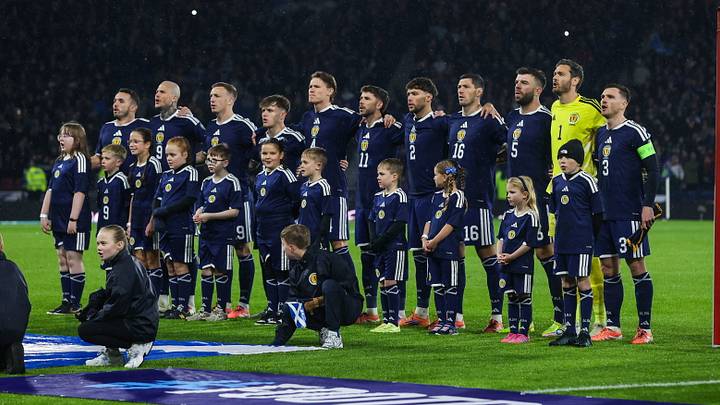
The Scotland national soccer team has had an array of musical accompaniment over the years.
Opposing fans are often left puzzled when the Tartan Army channels the Von Trapp family with a spirited rendition of “Do-Re-Mi,” while Del Amitri didn’t exactly inspire the 1998 World Cup squad with “Don’t Come Home Too Soon,” a tune more maudlin than motivational.
Yet the song most synonymous with the team is the hymn belted out before every international: “Flower of Scotland.”
Technically, “God Save the King” is the national anthem of the United Kingdom—including its northernmost nation. However, Scotland’s sporting teams have long rejected it because of its association with England, instead favoring the song written by Roy Williamson of The Corries at 69 Northumberland Street in Edinburgh in the 1960s.
Here’s everything you need to know about “Flower of Scotland,” the unofficial official national anthem.
“Flower of Scotland” Full Lyrics
O Flower of Scotland,
When will we see
Your likes again,
That fought and died for,
Your wee bit Hill and Glen,
And stood against them,
Proud Edward's Army,
And sent them homeward,
Tae think again.
The Hills are bare now,
And Autumn leaves lie thick and still,
O’er land that is lost now,
Which those so dearly held,
That stood against them,
Proud Edward’s Army,
And sent them homeward,
Tae think again.
Those days are past now,
And in the past
they must remain,
But we can still rise now,
And be a nation again,
That stood against them,
Proud Edward’s Army,
And sent them homeward,
Tae think again.
Flower of Scotland Lyrics Explained

“Flower of Scotland,” first performed by Scotland’s national soccer team in 1993 and fully adopted in 1997, centers on the Battle of Bannockburn, fought in June 1314 during the First War of Scottish Independence.
The song repeatedly references “Proud Edward’s Army,” the English force led by King Edward II, believed to have been the largest ever to invade Scotland, with around 25,000 men. Despite commanding only about 6,000 soldiers, Robert the Bruce defeated Edward, defending “your wee bit hill and glen”—a nod to Scotland’s rugged landscape. As the lyrics declare, the Scots “sent them homeward.”
However, the song later laments that “the hills are bare now” and the “land that is lost now,” suggesting that while Scotland won the battle, the broader struggle for lasting independence remained unresolved.
There is a Gaelic version of the song, but before matches it is usually sung in English, aside from the Scots word “tae” (to).
Former Scottish Conservative deputy leader Murdo Fraser has labeled the lyrics “jingoistic,” and critics have taken issue with what they describe as the “vindictive” tone of the chorus. However, Ronnie Browne of The Corries, who first performed the song in 1967, argued that fans want a “combative sentiment” before heading into battle on the field.
READ THE LATEST WORLD CUP NEWS, PREVIEWS & ANALYSIS HERE
 Add us as a preferred source on Google
Barnaby Lane, better known as Barney, is a soccer writer for SI FC. With nearly a decade of experience in the industry, he has worked for a range of household-name publications in both the United States and the United Kingdom, and has interviewed some of the world’s biggest athletes—from Usain Bolt and Rafael Nadal to Christian Pulisic (though his favorite interview remains Adebayo Akinfenwa). Barney specializes in Premier League soccer, covering everything from the nostalgia of years gone by to the modern, vastly different landscape of today’s game. He also has experience reporting on La Liga and Major League Soccer, the latter of which he developed a particular affinity for during his university days at Virginia Commonwealth University in Richmond.