%20%20--%3E%0A%3Csvg%20version%3D%221.1%22%20id%3D%22Layer_1%22%20xmlns%3D%22http%3A%2F%2Fwww.w3.org%2F2000%2Fsvg%22%20xmlns%3Axlink%3D%22http%3A%2F%2Fwww.w3.org%2F1999%2Fxlink%22%20x%3D%220px%22%20y%3D%220px%22%0A%09%20width%3D%2239px%22%20height%3D%2240px%22%20viewBox%3D%220%200%2039%2040%22%20enable-background%3D%22new%200%200%2039%2040%22%20xml%3Aspace%3D%22preserve%22%3E%0A%3Cpath%20fill%3D%22%23FFFFFF%22%20d%3D%22M38.5%2C7H28.2v26h10.3V7z%22%2F%3E%0A%3Cpath%20fill-rule%3D%22evenodd%22%20clip-rule%3D%22evenodd%22%20fill%3D%22%23FFFFFF%22%20d%3D%22M26.1%2C25.5c0%2C5.8-4.1%2C7.5-12.9%2C7.5C3.9%2C33%2C0%2C31.2%2C0%2C25.2v-1.1h11.6%0A%09v2.4c0%2C0.7%2C0.1%2C1.4%2C1.2%2C1.4c1%2C0%2C1.2-0.4%2C1.2-1.3v-0.9c0-1.6-0.9-1.6-3.5-2.2C2.2%2C21.7%2C0%2C19.7%2C0%2C15.3v-0.9C0%2C9.3%2C5.5%2C7%2C12.9%2C7%0A%09c10.2%2C0%2C12.8%2C2.6%2C12.8%2C7.4v1.8h-11v-2.9c0-0.6-0.4-1.1-1.2-1.1c-0.6%2C0-1.2%2C0.4-1.2%2C1.1v0.9c0%2C1.5%2C0.9%2C2%2C3.3%2C2.5%0A%09c8%2C1.6%2C10.5%2C3.3%2C10.5%2C7.5V25.5z%22%2F%3E%0A%3C%2Fsvg%3E%0A)
The 10 Most Iconic Moments in World Cup History—Ranked
The FIFA World Cup has a habit of producing footballing moments that live far beyond the final whistle.
From Saudi Arabia’s stunning upset over eventual champions Argentina in 2022, to Robin van Persie’s gravity-defying header against Spain in 2014 and Roberto Baggio’s devastating penalty miss in the 1994 final—each edition writes its own chapter in the sport’s history books.
Some moments, however, transcend even that—defined not just by their importance, but by their drama, controversy and sheer unforgettable brilliance.
Here, Sports Illustrated counts down the 10 most iconic moments in World Cup history.
10. The Birth of the Cruyff Turn

Walk into any soccer school around the world and one of the first skill moves young players are taught is the “Cruyff Turn”—a deceptively simple but devastating piece of skill popularized by the legendary Johan Cruyff. The move involves faking to shoot or pass before dragging the ball behind the standing leg, spinning away from a defender in one fluid motion.
It first captured global attention at the 1974 World Cup, during the Netherlands’ goalless draw with Sweden. With the ball at his feet and Swedish defender Jan Olsson tight to him, Cruyff feigned a pass before suddenly pulling the ball behind his leg, turning sharply and bursting into space—leaving his marker completely wrong-footed.
While variations of the move may have existed before, it was the elegance, timing and effectiveness with which Cruyff executed it that made it iconic. From that moment on, both the move and the man were etched into soccer history.
9. Marco Tardelli’s Scream

Marco Tardelli’s goal against West Germany at the 1982 World Cup may not be remembered as the most spectacular strike in tournament history—but it produced one of its most iconic moments.
After scoring Italy’s second, and ultimately decisive goal in the final, Tardelli burst away in an explosion of emotion, sprinting across the pitch as he repeatedly shouted “Gol!” and wildly flailed his arms in disbelief and joy.
Italy went on to win the match 3–1 and lift the World Cup, but it is Tardelli’s raw, unfiltered celebration—later known simply as “Tardelli’s Scream”—that has endured. To this day, it perfectly captures the passion and emotion that soccer can inspire, especially for soccer-mad Italians.
8. Roger Milla’s Dance

Roger Milla was the breakout star of the 1990 World Cup—and in the most unexpected way.
At 38, the Cameroon striker lit up the tournament, scoring four goals and becoming the oldest goalscorer in World Cup history at the time, as he helped his nation become the first African side to reach the quarterfinals.
But it wasn’t just the goals that made him unforgettable—it was the flair. Each time he found the net, Milla would sprint to the corner flag and break into his now-iconic dance, a moment of pure joy that captured the imagination of fans around the world. It became more than a celebration; it was a statement—of African pride, of underdog spirit and of defying age itself.
He doubled down on that legacy in 1994, scoring again at 42 to break his own record—proving once more that for Milla, time was just another opponent to beat.
7. Germany 7-1 Brazil

Germany’s meeting with Brazil in the semifinals of the 2014 World Cup was billed as a clash of giants—three-time winners versus five-time champions, both unbeaten in the tournament up to that point. A tight, high-quality contest was expected.
What followed instead was the most shocking thrashing in World Cup history. Joachim Löw’s Germany dismantled Brazil 7–1 on home soil in Belo Horizonte, with the hosts missing key figures Neymar and Thiago Silva.
Miroslav Klose scored his 16th World Cup goal to surpass Ronaldo as the tournament’s all-time leading scorer, while Brazil’s defeat ended a 62-match unbeaten run at home in competitive fixtures dating back to 1975. It also remains the heaviest loss in the nation’s World Cup history.
The match became a symbol of national humiliation in Brazil—head coach Luiz Felipe Scolari stepped down soon after—while for Germany, who went on to win the tournament, it stands as one of the most dominant and unforgettable performances ever seen on the world stage.
6. The “Game of the Century”

Italy and West Germany’s clash in the 1970 World Cup semifinal is remembered as the “Game of the Century” for good reason.
After a tense and tactical 90 minutes, where Italy’s trademark catenaccio approach largely contained West Germany’s famed attack, extra time erupted into chaos. In total, five goals were scored in just 30 minutes, with Italy ultimately prevailing 4–3 in one of the most dramatic matches ever played.
The drama reached another level when, as television broadcasts were still replaying Gerd Müller’s equalizer to make it 3–3, Italy’s Gianni Rivera scored the decisive goal almost immediately after—sealing victory in astonishing fashion.
West Germany were left heartbroken but had played their part in an all-time classic, particularly captain Franz Beckenbauer, who continued from the 70th minute onwards with a dislocated shoulder and his arm in a sling, after refusing to leave the pitch.
5. Zidane’s Headbutt

For a moment to become truly iconic, it doesn’t always have to be positive—sometimes it’s the sheer shock and lasting impact that cements it in history.
That was certainly the case in 2006, when Zinedine Zidane produced one of the most infamous moments the World Cup has ever seen. In the final against Italy, the French captain headbutted Marco Materazzi in the chest during extra time—an incident that stunned the watching world.
Zidane was immediately sent off, and with the game finishing 1–1, Italy went on to win the World Cup on penalties, with Materazzi among those converting in the shootout.
The moment has remained etched in soccer folklore ever since—made all the more extraordinary by the fact it was the final act of Zidane’s legendary career.
4. “They Think It’s All Over ...”

“They think it’s all over… it is now.”
Those were the iconic words uttered by Kenneth Wolstenholme during the 1966 FIFA World Cup final, as England’s Geoff Hurst completed his famous hat-trick to make it 4–2 against West Germany, just as fans spilled onto the pitch at Wembley.
The line has since become part of the global soccer vernacular, referenced in songs, television and popular culture for decades.
The match itself was just as memorable. Hurst’s second goal remains controversial to this day, with ongoing debate over whether the ball fully crossed the line. Meanwhile, the image of captain Bobby Moore lifting the Jules Rimet Trophy on home soil has become one of the most enduring photographs in World Cup history.
3. “The Miracle of Bern”

Hungary was supposed to win the 1954 World Cup.
Known as the “Mighty Magyars,” a side packed with world-class talent such as Ferenc Puskás, Zoltán Czibor and Sándor Kocsis, it arrived as Olympic champion from 1952 and the overwhelming favorite for the title.
Up to the final, everything went to plan. Under Gusztáv Sebes, Hungary swept aside all opposition, thrashing South Korea 9–0, West Germany 8–3, Brazil 4–2 and Uruguay 4–2 in a display of attacking dominance rarely seen on the international stage.
But in the final, the script flipped. West Germany—motivated by its earlier heavy defeat and aided by torrential rain, conditions it famously dubbed “Fritz Walter weather”—produced one of the greatest upsets in soccer history. Trailing 2–0 early on, it fought back to win 3–2, with Helmut Rahn scoring the decisive goal late on in what became known as the “Miracle of Bern.”
In the aftermath, questions were raised over potential doping, West Germany’s use of innovative Adidas boots suited to the wet conditions and controversial refereeing decisions. Whatever the truth, the victory turned its players into national heroes, restoring pride to a country still coming to terms with the aftermath of World War II.
2. Joga Bonito

Brazil has long lived by the mantra “Joga Bonito”—play beautifully—and no moment captures that philosophy better than Carlos Alberto’s goal in the 1970 World Cup final, when Brazil thrashed Italy 4–1 at the Estadio Azteca in Mexico City.
After earlier goals from Pelé, Gerson and Jairzinho had put the Seleção firmly in control, captain Carlos Alberto put the finishing touch on the victory in the 86th minute with one of the greatest team goals ever scored. Following a sweeping move involving much of the Brazilian side, the ball was worked across to him on the left, and he powered a first-time finish into the bottom corner with the outside of his boot.
Widely regarded as the greatest team goal in World Cup history—scored by what many consider the greatest World Cup team ever assembled—it remains the ultimate expression of Brazil’s beautiful game.
1. Diego Maradona vs. England

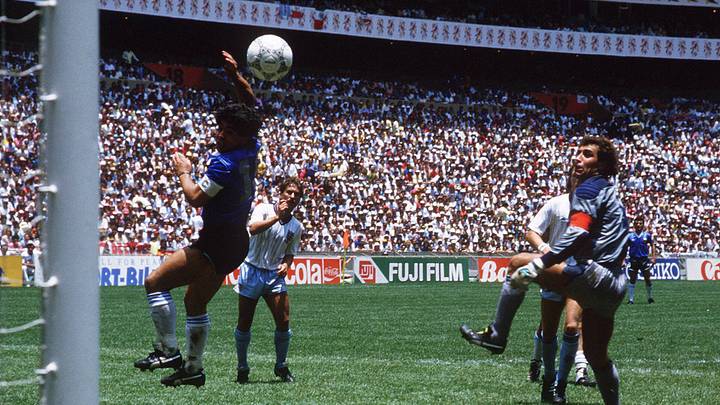
Never in World Cup history has there been an individual performance that combined brilliance, controversy and lasting impact quite like Diego Maradona’s display for Argentina against England in the quarterfinals of the 1986 tournament. In the space of just four minutes, he produced two of the most iconic—and contrasting—moments the game has ever seen.
With the match still goalless in the 51st minute, Maradona first took matters into his own hands—quite literally—leaping above England goalkeeper Peter Shilton to punch the ball into the net. The goal, later dubbed the “Hand of God,” remains the most controversial in World Cup history.
Just four minutes later, he delivered the complete opposite. Picking up the ball in his own half, Maradona embarked on a stunning solo run, dribbling past five England players before finishing coolly—a goal that would be immortalized as the “Goal of the Century.”
Argentina went on to win the tournament, defeating West Germany in the final, but it was that quarterfinal that defined the campaign—a perfect snapshot of Maradona at his most mesmerizing and most controversial: a flawed genius at the peak of his powers.
READ THE LATEST WORLD CUP NEWS, PREVIEWS & ANALYSIS HERE
 Add us as a preferred source on Google
Barnaby Lane, better known as Barney, is a soccer writer for SI FC. With nearly a decade of experience in the industry, he has worked for a range of household-name publications in both the United States and the United Kingdom, and has interviewed some of the world’s biggest athletes—from Usain Bolt and Rafael Nadal to Christian Pulisic (though his favorite interview remains Adebayo Akinfenwa). Barney specializes in Premier League soccer, covering everything from the nostalgia of years gone by to the modern, vastly different landscape of today’s game. He also has experience reporting on La Liga and Major League Soccer, the latter of which he developed a particular affinity for during his university days at Virginia Commonwealth University in Richmond.