%20%20--%3E%0A%3Csvg%20version%3D%221.1%22%20id%3D%22Layer_1%22%20xmlns%3D%22http%3A%2F%2Fwww.w3.org%2F2000%2Fsvg%22%20xmlns%3Axlink%3D%22http%3A%2F%2Fwww.w3.org%2F1999%2Fxlink%22%20x%3D%220px%22%20y%3D%220px%22%0A%09%20width%3D%2239px%22%20height%3D%2240px%22%20viewBox%3D%220%200%2039%2040%22%20enable-background%3D%22new%200%200%2039%2040%22%20xml%3Aspace%3D%22preserve%22%3E%0A%3Cpath%20fill%3D%22%23FFFFFF%22%20d%3D%22M38.5%2C7H28.2v26h10.3V7z%22%2F%3E%0A%3Cpath%20fill-rule%3D%22evenodd%22%20clip-rule%3D%22evenodd%22%20fill%3D%22%23FFFFFF%22%20d%3D%22M26.1%2C25.5c0%2C5.8-4.1%2C7.5-12.9%2C7.5C3.9%2C33%2C0%2C31.2%2C0%2C25.2v-1.1h11.6%0A%09v2.4c0%2C0.7%2C0.1%2C1.4%2C1.2%2C1.4c1%2C0%2C1.2-0.4%2C1.2-1.3v-0.9c0-1.6-0.9-1.6-3.5-2.2C2.2%2C21.7%2C0%2C19.7%2C0%2C15.3v-0.9C0%2C9.3%2C5.5%2C7%2C12.9%2C7%0A%09c10.2%2C0%2C12.8%2C2.6%2C12.8%2C7.4v1.8h-11v-2.9c0-0.6-0.4-1.1-1.2-1.1c-0.6%2C0-1.2%2C0.4-1.2%2C1.1v0.9c0%2C1.5%2C0.9%2C2%2C3.3%2C2.5%0A%09c8%2C1.6%2C10.5%2C3.3%2C10.5%2C7.5V25.5z%22%2F%3E%0A%3C%2Fsvg%3E%0A)
Three Factors That May Have Led Javier Mascherano to Quit Inter Miami
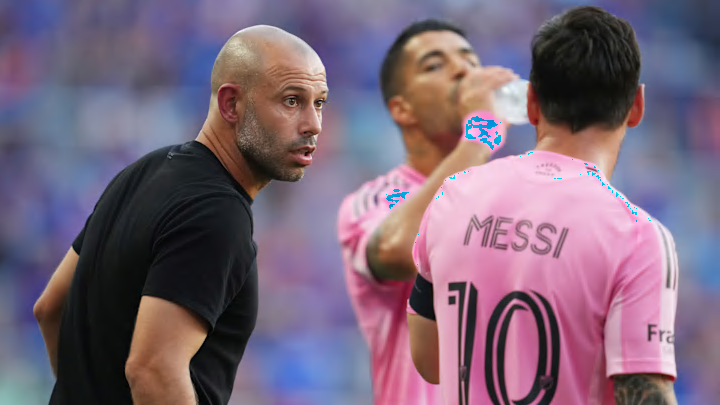
Inter Miami is heading into a new era after Javier Mascherano announced he was leaving as manager due to “personal reasons,” less than five months after leading the team to MLS Cup glory.
The Argentine’s departure comes with the club sat 10th in the Supporters’ Shield standings—they have a 3-1-3 record in MLS—having fallen out of the Concacaf Champions Cup in the Round of 16. While the start to the season had been less than remarkable, Mascherano’s departure—as a longtime teammate and friend of club captain Lionel Messi—was shocking.
Although he was the third coach to leave his post this season in MLS, the situation in Miami is not as dire as it was for Óscar Pareja’s departure from Orlando City or CF Montréal’s split with Marco Donadel.
Here, Sports Illustrated takes a look at three factors that could have influenced the end of the Mascherano era in South Florida.
Struggling to Adapt to Inter Miami’s Organizational Setup

Mascherano was, objectively, a good coach for Miami. Despite not having an overarching say in the roster, he was able to make an impactful change while working with the players given to him, even if they did not fit his tactical vision.
No position highlights the struggle more than the evolving situation at striker, where the club brought in Germán Berterame for $15 million from Rayados de Monterrey, the second-highest transfer in club history, and re-signed Luis Suárez despite his dipping form.
Both players, as good as they can be, did not fit Mascherano’s need for a mobile, creative striker that could elevate Messi’s role, while also taking some of the pressure off the eight-time Ballon d’Or winner.
Due to not having a striker who suited his ideal systems, Mascherano reverted to Suárez at times, amid Berterame’s cold start, simply because there were no other available options across the roster.
At the same time, the struggle to find another attacker who fit his system also changed Messi’s position from a center forward to an attacking midfielder, where the Argentine struggled to adapt, narrowing Miami’s attack, minimizing a striker’s impact and preventing him from elevating himself or the new attackers.
This was Mascherano’s first club coaching role and the first time dealing with team management and the ownership group. It was evident that he was always the head coach, rather than making roster management decisions aligned with the now-interim boss, Guillermo Hoyos.
If Mascherano had had more involvement in recruitment, the project might have gone even better than it did. Instead, it was evident that his ideal style didn’t fit with management’s vision, which also aligns with Messi’s wishes at nearly every turn, despite winning MLS Cup.
Concacaf Champions Cup and LAFC Loss Against Model Clubs

In Hoyos’s first media availability after taking the interim role, he told reporters that he considers Inter Miami to be a “top 10 club in the world.” A bold statement for a team currently sitting 10th in MLS and one that opened the season with a 3–0 loss to LAFC in front of 75,673 fans before crashing out of the Concacaf Champions Cup to Nashville SC.
The reality is, Miami is at best an average team this season, and that comes primarily down to roster construction, rather than any tactics from Mascherano. It’s highlighted by the strikers’ struggles, the consistently underwhelming decisions from center back Maxi Falcón, and the defensive fragility of a once-feisty Rodrigo De Paul.
All of those reasons climaxed in the recent 2–2 draw with Red Bull New York, Mascherano’s final match, but were evident throughout the first part of 2026.
Wow! 😱 Filthy connection from the young @NewYorkRedBulls.
— Major League Soccer (@MLS) April 12, 2026
18-year-old Julian Hall puts the defenders on skates to set up 17-year-old Adri Mehmeti for his first MLS goal. pic.twitter.com/ozH5cEd285
Against LAFC in the season-opener, Miami were overwhelmed by a team they would want to emulate. The Black and Gold have leaned on players who fit their roster ideals and maintained tactical continuity by appointing longtime assistant coach Marc Dos Santos as manager in the wake of Steve Cherundolo’s resignation, while reflecting the vision in moves for a creative midfielder, Stephen Eustáquio, and others.
Nashville, who knocked Miami out on away goals in the Champions Cup Round of 16, brought in Cristian Espinoza as an MLS free agent and a piece that could elevate the already potent duo of Sam Surridge and Hany Mukhtar.
Comparing those roster evolutions to Miami’s, there is a stark difference: Berterame, Dayne St. Clair, David Ayala and Sergio Reguilón have all struggled to settle into their roles, while the team has failed to adapt to losing Sergio Busquets and Jordi Alba. Although injuries have hampered the adjustment, no players have stepped up, and despite shifts from Mascherano, the personnel in the critical positions have underwhelmed.
For any team, end results fall back on decision makers. The first name to suffer at any club is often the manager, as the position is easily replaceable and a quick switch to a new voice often sparks the famed “new coach bump,” even if the problem lies in the greater roster and club construction.
The Personal Reasons Trend

Mascherano’s predecessor, Tata Martino, left his role after a better spell with the club than Mascherano, having set a regular-season MLS points record in 2024 to win the Supporters’ Shield, a more challenging trophy than MLS Cup.
Both have now left after major titles and both have cited “personal reasons” as the point of their resignations. While that can be seen as simply unlucky for Miami, it also reflects the potential toxicity of the position, dealing with the Messi-led spotlight and more, as well as the possibility that coaching at the club may not be the glamorous job it's often portrayed as, given the club's overarching influence on MLS.
Also drawing the two situations closer is the fact that both Martino and Mascherano took their full coaching staff with them when leaving the Herons, which is not often the case when managers leave on their own terms.
Mascherano reportedly told the club that he would leave after the most recent 2–2 draw against a teenage-led Red Bull New York, but to get to that point, the situation likely percolated much earlier, and for it to happen twice is quizzical.
READ THE LATEST MLS NEWS, ANALYSIS AND INSIGHT FROM SI FC
 Add us as a preferred source on Google
Ben Steiner is an American-Canadian journalist who brings in-depth experience, having covered the North American national teams, MLS, CPL, NWSL, NSL and Liga MX for prominent outlets, including MLSsoccer.com, CBC Sports, and OneSoccer.
Follow BenSteiner00