%20%20--%3E%0A%3Csvg%20version%3D%221.1%22%20id%3D%22Layer_1%22%20xmlns%3D%22http%3A%2F%2Fwww.w3.org%2F2000%2Fsvg%22%20xmlns%3Axlink%3D%22http%3A%2F%2Fwww.w3.org%2F1999%2Fxlink%22%20x%3D%220px%22%20y%3D%220px%22%0A%09%20width%3D%2239px%22%20height%3D%2240px%22%20viewBox%3D%220%200%2039%2040%22%20enable-background%3D%22new%200%200%2039%2040%22%20xml%3Aspace%3D%22preserve%22%3E%0A%3Cpath%20fill%3D%22%23FFFFFF%22%20d%3D%22M38.5%2C7H28.2v26h10.3V7z%22%2F%3E%0A%3Cpath%20fill-rule%3D%22evenodd%22%20clip-rule%3D%22evenodd%22%20fill%3D%22%23FFFFFF%22%20d%3D%22M26.1%2C25.5c0%2C5.8-4.1%2C7.5-12.9%2C7.5C3.9%2C33%2C0%2C31.2%2C0%2C25.2v-1.1h11.6%0A%09v2.4c0%2C0.7%2C0.1%2C1.4%2C1.2%2C1.4c1%2C0%2C1.2-0.4%2C1.2-1.3v-0.9c0-1.6-0.9-1.6-3.5-2.2C2.2%2C21.7%2C0%2C19.7%2C0%2C15.3v-0.9C0%2C9.3%2C5.5%2C7%2C12.9%2C7%0A%09c10.2%2C0%2C12.8%2C2.6%2C12.8%2C7.4v1.8h-11v-2.9c0-0.6-0.4-1.1-1.2-1.1c-0.6%2C0-1.2%2C0.4-1.2%2C1.1v0.9c0%2C1.5%2C0.9%2C2%2C3.3%2C2.5%0A%09c8%2C1.6%2C10.5%2C3.3%2C10.5%2C7.5V25.5z%22%2F%3E%0A%3C%2Fsvg%3E%0A)
Why Matheus Cunha Goal Should Have Been Disallowed After PGMO Admission
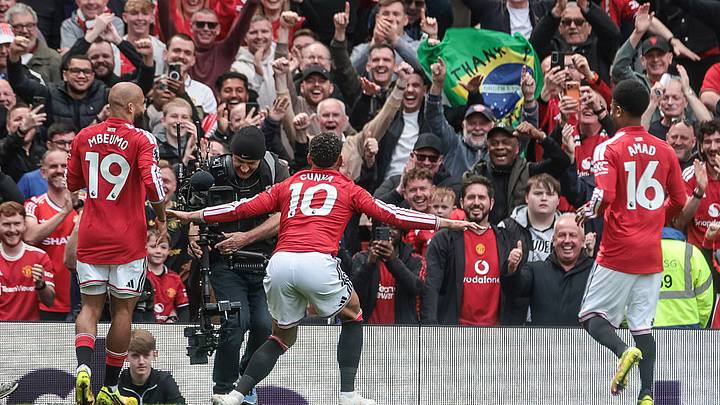
Manchester United’s crucial second goal in Sunday’s 3–2 win over Nottingham Forest should not have counted, in the eyes of refereeing chief Howard Webb.
Webb, head of Professional Game Match Officials (PGMO), is reported to have acknowledged in a discussion with Forest he initiated on Monday that the decision from the on-field referee to let Matheus Cunha’s goal stand was incorrect.
Cunha applied the finish, a goal which put Manchester United 2–1 ahead after a period of Forest pressure, but the issue stemmed from Bryan Mbeumo’s involvement.
Mbeumo’s shot rebounded to Cunha when it was blocked, after the Cameroonian forward had used his arm—albeit accidentally—to initially get the ball under control. Getting caught between Mbeumo’s hip and arm stopped it going past him.
Once Cunha found the bottom corner of the net, there was some hesitancy in the celebrations even though referee Michael Salisbury signaled for a goal. But a VAR intervention that delayed the game for around three minutes then recommended the on-field official take another look.
At that stage, the expectation was that Salisbury would reverse his decision and disallow the goal. But, having consulted the pitch-side monitor for another minute, he stuck to the original decision on account of the handball from Mbeumo still being perceived as “accidental.”
Commentating live for Sky Sports at the time, ex-United captain Gary Neville described the decision as an “an absolute shocker in every single way.”
#MUNNFO – 55’
— Premier League Match Centre (@PLMatchCentre) May 17, 2026
After VAR review, the referee stuck with the original decision to award a goal to Manchester United.
Referee announcement: “After review, the decision of goal stands because the handball offence is accidental, therefore the final decision is goal.”
What Is the Rule on Handball in Soccer?
The soccer rulebook is unhelpfully open to interpretation, but there is nothing in this instance that specifically validates Salisbury’s decision to let the goal stand because of accidental handball.
Only deliberate handball—“moving the hand/arm towards the ball”—is automatically an offense. Crucially, however, a player who “touches the ball with their hand/arm when it has made their body unnaturally bigger” is also deemed guilty of handball. Even though Mbeumo had no intention of using his arm in that moment, that it touched the ball in that position is still considered handball.
The sickener for Nottingham Forest is that, had Mbeumo scored from the shot he took—before it was blocked and fell to Cunha instead, the decision to disallow the goal would have been far easier.
The rules state that it is considered to be a handball offense if a player “scores in the opponents’ goal immediately after the ball has touched their hand/arm, even if accidental.”
Had Mbeumo scored himself, the incident would have been black and white, rather than a little gray.
READ THE LATEST MAN UTD NEWS, ANALYSIS AND INSIGHT FROM SI FC
 Add us as a preferred source on Google
Jamie Spencer is a writer and editor for SI FC. Jamie grew up in Manchester, England, in the 1990s and fell in love with the game at the same time as the Premier League was taking off. With more than a decade of experience behind him in sports media, he specializes in Manchester United and the overall Premier League, still living in England’s north-west soccer hotbed. Jamie is also an expert on the women’s game and enjoys old school nostalgia, telling stories from soccer’s rich history and culture.