%20%20--%3E%0A%3Csvg%20version%3D%221.1%22%20id%3D%22Layer_1%22%20xmlns%3D%22http%3A%2F%2Fwww.w3.org%2F2000%2Fsvg%22%20xmlns%3Axlink%3D%22http%3A%2F%2Fwww.w3.org%2F1999%2Fxlink%22%20x%3D%220px%22%20y%3D%220px%22%0A%09%20width%3D%2239px%22%20height%3D%2240px%22%20viewBox%3D%220%200%2039%2040%22%20enable-background%3D%22new%200%200%2039%2040%22%20xml%3Aspace%3D%22preserve%22%3E%0A%3Cpath%20fill%3D%22%23FFFFFF%22%20d%3D%22M38.5%2C7H28.2v26h10.3V7z%22%2F%3E%0A%3Cpath%20fill-rule%3D%22evenodd%22%20clip-rule%3D%22evenodd%22%20fill%3D%22%23FFFFFF%22%20d%3D%22M26.1%2C25.5c0%2C5.8-4.1%2C7.5-12.9%2C7.5C3.9%2C33%2C0%2C31.2%2C0%2C25.2v-1.1h11.6%0A%09v2.4c0%2C0.7%2C0.1%2C1.4%2C1.2%2C1.4c1%2C0%2C1.2-0.4%2C1.2-1.3v-0.9c0-1.6-0.9-1.6-3.5-2.2C2.2%2C21.7%2C0%2C19.7%2C0%2C15.3v-0.9C0%2C9.3%2C5.5%2C7%2C12.9%2C7%0A%09c10.2%2C0%2C12.8%2C2.6%2C12.8%2C7.4v1.8h-11v-2.9c0-0.6-0.4-1.1-1.2-1.1c-0.6%2C0-1.2%2C0.4-1.2%2C1.1v0.9c0%2C1.5%2C0.9%2C2%2C3.3%2C2.5%0A%09c8%2C1.6%2C10.5%2C3.3%2C10.5%2C7.5V25.5z%22%2F%3E%0A%3C%2Fsvg%3E%0A)
Tennis Mailbag: It’s Time for the Sport to Address Gambling, Ticket Prices
Hey, everyone …
• Here’s the latest Served podcast:
• Andy Roddick is heading to ESPN (for the record this doesn’t impact Served, the podcast and our little media company).
• Happy Craig Tiley day:
USTA appoints Craig Tiley as Chief Executive Officer.
— USTA (@usta) February 24, 2026
Globally recognized CEO of Tennis Australia to guide American tennis into its next era of growth and innovation.
Read more: https://t.co/9UFpUAbdtC pic.twitter.com/OMx3c4okBU
• Venus Williams is returning to Indian Wells.
• Tennis treasure Greg Sharko did a great job reporting from the NCAA event in Dallas last week.
• Here are some more details about Destanee Aiava’s retirement, thanks to Takashi Williams.
Gambling in tennis
• A few of you have written recently about gambling issues you’ve faced, including results you have found suspicious, bets that haven’t been paid and disputes with sportsbooks. If there’s a systemic issue or material evidence of corruption, I’m happy to investigate. But mere suspicions or quirky results aren’t enough. And I can’t be customer service for DraftKings, FanDuel and the others.
One of the many harms of the gambling culture is that it erodes trust in the product. Any comeback is immediately deemed suspect. Any official’s ruling inevitably leads to charges that they’re on the take. The unpredictability of sports and the unexpected plot twists and quirks—some of sports’ great assets and sources of appeal—are now seen through a prism of conspiracy. What a pity.
Full disclosure: I don’t gamble on sports. I can’t gamble on sports as a condition of receiving a credential. Should sports gambling be illegal? No. If people want to wager on uncertain events, that is an urge as old as human history and should be permitted. If people want to wager despite the odds being stacked against them and toward the house/sportsbooks, that’s their choice. Is sports gambling a public health crisis? Increasingly, yes. Does it threaten the integrity of competition? Increasingly, yes. Are sports and leagues slurping from the sportsbook’s trough for short-term nourishment but long-term peril? Yes. Is tennis particularly vulnerable? Yes.
One fundamental question I have for tennis bettors: What makes you think you have superior information? Put another way, do you really think you know more than anyone out there about a player’s injury, mood, life circumstances, etc.? If the answer is no, you are putting yourself in a position to lose.
Q&A
• Jon, if your daughter played professional tennis on the WTA Tour, what’s the one thing you would tell her?
James L., Las Vegas
Just one? Stay off social media. Another one? Seek mentorship from Jessica Pegula.
Seriously, I’d say a version of this: You’re the CEO. Don’t let anyone else play the role of boss. Part ways with a coach who doesn’t jibe with you. There is no such thing as a mandatory event—don’t play if you’re not up to it. Respect your colleagues. Respect your fans. Respect the tour. Respect the media. But you have ultimate agency; run your career like a start-up you founded.

Jon, I know you have touted Karolína Muchová in the past. I like watching her play but where do you see her career going now? Can she really win a major? Thanks.
Brett, Calif.
• Remember last week’s discussion about Frances Tiafoe and how personal and visceral fond feelings can cloud objective reality. I feel like there’s a version of that going on here. The tennis salon really likes Muchová, as we—or it—should. Here is a player with a versatile, all-court, all-surface game. (Remember, she came within a few games of beating Iga Świątek to steal the 2023 Roland Garros title.) She has flair, athleticism and shotmaking. She’s a veteran but still has some career runway. She has made deep runs at majors and even has a winning record against the current world No. 1.
Then you look at her results, and it’s sobering. She won the title in Doha last week, which is awesome. It also marked her second career title, with the first one being before the COVID-19 pandemic. She has advanced to the quarters or better at majors seven times, and yet she’s only won two career titles? And while it’s not her fault, she’s failed to get through so many seasons without significant injury—most seriously, a wrist injury, one of the worst injuries a tennis player can have.
There’s so much to like here. And if Muchová won a major, it would not at all be surprising. (She’s been to the semifinals or better at every major except for Wimbledon, where she’s been to multiple quarterfinals.) But if I were going to pick a likely breakthrough major winner, there are several other names (Amanda Anisimova, Elina Svitolina, Pegula, maybe Qinwen Zhang) higher on the list.
Hi Jon,
I’m a longtime tennis fan and regular reader/listener of your work. I’m writing with a guest question and a concern I hope you might consider addressing.
Tickets went on sale yesterday for several of the August International Tennis Hall of Fame induction weekend events surrounding Roger Federer’s induction. Events sold out within roughly two minutes. While I expected strong demand, the speed of the sellout suggests that very few tickets were available to the general public.
Like many fans, I logged in right at the start time and still had no realistic chance
to secure tickets. It was surprisingly discouraging—especially for an event meant to celebrate the sport’s history with its fans.
My question is broader than just my situation: As tennis grows and major moments like this draw global attention, are organizers doing enough to ensure fair public access to milestone events? And is there a better model for balancing sponsors, partners and insiders with dedicated fans who are willing to travel and support the sport?
I’d appreciate any attention you might bring to this—even just raising the question helps fans feel heard.
Thanks for all you do for tennis coverage and discussion each week.
Best regards,
Dave E.
• A quick story: Last week, a friend wanted to take his wife to the Broadway show, Just in Time. It’s based on Bobby Darin, and stars Jonathan Groff of Hamilton fame. It received strong reviews and seemed like a fun night out.
Then said friend looked at the price of tickets. They were expensive. Like, prohibitively expensive. I—did I say that? I meant my friend—like Broadway as much as anyone. But to me, $800 for two tickets is not rational. I can’t justify that, no matter how breathless the reviews are. But wait, this theater has a standing section, with tickets going for $40. You have to stand in line the morning of the performance, but that I can do. So, for $80, my wife and I stood a half-dozen rows back from the stage and, joined by other bargain hunters, watched the show. It was great. See it if possible.
Anyway, I kept thinking back to tennis. Why is it that this 750-seat theater on Broadway—which hardly has the margins of the U.S. Open, much less the seating inventory—can come up with a way to accommodate theater fans reluctant to pay through the nose? But tennis struggles so mightily?
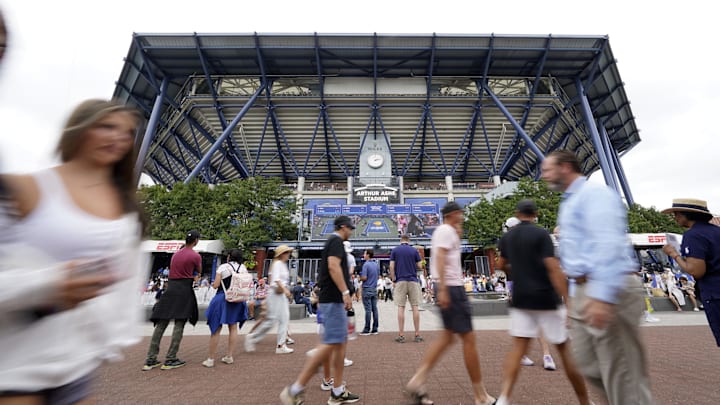
Increasingly, tennis fans feel priced out. Increasingly, I see matches played before pastures of empty seats. It’s not an issue of supply and demand or market economics. (Note the unsold seats at Arthur Ashe Stadium, Stadium 1 at Indian Wells, etc.) It’s a lack of will and creativity. Use an open-source dynamic pricing model, AI or consult Broadway. There must be a win-win here.
I have been impressed by the Australian Open’s website in the past, but what happened with the videos this year? No “shot of the day”, and the highlights weren’t nearly as well curated—for example, the final highlights were just three minutes, with only one shot from the impressive first set (and yet they included a shot that was randomly hit into the net). Especially combined with the increased difficulty in finding live matches, it’s really made the tournament harder to appreciate …
Kevin (Portland)
• My gripe was that it was hard to find interviews. But yes, we live in clip culture, and a paucity of videos does a disservice to fans, players and the event itself.
Jon,
When did you start coaching Vanderbilt men’s basketball?!? Where do you find the time?!? At any rate you’re doing a great job there in Nashville. Go Dores!
Paul R.
• This is a reference to Vanderbilt basketball coach Mark Byington.
Speaking of look-alikes, I’ll tell you all a quick story. Last year, I was shooting a 60 Minutes piece in Europe. I sat down for an interview and the subject said I looked exactly like Medvedev. I never envisioned myself as a 6' 6" Russian, who is more than 20 years my junior, but, hey, I try to proceed on the assumption we all see the world differently. And if nothing else, I seized on this as an easy rapport-builder.
“You’re a big tennis fan?” I asked, excitedly.
“No. Why?” they responded.
“Well, because you said I looked like Daniil Medvedev …”
“No, his first name is Dmitry.”
Shots
• The USTA Foundation is the beneficiary of the 22nd annual Desert Smash, on March 2 and 3 at the LaQuinta Resort. The 2026 event will feature four-time major champion Naomi Osaka and former world No. 1 and two-time U.S. Open champion Tracy Austin. Other WTA stars participating include world No. 3 and two-time major champion Elena Rybakina, who recently won the Australian Open, No. 10 Canadian teenager Victoria Mboko and rising American teenager Iva Jovic.
HAVE A GOOD WEEK, EVERYONE!
More Tennis on Sports Illustrated
 Add us as a preferred source on Google
Jon Wertheim is a senior writer for Sports Illustrated and has been part of the full-time SI writing staff since 1997, largely focusing on the tennis beat, sports business and social issues, and enterprise journalism. In addition to his work at SI, he is a correspondent for “60 Minutes” and a commentator for The Tennis Channel. He has authored 11 books and has been honored with two Emmys, numerous writing and investigative journalism awards, and the Eugene Scott Award from the International Tennis Hall of Fame. Wertheim is a longtime member of the New York Bar Association (retired), the International Tennis Writers Association and the Writers Guild of America. He has a bachelor’s in history from Yale University and received a law degree from the University of Pennsylvania. He resides in New York City and Paris with his wife, who is a divorce mediator and adjunct law professor. They have two children.
Follow jon_wertheim