%20%20--%3E%0A%3Csvg%20version%3D%221.1%22%20id%3D%22Layer_1%22%20xmlns%3D%22http%3A%2F%2Fwww.w3.org%2F2000%2Fsvg%22%20xmlns%3Axlink%3D%22http%3A%2F%2Fwww.w3.org%2F1999%2Fxlink%22%20x%3D%220px%22%20y%3D%220px%22%0A%09%20width%3D%2239px%22%20height%3D%2240px%22%20viewBox%3D%220%200%2039%2040%22%20enable-background%3D%22new%200%200%2039%2040%22%20xml%3Aspace%3D%22preserve%22%3E%0A%3Cpath%20fill%3D%22%23FFFFFF%22%20d%3D%22M38.5%2C7H28.2v26h10.3V7z%22%2F%3E%0A%3Cpath%20fill-rule%3D%22evenodd%22%20clip-rule%3D%22evenodd%22%20fill%3D%22%23FFFFFF%22%20d%3D%22M26.1%2C25.5c0%2C5.8-4.1%2C7.5-12.9%2C7.5C3.9%2C33%2C0%2C31.2%2C0%2C25.2v-1.1h11.6%0A%09v2.4c0%2C0.7%2C0.1%2C1.4%2C1.2%2C1.4c1%2C0%2C1.2-0.4%2C1.2-1.3v-0.9c0-1.6-0.9-1.6-3.5-2.2C2.2%2C21.7%2C0%2C19.7%2C0%2C15.3v-0.9C0%2C9.3%2C5.5%2C7%2C12.9%2C7%0A%09c10.2%2C0%2C12.8%2C2.6%2C12.8%2C7.4v1.8h-11v-2.9c0-0.6-0.4-1.1-1.2-1.1c-0.6%2C0-1.2%2C0.4-1.2%2C1.1v0.9c0%2C1.5%2C0.9%2C2%2C3.3%2C2.5%0A%09c8%2C1.6%2C10.5%2C3.3%2C10.5%2C7.5V25.5z%22%2F%3E%0A%3C%2Fsvg%3E%0A)
The Ultimate World Cup Team Overperformance: Cameroon in 1990
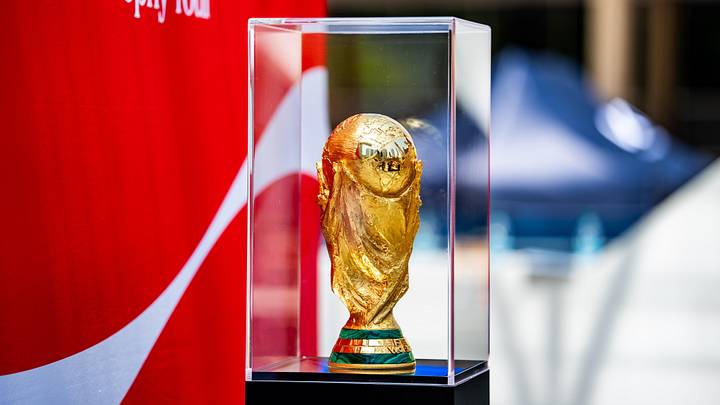
The FIFA World Cup is a celebration of soccer greatness. It’s where the very best collide in a bid to hone and enhance legacies.
And while the cream of the crop enjoys much of the attention, the almost 100-year-old competition also has a knack for championing the underdog.
There will be four World Cup debutants at the expanded 2026 iteration, only increasing the likelihood of a fairytale run that captures hearts and minds. Nowadays, it’s almost a guaranteed subplot of any World Cup.
Those who few are paying much notice of can take solace in knowing that there have been plenty in their shoes before. The World Cup has been rife with overperformers, and perhaps none more important that the Indomitable Lions of Italia ’90.
Here’s an overview of the ultimate World Cup underdog story.
Background
Ready for another edition of #WhatHappensNext? @CBF_Futebol win a free-kick against Zaire at the 1974 #WorldCup, tweet to unlock the full video!#WorldCup_GOAL: Brazil Score#WorldCup_CLEARANCE: Zaire employ a "different" form of defence...
— FIFA World Cup (@FIFAWorldCup) May 22, 2018
Cameroon gained its independence from France at the start of 1960 and become a FIFA member three years later. Within 20 years, the newly-established country qualified for its first World Cup.
Then, African soccer was regarded as primitive and harmless, with post-colonial stereotypes rife in any discourse. The world patronised the continent’s "innocence", as a legendary BBC commentator memorably quipped after Zaire’s Mwepu Ilunga disrupted a Brazil free-kick at the 1974 World Cup by charging out of the wall and booting the ball into oblivion.
Zaire was just the third African nation to qualify for FIFA‘s grand event, and its efforts in West Germany only solidified global perceptions.
However, there was promise in the ’80s. Cameroon didn’t win a game in 1982, but Algeria showed glimpses and were cruelly denied a spot in the knockouts by the ’Disgrace of Gijon’. Four years later, Morocco topped their group but were subsequently beaten 1–0 by West Germany in the first knockout round.
By the time Italia ’90 rolled around, there was a sense that African soccer was on the up. Cameroon, Africa Cup of Nations (AFCON) winners in 1984 and 1988, was one of two nations from the continent competing in the Mediterranean, but the team’s preparations were far from ideal.
Russian Valery Nepomnyashchy, hired two years prior with impressively little coaching experience, was pressured into picking retired veteran striker Roger Milla, 38, by president Paul Biya to prevent social unrest. Their pre-tournament camp in Yugoslavia offered few signs of encouragement (they lost all of their warm-up games), yet Cameroon would embark on a campaign that’d change African soccer forever.
Cameroon’s World Cup Record Before Italia ’90
Tournaments | Games played | Wins | Draws | Losses | Goals scored |
|---|---|---|---|---|---|
1 | 3 | 0 | 3 | 0 | 1 |
Cameroon’s 1990 World Cup Campaign
#OnThisDay in 1990, Roger Milla made the pitch his dancefloor. 🇨🇲🕺#FIFAWorldCup pic.twitter.com/nkb6FYNg0T
— FIFA World Cup (@FIFAWorldCup) June 23, 2024
The bulk of Nepomnyashchy’s squad either plied its trade back home or in France’s lowest leagues. Among the very few with experience of Europe’s premier divisions was goalkeeper Joseph-Antoine Bell, who was dropped from the starting lineup hours before their tournament opener against Argentina for criticising Cameroon’s preparations in the press.
While the Indomitable Lions were more talented than anybody gave them credit for, the majority expected Nepomnyashchy’s side to succumb to a battering when they faced the holders at San Siro, not least themselves.
But there was no Milanese mauling. Instead, Cameroon pulled off one of the greatest World Cup upsets. François Omam-Biyik’s header squirmed through Nery Pumpido to give them a stunning lead they’d refuse to relinquish, despite eventually being reduced to nine men as they cynically attempted to stymie the Diego Maradona-led Albiceleste.
🍾 To celebrate #2YearsToGo let's look back at a few opening goals at the #WorldCup through the years
— FIFA World Cup (@FIFAWorldCup) November 21, 2020
📼 First up? Francois Omam-Biyik's incredible header getting the party started at Italy 1990 as Cameroon shocked Argentina 😲
🇨🇲 @FecafootOfficie pic.twitter.com/XHJGCwEtPm
Bell’s replacement between the posts, Thomas N’Kono, watched on relatively untested, but Romania, in their second group game, certainly made him work. Espanyol’s then-33-year-old shot-stopper was outstanding against the Eastern Europeans, supposedly inspiring a young Gianluigi Buffon to take up the craft, and he wasn’t breached until the 88th-minute. By that point, Milla had twice performed his iconic wriggle by the corner flag, and Cameroon were up 2–0.
Nepomnyashchy was already thinking about the last 16 when the Soviet Union secured a thumping 4–0 victory on Matchday 3.
Group B
Pos. | Nation | Played | Won | Drawn | Lost | Points |
|---|---|---|---|---|---|---|
1. | Cameroon | 3 | 2 | 0 | 1 | 4 |
2. | Romania | 3 | 1 | 1 | 1 | 3 |
3. | Argentina | 3 | 1 | 1 | 1 | 3 |
4. | Soviet Union | 3 | 1 | 0 | 2 | 2 |
Knockout Stages
🏴 @England are preparing for a major quarter-final in Italy at #EURO2020
— FIFA World Cup (@FIFAWorldCup) July 1, 2021
🔙 #OnThisDay in 1990 they played another major quarter-final in Italy at the #WorldCup. Minutes away from defeat, Paul Gascoigne and @GaryLineker combined to secure a thrilling 3-2 win over Cameroon 🙌 pic.twitter.com/GWsw3IYs0Y
Colombia certainly didn’t enter Italia ’90 with the expectations they‘d boast in the United States four years later. They sneaked out of a tough group also comprising eventual winners West Germany and an excellent Yugoslavia team, and were led on-field by Milla’s talismanic former teammate at Montpellier, Carlos Valderrama.
Colombia’s No. 10 could only watch on as Milla stole the show again. Continuing to make the difference off the bench, the 38-year-old struck twice in extra-time to thrust the Indomitable Lions into the quarterfinals. By beating Argentina in Milan, they’d become the first Sub-Saharan African nation to win at a game at the World Cup. Now, they were Africa’s first World Cup quarterfinalists.
England was in the middle of its own seismic journey in Italy, and they were heavy favorites to advance at Cameroon’s expense despite a rather indifferent start to the tournament. The Three Lions scraped by Egypt to claim their only win of the group stage, and they were mightily fortunate to bypass Belgium in the last 16.
And, in the words of defender Terry Butcher, England were "so, so lucky" to escape Naples as the victors. Cameroon was the superior outfit, dazzling the Three Lions with the fluidity of their possession play, especially once Milla entered the fray in the second half. If only Gary Lineker weren’t so canny, then Cameroon may well have prepared for another giant-killing. Instead, Lineker‘s penalty-winning and scoring abilities helped England overturn a 2–1 deficit in extra time.
It was the end of a Cameroonian fairytale that’d captivated the neutral and helped shift ideas of Africa’s soccer competence at a time when the world was drastically changing.
Legacy

Commentator Peter Drury famously asserted that Siphiwe Tshabalala’s stunning opening goal to kick off the 2010 World Cup wasn’t just a goal for South Africa, but a "goal for all Africa."
Similarly, Cameroon’s efforts at Italia ’90 transcended national pride. As another Cameroonian great, Samuel Eto’o, said: "Milla set a whole continent on fire. It’s a fire that still burns today."
Milla and the Indomitable Lions forged a path for their neighbours to follow. In 1994, Nigeria’s ’golden generation’ impressed in the U.S., Senegal were stunning quarterfinalists in 2002, as were Ghana in 2010. Morocco became Africa’s first World Cup semifinalists in 2022, beating Belgium, Spain and Portugal along the way.
Cameroon’s achievement has thus been usurped, but they remain Africa’s soccer trailblazers on the grandest stage, especially when you consider how ill-prepared they appeared pre-tournament back in 1990.
READ THE LATEST WORLD CUP NEWS, ANALYSIS AND INSIGHT FROM SI FC
 Add us as a preferred source on Google
James Cormack is a writer for SI FC. Opting against a football coaching undergraduate degree at the last minute, he instead decided to take on a six-month internship with 90min in 2019 and hasn't looked back. Cormack's current SEO focus means he tends to venture to the land of match previews and predicted lineups, but he also has a wealth of experience in news and feature writing. A passion for soccer's history and the European game often takes his work beyond the familiarity of the Premier League, but it's with Tottenham Hotspur where his strongest allegiance lies.