%20%20--%3E%0A%3Csvg%20version%3D%221.1%22%20id%3D%22Layer_1%22%20xmlns%3D%22http%3A%2F%2Fwww.w3.org%2F2000%2Fsvg%22%20xmlns%3Axlink%3D%22http%3A%2F%2Fwww.w3.org%2F1999%2Fxlink%22%20x%3D%220px%22%20y%3D%220px%22%0A%09%20width%3D%2239px%22%20height%3D%2240px%22%20viewBox%3D%220%200%2039%2040%22%20enable-background%3D%22new%200%200%2039%2040%22%20xml%3Aspace%3D%22preserve%22%3E%0A%3Cpath%20fill%3D%22%23FFFFFF%22%20d%3D%22M38.5%2C7H28.2v26h10.3V7z%22%2F%3E%0A%3Cpath%20fill-rule%3D%22evenodd%22%20clip-rule%3D%22evenodd%22%20fill%3D%22%23FFFFFF%22%20d%3D%22M26.1%2C25.5c0%2C5.8-4.1%2C7.5-12.9%2C7.5C3.9%2C33%2C0%2C31.2%2C0%2C25.2v-1.1h11.6%0A%09v2.4c0%2C0.7%2C0.1%2C1.4%2C1.2%2C1.4c1%2C0%2C1.2-0.4%2C1.2-1.3v-0.9c0-1.6-0.9-1.6-3.5-2.2C2.2%2C21.7%2C0%2C19.7%2C0%2C15.3v-0.9C0%2C9.3%2C5.5%2C7%2C12.9%2C7%0A%09c10.2%2C0%2C12.8%2C2.6%2C12.8%2C7.4v1.8h-11v-2.9c0-0.6-0.4-1.1-1.2-1.1c-0.6%2C0-1.2%2C0.4-1.2%2C1.1v0.9c0%2C1.5%2C0.9%2C2%2C3.3%2C2.5%0A%09c8%2C1.6%2C10.5%2C3.3%2C10.5%2C7.5V25.5z%22%2F%3E%0A%3C%2Fsvg%3E%0A)
Ilia Malinin Took on the Olympic Pressure So the U.S. Could Take Home Gold
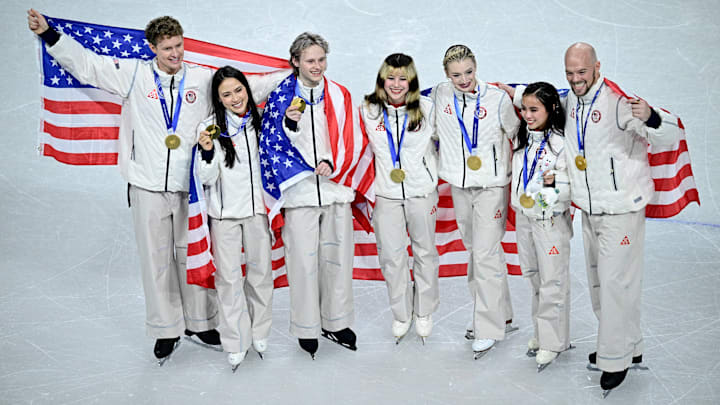
MILAN — The one hard truth about the Olympics is that no matter who you are, or how you got here, the pressure will find you. Sometimes it lands in your stomach and starts stomping around until you feel sick. Sometimes it runs circles around your head, and you feel dizzy but you don’t know why. The stomach is preferable.
Ilia Malinin found that out this weekend. Malinin is 21, and calling him the best male figure skater in the world doesn’t quite capture it. He is a phenomenon, the Quad God, Simone Biles on skates. Imagine his surprise, then, when he skated the short program in the team event Saturday, and—by his standards, anyway—made a mess of it.
He finished second, well behind Japan’s Yuma Kagiyama. At first, Malinin thought his uneven performance was “just out of nowhere.” He could have left it at that. It was just the team event. He is Ilia Malinin. No reason to worry.

“I had to sit around for a few hours, thinking [about] why that happened yesterday in the short program,” Malinin said Sunday night. “It came to: I didn’t really understand the impact of the Olympic environment. I think that was the reason why.”
From there, he made two decisions. The first: He would skate the long program in the team event. This was expected but not required; Yagiyama did not skate the long program for Japan. Malinin could have said he wanted to regroup and start concentrating on the men’s singles competition. But he knew that the only way to work through the pressure was to compete again.
His second decision would come later.
First, the pairs had to skate. The Americans were not expected to finish first. Danny O’Shea said the goal was “to be as close to the Japanese team as possible.” But at the Olympics, the pressure finds everybody. O’Shea turns 35 this week, but his partner, Ellie Kam, is only 21. This is her first Olympics. By this point in the team event, it was clear that every point would matter.
Right around the time their program began, O’Shea said two words to Kam:
“Hardest part.”
When O’Shea and Kam started skating together in 2022, they rushed into competition so quickly that they would mess up the most basic things.
“It was just a whirlwind at the beginning of our partnership,” O’Shea said. “We didn’t have time to practice, like, ‘How do you get on the ice?’ ”
They started joking that the start of any routine—skating together, facing each other— was the hardest part. Now O’Shea says it before competitions to help them both relax.
O’Shea and Kam talked quite a bit through their performance Sunday. When they landed a through loop (“Well, I stood there—she landed it,” O’Shea said), Kam said “Caaaaaaaaalm!” So much of pairs skating is about trust. O’Shea and Kam have skated together long enough to know that whatever they say when they are out there will only help. Sometimes, the skater who speaks is the one who needs to hear.

“Even if he says something that, like, doesn’t rub me in the right way,” Kam said, “[I] know that he has his best intentions.”
O’Shea and Kam finished fourth. Amber Glenn finished third in the women’s singles.
This set up Malinin’s second decision.
He looked up, he saw that Japan and the United States were tied, and he thought: Good.
“That attention, that pressure … seeing that it was gonna be a tie right now, and that deciding factor was gonna be my skate or not,” Malinin said later, “I really went out there and just decided, ‘O.K., let the nerves down. You just really need to get in the zone, and really just let things happen.”
His long program was not perfect. But one thing about Malinin is that, because he is capable of more than anybody else, he has a greater margin for error. He did not look like Ilia Malinin feeling pressure. He looked like Ilia Malinin. His score of 200.03 put the Americans in first place with one skater left.
“I’m proud of myself,” he said later.
Japan’s Shun Sato was the final long-program skater. He finished sixth at last year’s world championships. He was not supposed to beat Malinin. But Sato is 22, one of the best skaters in the world, and like Malinin, Sato knew that whether his teammates won silver or gold would come down to his skate. He skated magnificently. But Olympic pressure finds everybody, eventually. When his score of 194.86 posted, Sato burst into tears.
More Winter Olympics on Sports Illustrated
 Add us as a preferred source on Google
Michael Rosenberg was a senior writer for Sports Illustrated, covering any and all sports. He writes columns, profiles and feature stories and has covered almost every major sporting event. He joined SI in 2012 after working at the Detroit Free Press for 13 years, eight of them as a columnist. Rosenberg is the author of “War As They Knew It: Woody Hayes, Bo Schembechler and America in a Time of Unrest.” Several of his stories also have been published in collections of the year’s best sportswriting. He is married with three children.
Follow rosenberg_mike