%20%20--%3E%0A%3Csvg%20version%3D%221.1%22%20id%3D%22Layer_1%22%20xmlns%3D%22http%3A%2F%2Fwww.w3.org%2F2000%2Fsvg%22%20xmlns%3Axlink%3D%22http%3A%2F%2Fwww.w3.org%2F1999%2Fxlink%22%20x%3D%220px%22%20y%3D%220px%22%0A%09%20width%3D%2239px%22%20height%3D%2240px%22%20viewBox%3D%220%200%2039%2040%22%20enable-background%3D%22new%200%200%2039%2040%22%20xml%3Aspace%3D%22preserve%22%3E%0A%3Cpath%20fill%3D%22%23FFFFFF%22%20d%3D%22M38.5%2C7H28.2v26h10.3V7z%22%2F%3E%0A%3Cpath%20fill-rule%3D%22evenodd%22%20clip-rule%3D%22evenodd%22%20fill%3D%22%23FFFFFF%22%20d%3D%22M26.1%2C25.5c0%2C5.8-4.1%2C7.5-12.9%2C7.5C3.9%2C33%2C0%2C31.2%2C0%2C25.2v-1.1h11.6%0A%09v2.4c0%2C0.7%2C0.1%2C1.4%2C1.2%2C1.4c1%2C0%2C1.2-0.4%2C1.2-1.3v-0.9c0-1.6-0.9-1.6-3.5-2.2C2.2%2C21.7%2C0%2C19.7%2C0%2C15.3v-0.9C0%2C9.3%2C5.5%2C7%2C12.9%2C7%0A%09c10.2%2C0%2C12.8%2C2.6%2C12.8%2C7.4v1.8h-11v-2.9c0-0.6-0.4-1.1-1.2-1.1c-0.6%2C0-1.2%2C0.4-1.2%2C1.1v0.9c0%2C1.5%2C0.9%2C2%2C3.3%2C2.5%0A%09c8%2C1.6%2C10.5%2C3.3%2C10.5%2C7.5V25.5z%22%2F%3E%0A%3C%2Fsvg%3E%0A)
Look Out, World: The U.S. Is Coming for Curling
CORTINA d’AMPEZZO, Italy — To quote Coach Prime, We comin’.
The United States of America is coming for curling. We are on a collision course with worldwide domination; the only variable is time. Everyone else might as well attach white flags to their brooms and surrender. It’s over, or will be soon.
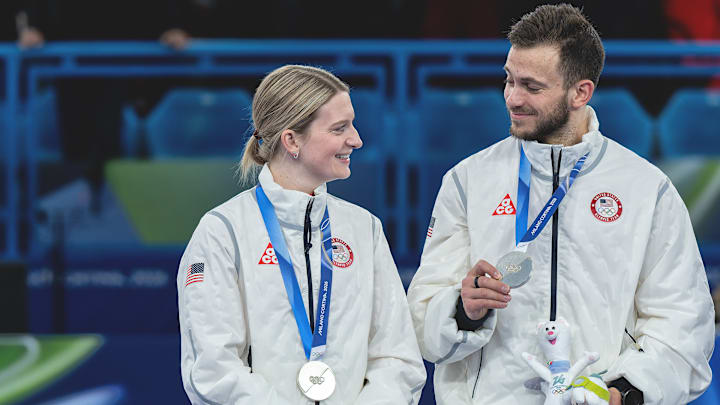
Today, it’s a silver medal in mixed doubles, courtesy of Korey Dropkin and Cory Thiesse. Soon enough, it will be a gold rush across men’s, women’s and mixed doubles. We’ll be spinning stones and breaking bones.
We were undoubtedly cheated out of gold by the Swedes in that 6–5 heartbreaker Tuesday night, but I haven’t figured out the sport well enough to know exactly how. Still, it’s the American way to claim cheating in defeat. I’m sure the curling message boards will be on fire with incriminating freeze frames of Swedish malfeasance that went undetected by the corrupt refs who are trying to protect the establishment and keep an upstart nation down.
(Despite being robbed, it’s difficult to hate the Swedes. Their meatballs and fish are good. Volvos are nice, when they’re not in the shop. Björn Borg was cool. Picking a fight with them would be like, I don’t know, going after Greenland. Who would do that?)
All things considered, a curling silver medal is great—the first American medal of any kind in mixed doubles, and just the third Olympic medal ever in the sport for the U.S. It’s a Cinderella story, out of nowhere.
And it’s more than we’ve accomplished in some other sports so far at Milan Cortina. Team USA’s overall medal haul through Tuesday is seven, just two gold. Norway is lapping us.
Nobody thought Our Lad Dropkin and Lass Theisse could get this far, but there they were, racking up a 6–3 record to reach the medal round. Once there, certainly nobody thought they could beat defending world and Olympic champion Italy in the semifinals.

But Italy ain’t played nobody, Pawwwl. The host country’s A team wasn’t ready for our speed, power, accuracy and game plan. Everybody’s got a plan until they get a hammer in the house.
Thiesse, a steely-eyed, level-headed customer whose day job is a lab technician, became the first American woman to win a curling medal. Dropkin is a realtor off the ice but a showman on it—flexing a considerable bicep after a clutch play, egging on the crowd, manically sweeping with calloused and bandaged hands.
The tandem effectively punctures the beer league stereotype that comes with the slow-motion sport. They’re in shape, they’re highly coordinated, they’re nimble and flexible. (That said, curling can also be a beer league—another attribute in its favor.)
The riveting run to the gold medal match by Dropkin and Thiesse silenced the doubters and made a mockery of the pundits, who are forever underrating our curlers. The preseason magazines and polls were way off, as usual.
Now here we are. The rising curling power on this planet cannot be kept down. The fever has arrived and spiked, becoming an unconfined contagion. Just look at the stands and listen to the fans at the Cortina Curling Center on Tuesday night—filling seats and chanting “U-S-A” like it’s Lake Placid in 1980.
Americans showed up like Indiana fans during the College Football Playoff. It was suitably raucous before one key moment of the match, when Dropkin was hunched over the ice to send a stone gradually skimming to the other end, that a fan in stars-and-stripes gear stood up and frantically waved his arms for quiet—like a quarterback coming to the line of scrimmage in a loud home stadium.
After a showdown that intense, with that much on the line, it was understandable that none of the medalists made it in for the post-match press conference within 90 minutes of it ending. They needed space. Sporting giants cannot be rushed. And besides, it’s not like curling needs publicity or anything.
Ultimately, this performance will only help recruiting. Parents will put tiny brooms in their newborns’ cribs. Five-star talents will be requesting ice time in their local leagues, playing pick-up shuffleboard in the towns that don’t have curling facilities, and watching it on ESPN. (Oh yeah, the upcoming Rock League is inevitable for the World Wide Leader. If they could get the world’s best golfers to hit balls into screens simulating real courses, why not curling? Think of the revenue from advertising on the stones.)

Private equity firms are standing by, ready to invest. The Saudis want a piece of the action. With the additional money we can buy out our bad coaches and steal some good ones from overseas.
Think ahead to 2034. By then, football will be deemed too violent. Basketball will be deemed too strenuous. Baseball will be deemed unwatchable. Hockey will no longer be the most popular sport on ice. Curling will fill the vacuum.
We will get the world on home ice in Salt Lake City for the 2034 Olympics. That will be like Tiger Stadium at night, Cameron Indoor and Lambeau Field rolled into one. I feel a medal sweep coming on.
More Winter Olympics on Sports Illustrated
 Add us as a preferred source on Google
Pat Forde is a senior writer for Sports Illustrated who covers college football and college basketball as well as the Olympics and horse racing. He cohosts the Others Receiving Votes podcast for SI and is a regular contributor to the Tony Kornheiser Show podcast. He previously worked for Yahoo Sports, ESPN and The (Louisville) Courier-Journal. Forde has won 28 Associated Press Sports Editors writing contest awards, has been published three times in the Best American Sports Writing book series, and was nominated for the 1990 Pulitzer Prize. A past president of the U.S. Basketball Writers Association and member of the Football Writers Association of America, he lives in Louisville with his wife. They have three children, all of whom were collegiate swimmers.
Follow ByPatForde