%20%20--%3E%0A%3Csvg%20version%3D%221.1%22%20id%3D%22Layer_1%22%20xmlns%3D%22http%3A%2F%2Fwww.w3.org%2F2000%2Fsvg%22%20xmlns%3Axlink%3D%22http%3A%2F%2Fwww.w3.org%2F1999%2Fxlink%22%20x%3D%220px%22%20y%3D%220px%22%0A%09%20width%3D%2239px%22%20height%3D%2240px%22%20viewBox%3D%220%200%2039%2040%22%20enable-background%3D%22new%200%200%2039%2040%22%20xml%3Aspace%3D%22preserve%22%3E%0A%3Cpath%20fill%3D%22%23FFFFFF%22%20d%3D%22M38.5%2C7H28.2v26h10.3V7z%22%2F%3E%0A%3Cpath%20fill-rule%3D%22evenodd%22%20clip-rule%3D%22evenodd%22%20fill%3D%22%23FFFFFF%22%20d%3D%22M26.1%2C25.5c0%2C5.8-4.1%2C7.5-12.9%2C7.5C3.9%2C33%2C0%2C31.2%2C0%2C25.2v-1.1h11.6%0A%09v2.4c0%2C0.7%2C0.1%2C1.4%2C1.2%2C1.4c1%2C0%2C1.2-0.4%2C1.2-1.3v-0.9c0-1.6-0.9-1.6-3.5-2.2C2.2%2C21.7%2C0%2C19.7%2C0%2C15.3v-0.9C0%2C9.3%2C5.5%2C7%2C12.9%2C7%0A%09c10.2%2C0%2C12.8%2C2.6%2C12.8%2C7.4v1.8h-11v-2.9c0-0.6-0.4-1.1-1.2-1.1c-0.6%2C0-1.2%2C0.4-1.2%2C1.1v0.9c0%2C1.5%2C0.9%2C2%2C3.3%2C2.5%0A%09c8%2C1.6%2C10.5%2C3.3%2C10.5%2C7.5V25.5z%22%2F%3E%0A%3C%2Fsvg%3E%0A)
Mystique Ro Hates Roller Coasters, but Dove Headfirst Into Skeleton for an Olympic Dream
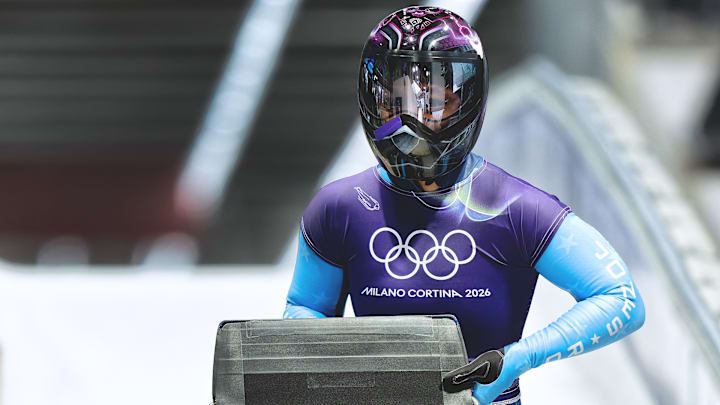
Mystique Ro knows how to pivot. She started out playing soccer. She was put into a track and field camp at a local high school because “my dad said my running form sucks from soccer.” Her coach told her that she was quick and recruited her. She started as a sprinter then got roped into doing hurdles.
So when it came time to pivot once again, she did.
“When skeleton presented itself, I was like, Give it a shot. Let’s see,” Ro said. “It opened another opportunity for me. That was really cool to be able to have that opportunity to just pivot and try something else, have a new experience and see where it takes me off the track.”
Ro first watched skeleton during the 2010 Vancouver Olympics and dismissed it immediately. She went on to compete in track and field at Queens University in Charlotte. She set school records in the 100-meter hurdles and heptathlon (both outdoor), the 60-meter and long jump (indoor) and was a part of multiple school record-setting relay teams during her career.
Like many athletes, Ro dreamed of going to the Olympics. But as her collegiate career came to a close, she realized that despite loving the sport, she had hit her ceiling. That’s where a recruiting email from five-time Olympic medalist Elana Meyers Taylor came in. Meyers Taylor encouraged track and field athletes to attend a combine for sliding sports. The email was intended for Ro’s college teammate Nikia Squire. Ro happened to be staying with Squire and tagged along.
Ro intended to go the bobsledding route. At the combine, coaches told her “you’re a little small” for bobsled. It’s a gravity sport and Ro, then 21, was at her track weight. The coaches suggested that she try skeleton instead.
Her first impression? “I was like, Oh, those crazy people,” Ro said. “You want me to do that?”
They did.
Now almost 10 years later, Ro is competing at her first Olympics.
Ro isn’t the first sliding athlete to be on her second sport. Meyers Taylor played softball. Seven other members of the U.S. bobsled team competed collegiately in track and field, while Ro’s mixed relay partner, Austin Florian, was on the ski team at Clarkson University. Ro, though, is the only one on this team to marry a track background with skeleton.

She isn’t a speed junkie. She is terrified of roller coasters. Hurling herself on a sled going more than 80 mph wasn’t for her.
“So it was just one of those, again, just try. Don’t say no yet, just try,” Ro said. “And I was screaming on the way down 40 miles an hour. But like, you know, we tried it. It’s not for me.”
But she went back. First the combine, then to driving school in Lake Placid, N.Y. She learned to accept the speed that came with the event. She found out the hard way that she is allergic to ice. She struggled through hitting walls for the first two years and hoped that it would get better. Eventually, with a little bit of help from teammate—and fellow first-time Olympian—Dan Barefoot, it did.
Ro debuted on the World Cup circuit in Altenberg, Germany, in January 2023 where she finished 19th. The following season, she opened up her World Cup campaign with her first podium, a second place finish in La Plagne, France. Three and a half months later, she became the first U.S. woman in eight years to win on the circuit. A year later, she took home a silver medal in the individual competition at the world championships in Lake Placid.
Debut Ready
Ro and Florian are the defending world champions in the newest skeleton event: the mixed team relay, which makes its Olympic debut on Feb. 15 in Cortina. One man and one woman competitor team up and their times are added together. The biggest change for the athletes is the addition of a light bar. When the five lights go out, a beep signals the start. The reactionary nature of the event bodes well for Ro, who is used to a starting gun from her track days.
“The new event, the mixed relay, has been up my alley [because of] this reaction start,” Ro said. “So that’s one thing they asked us, ‘how do you feel?’ This is home for me. I’m used to going off the block from a gun sound, and so now we have a beep. That’s got another 15 meters of the ramp. My strength is the ramp. So I enjoy that, and that’s something that I can fall back on as a skill I built over 10 years. The rest of the field might not feel that way because I don’t have a track background but I think that’s a good, strong asset for me."
Ro’s starting gun experience isn’t the only element of her track career that has continued to help her.
“In college I competed as a heptathlete and that allowed me to learn different events and with that comes a lot of learning very quickly and on the fly,” Ro said. “Transitioning to the sport of skeleton, you have to learn very quickly and adapt.”
Ro and Florian finished no lower than sixth in the eight times they have competed together since they teamed up two years ago. Florian hopes to bring last year’s success to the track in Cortina.
“To go into the Olympics in the first year of [the event and] being the defending world champions in it is a pretty cool thing,” Florian said. “We’re gonna try to take the momentum from that and this past season into that [event] and to really put a good race down.”
Ro used last year’s world championships in Lake Placid as a confidence booster heading into the Olympic year.
“The importance of home was kind of paramount. Home is a physical place, but it’s also a mindset,” Ro said. “You are very comfortable at home, you’re very confident. So when you get into a routine, you have your support staff and your entire team with you, it makes it much more seamless. It’s more natural. I think treating this event coming up as another home event and bringing that confidence is really important for us to have success on this track.”
More Winter Olympics on Sports Illustrated
 Add us as a preferred source on Google