%20%20--%3E%0A%3Csvg%20version%3D%221.1%22%20id%3D%22Layer_1%22%20xmlns%3D%22http%3A%2F%2Fwww.w3.org%2F2000%2Fsvg%22%20xmlns%3Axlink%3D%22http%3A%2F%2Fwww.w3.org%2F1999%2Fxlink%22%20x%3D%220px%22%20y%3D%220px%22%0A%09%20width%3D%2239px%22%20height%3D%2240px%22%20viewBox%3D%220%200%2039%2040%22%20enable-background%3D%22new%200%200%2039%2040%22%20xml%3Aspace%3D%22preserve%22%3E%0A%3Cpath%20fill%3D%22%23FFFFFF%22%20d%3D%22M38.5%2C7H28.2v26h10.3V7z%22%2F%3E%0A%3Cpath%20fill-rule%3D%22evenodd%22%20clip-rule%3D%22evenodd%22%20fill%3D%22%23FFFFFF%22%20d%3D%22M26.1%2C25.5c0%2C5.8-4.1%2C7.5-12.9%2C7.5C3.9%2C33%2C0%2C31.2%2C0%2C25.2v-1.1h11.6%0A%09v2.4c0%2C0.7%2C0.1%2C1.4%2C1.2%2C1.4c1%2C0%2C1.2-0.4%2C1.2-1.3v-0.9c0-1.6-0.9-1.6-3.5-2.2C2.2%2C21.7%2C0%2C19.7%2C0%2C15.3v-0.9C0%2C9.3%2C5.5%2C7%2C12.9%2C7%0A%09c10.2%2C0%2C12.8%2C2.6%2C12.8%2C7.4v1.8h-11v-2.9c0-0.6-0.4-1.1-1.2-1.1c-0.6%2C0-1.2%2C0.4-1.2%2C1.1v0.9c0%2C1.5%2C0.9%2C2%2C3.3%2C2.5%0A%09c8%2C1.6%2C10.5%2C3.3%2C10.5%2C7.5V25.5z%22%2F%3E%0A%3C%2Fsvg%3E%0A)
For U.S. Speedskater Greta Myers, an Olympic Debut Arrives Ahead of Schedule
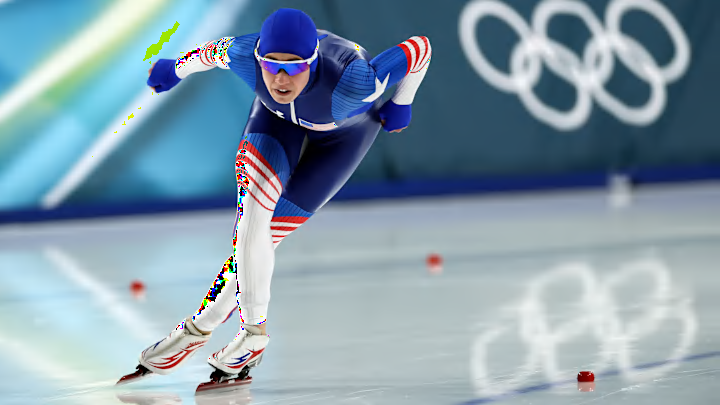
MILAN — The coolest day of Greta Myers’s career started after it ended.
On Saturday morning, Myers went through an action movie of a workout: 90 intense minutes, ending in a big crash, on a set built to look like something it isn’t. Milano Speed Skating Stadium is a temporary venue; it will go back to being part of the Fiera Milano Rho exhibition center after the 2026 Winter Olympics. In the last segment of the training session—four laps at top speed—Myers and teammate Giorgia Birkeland hit some choppy ice.
“Just had a misstep,” Myers said later, “and both kind of slid down into the pads.”
Birkeland hurt her funny bone and had blood all over her suit. Myers bruised her right knee. The injuries are not serious, but the fatigue was. It was Myers’s last big workout before what was supposed to be her Olympic debut: the team pursuit on Feb. 14. Myers says she was “pretty cooked” as she started untying her skates in the infield. That’s when one of Myers’s coaches, Gabriel Girard, told her Czech legend Martina Sáblíková, a three-time Olympic gold medalist, had to withdraw due to illness, opening up a spot in the 3,000-meter race.
Yes: The race that would start in three hours.
Her first thought: “Oh my gosh.”
Her next: “Wait—are my blades O.K.?”
At 1:07 p.m. local time—6 a.m. in Myers’s home state of Minnesota—she called her dad.
“Whaaaaaaaat?” he answered.
“Dad, I’m in the 3k!” she said.
The rest was a blur. Her blade tech got to work. Her manager ran over to the Olympic village to get her skinsuit and some snacks. U.S. Speedskating tracked down her boyfriend of four years, Cooper McLeod, which wasn’t hard: He is also on the team. McLeod was doing bike intervals. Somebody upgraded him to a car and got him over to the rink.
“I didn’t really have the time or energy to be nervous,” Myers said. “But I did get a little bit emotional. I was walking in the tunnel underneath [the stands] and I just started tearing up a little bit, because this has always been my dream, and it’s finally come true.”

At 4 p.m, Myers made her Olympic debut. She finished in 4:13.46, last among the 20 skaters, but she was the only one of the 20 who had busted ass for an hour and a half Saturday morning after marching in the opening ceremony Friday night. For Myers, this race was never about a finish. It was about a start.
Myers is only 21. She is the youngest skater on the U.S. team, which tells you she is a rare talent, but also that she is far too green to be jaded.
Girard said he wanted her to march in the opening ceremony to check that box; in four or eight years, she could be a medal favorite in the 3,000-meter race, which always takes place the day after opening, and her coaches will want her to rest. Girard said even if he had known that a spot would open in the 3,000, he still might have wanted Myers to do that hard workout Saturday morning, because her whole schedule is built around the team pursuit, in which she might medal.
As for the 3,000: “It’s not a priority for her, that event,” Girard said.
The 3,000 might not be a priority for Myers this month. It is not a priority for the U.S. team. But skating in the Olympics has been a priority for Myers for years, almost since she started speedskating at age 12.
Even Saturday, with no time to think about what it meant, Myers thought about what it meant. For her, of course. But also for Sáblíková.
“I was actually pretty sad,” Myers said. “I’ve always looked up to her, and this was her final Olympics. So that kind of broke my heart a little bit, for her. …”
“It‘s the Olympics. People do not want to give up the opportunity, even if they’re sick, even if they‘re injured. Lindsey Vonn is racing [on] a blown-out knee. It’s a really hard thing to give up.”
It’s an even harder thing to achieve. Myers will have more Olympic races—this month, but also maybe in four and eight and 12 or even 16 years. If it ever starts to feel routine, she can summon the feeling she felt Saturday, when she was too cooked to beat anybody else, and far too stoked to care.
More Winter Olympics on Sports Illustrated
 Add us as a preferred source on Google
Michael Rosenberg was a senior writer for Sports Illustrated, covering any and all sports. He writes columns, profiles and feature stories and has covered almost every major sporting event. He joined SI in 2012 after working at the Detroit Free Press for 13 years, eight of them as a columnist. Rosenberg is the author of “War As They Knew It: Woody Hayes, Bo Schembechler and America in a Time of Unrest.” Several of his stories also have been published in collections of the year’s best sportswriting. He is married with three children.
Follow rosenberg_mike