%20%20--%3E%0A%3Csvg%20version%3D%221.1%22%20id%3D%22Layer_1%22%20xmlns%3D%22http%3A%2F%2Fwww.w3.org%2F2000%2Fsvg%22%20xmlns%3Axlink%3D%22http%3A%2F%2Fwww.w3.org%2F1999%2Fxlink%22%20x%3D%220px%22%20y%3D%220px%22%0A%09%20width%3D%2239px%22%20height%3D%2240px%22%20viewBox%3D%220%200%2039%2040%22%20enable-background%3D%22new%200%200%2039%2040%22%20xml%3Aspace%3D%22preserve%22%3E%0A%3Cpath%20fill%3D%22%23FFFFFF%22%20d%3D%22M38.5%2C7H28.2v26h10.3V7z%22%2F%3E%0A%3Cpath%20fill-rule%3D%22evenodd%22%20clip-rule%3D%22evenodd%22%20fill%3D%22%23FFFFFF%22%20d%3D%22M26.1%2C25.5c0%2C5.8-4.1%2C7.5-12.9%2C7.5C3.9%2C33%2C0%2C31.2%2C0%2C25.2v-1.1h11.6%0A%09v2.4c0%2C0.7%2C0.1%2C1.4%2C1.2%2C1.4c1%2C0%2C1.2-0.4%2C1.2-1.3v-0.9c0-1.6-0.9-1.6-3.5-2.2C2.2%2C21.7%2C0%2C19.7%2C0%2C15.3v-0.9C0%2C9.3%2C5.5%2C7%2C12.9%2C7%0A%09c10.2%2C0%2C12.8%2C2.6%2C12.8%2C7.4v1.8h-11v-2.9c0-0.6-0.4-1.1-1.2-1.1c-0.6%2C0-1.2%2C0.4-1.2%2C1.1v0.9c0%2C1.5%2C0.9%2C2%2C3.3%2C2.5%0A%09c8%2C1.6%2C10.5%2C3.3%2C10.5%2C7.5V25.5z%22%2F%3E%0A%3C%2Fsvg%3E%0A)
Milan Cortina Opening Ceremony Paraded the Wonder of Italy to the World
MILAN — Whether it be a champagne-soaked World Series celebration or the emotion of an Olympic medalist’s rejoice, I often wonder if it gets any better than witnessing the catharsis of a champion. It feels like one of the few moments in life where one can truly witness an achievement being celebrated with pure, euphoric jubilation. And we can count on it to happen every year in every sport—or for some, every four.
But for us mere mortals, we must settle for subtler moments of joy. Some have the best year of their life; others, similar to Olympians, experience that one summer (or winter) that changed everything. And for some of us, there are but fleeting memories that we can look back upon as destiny-altering. For me, those came in Milan 15 years ago. Milan with its grand boulevards of stoic chaos. Part Paris and part Naples. Milan, the fashion capital and heart of the storied Italian classical music tradition.
My first European soccer match came at the San Siro stadium on a melancholy winter’s afternoon. I can still smell the mix of cigarette smoke and the gunpowder of red flares as the AC Milan ultras sang to the heavens. The raw energy, the passion: It blew away anything I had ever experienced as an American sports fan. I was hooked; it made me not just want to cover sports, but the people who take a spectacle and make it spectacular.
The very next day, on a whim, I took a train from Milan to Lake Como. The winter stillness, the glacial lake reflecting the Alps like a mirror, the idyllic beauty was a portrait of bliss and harmony. And on that very train, I read and re-read a line from the classic Italian poem L’infinito by Giacomo Leopardi:
But sitting here and gazing,
I can see beyond, in my mind’s eye unending spaces
superhuman silences and depthless calm,
till what I feel is almost fear.
It could’ve been an ode to the fearless Lindsey Vonn, who at 41 will be competing at these Milan Cortina Olympics one week after rupturing her ACL. But for me, those verses forged the perfect description of harmony and a life void of chaos. It filled me with child-like wonder and still does—little did I know that it would one day become home for me and my family for the better part of the last decade.
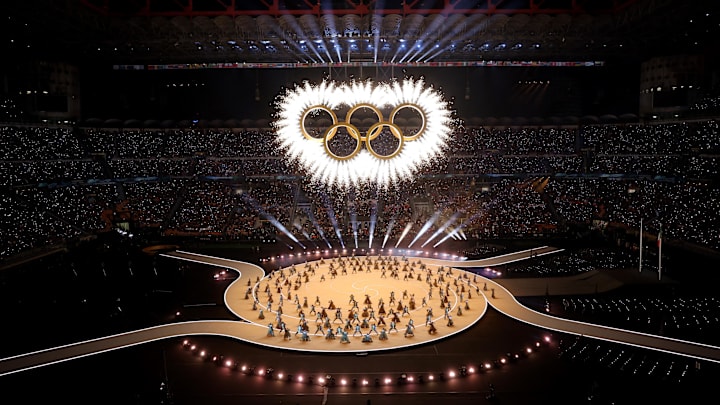
So indulge me, if you will, as I bring you into my home region, which just happens to be hosting the Winter Olympics, with the opening ceremony Milan, with L’infinito being recited to the 80,000 of us sitting in the San Siro as I write these words.
The year 2006 was a monumental one for Italian sports. A corruption scandal rocked Serie A, Italy’s domestic soccer league, resulting in prison sentences for referees and club executives and a demotion of Italy’s most storied club, Juventus. The Italian men’s national team followed that up by galvanizing the nation with a World Cup triumph. And Turin hosted the nation’s first Olympics in 46 years.
It’s difficult to find an Italian who doesn’t speak about Turin 2006 with exuberant pride. In Italy, we love to look back at the beauty of the past; we’re not so great at recognizing the beauty of things in the moment. But with Turin 2006, we got to do both, particularly when legendary Italian opera singer Luciano Pavarotti took the stage in the opening ceremony.

In what was his final public performance before he died of pancreatic cancer, Pavarotti’s rendition of the Turandot tenor aria “Nessun Dorma” captivated the world in what is now the silver medal of Olympic opening ceremony moments after Celine Dion’s “Hymne à l’amour” at Paris 2024. It was later revealed that Pavarotti, ailing and too weak to perform in the cold, staged his performance, opting to pre-record it days prior rather than risk damaging his legacy live as billions watched. In essence, it became a metaphor for life in Italy: Reminiscent of better times, but trying at all costs to hold onto our image.
The song, too, has a recent sporting history. To open the 1990 World Cup in Italy, Pavarotti, Plácido Domingo and José Carreras performed “Nessun Dorma” in their first concert as The Three Tenors. They performed the song at the following three World Cups before its arrival on the Olympic stage in 2006. So the ’26 opening ceremony in Milan, Andrea Bocelli took the stage to sing “Nessun Dorma” in Pavarotti’s stead, erupting over the refrain of “Vincerò,” (I will win), a statement befitting of an Olympic setting.
20 years after the 2006 Torino closing ceremony, Andrea Bocelli returns for a dazzling performance to open the 2026 #WinterOlympics. ❄️ pic.twitter.com/gaH88IEavJ
— NBC Olympics & Paralympics (@NBCOlympics) February 6, 2026
To continue the theme of wistful remembrance, 90s pop singer Laura Pausini sang the Italian national anthem while being backed by an Alpine choir in Cortina d’Ampezzo, Milan’s cohost Olympic city. Pausini wore a stunning Armani dress, diamond studded and black to commemorate the legacy of Giorgio Armani, who died in September at age 91. He was ever-present at the opening ceremony in the city he called his own, as performers and athletes alike paraded his costumes to a TV audience of billions.

Adding to the nostalgia was a rousing performance from violin prodigy Giovanni Andrea Zenon on a 1716 Stradivarius (a nearly identical violin from that same year is valued at $20 million) while dancers from the renowned La Scala opera house swirled in the background. The opening ceremony even featured a segment on Italian hand gestures.
And then there was Mariah Carey, of all people, who made a rare, non-December appearance to put majestic high C’s in “Nel blu, dipinto di blu,” a song known the world over as “Volare.” The easy comparison was always going to be Paris and the nonpareil grandeur of a summer parade down the Seine. But it took Mariah to allow us to recognize what this opening ceremony could do better and what it truly was: not an esoteric celebration for Italians like Paris 2024 was for the French, but a celebration of Italy for what the world loves most about Italy.
Mariah Carey opens the 2026 #WinterOlympics with a stunning performance! ✨ pic.twitter.com/m2yO74i6Lx
— NBC Olympics & Paralympics (@NBCOlympics) February 6, 2026
Living in Italy is a divine comedy. At times, it can feel like paradise; then, you’re suddenly unaware of what ring of hell you’ve been thrust into—any experience with Italian bureaucracy will quickly remind you of the inferno, as long as you first take a number and remain seated until you’re redirected to another ring of hell. What’s most important is that you can sit back afterward with a glass of wine and laugh about it all. And finally, we’re at the vino stage of this Olympic journey.
The most widespread stories before the 2026 Milan Cortina Olympics weren’t of excitement or anticipation, but of unfinished arenas and the arrival of ICE. The theme of the opening ceremony was Armonia (Harmony), but U.S. Vice President JD Vance was present—and was booed—so someone must’ve missed that memo. But now that we’re past that and the opening ceremony has enraptured us all, one can’t help but think about how it won't be long before we’re wrapped up in another stadium construction dilemma.
While the opening ceremony was spread across four host sites across northern Italy—these are the most widespread Olympics ever—all roads led to Milan’s San Siro. The legendary soccer stadium is Italy’s largest and most iconic, and in five years, it will be no more as a new behemoth will take its place. The stadium will celebrate its 100th birthday in September, which probably means it is time for a new stadium. But with it goes those very destiny-changing memories and moments of jubilation, groundbreaking concerts and historic soccer matches, and now an Olympic opening ceremony.
The structure looks like an original Star Wars spaceship model sitting atop concrete springs that create an optical illusion when spectators descend the spiral towers. It has quirks, and those are the things I’ve come to love most about Italy. The way people have to cover their necks in 80-degree weather because of the fear of the colpa d’aria, a condition that somehow only afflicts Italians where a blast of wind could prove to be lethal if it hits the neck. The fact that we have to greet every single person upon walking into a locale even if it takes an entire afternoon. Our absurd love for any kind of cheesy performance, game show or drama—the cheesier the better.
The new San Siro will be gorgeous, it will be perfect, but it will soon be just like everything else in a globalizing world: uniform and prim, shiny but without grit, appealing but without character. Italy has always felt like it is fading, drifting into something it has not. And we’re starting to get tired of keeping up the façade.

One of the clearest examples of the steady decline is the unabated thirst for tourism at the expense of local traditions. So it fits that Airbnb is a major sponsor of these Winter Games, joining in the Olympic tradition of displacing local populations for capital. Another is the widespread affinity for influencer culture (hence, the official 2026 Winter Games slogan: “IT’s Your Vibe”). Nine of the top 10 Italian artists on Spotify in 2025 were trap rappers known more for their Instagram following than their homogenous music. It doesn’t mean we all need to all listen to “Nel blu, dipinto di blu” and Laura Pausini; it just means that Italy is changing. Which is what made the final performer so poignant.
While the rapper Ghali was likely the least internationally known performer at the opening ceremony, he is likely the best representative of what Italy currently is. Born in Milan to Tunisian parents, Ghali is both Italian and outsider, a voice for the downtrodden and the other. If this is the new Italy, maybe there is hope after all that we can recognize beauty in both tradition and what’s to come—and celebrate them equally.
After all, you don’t have to speak Italian to feel the emotion of our words; you don’t need to know how to cook to enjoy our cuisine. You just need to allow yourself the grace to enjoy a moment. It’s what experiencing new cultures does best, whether it’s eating a good meal or marveling at an Olympic opening ceremony. It adds wonder back into our lives. Yes, wonder, the magic that drives our best memories and makes our hearts float in jubilation.
Even if for an hour, or a meal, or a day if you can risk it, delve into the wonder that is Italy. Let your heart soar to Vivaldi’s The Four Seasons. Go splurge on the best ingredients and whip up a carbonara (guanciale not pancetta; pecorino Romano not parmesan; never, I repeat never, add cream). Press play on Ennio Morricone’s concert along the Venice lagoon, close your eyes and listen to Pavarotti’s greatest hits. For even if you cannot understand the words, you will be able to feel the notes rise within you. For what is wonder if not that which we cannot put into words. The ineffable, the goosebumps, “Wow” as a rippling emotion.
So for the next two and half weeks, as stars turn sangfroid into silverware under the Dolomites and the Duomo, let us embrace what the best of sports—and culture—offers us all. Perhaps, it is a calling to the world: Let us all embrace wonder once again.
Leopardi wrote it best:
So my mind sinks in this immensity
and to flounder in this sea is sweet to me.
More Winter Olympics on Sports Illustrated
 Add us as a preferred source on Google
Andrew Gastelum is an editor and writer at Sports Illustrated who specializes in soccer, the Olympics and international sports. He is a graduate of the University of Notre Dame and lives in Italy.
Follow aogastelum