%20%20--%3E%0A%3Csvg%20version%3D%221.1%22%20id%3D%22Layer_1%22%20xmlns%3D%22http%3A%2F%2Fwww.w3.org%2F2000%2Fsvg%22%20xmlns%3Axlink%3D%22http%3A%2F%2Fwww.w3.org%2F1999%2Fxlink%22%20x%3D%220px%22%20y%3D%220px%22%0A%09%20width%3D%2239px%22%20height%3D%2240px%22%20viewBox%3D%220%200%2039%2040%22%20enable-background%3D%22new%200%200%2039%2040%22%20xml%3Aspace%3D%22preserve%22%3E%0A%3Cpath%20fill%3D%22%23FFFFFF%22%20d%3D%22M38.5%2C7H28.2v26h10.3V7z%22%2F%3E%0A%3Cpath%20fill-rule%3D%22evenodd%22%20clip-rule%3D%22evenodd%22%20fill%3D%22%23FFFFFF%22%20d%3D%22M26.1%2C25.5c0%2C5.8-4.1%2C7.5-12.9%2C7.5C3.9%2C33%2C0%2C31.2%2C0%2C25.2v-1.1h11.6%0A%09v2.4c0%2C0.7%2C0.1%2C1.4%2C1.2%2C1.4c1%2C0%2C1.2-0.4%2C1.2-1.3v-0.9c0-1.6-0.9-1.6-3.5-2.2C2.2%2C21.7%2C0%2C19.7%2C0%2C15.3v-0.9C0%2C9.3%2C5.5%2C7%2C12.9%2C7%0A%09c10.2%2C0%2C12.8%2C2.6%2C12.8%2C7.4v1.8h-11v-2.9c0-0.6-0.4-1.1-1.2-1.1c-0.6%2C0-1.2%2C0.4-1.2%2C1.1v0.9c0%2C1.5%2C0.9%2C2%2C3.3%2C2.5%0A%09c8%2C1.6%2C10.5%2C3.3%2C10.5%2C7.5V25.5z%22%2F%3E%0A%3C%2Fsvg%3E%0A)

00:55:38 |
Up Next

Albert Breer on Caleb Williams Avoiding Major Injury, Daniels Sidelined and Chargers Desperation
Sep 21, 2026

How Good Will the Not-Tanking Jazz Actually Be?
Sep 22, 2026

Albert Breer on QB Options for Giants, Niners Look Great and Bucs' Struggles
1 hour ago

Deshaun Watson Bought Himself Some Time With That Win
Sep 21, 2026
Albert Breer on Caleb Williams Avoiding Major Injury, Daniels Sidelined and Chargers Desperation
Sep 21, 2026
How Good Will the Not-Tanking Jazz Actually Be?
Sep 22, 2026
Albert Breer on QB Options for Giants, Niners Look Great and Bucs' Struggles
1 hour ago
Deshaun Watson Bought Himself Some Time With That Win
Sep 21, 2026

The Lakers' New Roster Was Built Around Luka
Sep 22, 2026

Bronson Reed Talks WWE Return, and Bringing WrestleMania to Australia
Sep 22, 2026

Can the Knicks Break the 8-Year No-Repeat Streak?
Sep 22, 2026

The Cleveland Browns Want NBA-Style Trades
Mar 30, 2026

The NBA's Anti-Tanking Proposals Make No Sense
Mar 31, 2026

“Knock His Head Off” — Chris Duncan Sends Warning to Renato Moicano 😳
Apr 2, 2026

A Title Contender is Not Giving LeBron $50 Million
Apr 3, 2026

Tom Dundon's Cheapness is the Talk of the NBA
Apr 23, 2026
Transcript
Hello and welcome to SI's Daily Rings.
I'm Dan Gartland, joined by Mitch Goldish.
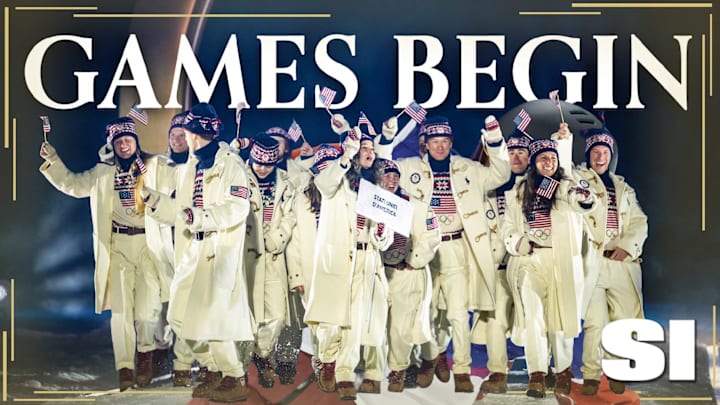
Mitch, here we are, the opening ceremony just wrapped literally moments ago.
I'm excited to get into this with you.
A lot to talk about today.
I know it's gonna be a good one.
Yeah, this feels like we're back in our old routine.
We are now evening taping, like you said, uh, we just watched the early version, like the live version that started this afternoon.
I know there's gonna be a replay, uh, during the prime time hours, so I don't know when people are listening to this podcast.
Some of them might have already seen it.
Um, some of this might be coming out while the opening ceremony is still happening on your television.
But yes, here we go.
We are a daily podcast and we are now going to be daily around this time every day for the next, uh, what, 17 days.
Yeah, it's gonna be, it's gonna be a grind.
It starts here.
We're getting, you know, we had a little taste of some sports earlier in the week, but now, you know, starting tomorrow, full slate of sports, full slate of podcasting.
It's gonna be a lot of fun.
It's gonna be a, a real, uh, hell of a ride and I'm happy to go on it with you, Mitch.
Yeah, me too.
I'm very excited we're doing this again.
And yeah, like you said, we only had a little taste, but I still, I am, I am like overwhelmed with notes here.
I've got Google Docs, I've got a written notebook, I've got stuff in my phone.
I am, I am ready.
It was only like half a day of sports.
But I've got enough that we can talk.
So yeah, I think this is going to be the general format where we will, uh, recap all of the stuff that happened during the day and then end every episode by previewing what's to come the following day.
We're gonna touch on news headlines.
Sometimes they will be very important and serious, and sometimes they might be a little bit more silly.
I think we're gonna have a little bit of both.
Um, but yeah, before we get into some of the news, I just want to say how fun it has been that we're back up in everyone's feeds and we're hearing from listeners.
There are people who just found us and they're new and they're telling me, hey, I I'm so glad I found this show.
There are people who are saying, oh , I listened to you last time.
I'm so glad you're back.
I'm gonna give a shout out here to our new, uh, favorite listener, HRJ, who did leave us our first Apple Podcast review of the year, saying, so glad you're back in 206.
The joy I felt seeing this pop back in my feed cannot be described.
Comprehensive Olympic of it.
All right, I'm not gonna read the whole thing.
Uh, but thank you so much and thank you to everyone else who has followed.
Um, yeah, we very much appreciate it and yeah, we're, I'm happy to hear that people are excited because I know we are both excited as well.
Yeah, it's, it's always great to hear from, from listeners who are enjoying hearing us and, you know, just gives us a look, like I said, it's gonna be a grind 17 straight days.
So words of encouragement like that to help us continue on .
Or, or anything, uh, if you have knowledge to pass on, if you are an expert in biathlon or, uh, Nordic combined or uh slopestyle or normal hill or whatever your area of expertise is, you are always welcome to, uh, pass along tidbits to teach us something and maybe we'll pass it along to our audience.
Or provide us with caffeine.
Yes, that too.
Um, though not today.
I'm off caffeine today because I'm trying to get my, uh, my sleep schedule back in order and I wanted to be able to fall asleep tonight.
So I'm up at, uh, at a nice early hour tomorrow.
OK.
Garth, do you want to start with the opening ceremony, or do you want to go right into the news headlines?
What should we do here?
I think, look, the opening ceremony is the big event of the day, so maybe, you know, we should start on that a little bit .
I don't have too many thoughts other than that it was just so goddamn long.
I was just like, I sent you an annoyed Slack message, uh, 3 hours into the show, and then there was another half hour remaining after that.
Um, I, I look, I get like they got a lot of, a lot of countries introduced and it was great seeing a lot of them.
Um, you know, it's interesting to see the different sizes of the, um, the winter delegations for some countries versus the summer.
Um, always fun to see some of those, those countries that only have, you know, one or two coming in.
Uh, great to see that, but then there's all the pomp and circumstances to drag on and on, especially the second half after the parade of nations.
It's all these different performances, and some of them are great and some of them are like, come on, can we just, just skip to the cauldron lighting and let's go, let's go podcast.
What a cynic.
I love the opening ceremony.
Come on.
No, I, I actually, I will agree with you.
I, I thought all of the stuff at the beginning, and yes, the pomp and circumstance, they had like the opening montage and it's, it's coffee and mountains and spaghetti, and then, uh, and then the dances and they had the tubes of paint coming from the sky, all that stuff, you gotta have a little bit of that, and some of that pomp and circumstance is fun.
I do agree with you that I thought after the parade of nations, which I do love, uh, that's where it's like, OK, we can light this thing.
Um, but yeah, I, I, I love seeing the athletes come in and I will say I, um.
Uh, reading about it in advance, I knew that they were gonna have basically different stations.
We've talked a bunch on the show already about how the Olympics are very spread out, and so they were talking about how they'll have not just sort of the main stadium , but also these other locations where athletes are going to be.
And at first I was like, wow, that's kind of a bummer for them, they're not going to be at the stadium, but then actually Shaun White, who was on NBC's coverage, uh, was saying that in the past those athletes haven't been able to participate at all.
And so, It's like, OK, well, if the choice is them not being there at all, uh, versus having this, um, you know, like a satellite place to appear and get interviewed and be on.
It was interesting, they didn't have all the flag bearers actually in the main stadium, um, they had people in different places, but it was, it was cool.
I love seeing those athletes, uh, be able to get recognized, and, you know, Mariah Carey, there's, there's, uh, there's good, and Charlize Theron, and then, you know, the speeches and whatnot, um, yeah, you know.
Yeah, I do.
I did like that.
I, I, I did like how there was an opportunity for the athletes in other places to participate.
Also an opportunity for the viewer at home to see these other places, right?
Like, you know, I was also a little bit surprised, just quickly, the, um, the San Siro stadium where it took place, this historic stadium in Milan, about 100 years old, the home of the two big Milan soccer teams, AC Milan and Inter Milan, and I was hoping for a little bit of a nod to soccer.
I know that's a Summer Olympic sport, but just cause, like, this place, I think for people, for people at home, well, for one thing, Uh, my two jobs at SI right now were 3, right, was the podcast.
I write a newsletter.
I'm also doing a video series on historic stadiums, and so, like, I'm very into like places like the San Siro, um, that's just like a really, like an iconic place in European sports really.
And hoping for a little nods of soccer there, but, um, you know, so it was different in the stadium, right?
That's obviously a very traditional, you know, it doesn't really change from Olympics to Olympics, what it looks like inside the stadium, but then you get to see out in the mountains and people, you know, they're walking through the snow in these little villages.
I thought that was such a neat little touch, and I think it will be replicated at future Olympics.
Yeah, and, uh, and that is great.
So, and actually I, I feel like I have said this before, but I want the one thing that I really like about the opening ceremony is, and I know this is maybe like an American thing where we get so focused on favorites and who's gonna win gold medals, and the Americans sort of expect that they're gonna just win everything.
There are a lot of athletes who I always say, like, their dream is participating in the Olympics, and I don't want to downplay.
I know everybody, uh, at that world class level has this mindset that they're gonna go in and they're gonna win every event, and they have to like visualize their success and all that.
But if we're being real, like, I think the person who comes in dead last in some of these events knows they're probably not gonna be on the medal podium.
A lot of these athletes, their entire life goal is to win the qualifying and make it there, and so they have this moment where they get to be in the stadium, be with their country's flag.
And be recognized.
And that's just like such a cool moment that for so many athletes, that is truly the highlight of the Olympic experience just as much as participating.
Um, you know, I know that, like , again, I keep talking about Shaun White cause he was on there talking about all the amazing places he's traveled, but he talked about how meaningful the event is to him tonight and he also has his incredible memories of his gold medals and competition and people have that too.
But I just know this is like such a special thing for a lot of athletes.
So it's, it's nice to be able to appreciate the ones, especially who come from so far away and, and, you know, countries that you don't typically hear about at the Olympics outside of this moment.
Yeah, that definitely comes through, it's the opening ceremony is their time to shine, right?
And so, um, two nations that were making their Olympic debut with this Olympic sorry, Winter Olympic debut, Benin and Guinea-Bissau, Guinea-Bissau, I'm sorry, uh, they got to have their, their moment in the sun there.
Uh, that was so nice to see.
Um, they have two, each of them just has one athlete, uh, Nathan Chibozo, 21, who'll represent.
De Benin in the slalom, and giant slalom, born in France and first represented Togo, and then there's a 19-year-old named Winston Tang, who was born in Oregon.
He's representing Guinea-Bissau in ski slalom.
His father is from Guinea-Bissau, his mother's from Taiwan.
He previously represented Taiwan, but there's, there's 15 athletes from Africa at these games.
From an all-time high 8 African nations.
So, like you're saying, you know, these are, a lot of them are not medal contenders, but, um, you know, it's always great to see you.
They, they're talking a lot on the broadcast about the increased representation, how people, uh, athletes are coming from more countries and more parts of the world and, um, yeah, an all-time high in terms of African, uh, representation.
Yeah, and I think that is one of the benefits of adding sports is they're also just like adding events that people are interested in, and I think a lot of these sports are doing a good job recruiting and uh looking to different places um for athletes, and yeah, it's it's very cool.
It's uh, the summer is much bigger, just the scope of how many countries are represented and how big their delegations are, but here there are a lot of countries where it was like 6 people, 7 people from these nations.
So, glad they got their moment today.
And I, I should just mention for those of you, uh, we can plug here our YouTube channel, right?
You can always watch these podcasts on YouTube if you want to see what we look like.
Um, I was impressed always by the fashion, right?
You know, Brazil with the hats, they looked great.
Um, I had gotten this week on TikTok a lot of videos of athletes, um, unboxing their Olympic swag, and I got one from an Irish athlete, uh, and he, he unboxed the Ireland, uh, official team cable knit sweater.
So when I saw Ireland come through in the cable knit sweater, I said, I got one of those, let me wear that for the podcast.
And so if you are looking, watching the video and wondering why I'm wearing a cable knit.
Sweater.
That's the reason.
Ireland, they look good in them.
Uh, keep me a little warmer than I would need in my house right now .
I'm not up there on the mountains in Cortina, but, uh, a little treat at home for the, for the viewers.
That's funny.
I thought you were just, uh, getting cozy.
You've had some, some good fashion here as we've started to.
I don't know, uh, you know, how much you have in store if you've got 16 days worth of outfits picked out, but yeah.
All right, so should we, um, should we head in, should we get into some of the top, uh, news headlines before we get into the day zero sports?
But we wanna just, just talk briefly.
I know there was a lot of, we talked about, uh, with Michael Rosenberg before the games about how the US might be received, and I thought the US reception at the opening ceremony was so fascinating.
Um, so for those who haven't seen it, um, you know, we were, we were anticipating in the SI newsroom, there was some, if you take it behind the scenes a little bit here, there was some chatter from our folks who were in the stadium thinking maybe we should get some, uh, an article kind of halfway ready about the US being booed, right?
So we have, you know, people were saying, oh, we should prepare something on that, because they're expecting, you know, due to the political situation in this country, there might be some boos for the US.
And in fact, it was really interesting.
The athletes came in, and there was a lot of cheers.
And then they flashed.
On the screen in the stadium to Vice President JD Vance, and those cheers flipped on a dime to really, really lusty booze.
And so, I thought that was a really, it's, it's interesting how, um, that might give us an indication of how the US might be received throughout these Olympics where, you know, um, fans are gonna be, it seems like they're gonna be supporting, you know, the athletes maybe more than we might have expected, uh, with the understanding that, hey, a lot of these guys, they don't like what's going on back home.
Uh, we like them, and we don't like the guys who are in charge.
Yeah, that is interesting, uh, you know, you think about the, the Summer Olympics, just how famous everybody is.
Like if, if this had been the Summer Olympics and then like LeBron James and Steph Curry come out, like, yeah, you, the fans are not gonna like boo them.
The Winter Olympians are less famous, but, um, you know, still, even if they're not necessarily like household names, so everyone is uh super excited to see because they've been following them forever.
Um, it is nice that the athletes won't have that taken out on them, because that is a shame.
Like, these are athletes who have, uh, trained their entire lives for the Olympics, and, uh, you know, some people definitely put their political views out there, but a lot of them, uh, just want to go and perform their sport, and they have no control over which political party is in power or anything that the country has done.
And so, yeah, I'm, I'm definitely happy to see that, uh, you know, listen, people are always gonna boo and dignitaries and whatever, that's fair game, but like it is, I agree with you, it is nice, um.
If the athletes are sort of, uh, left away from that, uh, cause I think there are people who were expecting that to be the reception, like you said, and, uh, yeah, interesting, uh, an interesting dichotomy there to see how that was handled.
And similarly, there was, I, I found it really interesting.
The, clearly the second biggest cheer of the night, obviously the biggest cheer went to the home country, Italy.
There was like, you know, the place seemed like it was gonna fall down, so, so raucous in there.
But the second biggest cheer of the night and pretty close to the reception that Italy got was Ukraine.
Um, we talked about political.
Right?
And then Russia and Belarus is not being involved in these Olympics because of the invasion of Ukraine.
Interesting to see which nations get punished for invading other countries.
Anyway, um, but Ukraine, you know, because of the support for the the going through the war over there, um, such a really great reception, and they'll definitely be fan favorites as we move here into the Olympics.
Yeah, I think I remember that from the previous Olympics also when I think it was much more, you know, fresh and new at the time.
Um.
Yeah, well, I'm sure he'll listen, it'll be impossible to uh fully escape politics.
I know some people would like to, but I'm sure, uh, some of these topics will come up at some point over the course of the next 16 days.
Yeah, I think, uh, maybe on that note, we'll, we'll leave the politics to CNN and we'll, we'll move on to, uh, to the, uh, the news, the news of the day.
Yeah, you want to move on to Great Britain's, uh, skeleton rider helmets not meeting safety standards and, uh, how they filed an arbitration, uh, they had an appeal to the Court of Arbitration because their helmets are have aerodynamic ridges.
Are these are the kinds of stories people are coming to our podcast for, right?
So Mitch, that's actually, maybe you can enlighten me on that one because I didn't, uh, I didn't see that one.
This, well, yeah, this is at the top of my list chronologically on the news, not necessarily an importance level.
Um, but yeah, this is just one of those things, and, and I was reading a, a story on ESPN's website that actually had a reminder.
I had forgotten about some of this, but, uh, to quote from the story, this is not the first time the British skeleton team's equipment for the games has come up for close scrutiny, uh, in 2010, moments after Amy Williams' gold.
Medal run, the US and Canadian teams lodged a protest, alleging that small ridges on her aerodynamic helmet were illegal.
The protest was thrown out and Williams accused her detractors of sour grapes.
Um, and then there was another thing about suits in 2018.
So anyway, we are going to talk about the ski jumping, I know, and, uh, so it's just interesting.
Everybody's looking for an edge, any single place you can find it, and that includes the skeleton helmets.
Yeah, I, you know, obviously, yeah, you mentioned the, the ski jumping.
I think, like, I wonder, I like, as I'm reading stories like this, I, I'm , I'm wondering, like, it seems like the, um, you know, stories about, like, gaining these little edges, like you mentioned, they seem to be more prevalent in these winter games than the than the summer, right?
I think, you know, uh partially it's not because That's because people are not wearing, you know, suits in, in track or, you know, the, the swimsuits, right?
That was a, that has become a, a point of controversy in recent Olympics when there's been technological advances with the swimsuits.
Um, but, you know, you, you're not, there's not so much equipment, I guess, in, especially the speed oriented sports in, um, in the Summer Olympics.
And so, uh, that's definitely become a bigger talking point in the winter here than, than we've seen previously.
Yeah, and I think some of that is also just like the distances they're flying, thinking about like ski jumping in particular, um, you know, it's a huge jump and they're very high in the air.
This is very detailed analysis here, you know, gotta go in depth for that kind of thing, but no, and then you think about like the broad jump, like at the or the long, the broad jump, the long jump in track and field in the Summer Olympics, they're just not going as far.
and they're not as high.
And so I guess what they're wearing isn't quite as important, um, and some of those like track and field events.
Um, but yeah, like the, the bobsled skeleton luge events when they're at the track, it can make a huge difference when they're going at those speeds.
And I guess, yeah, having, uh, your epee or saber a little bit sharper or something is not going to give you quite the same advantage when we're talking about Summer Olympic sports.
Right.
I think, let's just, let's not, uh, dance around it anymore.
There's another idiom I could have used that would have been, uh, inappropriate here.
Let's not dance around the, uh, the ski jumping issue anymore.
So, um, I'm sure a lot of people have seen this, uh, at this point, but there's, um, an ongoing controversy.
It seems like this is an interesting one because, so we talked previously about the Norwegian team and the alterations they were caught making the ski suits, um.
after, so there's a, a period where, um, like, equipment is, uh, is regulated and and approved, right?
And after that, you're not allowed to make any more alterations.
Norway was caught making alterations after that deadline has passed.
Um, this more recent controversy seems more, um, it's a little more vague than the Norway one.
So there was a German newspaper bill, it's like the, the biggest uh German newspaper.
They posted a story alleging that ski jumping athletes had, and I can't cover your kids' ears if you're in the if you're in the car, maybe just with the with the rhythm of the show, I was the one who ended up having to deliver this news rather than Mitch, but I'll, I'll, I'll power through it.
So, um, caught allegedly injecting hyaluronic acid into their genitals, um.
And seems like really painful and like a really extreme way to go about gaining an advantage, and the question obviously is, how does it give you an advantage?
Well, you know, they get measured before the race, and then that determines how, uh, you know, the shape of their suit, and if your crotch is bigger, you get a bigger crotch in your suit, and then if the crotch is bigger in the suit, then you get, um, you know, your suit is, is, um, They changes the aerodynamics, so like the wind catches it like a sail and allows you to to soar farther, and so, um, yeah, this is a story, again, there's just um The the German newspaper article didn't mention any particular athletes or countries that have been, you know , doing this, uh, you know, it's, it's like, and the other thing was that the World Anti-Doping Agency was like, I don't know if it's really our responsibility cause they're not really, like, taking drugs, they're more just like, you know, inserting substances into themselves.
It's like, not, not enhancing their, like, physical performance.
So, um, a really strange story all around.
And uh the kind of story that we love to talk about on this podcast.
All right, quick shout out to one of my favorite things in my closet right now, Cozy Earth.
First off, their bamboo pajamas, ridiculous.
These are hands down the softest pants I own, like unbelievably soft.
I wear them when I'm working from home, running errands, even just lounging on the couch.
They somehow feel cozy without being too warm, and they actually look good enough to leave the house in, which is rare for pajamas.
Whether it's for someone special or just for yourself, Cozy Earth makes it easy to bring comfort and care into your everyday life.
This Valentine's Day season, we are offering a buy one, get one pajama deal you won't see any other time of year.
These viral PJs are so good, they sold out during the holidays, and now they're back with an exclusive deal only available January 25th to February 8th.
Head to cozyEarth.
com and use my code Daily Rings BOGO, that's Daily Rings B O G O to get these PJs for you and someone you love.
And if you get a post-purchase survey, be sure to mention you heard about Cozy Earth right here.
Celebrate everyday love with comfort that makes the little moments count.
Yes, so I wanna give a shout out to uh Jeff Eisenberg.
Yahoo, who had a story that was excellent.
This was a really thorough story on the whole, uh, the origins of, of how this came to light and also just sort of the back history, um, cause yeah, you know, we did sort of prepare our listeners that this was a thing .
We talked about the scandal in Norway.
And, uh, by the way, I'll say this again, if you are brand new here, uh, welcome, if this is your first episode.
But anyone who missed the Monday show, which was our first when we really started going daily, I would recommend that because we previewed every single sport.
And we've got, uh, news for you on all 16 fun facts, storylines, favorites, all kinds of things, uh, stuff about how the sports work.
And we did talk about how this was an issue and, um, Team Norway, some of their athletes, and I think, uh, like team leadership are serving suspensions still and aren't here.
Um, it's, so it, it feels like there was a press conference where they were asked about this, and then this came up.
Uh, I do have some numbers from the story, from, uh, Jeff's story .
It says research from a scientific journal, Frontiers, published last October, said that a 2 centimeter.
In a suit represented an extra 5.8 m in the length of a jump.
So that is, we are really talking like, yeah, a small difference in the suit can really lead to, I mean, 5.8 m is a ton when you talk about sports where they're already, they're measuring in decimals because they can be so close.
Um, it does also say no specific athletes have been accused of the practice, um, but, uh, WADA has said they will investigate.
So yeah, the other thing that I like about this story is it really just talks about this whole culture of cheating.
It's sort of like the, when the Astros sign stealing scandal came to light, uh , you know, you also found out like, yeah, they were doing it the most brazenly, but there were also like a bunch of teams that were trying to cheat and steal signs, and, uh, other similar scouts.
I don't know if Deflategate, there were a lot of people who came out and they were like, this isn't a big deal, like lots of teams do stuff like this.
Um, and so I think that's where.
Just sort of revealed for me, um, this whole culture.
I'm seeing stuff about like, uh, athletes because they have these like suit checks basically, and they're athletes who like put modeling clay in their underwear to lower their crotch to floor measurements.
Uh, and there's like a whole history of people like stuffing dishes and things in their pants.
And so, first of all, you know, it's, it's clever.
This is a clever way to do it.
If they're cracking down on double checking that you don't have, uh, physical items stuffed in your shorts.
Coming up with a different way to make your crotch bigger is clever.
It reminds me a little of, um, Peyton Manning has talked before about, uh, intentionally tanking the baseline concussion test, so that if he received like a concussion test during a game, uh, they would compare how he was to his baseline and his baseline was not him at his sharpest.
And it's sort of like a similar idea where it's like if you manipulate on the day that they test you in advance, then you can possibly get away with something.
Um, but yeah, it's interesting cause it's not like performance enhancing drugs where you're like, I, well, I guess if you're injecting that is like, you know, you know, injecting something into your body, but it's not necessarily an illegal substance.
It's, it's such a, it's a complicated gray area.
It's, it's, uh, it's definitely against the spirit, but it's, it's interesting.
There was also, I think there was a Guardian story.
Um, I don't have it in front of me, but there was a Guardian story where they talked to a doctor and um about they said that the effects of the injection could last up to 18 months.
Um, so this is not something that they're, you know, it's not like, Um, you know, like, I, I have a friend who played peewee football and he was a bigger guy.
And so when they would do the weigh-in, he had like his weigh-in clothes and his game clothes, right?
So there's something like right before that he's wearing his lighter cleats, his lighter shorts or whatever.
But, um, this is not like that where you do something right on the, uh, you know, on the eve of competition.
This is something that can last for a year and a half.
Um, and then obviously there's, um, there's risks involved, like, you know, health risks.
Uh, they said like, you know, you could have.
Uh, gangrene, in fact, you know, you could have, uh, necrosis, like, like, you know, you can, you can do some really serious, um, you know, physical damage to yourself, uh, just, you know, to chase that, that couple extra centimeters to give you those few extra meters in the competition.
Yeah, so, and that is, that sort of gets back to, um, like part of the outrage over like certain PEDs is, uh, like think about the steroid era in baseball.
There was like uh people felt pressured to keep up, like , I didn't want to take it, but everyone else was taking it, and so that's why I started and also this has like long term health risks, which is another reason why I shouldn't feel like I have to take it.
So it's sort of, yeah, a lot of, a lot of interconnected stories.
It's interesting this became such a big storyline, even though, like you said, nobody is confirmed to have violated this specific thing, which I don't even.
know if there is a rule against this.
Maybe there will be, um, but it's tough.
It's tough to legislate this and, and, uh, people are looking for any edge they can find.
And yeah, they have to weigh in.
They have to wear their suits because the suits get checked.
So I don't know how you, uh, you know, test for this.
It's it's all that that's somebody else's job to figure that one out.
Yeah, I'm I'm not, I'm not going near that one.
Yeah.
All right, well, we will be sure to, uh, let you all know if there's anything else on the, uh, injections storyline as it, uh, as the Olympics roll on.
Should we start talking about the actual sports have already been played?
Um, I didn't know if you want to do a Lindsey Vonn update.
Oh Lindsey Vonn, that is on my notes.
Yeah, yeah.
So that's, that's kind of a hybrid, right?
Because, uh, she did, she did race today.
Um, that's true.
That was a, yeah, so she raced today.
Uh, well, you know, she, it was training, right?
It's not, not a, not a competitive race, so to speak, but she skied today.
She skied today, correct.
Good, good, good, uh, good terminology.
Um, so, yeah , so, I mean, I, I actually, I was lucky enough to watch this one live because the, uh, the down, women's downhill training had been delayed due to weather.
There was some fog up near the top of the course that was impairing visibility, so they were delayed for over an hour, um, and then I happened to turn it back on just as she was.
Going down the hill.
So, um, she had a pretty good run.
Um, she had one turn that she took slightly too wide, um, and then she had a hard landing on the final jump, but she had a time of, uh, 1 minute and 40.33 seconds.
That was 11th best out of 43 competitors.
And again, without an ACL, uh, I saw some footage of her strapping on the brace, um, you know, look, I mean, 11th isn't gonna win you a medal, but it's a lot better, I think, than people would have thought she would do in her first races that injury.
Yeah, and I also, um, she did not speak after the race, but I saw her, uh, coach said she was smart, she didn't go all in, so I think, um, she was, you know, wanted to test it certainly, but I don't think she was like trying to finish in first, um, which is why it, it can be a little difficult to, um, Sort of, uh, judge all of the competitors that that might stand in contrast with what I'm about to say.
There was , there was a little bit of a storyline where like some people were talking about, um, like, should she not race?
Is she like taking somebody's spot?
And Tim Leighton, who we've already talked about on this show, um, with his great story on Lindsey Vonn the other day, he tweeted out, uh, with regard to the silly controversy about Lindsay.
Vonn quote, taking someone else's spot.
By racing on her torn left ACL.
5 USA women did this morning's downhill training run and Vaughn was 3rd fastest.
So, again, you don't know if everybody was like going all out 100% in these things, um, but if she wasn't, and she was still 3rd fastest, then, yeah, I think that is certainly proof that it's at least safe enough for her to try.
Um, I'm gonna quote another Yahoo story here, this one from Dan Walken.
He had a great, uh, story with the headline, uh, Why Doctors Say Lindsey Vonn has a great chance to Perform well despite ACL tear, and he actually, uh, interviewed a few doctors to talk about because a lot of people were like, How is this even possible?
Like, I'm, like when my quarterback tears his ACL, my football team season is over, and like basketball players are out for 9 months to a year.
So I thought it was interesting getting the medical perspective.
And so, uh, once again, everyone's favorite segment, I'm just gonna read passages from a story, um, but I thought this was interesting.
Uh, so an orthopedic surgeon says , from a purely physical or biomechanical standpoint, it's possible if you're an elite alpine skier like Lindsay to perform at that Olympic level.
Alpine skiing is very different from your traditional field cutting pivoting sports.
The movement patterns are relatively predictable in comparison, so there's less demand on the ACL when trying to decelerate or change directions.
There's still an increased risk for secondary injury to the meniscus or her cartilage, but her ability to generate force, maintain her edges, and tolerate those speeds is not eliminated inherently just by having that ACL deficiency.
So, despite all these things, she still has a great chance to perform well.
Then there was a different doctor who also then said, uh, when your knees are bent, like when you're skiing, your quadriceps are the shock absorbers of your knee.
They're allowing you to crouch down in that position and manage the terrain of the course.
So without strong quads, that's not a reasonable task.
And now this is Mitch talking, not the doctor.
Fair to assume Lindsey Vonn has strong quads, and so that's why, uh, when you think like, I would not be able to do this .
Uh, yes, she is a lot stronger than you are, and that's why she is able to give this a go.
But I thought that was interesting cause a lot of people just said like, how on earth can she even attempt this, and part of it is, well, she has very strong quads, and like, you know, there could be some risk of future damage, but she's already 41 and this could be her last race, likely to be her last Olympics, and so if she wants to give it a try, then that's a risk she might be willing to take, or clearly is willing to take.
Yeah, I, I saw a lot of preview, uh, course preview videos before these Olympics talking about like they would be like a POV going down the mountain, and it'd be kind of an analyst talking about what's happening at each different stage of the race, and they always mention like, as you get to the bottom, your quads are really burning because that's like what you're using to stabilize, you know, you, you, I think it's like, it doesn't, it's not exactly, um, you know, like, common sense that that, oh, like, you know, just cause you're like going down.
Down the hill, you're actually like really engaging a lot of those muscles, you know, to keep yourself stable.
Um , so, yeah, like, you know, it, it, it more relies on the quads and the, the knee is kind of secondary.
And so, um, certainly, you know, she would prefer to have the ACL, but the brace that she's gonna wear is gonna do a good enough job stabilizing that knee that she should be able to do OK.
And then, uh, once these Olympics are done, then go under the knife and get a, get a fresh ACL.
Yeah, it is amazing though.
She was gonna be one of the biggest stories of the Olympics anyway.
And then this, this happened a week before and it's, it's like mind boggling that this is gonna happen, but I think her, her races already would have been must-see TV, but now it's like anytime she does anything, there are gonna be so many people tuning in with interest.
She, by the way, she has been, some athletes, uh, go like social media blackout.
She is all over social media.
She posted a video of herself doing like box jumps and workouts the day before the training run, so people knew she was fine.
She's like tweeting at people who are saying she shouldn't do this or somebody was like questioning whether her, uh, ACL was really fully ruptured and she made very clear that it is.
And so, uh, she's got, she's putting a lot of stuff out there also, I guess .
I did did say she didn't talk after the race.
She let her coach speak for her, but she is speaking plenty on social media and, uh, and good for her.
Well, you didn't, you mentioned these other activities she's doing.
So, in, uh, Pat Forty's story about her run today, uh, he had a detail in there that during that, Weather delay, she was with the rest of her colleagues up there in the, I believe they call it the start house at the top of the mountain, and they were trying to pass the time by doing line dancing, and she was, she was dancing with the rest of them.
So, uh, if the knee could hold up on the mountain, it could hold up in a line dance, and it seems like she's gonna be able to give it a shot here.
Yeah, it depends on your familiarity with the line dance, right?
That orthopedic surgeon talks about the predictability of the movements.
So, you know, I don't know who choreographed it or, uh, when she learned it, but you'd think that would be a big factor.
You mentioned also the um how she was 3rd out of 5 American women.
A great day for the American women in that downhill training.
Uh, Jacqueline Wiles had the fastest time in training, and Breezy Johnson was 6th.
So, looking really good for the US women when that race finally happens on Sunday.
All right , well, speaking of a great day for Team USA, I think we have two other sports we could talk about.
Uh, so I'm gonna start with curling, and I'll leave, uh, I'll leave figure skating for you, but, uh, Team USA's mixed doubles curling team, which we have talked about, uh, is their best chance at a medal.
They are now 4-0 after two days of competition with 2 more wins today .
Um, their first match of the day was against, um, Canada, uh, and they, uh, they won 7-5.
They, we talked the other day about a power play.
It was very exciting.
They were, uh, it was.
Like back and forth, 1-0, 3-1, 3-3, 4-3, and then they scored 3 in the end, in the seventh end when they used their power play, got a win.
So that was like a close back and forth match, and then later in the day, they really just like dominated Czechia, just got ahead early and it was over pretty quickly.
Um, so yeah, the mixed curling team, the Cory, uh, they are now 4-0, and, uh, Great Britain is also 4-0.
They are the two undefeated teams left in the round robin play, and they will play against each other tomorrow morning.
Yeah , that was something I had my eye on as well.
Um, great performance from, from the two Corey.
Uh , the curling's been great, the mixed doubles, like we were talking about the other day, it's a great, you know, mix up from the usual, uh, 4-person lineup that uh is the traditional format.
Um, yeah, great, and like, like you said, this dominating their, their opponents, you know, I, I turned on the curling earlier in the day, and, um, I was, you know, when the, the early session.
And I was like, OK, I'm, I'm gonna choose in the quad view, I'm gonna choose the US as my, like, one to have the audio on, and the game got kind of out of hand and I changed to some of the other ones.
So, uh, yeah, they've been looking great so far.
So yeah, the, the curlers were great on one kind of ice, a different kind of ice.
US figure skating also had a great day, didn't they, Mitch?
They did, and I have to say, uh, I have a take on this.
So, uh, the, the figure skating team event started, and so we got to see, well , it was, it was more than 3 Americans, it was really 5 cause there are 2 of them were pairs.
Um, this event felt a little bit out of place here.
It's always a little strange, the, uh, day -2 and -1, and then events on the day.
Of the opening ceremony.
And I understand that they do that with, uh, you know, with curling and hockey because they just have to get a bunch of games in to get through a whole tournament.
And then we've seen the same with sports like soccer and, uh, I think rugby sevens and maybe even field hockey, if I remember correctly, in the summer, um, some of those where it's like a bunch of teams playing a bunch of games in pool play.
Um, but the figure skating feels like it's such a marquee event that it was like kind of a shame that this was on day zero, when a lot of people might not even have realized the Olympics started yet.
Um, and I just feel like they should be able to to build a schedule that has all of the figure skating taking place after the opening ceremony.
Yeah, that, that makes sense to me too.
I, I, it's also like, I think the um the, the fact that it starts with the team, like, like the um gymnastics in the summer also starts with the team event.
I kind of, I would prefer to kind of have them compete individually first and then come together as a team.
I think it helps kind of build the narrative better, but, um, that's the way they do it in the figure skating as well.
So, yeah, certainly some tweaks that could be made to the schedule, um, for a viewing perspective.
I feel the same way that it would be more interesting cause I, yeah, I don't know, it, it's uh.
You, you, it would be an interesting question to ask the athletes, which is more meaningful to them, uh, like winning an individual gold or winning a team gold.
Um, and you wonder what, what they would tell you and what they would tell you if they were, uh, telling the truth or what they, what they felt pressured to say.
Um, but yeah, to me, it feels like, uh, seeing everybody perform their individual routines first and then, uh, and then do the team event second would kind of make sense.
But anyway, this is the way they do it.
So I watched them.
I caught, uh, one of them live and then the other two.
taped because they were very early and tomorrow is gonna be my day that I, I get myself on the Italy, uh, time schedule.
Um, but yeah, Alyssa Liu was the one that I saw live and she was awesome.
Um, I think we talked about her, um, Monday on the preview.
We also, uh, Stephanie Epstein, by the way, has, um, profiles on a couple of great figure skaters, uh, Alyssa Liu , and then also on Elliott Malinin, the quad god who we have talked about.
By the way, um, I, uh, have been sharing a ton of stuff on social media, but if you're looking for more.
Information about the athletes, uh, on both Twitter and Blue Sky, I put out just like a huge thread with all of Sports Illustrated's preview content.
And so we've got all the great stuff from Michael Rosenberg and Pat 40 Seth Epstein.
Like I mentioned, we've got the medal predictions from Brian Cazeneuve that we referenced earlier in the week.
Um, now you can read them for yourselves.
You don't have to just listen to me, uh, and try to, you know, write them down really quickly.
Um, but yeah, all kinds of great stuff.
So you can just find me at Mitch Golddi on either Twitter or Blue Sky and get just like a ton of preview stuff from SI.
Um, but anyway, yeah, Alyssa Liu, she was great.
Uh, I will say the broadcasting definitely helps me because I was watching and, uh, they were like, OK, this is gonna be a triple lutz into a triple loop.
This is the toughest part of her routine.
And I was like, OK, thanks.
And then I would sit up in my chair and then she nails it, and I was like, oh, that's so impressive.
That was the toughest part of her routine.
And it's like very helpful, uh, that, that they are there to uh.
Walk you through it, but no, you know, listen, I'm not a, I'm not gonna be able to break down the, the triple luts and the quadruple axle and all the technical elements.
Um, but just as someone who can appreciate, uh, you know, incredible athletic achievements, uh, and feats, just watching them, uh, and like how tight they spin and how high they jump and all the amazing stuff that people love about the Olympics.
Um, it's on display in figure skating in much the same way as it is, um.
In, uh, in gymnastics, which I think is a fair comparison.
So yeah, she was actually, she was the 2nd to last skater to go, um, in the women's singles, and she took over the top spot, uh, by a decent amount.
And then I watched, there was a Japanese skater right after her, who then, uh, came in with an even higher score than her.
She, she took over 1st place.
Um, but still, a 2nd place finish was good for, uh, the US and the US was off to an early lead, um, because earlier in the day.
The rhythm ice dancing team of um Madison Chalk and Evan Bates, uh, they finished in 1st, which uh got the team off to a huge start.
They are the 3 time reigning world champions, so I think everybody expected that they would be very good.
Um, but yeah, if you haven't checked this out, you can find highlights on NBC's website.
Uh, they danced, uh, skating.
To a Lenny Kravitz medley and the uh announcers were talking about their nostalgia for the 90s music and they're fun putting it together.
Um, but yeah, so if you want to see them uh skate, they were awesome.
And if you want to listen to some Lenny Kravitz, there you go.
I think they got to uh four songs, starting appropriately with American Woman, uh, the Lenny Kravitz version as the, uh, the first song.
I want to talk about one more thing before we move on to tomorrow's preview.
Mitch, did you catch any hockey this morning?
Uh, I didn't.
There is one, if, if you'll let me do one more, uh, US figure skating, there's also the, I didn't realize so, so, so of the, on the third one, and this is the one that unfortunately did not go as well as the as the other two, but the pairs short program, uh, Ellie Cam and Danny O'Shea, and they actually had a fall, um, where basically Danny O'Shea was like, uh, throwing her into a spin.
And she, uh, fell very briefly and got up.
They still finished in 5th place, which is not bad and still, you know, recovered enough that the US is in 1st place with 25 points overall.
Japan 2nd with 23, Italy 22, then Georgia, then Canada in 5th.
So it's a very good day overall, but not a perfect day.
They did have a fall and, and finished in 5th.
But, uh, yes, so that is, that is what I was watching.
Well, I guess you were watching hockey, so I will, I will let you take it away for hockey.
Yeah, so there were, there were two, women's hockey games today.
The, the first one that I saw was, um, it was Japan and France.
Uh, Japan had a late go-ahead goal and then had an empty netter after that.
Um, France then scored on a late, on a late power play and then almost had a chance in the final seconds to tie it, couldn't get it done.
That was a great game, tough the top, but it was.
Topped By later in the day, Czechia versus Switzerland, which is a shootout thriller.
Uh, Switzerland had a big comeback, down 2 goals in the 3rd period, scored twice, once with about 10.5 minutes left, again with 2 and 2 minutes 20 left.
Um, the first goal was this great great pass on the power play to a, a shooter right in front of the net.
And the second one, a little bit of a soft, not a soft goal, but a more of a, a, a lucky goal, I guess you might say.
The, uh, the goalie got a piece of it, trickled in, and then both teams had chances in overtime.
I want to talk about this though, and the reason I was so eager, and the reason why I interrupted you in your in your figure skating talk was because the shootout was incredible.
It went 3 extra rounds, and um the shooters were just like, I mean, I watched a, um, I watched an NHL game a couple days ago, I went to a shootout, and I, I felt like kind of underwhelmed.
I was like, I feel like they weren't doing any, like, cool moves, it was, you know, kind of like, Easy.
Maybe the goalie just made it look like they were not doing much, but in this one, like, the shooters are doing a great job, some really nice, you know, fakes and, and geeks and all this stuff.
They look just, it was a really, like, I think a lot of people are are upset about the shootout as a way of, of breaking a tie.
You gotta do it in a tournament as short as this, but, um, they showed you why the shootout can be a lot, a lot of fun.
Um, yeah, I'm not sure if we brought this up.
Is there an overtime period at all, or do they go straight to a shootout?
Yeah, it's NHL rules, so it's, it's, yeah, it's a, it's a 3 on 3 overtime.
I believe it's 5 minutes just like in the NHL, and then, um, and then they move to a shootout after that.
OK, yeah, 5 minutes does seem short.
It would be nice if they, you know, it's not an 82 game season, but, um, I understand they wanna, they wanna get the games in and.
They say if they're tied, they're tied, so this is, they gotta settle it somehow.
I know they go to penalty kicks in soccer in the Olympics also, and um, so yeah, but uh all right, thanks for that.
I have not watched any hockey except for the USA women's first game that they won.
So, uh, I think as I was sort of rationing out where am I gonna get started here, I was prioritizing the Team USA stuff and And, uh, good lesson that just tune into any old hockey game because you never know what's gonna happen at these events.
Yeah, it's been good.
I mean, you know, it's a little like some of these lower tier teams like Japan, they're, you know, a little sloppier than the, I mean, or sloppier than the US to be honest, but, uh, it's kind of like, you know, college football versus the NFL.
Sometimes that slop is, it can, it can lead to some chaos and it was a good game.
All right, we love some chaos slop.
Now, now, Mitch, before we move on to, or I should say as we move on to previewing tomorrow.
Um, I'm gonna surprise you with a pop quiz, OK, so the, you hang on, hang on, hang on.
You, you told me that you were gonna have a surprise segment that we would block out time for.
You did not tell me it was gonna be a pop quiz for me, but OK, yeah, because that would ruin the fun of it.
So the, uh, of the 5 medal events tomorrow, the big one is the men's downhill skiing, OK?
We talked about in our, uh, in our preview, I should, I should ask first, have you been watching much of the skiing and have you had the commentary on?
Um, not yet, and, uh, OK, so this, you're, this is gonna hurt you in the quiz.
I hate, I hate to tell you.
OK, that's fine.
I, I believe there was commentary on a little in what I saw, but it may have been just like highlights, so I, yeah, I don't know.
So the course, or as it's known in skiing, the piece is broken down into different segments, and they all have different names, and they are in Italian, and some of them are trans have, you know, direct translation, some of them do not.
So Mitch, what I have for you today is a quiz called Peast or Pasta.
You will tell me, is this the name of a segment of the piece on the men's downhill track at Stelvio, or is it a shape of pasta?
OK, I feel, uh, not super prepared for this on the piece, but in the pasta category, I feel like I have been training for this my entire life, and so I will go ahead and give this my best.
Bear in mind there are 400 different shapes of pasta approved by the Italian, you know, Pasta Federation, whatever it's called.
So, uh, we're not talking about penne, we're got, you know, we're going off the beaten path here a little bit.
OK, OK, your first one.
It's called Maltaani.
Maltiani, Maltayati, I'm sorry.
Maltayati, OK, yeah, I was gonna, I was gonna make a joke like, um, the spelling be like, you know, language of origin or whatever, but yeah, I feel like, OK, Maltayati, that's a pasta.
That is a pasta, it means badly cut.
Mhm.
OK.
Second, we have Fontana Longa.
Fontana Langa, well, something long, that could be, that could refer to pasta, that could refer to a part of the piece .
I'm gonna say peace.
It is peace, it means long fountain.
Yeah, OK, roll here.
Here we go .
Pian Dolorso.
Pondor, so that's a piece.
That's the piece that means bear plane like bears in the animal.
OK, Crest scary scary part to, to ski past if, if that's where the bears live.
Sorry, what was that one?
Creste de gallo.
Creste de gallo.
Now I hear Creste, and that makes me think of like a crest, like part of a mountain, but I wonder if you're bringing this up to try to trick me, uh, but no, I'm gonna say peace.
That is pasta, it means rooster's crest, it's kind of a ruffled shape.
OK, I'll look that one up later.
How about cargentina?
Cargentina, that's a pasta.
That is part of the piece.
I was on fire.
Now I'm 3 for 5.
Is that right?
How many of these do you have?
3 for 5.
I, I have 10.
You're halfway through.
You're, you're batting above, above 500 here.
All right, I gotta get back on a roll here.
Here we go.
Sanarelli.
That's a pasta.
That is a pasta.
There we go.
Quadre Fiore and, and, I hope you're putting in like ding sound effects every time I get something right here.
Quadre Fiore, Quadre Fiore, that is a piece, that is a pasta, it means square flour.
OK, OK, 3 more for you.
Sally Del Hermelino.
Oh boy, um.
Pasta.
Confusingly, this is part of the piece and the and Sali means salt.
This is the ermine salt.
Should have had that one.
All right, 2 more.
Napolidulivo.
Fully delete it.
Now, if I finished 5 out of 10, people are gonna think it was just like, you know, law of averages, like I was destined to get 5 out of 10.
Uh, that one's a, that one's pieced.
That is pasta, it means olive leaf.
That means I can't finish above 500.
OK.
No, your, your, your last chance here, Canalino Certarelli.
That is pasta.
That is pieced.
It means Certelli Canal.
So I got the 1st 3 and then I got 1 of the last 7.
Is that what you're telling me?
Yeah, you, you, you, you faded down the stretch there.
Uh, I think you, you missed the gate, I think, on the, on the piece, and, and, and it was a, it was a DNF.
So, uh, not the best showing there.
Perhaps you will have an opportunity for redemption, uh, later.
OK, well, I will pay closer attention to the commentary and maybe I'll, uh, brush up on my pasta, you know, it's gonna be hard to get out of the house with the hours we're keeping, so maybe I'll, uh, you know, find, deliver, have some, uh, pasta dropped off at the door.
Maybe I'll, I'll take care of it that way.
Right.
OK.
But yeah, so that, that's the big event tomorrow is the men's downhill.
Um, we talked a lot about the women's downhill, uh, and the weather conditions there, but the men have not been plagued by the, the bad weather.
They should have some good conditions for a good race tomorrow.
Yeah, so I think you said there are 5 medal events, and we can uh quickly run through all of them, but yeah, the men's downhill starts at 5:30 a.m. Eastern.
Um, we are both on Eastern time, I think, uh, default assumption is that whenever we bring up a time, it's gonna be Eastern time.
Um, but yeah, I, I mentioned in the preview episode Monday, Marco Odermatt, the Swiss blade, he is the favorite.
Um, Ryan Cochran-S Siegel of the US could contend.
Uh, I don't think I mentioned this in our preview, but, uh, his mom, Barbara Anne Cochran won a gold medal in slalom in 1972, and if he wins gold, they would be the first mother-son duo to both win Olympic gold.
Um, he's not expected to win gold, but like that would be an amazing storyline.
That would be very cool if he does that.
He had the, he had the fastest training run in the, in the first training.
And, um, so, you know, don't sleep on him there.
He also, he comes from this like amazing skiing family, the Cochrans out of Vermont, like, his mother won, uh, you know, like you said, won an Olympic medal, but then there's other members of the family, cousins, uncles, aunts, you know, siblings who all have, um, who are part of the US ski teams throughout the past, uh, 40, 50 years.
So it's like a, a ski dynasty up there in Vermont with the Cochrans.
Yeah, so, uh, moving right along here, I mentioned that there are 5 medal events.
Next on my board is something that is actually not a medal event, but the other huge thing happening tomorrow is that Ilya Malinin is gonna make his Olympic debut.
Um, this is, I say not a medal event, cause medal event is, uh, typically when you and I talk about that, it's like they are giving a medal immediately after this event, which is like when they, you know, they're do the, the.
The Downhill or the skiathlon or what have you, or the gold medal, uh, curling match.
Um, but the, as we mentioned earlier, the, uh, figure skating team, uh, the team event is ongoing, and tomorrow is the men's singles.
So that starts at 1:45 p.m. and Ili Malinin, the quad god, uh, he is like the Simone Biles of figure skating where he is just.
Doing so many, uh, you know, jumps and tricks and things that like his, uh, his ceiling is so much higher than anyone else for his technical score that it's like impossible for anyone to match them, just doing their routine.
He's gonna do, uh, quad jumps, he does backflips in his routine, he's just like unbelievable.
And so we mentioned that Team USA is already in the lead before he has even started, and he might be the heaviest favorite in anything.
So that's definitely a great, great start for them and it'll be fun to see him get out there on the Olympic ice.
Yeah, that, that's much watch TV.
Uh, must-watch TV for me as well.
You mentioned previously the, uh, mixed doubles curling, US and Great Britain, the two undefeated teams left in the, in the standings.
Uh, that one's 8:35 a.m. Eastern, but then the US has another match at 1 o'clock against Korea.
So we'll see, uh, if they can keep their winning ways going.
Another medal event is uh 7 a.m., the women's skiathlon.
So this is the one that we talked about earlier in the week where they will do basically 22, 10K events.
They have the classical and the freestyle, the two different styles of cross country skiing.
Uh, there are 4 Americans in the race.
One of them is Jessie Diggins.
She has 3 Olympic medals, but, uh, not in this event.
So she's going for a 4th medal.
She can definitely contend here.
Uh, our guy Brian Cazeneuve has her winning a silver here, so this would be, uh, potentially her 4th Olympic medal, and I think.
This is just like a fun race.
It's a cool test that they have these two different, uh, styles of skiing, and then they're going to get a 10K in both of them.
And it's a fun event that I enjoyed watching, uh, like old races of on YouTube as we were doing our prep for this podcast, uh, within the past few weeks.
And so it'll be fun to see another pretty big name, Jesse Diggins out there with a chance to medal.
The next medal event, 10 o'clock is the women's long track speed skating 3000 m.
Uh, that's a place where the US is not really expected to compete for a medal.
Their strength, with Erin Jackson, she's a sprinter, um, so the longer distances maybe not such of a, uh, such a, uh.
But, um, just so you know what to look out for there, uh, Brian Cazeneuve, we're gonna mention him, you know, a couple of times a day, every day, uh, he said watch out for 38-year-old Czech Martina Solikova, who has won 7 medals over the last 4 Olympics.
Um, well, you talked about how exciting the hockey was, and I told you earlier in this episode, I have only watched the Team USA women's hockey team, and so fortunately for me, they have another game.
We hope they have another game.
They might not, uh, because I, I actually meant to bring this up in our news rundown and forgot.
Their opponent is Finland, and this game is at 10:40.
I say they might not because Finland is dealing with a norovirus out.
Outbreak.
Uh, so I have some numbers on here.
Uh, Finland's women's hockey team had to postpone a game against Canada earlier in the Olympics.
Uh, 13 of their players are quarantined or were at the time quarantined in the village, either sick or exposed.
Uh, it was not clear publicly how many of their athletes were actually sick with norovirus versus how many are just, uh, taking extra precaution to quarantine because of an exposure.
Um, but I guess they showed up at a, a skate around and they had only 8 skaters and 2 goalies available.
And so they decided to just postpone.
Um, I don't know what the, uh, system is.
I'm sure they have, you know, contingency plans in place for all kinds of sports about what happens if a game gets postponed, especially in a world after the COVID Olympics where they had to come up with all kinds of contingencies.
They have a plan for this.
I don't know at what point they would cancel the game or try to squeeze in and fit it into the schedule, but anyway.
Uh, we're hoping, we're hoping the best for you, Finland .
Hope everyone's healthy, uh, healthy enough to play the game, but also at full strength.
You want to see a good game.
Um, you don't want to see them, uh, you know, just play against a bunch of people who are sick.
So, uh, hopefully we will get a chance to see Team USA's women's hockey team on the ice again tomorrow.
This is a situation where the kind of unorthodox um structure of the women's hockey tournament could come, could be an advantage or not an advantage, but it, it could alleviate some of the problem with the scheduling here, right?
So we talked about how, uh, the top 5 teams in the world, they're all in one group together, and they all advance automatically to the quarterfinals.
These preliminary games are just for ranking to determine the seeding for the quarters.
So you can envision a world where they say, all right, Finland, you know, you didn't get to play your matches, you'll just be the, the bottom seed in the quarters, and then, you know, you'll be hopefully you'll be healthy by then.
So, um, I think that structure is a little bit unusual, but it, it makes it easier in this case to deal with a situation like that.
Yeah, cause even if they forfeit instead of uh just like saying declaring no game, then it's like, you know, both teams are moving on anyway.
Um, like you said, if, if all 5 make it into the quarters, then like the difference between 4th and 5th place, if they're playing each other is like literally nothing, so who knows?
Yeah, I, I think that's a very good point that they are, they are.
Scheduled to move on anyway, so they'll, I'm sure they'll work it out in a way that, uh, seems, well, I shouldn't say, I was gonna say they'll work it out in a way that seems fair to everybody, but I should not say that that is not a guarantee with the IOC.
There could certainly be people who are pissed off with whatever they decide is the appropriate way to fix this, but, uh, something that could at least seem fair enough to you and me, uh, let's say.
So the next, uh, medal event, that's gonna be the men's snowboard big air final.
The big air is like, it's, it's, it's a real daredevil event.
I've been seeing videos online, like, it seems like almost every athlete who's competing is taking the same video saying, come on, I'm gonna show you what it's like to ride the elevator up to the top.
I saw an Australian athlete who did it with a, with an Australian reporter and the reporter's like, you know, shaking in her boots on the way up there.
It's like this rickety.
Kind of like construction site style elevator goes all the way up and then you get to the top and you look down, it's just like, people like ants down there and then the skiers or the snowboarders go down off this enormous ramp, they do some crazy trick.
Um, so that's always a really fun one.
And it's like, it's just so much fun, the, um, the one and done nature of it.
And so, for me, that's a must-see event.
I'm really looking forward to that one.
That's , uh, if I didn't mention, it's 1:30 Eastern, uh, tomorrow.
Yeah, I would not survive the elevator ride, let alone then going down on, uh, whether it's a uh skis or a snowboard, that is just not something I could ever dream of doing.
Uh, I'm gonna, do you want to take the final medal event also as our, you were our large hill, normal hill guy in the previews.
Do you want to tell us about this, the, the The final medal event tomorrow?
Sure, yeah.
So this is the women's normal, uh, ski jumping normal hill final.
So, um, the normal hill is a 90 m ramp versus the large hill is 120 m.
Um, this is the one that women have always competed in at the Winter Olympics, well, at least since they started allowing women to compete in ski jumping and I think it was 2014.
Um, so this is the one, the, the, the more interesting one is gonna be the large hill cause that'll be the first women's large hill competition.
But, um, I think this is one to watch out for Slovenia here.
Slovenia's got some athletes.
Uh, we mentioned how Norway is having a down year because of the, uh, the ski suit controversy.
So an opportunity here for Slovenia, a kind of a burgeoning ski jumping nation to seize control.
All right, well, there we have it.
We have recapped day 0, we have previewed day 1.
We are, I feel off and running.
I don't know if you had other sports.
That was sort of the end of my list of the uh biggest, most important things to watch, but there's a, there's a full calendar.
You're gonna wake up early and you'll have sports on all day if you want.
What a, what a perfect way to spend a Saturday.
Yeah, the last event of the day is, uh, women's hockey Canada versus Switzerland.
I don't know if that's, uh, you know, the, the, the, it's all been, the hockey's been great.
And also like the thing about that one is you want to, if you want to watch Canada and kind of get a scouting report ahead of a, a big US Canada match, then, uh, you know, know thy enemy, I guess if you want to look at that one.
Even though we know they're both moving on to the quarters, but, but sure, yeah, no, I agree.
Right.
All right, as long as nobody has norovirus, I guess.
True.
OK.
Well, yeah, that's, that'll about do it for today.
Um, you know, we're, uh, we're finally, finally going here after that interminable opening ceremony.
We finally get to have some, some full day, a full day of sports tomorrow, wire to wire.
Uh, I'm really looking forward to it.
I'm looking forward to keeping, uh, getting, getting in my note-taking routine a little bit better, so I'm not, uh, stumbling so much over the names, but, uh, yeah, this is gonna be a, a, a big day tomorrow.
We're finally gonna get running and, uh, we're really looking forward to it.
Yeah, hopefully, the way you felt uh at the end of the opening ceremony is not how too many of our listeners felt listening to me try to guess pasta or piece.
But, uh, we will try to have some fun games along the way, uh, for the next 16 days.
Yeah, thanks so much everybody for checking this out.
Uh, again, not to be annoying about it, those Apple Podcasts.
Reviews and ratings on Spotify and everything.
Uh, short time frame to pick up an audience here, so we would appreciate it.
And word of mouth is the best.
If you love the podcast, tell your friends, put it on your social media.
Uh, we would really appreciate that.
It's gonna be a lot of fun.
I'm very excited.
I'm excited to be doing this again with you, Gart.
And yeah, we'll talk to everyone again tomorrow.