%20%20--%3E%0A%3Csvg%20version%3D%221.1%22%20id%3D%22Layer_1%22%20xmlns%3D%22http%3A%2F%2Fwww.w3.org%2F2000%2Fsvg%22%20xmlns%3Axlink%3D%22http%3A%2F%2Fwww.w3.org%2F1999%2Fxlink%22%20x%3D%220px%22%20y%3D%220px%22%0A%09%20width%3D%2239px%22%20height%3D%2240px%22%20viewBox%3D%220%200%2039%2040%22%20enable-background%3D%22new%200%200%2039%2040%22%20xml%3Aspace%3D%22preserve%22%3E%0A%3Cpath%20fill%3D%22%23FFFFFF%22%20d%3D%22M38.5%2C7H28.2v26h10.3V7z%22%2F%3E%0A%3Cpath%20fill-rule%3D%22evenodd%22%20clip-rule%3D%22evenodd%22%20fill%3D%22%23FFFFFF%22%20d%3D%22M26.1%2C25.5c0%2C5.8-4.1%2C7.5-12.9%2C7.5C3.9%2C33%2C0%2C31.2%2C0%2C25.2v-1.1h11.6%0A%09v2.4c0%2C0.7%2C0.1%2C1.4%2C1.2%2C1.4c1%2C0%2C1.2-0.4%2C1.2-1.3v-0.9c0-1.6-0.9-1.6-3.5-2.2C2.2%2C21.7%2C0%2C19.7%2C0%2C15.3v-0.9C0%2C9.3%2C5.5%2C7%2C12.9%2C7%0A%09c10.2%2C0%2C12.8%2C2.6%2C12.8%2C7.4v1.8h-11v-2.9c0-0.6-0.4-1.1-1.2-1.1c-0.6%2C0-1.2%2C0.4-1.2%2C1.1v0.9c0%2C1.5%2C0.9%2C2%2C3.3%2C2.5%0A%09c8%2C1.6%2C10.5%2C3.3%2C10.5%2C7.5V25.5z%22%2F%3E%0A%3C%2Fsvg%3E%0A)
Zuffa Boxing’s Rivalry With Matchroom Boxing Comes Into Focus
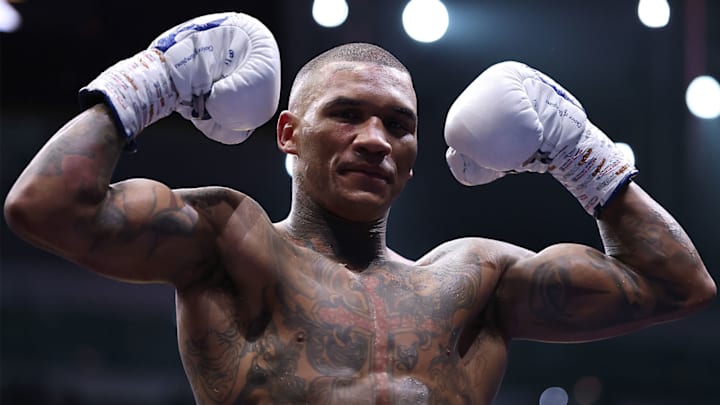
Last week, Zuffa Boxing, the nascent promotion fronted by UFC honcho Dana White, made its most significant signing, inking British star Conor Benn to a one-fight deal. The move sent a shock wave through the U.K. boxing scene while triggering Matchroom Boxing’s top officials, who immediately branded Benn as disloyal. “Classless” was how Matchroom president Barry Hearn described Benn’s exit. Eddie Hearn, Matchroom’s chairman, said the decade he spent promoting Benn “feels a little bit like wasted years.”
Since debuting in January, Zuffa has moved quickly, signing more than 90 fighters to promotional contracts. Most of the roster is made up of journeymen, fighters who longtime trainer and manager Robert Garcia described as having been “rejected by the top promoters.” Zuffa’s first major signing was Jai Opetaia, a cruiserweight titleholder who will make his debut on Sunday. Benn, who is coming off a win over Chris Eubank Jr. last November, becomes the biggest name in the Zuffa stable.
Zuffa officials have been open about their desire to build a model in boxing similar to the one enjoyed by Ultimate Fighting Championship (UFC), which White transformed from a mixed martial arts company on the brink of bankruptcy into a multibillion-dollar property. As part of that, Zuffa has backed federal legislation that would amend the Professional Boxer Health and Safety Act, which would allow Zuffa to operate outside the current system. It has also taken aim at Matchroom, its most formidable competitor.
In recent months, Zuffa has signed Opetaia, a former Matchroom fighter, made a lucrative, multiyear offer to unified 115-pound champion Jesse “Bam” Rodriguez (Matchroom matched the offer) and poached Benn. Zuffa officials will note that all three of those fighters were free agents. Still, industry insiders see it as a clear attempt to weaken its top competition.
Hearn calls Zuffa’s raids “unbelievably flattering,” adding “I think they recognize that we are the best out there.” Zuffa is armed with a broadcast deal from Paramount, which has streamed the first three Zuffa cards on Paramount+. More significantly, Zuffa is co-owned by Sela, the Saudi Arabian promotional company bankrolled by the deep pocketed Saudi Public Investment Fund. They have also partnered with Turki Alalshikh, the Saudi official and Ring Magazine owner who has funded many high-profile boxing events over the last three years.
That’s given Zuffa access to almost limitless capital. Benn, who will fight on the undercard of the heavyweight showdown between Tyson Fury and Arslanbek Makhmudov, will earn $15 million, with $4 million paid up front. On an earnings call last week, Mark Shapiro, the president and chief operating officer of TKO, Zuffa’s parent company, told investors that Sela was covering Benn’s full purse.
That would appear to complicate things for Matchroom, which has had a business relationship with Sela and Alalshikh. Matchroom has promoted several Anthony Joshua fights with Alalshikh, and in January was the promoter for the Sela event headlined by Shakur Stevenson’s win over Teofimo Lopez. Hearn told Sports Illustrated that there have been talks with Alalshikh about Joshua, who is plotting a return after following his recovery from a tragic car crash that killed two of his friends.
“It doesn't because I know what they are,” says Hearn about Zuffa’s alignment with Sela and Alalshikh changing his relationship with them. “And when I know what you are, there's no surprises. As long as we're all honest, I don't really care. I know that Turki Alalshikh is going to do whatever he wants to do and how he feels at the time. And I'll do the same.
“If he goes the other way and does something that won't benefit me, no problem. And I'll do the same. We like working with him and it does benefit our fighters. And we'll always continue that jovial good relationship, but he's going to do what he wants to do, like we're going to do what we want to do. So I expect that relationship to continue, but who knows?”
Among the ways Hearn has combatted Zuffa’s advances is by repeatedly noting the pay disparity between UFC fighters and the recently signed Zuffa boxers, in an effort to spark a revolt. (A handful of UFC fighters, including Sean O’Malley, have commented on it.) He has also worked to strengthen Matchroom’s relationship with the sanctioning bodies. Zuffa’s plan is to operate outside the traditional sanctioning body system, using the newly created Zuffa belt to crown champions in each weight division.
“For us, we're trying to move in the other direction from Zuffa,” says Hearn. “We're trying to keep the tradition of this great sport. We're trying to understand and make people understand the legacy of this sport. The fact that belts are important. Champions do fight champions. And people, the athlete and the talent need to be respected in the way that they're dealt with, which you don't see in other parts of their business. So I like our spot. I like our position.”
Ultimately, Hearn says, it will come down to the product. Matchroom recently signed a new five-year deal with DAZN (disclaimer: I call fights for DAZN), which Hearn says calls for 30 fight cards a year. On Saturday, Matchroom co-promoted a 130-pound title unification fight between Emanuel Navarrete and Eduardo “Sugar” Núñez. More than 10,000 fans packed Desert Diamond Arena in Glendale, Ariz., for the all-Mexican showdown, which Navarrete won by 11th-round knockout.
To succeed, events like that can’t be the exception, but the rule.
“I'm smart enough to know these are powerful people and it's going to be a good fight,” says Hearn. “I was going to say good clean fight. We'll be from our side, but we'll see what happens. I don't think it's bad for boxing. We just got to make sure that the product is good. And that is how we will move this product forward and maintain our position in the market as number one while also maintaining the beauty and the history and the legacy of this sport.”
 Add us as a preferred source on Google
Chris Mannix is a senior writer at Sports Illustrated covering the NBA and boxing beats. He joined the SI staff in 2003 following his graduation from Boston College. Mannix is the host of SI’s “Open Floor” podcast and serves as a ringside analyst and reporter for DAZN Boxing. He is also a frequent contributor to NBC Sports Boston as an NBA analyst. A nominee for National Sportswriter of the Year in 2022, Mannix has won writing awards from the Boxing Writers Association of America and the Pro Basketball Writers Association, and is a longtime member of both organizations.
Follow sichrismannix