%20%20--%3E%0A%3Csvg%20version%3D%221.1%22%20id%3D%22Layer_1%22%20xmlns%3D%22http%3A%2F%2Fwww.w3.org%2F2000%2Fsvg%22%20xmlns%3Axlink%3D%22http%3A%2F%2Fwww.w3.org%2F1999%2Fxlink%22%20x%3D%220px%22%20y%3D%220px%22%0A%09%20width%3D%2239px%22%20height%3D%2240px%22%20viewBox%3D%220%200%2039%2040%22%20enable-background%3D%22new%200%200%2039%2040%22%20xml%3Aspace%3D%22preserve%22%3E%0A%3Cpath%20fill%3D%22%23FFFFFF%22%20d%3D%22M38.5%2C7H28.2v26h10.3V7z%22%2F%3E%0A%3Cpath%20fill-rule%3D%22evenodd%22%20clip-rule%3D%22evenodd%22%20fill%3D%22%23FFFFFF%22%20d%3D%22M26.1%2C25.5c0%2C5.8-4.1%2C7.5-12.9%2C7.5C3.9%2C33%2C0%2C31.2%2C0%2C25.2v-1.1h11.6%0A%09v2.4c0%2C0.7%2C0.1%2C1.4%2C1.2%2C1.4c1%2C0%2C1.2-0.4%2C1.2-1.3v-0.9c0-1.6-0.9-1.6-3.5-2.2C2.2%2C21.7%2C0%2C19.7%2C0%2C15.3v-0.9C0%2C9.3%2C5.5%2C7%2C12.9%2C7%0A%09c10.2%2C0%2C12.8%2C2.6%2C12.8%2C7.4v1.8h-11v-2.9c0-0.6-0.4-1.1-1.2-1.1c-0.6%2C0-1.2%2C0.4-1.2%2C1.1v0.9c0%2C1.5%2C0.9%2C2%2C3.3%2C2.5%0A%09c8%2C1.6%2C10.5%2C3.3%2C10.5%2C7.5V25.5z%22%2F%3E%0A%3C%2Fsvg%3E%0A)
March Madness: Five Teams to Avoid in Your Men’s NCAA Tournament Bracket
In this story:
Welcome to Sports Illustrated’s annual Danger Rankings!
Every year, fans everywhere filling out their bracket are hunting for the Cinderella team that might win them their bracket pool. But equally important is knowing which top teams not to back for a deep run. And even in a time when many are predicting much chalkier tournaments than we’re used to, you can guarantee there will be at least some chaos in the first weekend of the Big Dance.
Here’s a look at five top-four-seeded squads that could be in danger of an early exit.
Nebraska (No. 4 seed, South Region)
Nebraska has never won an NCAA tournament game. For much of the season, it looked like a foregone conclusion that streak would end this year. The Cornhuskers won their first 20 games of the season and climbed into the top five of the national rankings in the process, but have gone just 6–6 in their final 12 games with just one win over an NCAA tournament team in that stretch.
Since Feb. 1, Nebraska has been just the 35th-best team in the country, per T-Rank. That’s much more in line with teams playing in No. 8 vs. No. 9 games than a top-four seed. It has also really sputtered offensively since then, ranking as the 132nd-ranked offense in that span, worst of any at-large team. The Huskers very much look like the team that overachieved early and has come back to the pack, and now looks like perhaps the most vulnerable team in the top 16.
Nebraska should have a good chance to get that first tournament win under its belt, though Troy has impressive size and experience for a mid-major walking into a game like this. That second-round tilt against the winner of Vanderbilt and McNeese is scary though. Vandy is clearly underseeded as a No. 5 seed after reaching the SEC tournament final, and McNeese is analytically one of the top mid-majors in the field. A second weekend trip will be a tall order.
Alabama (No. 4 seed, Midwest Region)
The Crimson Tide had better hope the old adage that defense wins championships doesn’t ring true here. Alabama’s defense ranks No. 67 nationally on KenPom, by far the worst among top-four seeds. And the history for teams with the Tide’s profile on both sides of the ball is shaky in the tournament. Similarly seeded teams like 2024 Kentucky (lost to Oakland), ’22 Iowa (lost to Richmond) and even ’14 Duke (lost to Mercer) have gotten exposed in this event. In short, it’s a high-variance style of play that can pop when things are going well but look really bad if things start going poorly.
That said, Alabama has avoided early upsets under Nate Oats for the most part. The Tide have advanced to the second weekend in four of the last five tournaments, including the 2024 run to the Final Four. Alabama has a superstar at the point in Labaron Philon Jr., but his backcourt mate Aden Holloway seems unlikely to play this weekend after a felony arrest on drug charges. And the Tide’s frontcourt is thin after injuries and has struggled all season long. The Tide feel more vulnerable entering the tournament than they have in awhile.
Plus, the draw is tough this time around. As good as Philon is, Hofstra has two high-level guards in Cruz Davis and Preston Edmead. Facing teams that protect the paint the way Hofstra does negates the biggest advantage most high-majors have in early round games, so don’t be surprised if that first-round game is a serious test. A potential matchup with Texas Tech in the second round would basically be a toss-up as well.
Virginia (No. 3 seed, Midwest Region)
Virginia has had a phenomenal first season under Ryan Odom, vaulting from unranked in the preseason to a No. 3 seed in the Big Dance after a 29-win campaign. But that luck could end this weekend if the Cavs aren’t careful, with a pair of potentially difficult matchups to come if Virginia wants to advance to the second weekend.
Among the No. 14 seeds in the field, Wright State looks the most dangerous. The Raiders have a pair of dynamic guards in TJ Burch and Michael Cooper, and freshman big man Kellen Pickett is a rising star. And Wright State does an excellent job of running teams off the three-point line and forcing them to score in isolation, which isn’t Virginia’s brand of basketball. Advance in that game, and a second-round matchup potentially with Tennessee looks scary as well. The Vols have the size at the rim in Felix Okpara to bother Virginia’s bigs and a talented point guard in Ja’Kobi Gillespie who could be the best guard on the floor.
T-Rank’s “Similar Profiles” tool says the 10 teams most similar to Virginia since 2008 average just 1.6 wins per tournament. That’s by far the lowest among the No. 3 seeds, with the next lowest Gonzaga at 2.2 wins. Plus, history hasn’t been kind to teams who’ve overachieved preseason rankings the way Virginia has. If you’re looking for the most vulnerable No. 3, it’s probably the Hoos.
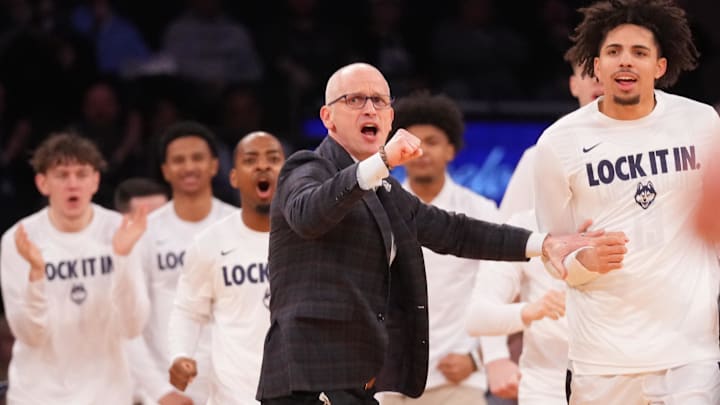
UConn (No. 2 seed, East Region)
UConn has limped into the Big Dance, getting blown out in the Big East title game by St. John’s and losing to close the regular season to a 20-loss Marquette team. There’s also a physical limp involved. Star point guard Silas Demary Jr. tweaked his ankle late against St. John’s, a big concern for a team that has already been struggling with ball security of late.
The question with UConn is how much the reset from conference play into a tournament setting helps them. Head coach Dan Hurley has long been of the belief that his team is more dangerous against nonconference opponents who are less accustomed to dealing with the Huskies’ deep playbook offensively than Big East foes that see them two and three times a season. In the Big Dance, when in many cases less physicality is allowed, UConn’s offense hums at a different level than the wars of Big East play. But that said, the Huskies have some real answers they need to find heading into this tournament. Over their last five games, they’ve turned it over in at least 20% of their offensive possessions in four of those contests. They’ve got the shooters on paper to be absolutely elite from distance, but pedestrian statistical seasons from sharpshooters Solo Ball and Braylon Mullins have brought down their numbers and the Huskies have shot it incredibly poorly in recent losses to St. John’s and Marquette. UConn has to be better offensively if it wants to make a deep run.
The matchups aren’t easy in the first weekend either. You’d expect UConn to get by Furman, though freshman guard Alex Wilkins is an outstanding talent and head coach Bob Richey has won a game in the Big Dance before. And if UConn draws UCLA in the second round, expect that one to be an absolute war. The Bruins have been outstanding of late, with PG Donovan Dent coming into his own after a slow start to the year and Tyler Bilodeau one of the best stretch PFs in the country. UCLA looks dangerous enough to put a serious scare into the Huskies.
Michigan (No. 1 seed, Midwest Region)
After last year’s Final Four was all No. 1 seeds, it feels like we may be due for a top seed to take an early exit. And while it’s hard to predict any of the top seeds will fall, the team with the potential scariest first weekend ahead is Michigan. We’ll take out the No. 1 vs. No. 16 game from the equation here (although both UMBC and Howard come in scorching hot) and say Michigan advances there. That second-round matchup with either Saint Louis or Georgia pits the Wolverines against two very high-variance teams that can absolutely fill it up from beyond the arc.
With Saint Louis in particular, one prevailing thought all season has been that Michigan would be most vulnerable against teams with bigs that can pull the Wolverines’ shot blockers away from the rim. The Billikens have that in Robbie Avila, and shoot tons of threes with sharpshooters Trey Green and Ishan Sharma to try to apply some early game pressure. Georgia will play more traditionally but has guards Jeremiah Wilkinson and Marcus “Smurf” Millender that can fill it up and a mass of humanity at the rim in Somto Cyril.
So while Michigan certainly has national title potential, it’s at least worth a bit of caution before going all in on the Wolverines to cut down the nets.
More March Madness from Sports Illustrated
Listen to SI’s college sports podcast, Others Receiving Votes, below or on Apple and Spotify. Watch the show on SI’s YouTube channel.
 Add us as a preferred source on Google
Kevin Sweeney is a staff writer at Sports Illustrated covering college basketball and the NBA Draft, and is an analyst for The Field of 68. A graduate of Northwestern, Kevin is a voter for the Naismith Trophy and is a member of the U.S. Basketball Writers Association (USBWA).
Follow CBB_Central