%20%20--%3E%0A%3Csvg%20version%3D%221.1%22%20id%3D%22Layer_1%22%20xmlns%3D%22http%3A%2F%2Fwww.w3.org%2F2000%2Fsvg%22%20xmlns%3Axlink%3D%22http%3A%2F%2Fwww.w3.org%2F1999%2Fxlink%22%20x%3D%220px%22%20y%3D%220px%22%0A%09%20width%3D%2239px%22%20height%3D%2240px%22%20viewBox%3D%220%200%2039%2040%22%20enable-background%3D%22new%200%200%2039%2040%22%20xml%3Aspace%3D%22preserve%22%3E%0A%3Cpath%20fill%3D%22%23FFFFFF%22%20d%3D%22M38.5%2C7H28.2v26h10.3V7z%22%2F%3E%0A%3Cpath%20fill-rule%3D%22evenodd%22%20clip-rule%3D%22evenodd%22%20fill%3D%22%23FFFFFF%22%20d%3D%22M26.1%2C25.5c0%2C5.8-4.1%2C7.5-12.9%2C7.5C3.9%2C33%2C0%2C31.2%2C0%2C25.2v-1.1h11.6%0A%09v2.4c0%2C0.7%2C0.1%2C1.4%2C1.2%2C1.4c1%2C0%2C1.2-0.4%2C1.2-1.3v-0.9c0-1.6-0.9-1.6-3.5-2.2C2.2%2C21.7%2C0%2C19.7%2C0%2C15.3v-0.9C0%2C9.3%2C5.5%2C7%2C12.9%2C7%0A%09c10.2%2C0%2C12.8%2C2.6%2C12.8%2C7.4v1.8h-11v-2.9c0-0.6-0.4-1.1-1.2-1.1c-0.6%2C0-1.2%2C0.4-1.2%2C1.1v0.9c0%2C1.5%2C0.9%2C2%2C3.3%2C2.5%0A%09c8%2C1.6%2C10.5%2C3.3%2C10.5%2C7.5V25.5z%22%2F%3E%0A%3C%2Fsvg%3E%0A)
March Madness: Four Teams to Avoid in Your Women’s NCAA Tournament Bracket
In this story:
Welcome to Sports Illustrated’s Danger Rankings!
It’s officially bracket season in women’s college basketball, a time when fans scour for Cinderellas and tout their favorite top seeds. And while it’s certainly important to navigate the lovable underdogs, it’s just as important to know which top teams may not be ticketed for a deep run in this year’s NCAA tournament.
The women’s NCAA tournament has historically been chalky—and this year seems no different. That said, there are still opportunities for favored teams to run into bumps in the road.
Here are four top-four seeds who could be in danger of heading home early.
Oklahoma (No. 4 seed, Regional 4, Sacramento)
The fast-paced Oklahoma Sooners can flat out score, averaging the third-most points per game in the country this season. With freshman guard Aaliyah Chavez a dangerous scorer in transition and senior center Raegan Beers a force in the paint, the Sooners can overwhelm teams with their inside-out approach.
Add in the fact that Oklahoma dominated the glass like few teams this season, and you have a legitimate tough out in March. But the Sooners developed an unfortunate pattern in their losses this season. In six of seven defeats, Oklahoma turned the ball over at least 17 times, leading to easy buckets for its opponent.
Should Oklahoma win its first-round game against Idaho—and it should—Michigan State and its opportunistic defense, which forced 20 turnovers per game this season, looms in the second round.
Then, should the Sooners manage to advance past the Spartans, a date with South Carolina looms. Yes, the Sooners were one of just two teams to defeat the Gamecocks this season, outlasting them in overtime back in January.
South Carolina coach Dawn Staley is one of the best in the business at game-planning for an opponent, and the Gamecocks could be playing angry after a decisive defeat in the SEC tournament final.
The Sooners have the firepower to challenge anyone, but their propensity for unforced errors makes them tough to trust in March.
Ohio State (No. 3 seed, Regional 1, Fort Worth)
Led by the Cambridge sisters—three-level scoring threat Jaloni and defensive ace Kennedy—the Buckeyes are a formidable and very well-rounded team. In particular, Ohio State’s ability to create turnovers and turn them into easy buckets in transition puts a ton of pressure on opposing teams.
But Ohio State’s road through the region contains multiple potential pitfalls. While the Buckeyes are an opportunistic defense, they struggled to defend the three-point line this season, allowing opponents to shoot 33.7% from beyond the arc, the 28th-highest mark in the nation.
Looming in the Buckeyes’ way are teams who can light it up from three-point range. Should Ohio State take care of business against No. 14 seed Howard, they’ll face the winner of Notre Dame–Fairfield. The Stags knocked down more three-pointers than any team in the country at a 37% clip. Meanwhile, the Fighting Irish, led by star guard Hannah Hidalgo, have multiple shooters capable of lighting it up from long range.
Should Ohio State survive the onslaught of three-pointers, they then have to tango with Vanderbilt and the leading scorer in Division I women’s basketball, Mikayla Blakes, in the Sweet 16. If they manage to defeat the Commodores, their reward is a date with the defending champion UConn Huskies, who haven’t lost since February of last year.
While Ohio State is capable of advancing to the Sweet 16, anything more than that is too much of an ask for a young team with just two seniors and one junior.
Iowa (No. 2 seed, Regional 4, Sacramento)
For the second straight year, Jan Jensen has led the Hawkeyes to the NCAA tournament. Only this time, Jensen & Co. are on the heels of the program’s most successful regular season since the days of Lisa Bluder and Caitlin Clark—and a potential exit in the second round of the NCAA tournament for the third straight year simply won’t do.
But there are two problematic matchups for the Hawkeyes in their region. TCU, a potential Sweet 16 opponent, has the kind of two-way archetype that could give Iowa trouble. Only one team—the Huskies—held opponents to a lower field goal percentage than the Horned Frogs, who boast elite defenders on the wing in Olivia Miles and Marta Suarez, as well as a strong rim protector in Clara Silva.
And on the offensive end, the Horned Frogs have six players shooting at least 34% from the field, a bad combination for a Hawkeyes team that struggled to defend the three-point line in its losses this season.
If Iowa manages to advance to the Elite Eight for the first time since 2024, they’ll have a date with South Carolina. There are question marks about the Hawkeyes’ ability to hang with the very best in the country, as they lost three games against No. 1 seeds UConn and UCLA by an average of 33 points, including a 96–45 beatdown at the hands of the Bruins in the Big Ten tournament final.
The Hawkeyes, led by Ava Heiden, Chit-Chat Wright and Hannah Stuelke, are a fine bet to advance past the second round, but don’t seem likely to make a deep run.
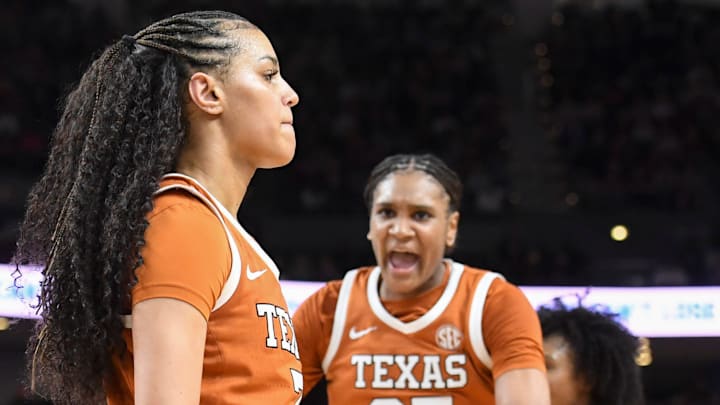
Texas (No. 1 seed, Regional 3, Fort Worth)
Wow, is it hard to put Vic Schaefer’s Texas Longhorns here. Led by Madison “Midrange Maddie” Booker, a matchup nightmare for opposing defenders, and Rori Harmon, one of the best two-way players and point guards in the country, the Longhorns have everything they need to win the program’s first national title since 1986.
And after watching Texas decisively defeat South Carolina in the SEC tournament final to deny the Gamecocks their fourth straight conference title, no one would blame you if you wanted to pick the Longhorns to go all the way.
But of the No. 1 seeds, the Longhorns certainly seem to have drawn the toughest of the possible paths. Looming in Texas’s way are two teams that acquitted themselves remarkably well against the best of the best.
The No. 2 seed Michigan Wolverines came the closest of any team in the country to defeating the mighty UConn Huskies, losing by just three points to the defending champions back in November. The Wolverines were able to put a scare into UConn despite trailing by as many as 17 points in the third quarter.
Michigan is a young team, but the trio of Olivia Olson, Syla Swords and Mila Holloway are about as well-rounded as any in the country. The Wolverines have shown they can take a hit from the very best—and keep on coming.
Also in the Longhorns’ region are the Louisville Cardinals, one of the deepest teams in the country. Powered by Sixth Player of the Year Imari Berry, the Cardinals ranked second among all Division I teams with 34.2 bench points per game. Seven Louisville players averaged at least eight points per game this season.
The Cardinals’ depth and stout defense allowed them to stick around with two of the No. 1 seeds in the women’s tournament in matchups earlier this season. UConn defeated teams by an average of 38.3 points this season, but defeated the Cardinals by only 13 in the season-opening game.
Then, the Cardinals pushed South Carolina to the brink in a two-point December loss in which Louisville guard Tajianna Roberts missed a potential go-ahead three-pointer with four seconds remaining in the contest.
Texas will be favored in any game it plays against every team not named UConn or UCLA. But one of the Wolverines or Cardinals could give them a real test in a potential Elite Eight showdown.
More March Madness from Sports Illustrated
Listen to SI’s college sports podcast, Others Receiving Votes, below or on Apple and Spotify. Watch the show on SI’s YouTube channel.
 Add us as a preferred source on Google
Tim Capurso is a staff writer for Sports Illustrated, primarily covering MLB, college football and college basketball. Before joining SI in November 2023, Capurso worked at RotoBaller and ClutchPoints and is a graduate of Assumption University. When he's not working, he can be found at the gym, reading a book or enjoying a good hike. A resident of New York, Capurso openly wonders if the Giants will ever be a winning football team again.
Follow TimCapurso