%20%20--%3E%0A%3Csvg%20version%3D%221.1%22%20id%3D%22Layer_1%22%20xmlns%3D%22http%3A%2F%2Fwww.w3.org%2F2000%2Fsvg%22%20xmlns%3Axlink%3D%22http%3A%2F%2Fwww.w3.org%2F1999%2Fxlink%22%20x%3D%220px%22%20y%3D%220px%22%0A%09%20width%3D%2239px%22%20height%3D%2240px%22%20viewBox%3D%220%200%2039%2040%22%20enable-background%3D%22new%200%200%2039%2040%22%20xml%3Aspace%3D%22preserve%22%3E%0A%3Cpath%20fill%3D%22%23FFFFFF%22%20d%3D%22M38.5%2C7H28.2v26h10.3V7z%22%2F%3E%0A%3Cpath%20fill-rule%3D%22evenodd%22%20clip-rule%3D%22evenodd%22%20fill%3D%22%23FFFFFF%22%20d%3D%22M26.1%2C25.5c0%2C5.8-4.1%2C7.5-12.9%2C7.5C3.9%2C33%2C0%2C31.2%2C0%2C25.2v-1.1h11.6%0A%09v2.4c0%2C0.7%2C0.1%2C1.4%2C1.2%2C1.4c1%2C0%2C1.2-0.4%2C1.2-1.3v-0.9c0-1.6-0.9-1.6-3.5-2.2C2.2%2C21.7%2C0%2C19.7%2C0%2C15.3v-0.9C0%2C9.3%2C5.5%2C7%2C12.9%2C7%0A%09c10.2%2C0%2C12.8%2C2.6%2C12.8%2C7.4v1.8h-11v-2.9c0-0.6-0.4-1.1-1.2-1.1c-0.6%2C0-1.2%2C0.4-1.2%2C1.1v0.9c0%2C1.5%2C0.9%2C2%2C3.3%2C2.5%0A%09c8%2C1.6%2C10.5%2C3.3%2C10.5%2C7.5V25.5z%22%2F%3E%0A%3C%2Fsvg%3E%0A)
Top Women’s Teams With the Clearest Paths to the Final Four
In this story:
There was very little debate this year about which four teams would receive top seeds. For weeks, it’s felt obvious that women’s basketball has UConn, UCLA, Texas and South Carolina—and then it has the rest of the field. But the field has more fight in some areas than in others.
Here’s the breakdown of those No. 1 seeds and their respective potential roads to the Final Four—ranked from hardest to easiest.
4. UCLA (Sacramento 2)
UCLA may have gotten the No. 2 overall seed, but the Bruins have the most difficult path to the Final Four. Their region includes two-seed LSU and three-seed Duke. At this point, UCLA and LSU are about as acquainted as any two programs can possibly be in March, having met in the Sweet 16 in 2024 (LSU won that one) and in the Elite Eight in ’25 (UCLA got its revenge), with several key players remaining on the rosters from those matchups. Now another potential one sits on the table for the second weekend this year. But a rematch there would only happen if LSU beats Duke in the Sweet 16. And it’s not so clear that UCLA should prefer facing the No. 3 here over the No. 2.
It’s true that UCLA and Duke already played once this year back in November, when the Bruins were missing star center Lauren Betts, and UCLA still delivered a statement win. But the Duke of November looks very different from the Duke of March. Kara Lawson’s squad pulled off a remarkable midseason turnaround en route to winning the ACC. The Blue Devils’ slow, grinding defense is among the most disruptive strategies that can be found anywhere in the bracket.
Put simply, if UCLA has to play LSU, it will face the most potent offense in the game, and if it has to play Duke, it will face one of the staunchest defenses. Neither of those options is particularly appealing. But if there’s any program that made a habit of taking on tough competition this year? It’s UCLA. No team recorded more Quad I wins. It’ll be a tough road from Sacramento 2 to Phoenix, yes, but no program has proven itself as up to that task as UCLA.
3. UConn (Fort Worth 1)
“I don’t know what to make of that, to be honest with you,” UConn coach Geno Auriemma told reporters on Sunday of his reaction to sharing a region with two-seed Vanderbilt. “...That would be like they are the No. 8 team in the country. I find that hard to believe.” He’s correct that Vandy does make for an unusually tough potential opponent for the No. 1 overall seed to face in the Elite Eight. (And, for what it’s worth, Shea Ralph and the Commodores finished No. 6 in the most recent AP poll, not No. 8—but the committee has to consider more than just a simple ranking here, including the unenviable task of spreading teams from the loaded, top-heavy SEC across the bracket.) There’s a compelling storyline here, of course, in the fact that Ralph played at UConn and then spent years on the bench with Auriemma before leaving to helm a program of her own at Vanderbilt. But it doesn’t take any context for this potential matchup to be enormously compelling on its own.
Facing Vanderbilt would see UConn contending with a one-of-a-kind backcourt pairing in Mikayla Blakes and Aubrey Galvan. The leading scorer in the country, Blakes has benefitted enormously this year from the addition of savvy freshman point guard Galvan, and she’s gotten far more comfortable (and dangerous) with her movement off the ball.
And before UConn potentially faces the leading Division I scorer in Blakes, it very well might have to face the second-leading D-I scorer in Audi Crooks of Iowa State, in a potential matchup in the Round of 32. While Iowa State struggled through much of conference play, it should enter the tournament with the benefit of a healthy Addy Brown, which makes them a plausibly tough out.
Blakes and Crooks are both contenders for National Player of the Year. But the heavy favorite for the award is, of course, UConn’s Sarah Strong, who has stood out as the best player on the best team in the country. This region is surprisingly tough for a No. 1 overall seed. But it still feels hard to believe any squad will come out on top here other than UConn.
2. Texas (Fort Worth 3)
The Longhorns sealed the right to play in Fort Worth by winning the SEC. And it earned them a decently favorable potential matchup for the Elite Eight. The two-seed here is Michigan—a very tough program that has shown the ability to hang with top squads like UConn and UCLA. But so much of the Wolverines’ game depends on its young guards and what they can do on the perimeter. The Longhorns will have a chance to own the paint and thrive on mismatches here. Simply put, Michigan has an awful lot of talent, but it doesn’t have a ready answer for Texas star Madison Booker. And neither does three-seed Louisville or four-seed West Virginia. There’s no team here posing a clear matchup problem for Texas—and that leaves a clear potential road to Phoenix.
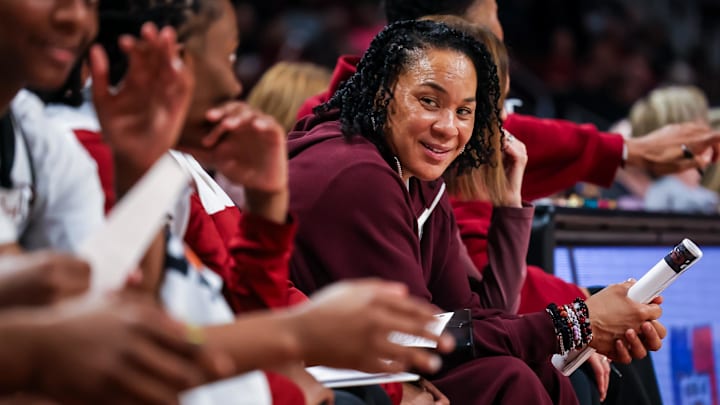
1. South Carolina (Sacramento 4)
Yes, South Carolina shares a region with four-seed Oklahoma, which handed the Gamecocks a rare loss back in January. And yes, South Carolina also shares a region with two-seed Iowa, which held its own against a remarkably tough schedule this year, and with three-seed TCU, which features the strong combination of Olivia Miles and Marta Silva. But the Gamecocks still have the clearest path forward to Phoenix.
It’s very hard to believe Oklahoma will be able to recapture the magical overtime period it took for the Sooners to take down the Gamecocks the first time around. TCU and Iowa, meanwhile, don’t quite match up to South Carolina in terms of depth or balance. The Gamecocks got the last No. 1 seed. But Dawn Staley & Co. may just get the last laugh.
More March Madness from Sports Illustrated
 Add us as a preferred source on Google
Emma Baccellieri is a staff writer focused on women’s basketball for Sports Illustrated. She previously covered MLB. She has also written for Baseball Prospectus and has been honored with multiple awards from the Society of American Baseball Research. A graduate of Duke University, she lives in Washington, D.C.
Follow emmabaccellieri