%20%20--%3E%0A%3Csvg%20version%3D%221.1%22%20id%3D%22Layer_1%22%20xmlns%3D%22http%3A%2F%2Fwww.w3.org%2F2000%2Fsvg%22%20xmlns%3Axlink%3D%22http%3A%2F%2Fwww.w3.org%2F1999%2Fxlink%22%20x%3D%220px%22%20y%3D%220px%22%0A%09%20width%3D%2239px%22%20height%3D%2240px%22%20viewBox%3D%220%200%2039%2040%22%20enable-background%3D%22new%200%200%2039%2040%22%20xml%3Aspace%3D%22preserve%22%3E%0A%3Cpath%20fill%3D%22%23FFFFFF%22%20d%3D%22M38.5%2C7H28.2v26h10.3V7z%22%2F%3E%0A%3Cpath%20fill-rule%3D%22evenodd%22%20clip-rule%3D%22evenodd%22%20fill%3D%22%23FFFFFF%22%20d%3D%22M26.1%2C25.5c0%2C5.8-4.1%2C7.5-12.9%2C7.5C3.9%2C33%2C0%2C31.2%2C0%2C25.2v-1.1h11.6%0A%09v2.4c0%2C0.7%2C0.1%2C1.4%2C1.2%2C1.4c1%2C0%2C1.2-0.4%2C1.2-1.3v-0.9c0-1.6-0.9-1.6-3.5-2.2C2.2%2C21.7%2C0%2C19.7%2C0%2C15.3v-0.9C0%2C9.3%2C5.5%2C7%2C12.9%2C7%0A%09c10.2%2C0%2C12.8%2C2.6%2C12.8%2C7.4v1.8h-11v-2.9c0-0.6-0.4-1.1-1.2-1.1c-0.6%2C0-1.2%2C0.4-1.2%2C1.1v0.9c0%2C1.5%2C0.9%2C2%2C3.3%2C2.5%0A%09c8%2C1.6%2C10.5%2C3.3%2C10.5%2C7.5V25.5z%22%2F%3E%0A%3C%2Fsvg%3E%0A)
Ranking Men’s College Basketball Power Conferences: Is It Big Ten’s Title to Lose?
In this story:
Conference superiority debates aren’t quite as popular in college basketball as they are on the gridiron, but with the men’s NCAA tournament approaching, it’s a good time to take stock of which leagues seem best positioned heading into March Madness. With teams buried in league play for the last two months, it’s sometimes hard to take stock of what league results really mean and which will translate best to the Big Dance. Plus, who doesn’t love some old-school bragging rights?
Here’s a look at how Sports Illustrated ranks the five power conferences on the hardwood this season.
1. Big Ten
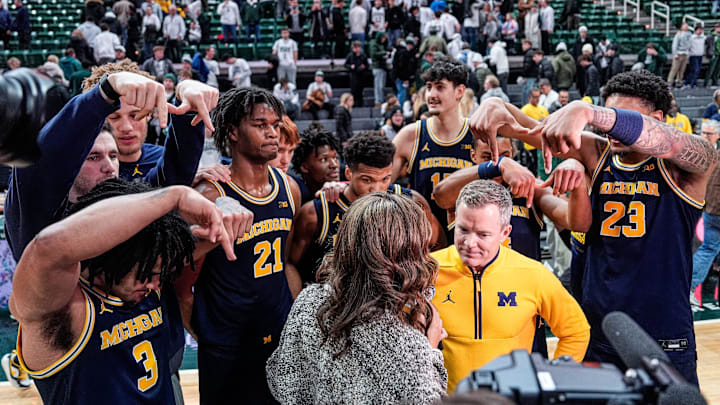
Historically, the strength of the Big Ten has been its balance. The league has stacked NCAA tournament bids but often lacked the elite teams to make the serious push for the title … and those elite teams have sometimes been tripped up earlier than expected, contributing to the league’s long national title drought. This year, the paradigm has been somewhat flipped: I’d argue that the bottom half of the Big Ten is the worst it has been in years, but the top features a handful of excellent teams and one top-tier title contender in Michigan.
Four of the top eight and five of the top 12 teams on KenPom are from the Big Ten. Illinois, Purdue, Michigan State and Nebraska all have shown their flaws of late, but still look like bona fide contenders to at least get to an Elite Eight or Final Four. And the good news for the league is that, in those cooler stretches, the top teams have given out enough quality wins to ensure the league sends several more teams dancing. UCLA picked off Purdue and Illinois at home in Westwood, Ohio State recently upset Purdue in Columbus, while Wisconsin built a nice résumé with road wins at Michigan and Illinois. Right now, the league has seven NCAA tournament locks and should get a couple more bids assuming things break right down the stretch.
But the essential question: Is this the year the Big Ten finally stands alone during “One Shining Moment”? It’s far from a lock, but the league has a real chance to have two to three teams in the Elite Eight with a puncher’s chance to go all the way.
2. Big 12
Similar to the Big Ten, the Big 12 is somewhat top heavy this season. The monsters at the top (Arizona, Houston, Iowa State, Texas Tech and Kansas) are formidable, all capable of a Final Four run or more depending on draw. Arizona seems on track for a No. 1 seed, and data points of road/neutral site wins over the SEC (Florida) and Big East (UConn) leaders certainly helps strengthen the Big 12’s case.
One thing hurting the Big 12’s case for the top spot: BYU’s struggles of late. The Cougars at one point looked like a serious second weekend or even Final Four threat, but are just 3–8 in their last 11 games and have struggled mightily of late without Richie Saunders, who’s sidelined for the season with a knee injury. Few others have emerged: UCF and TCU have middling profiles and may be the only other two teams dancing from the league, though Cincinnati has surged late to make things interesting.
In the end, the slightly better depth in the Big Ten helped that league win out for the top spot, especially with fairly even top fives.
3. SEC
The SEC was the clear winner in this category last year after sending a record 14 teams to the NCAA tournament. The league has taken a step back this season though, at least in terms of the quantity of elite teams. Florida increasingly looks like a real threat to go back-to-back, but outside of the Gators, there’s plenty of good and very little great in the league this season.
Interestingly, KenPom still rates the SEC as the nation’s best conference. But KenPom’s conference ranks are based on the average strength of a team that would go .500 in the league. The SEC’s depth, with 11 teams still in serious tournament contention and all but three teams in KenPom’s top 60, brings its marks up. This feels like a year where the SEC could send the most teams to the Big Dance, but perhaps only a couple make it through to the second weekend.
It’s also worth noting that the SEC struggled in the nonconference, particularly in games vs. power-conference opponents. SEC teams went just 36–48 against fellow high-major foes. That could be a sign of things to come in tournament time.
4. ACC
This has been exactly the bounce-back season the ACC needed after trending down of late and really feeling the brunt of the criticism last year when the league sent just four teams dancing. Duke is still carrying the torch for the league and looks on track for the No. 1 overall seed in the Big Dance, but some of the conference’s recent coaching hires have pulled off rapid turnarounds and most of the top brands in the league are back into tournament contention, at the very least.
Ryan Odom has engineered a rapid rebuild at Virginia, which looks in line for a potential top-four seed in the NCAA tournament at 25–4. Miami has gone from 24 losses in 2024–25 to 23 wins in ’25–26 under Jai Lucas. NC State has stumbled of late, but still should go dancing in Will Wade’s first year. Recent realignment addition SMU is well positioned to make the NCAA tournament, as well, and both Cal and Stanford have improved to at least be helping the league analytically.
And just as importantly, the bottom of the league has picked up the slack some. Last year, a whopping eight of the league’s 18 teams finished outside KenPom’s top 100. Right now, just two ACC teams are 100th or worse. That has been huge in helping the league’s mid-pack teams build NCAA tournament résumés.
The lack of true title contenders after Duke keeps the ACC from moving higher on this list, but commissioner Jim Phillips should be walking around with a bit more pep in his step than he was at this time last year.
5. Big East
The Big East is the clear fifth choice among the power conferences this season, in spite of some summertime hand-wringing from coaches in rival leagues about the conference’s advantages in the revenue-share era. Without a late surge from Seton Hall or a bid-stealer situation in the Big East tournament, the league seems poised to send just three teams to the NCAA tournament: UConn, St. John’s and Villanova. Marquette has been mired in a miserable 10–19 campaign after making the NCAA tournament in Shaka Smart’s first four years, while Creighton has taken a step back after a great run of success in the first half of the 2020s. Get those programs back rolling and things look a lot better for the league, even before hopeful turnarounds at Xavier, Providence and Georgetown.
The good news for the league is that all three teams have the potential to advance in the Dance. UConn looks like a legitimate national title contender, which would be the league’s fifth championship in the last 10 years. St. John’s is likely a tier or two below, but the Red Storm could still make a run. And Villanova has been feisty in Year 1 under Kevin Willard and should at least be favored in its first-round game. But being projected for just three bids when all four other leagues will at least double that mark does sting.
More College Basketball from Sports Illustrated
Listen to SI’s college sports podcast, Others Receiving Votes, below or on Apple and Spotify. Watch the show on SI’s YouTube channel.
 Add us as a preferred source on Google
Kevin Sweeney is a staff writer at Sports Illustrated covering college basketball and the NBA draft. He joined the SI staff in July 2021 and also serves host and analyst for The Field of 68. Sweeney is a Naismith Trophy voter and ia member of the U.S. Basketball Writers Association. He is a graduate of Northwestern University’s Medill School of Journalism.
Follow CBB_Central