%20%20--%3E%0A%3Csvg%20version%3D%221.1%22%20id%3D%22Layer_1%22%20xmlns%3D%22http%3A%2F%2Fwww.w3.org%2F2000%2Fsvg%22%20xmlns%3Axlink%3D%22http%3A%2F%2Fwww.w3.org%2F1999%2Fxlink%22%20x%3D%220px%22%20y%3D%220px%22%0A%09%20width%3D%2239px%22%20height%3D%2240px%22%20viewBox%3D%220%200%2039%2040%22%20enable-background%3D%22new%200%200%2039%2040%22%20xml%3Aspace%3D%22preserve%22%3E%0A%3Cpath%20fill%3D%22%23FFFFFF%22%20d%3D%22M38.5%2C7H28.2v26h10.3V7z%22%2F%3E%0A%3Cpath%20fill-rule%3D%22evenodd%22%20clip-rule%3D%22evenodd%22%20fill%3D%22%23FFFFFF%22%20d%3D%22M26.1%2C25.5c0%2C5.8-4.1%2C7.5-12.9%2C7.5C3.9%2C33%2C0%2C31.2%2C0%2C25.2v-1.1h11.6%0A%09v2.4c0%2C0.7%2C0.1%2C1.4%2C1.2%2C1.4c1%2C0%2C1.2-0.4%2C1.2-1.3v-0.9c0-1.6-0.9-1.6-3.5-2.2C2.2%2C21.7%2C0%2C19.7%2C0%2C15.3v-0.9C0%2C9.3%2C5.5%2C7%2C12.9%2C7%0A%09c10.2%2C0%2C12.8%2C2.6%2C12.8%2C7.4v1.8h-11v-2.9c0-0.6-0.4-1.1-1.2-1.1c-0.6%2C0-1.2%2C0.4-1.2%2C1.1v0.9c0%2C1.5%2C0.9%2C2%2C3.3%2C2.5%0A%09c8%2C1.6%2C10.5%2C3.3%2C10.5%2C7.5V25.5z%22%2F%3E%0A%3C%2Fsvg%3E%0A)
Lane Kiffin Once Again Pushes Boundaries in Demond Williams Jr. Saga
In this story:
The two biggest messes of the moment in college football are Mississippi’s coaching uncertainty for its College Football Playoff game against Miami and Demond Williams Jr. jilting of his signed contract with Washington.
The common thread tying these otherwise unrelated situations together? Surprise! It’s Lane Kiffin. The national leader in lowering the standards of college football coaches is doing double duty on that front this week.
After choosing to take the LSU job amid Ole Miss’s playoff run, creating an unparalleled turmoil in the sport, Kiffin and LSU gave their blessing to a number of staff members who were also going to Baton Rouge to continue working with the Rebels. Lo and behold, Ole Miss has won two games—most recently an upset of Georgia in the Sugar Bowl—to reach the playoff semifinals. That development seems to have weakened Kiffin’s support of loaning his coaches to the playoff push.
In Arizona, Ole Miss coach Pete Golding finally gave a concrete answer Wednesday on which coaches will not be available for the Fiesta Bowl—receivers coach George McDonald and tight ends coach Joe Cox. They both stayed at LSU, while others have shuttled back and forth between the Tigers and Rebels. (Most importantly, departing offensive coordinator Charlie Weis Jr. will be present and calling plays.)
“Do they want to be here?” Golding said Wednesday of McDonald and Cox. “Yeah, you’re damn right they do.”
Can the Rebels still play at their highest level without two position coaches? Sure. Modern power-conference staffs are small armies, with assistants to the assistants and analysts all over the place. There is quality depth, one might say.
But Kiffin seemingly reneging on unconditional support of his former team’s playoff run—because it became inconveniently long—is the kind of thing that earned him his reputation in the sport.
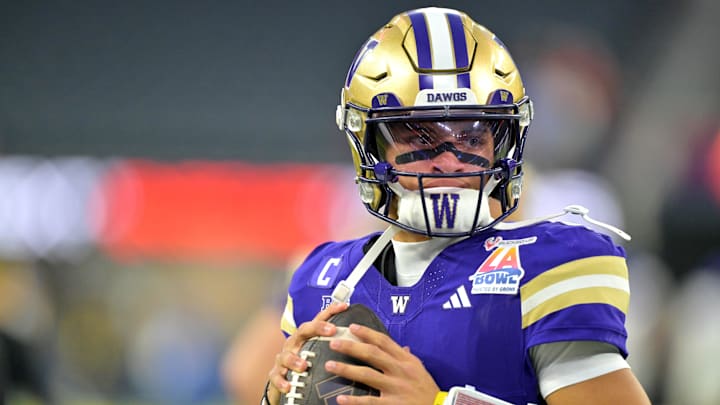
On top of that, here came the Williams fiasco. After two seasons at Washington, the quarterback signed a deal earlier this month for 2026 to remain with the Huskies. Then, on Tuesday, Williams announced on social media that he plans to transfer. (It’s not clear whether the formal process of requesting to be placed in the portal, and Washington doing so, has begun.) He intends to walk out on the contract he just signed, though Washington seems intent on making that as difficult as possible.
Williams’s reported most likely destination? LSU.
As all this was breaking the internet Tuesday night, two other things were transpiring. Kiffin was sitting at an LSU basketball game with another prospective transfer quarterback, Sam Leavitt of Arizona State. And on the Washington campus, many members of the Huskies’ football program—including head coach Jedd Fisch—were attending a memorial service for late soccer player Mia Hamant, who died in November of a rare kidney cancer.
Williams’s move was shocking and callous. It will be excused by many because he’s presumably getting a bigger payday, but it’s a terrible look—both bailing on the contract and dropping his announcement during a memorial for a deceased fellow Washington athlete, with his teammates in attendance.
As for the recruitment of Leavitt, it remains unknown how forthcoming Kiffin was with him while also pursuing another QB. Leavitt has other options and was reportedly visiting Tennessee on Wednesday. As a source familiar with Leavitt’s situation put it Wednesday, “It’s getting more difficult to know who to trust.”
This is the bottom line with Kiffin: He is arguably the lead weasel in a coaching fraternity with many of them. And being a weasel has a way of working out for him.
Al Davis hated him and fired him as coach of the Raiders. Didn’t hamper his career.
Then-SEC commissioner Mike Slive hated Kiffin when he was at Tennessee. Didn’t hamper his career.
USC athletic director Pat Haden fired Kiffin after he got off the plane from a road loss at Arizona State. He bounced back.

Mississippi now viciously hates him for bailing on a playoff team for a rival. LSU was so completely unconcerned about Kiffin’s career pattern that it gave him a $91 million contract—which includes paying him bonuses for every playoff game Ole Miss wins.
It’s an incredible career arc, filled with acrimonious partings. College sports is rife with babble about coaches teaching life lessons to young people. And yet some of the richest ones are scammers. The implied lesson: Do or say whatever it takes to get ahead.
For Kiffin, the latest attempt to get ahead apparently means disregarding Williams’s signed contract, possibly tampering with the player and trampling over the top of other QBs he was recruiting to LSU. And in a symptom of an ailing profession, everyone will pretty much shrug it off as the byproduct of a business where winning is all that matters.
It’s also a byproduct of a glaring weakness in the college sports model, of course.
Signed athlete compensation contracts in this industry are difficult to enforce. An employment agreement that comes without employee status has an inherent weakness. The school understandably says it will pursue legal remedies, with the Big Ten actively in support of the Huskies in this matter—not to mention the hopes of other colleges around the country looking at potential precedent being set.
But good luck undoing what’s been done.
The Big Ten also was supportive of Wisconsin last year when it tried to legally enforce a contract signed by defensive back Xavier Lucas. The case alleging tampering has gone to court and is proceeding, but Lucas still wound up at Miami and played all season. He will be a key part of the Hurricanes’ attempts to defeat Ole Miss on Thursday night.
Let’s assume there is no possibility of Williams staying at Washington. The bridge back appears to have been burned. The next question is how the transfer process would unfold.
If Williams wants to enroll at LSU or anywhere else, Washington prohibiting him from formally entering the transfer portal probably wouldn’t stop him. Would he be free to suit up and play immediately? Presumably, but that’s not guaranteed.
Penalties could be assessed to LSU coaches or staff members if NCAA enforcement concludes that tampering occurred and the committee on infractions makes a ruling to that effect. While rules enforcement regarding tampering has been largely overrun by sheer pervasiveness and campus indifference, there have been recent cases that produced significant penalties. In a ruling from last June, the Oklahoma State head women’s tennis coach was suspended for 50% of the season and given a four-year show-cause order, among other sanctions.
Infractions cases are not adjudicated overnight, though. If this becomes pursued as a full-blown case, there’s no telling how long it would take to complete.
In most potential outcomes, Kiffin is set up to win. If Ole Miss is eliminated Thursday night, he gets his full staff onboard at LSU sooner. If Ole Miss advances, he picks up more bonus money and claims reflected glory as the program’s architect. If Williams lands in Baton Rouge and clears initial eligibility hurdles, he’s presumably got his first LSU starting quarterback.
All in a week’s work for the leading weasel in the field.
More College Football from Sports Illustrated
Listen to SI’s college sports podcast, Others Receiving Votes, below or on Apple and Spotify. Watch the show on SI’s YouTube channel.
 Add us as a preferred source on Google
Pat Forde is a senior writer for Sports Illustrated who covers college football and college basketball as well as the Olympics and horse racing. He cohosts the Others Receiving Votes podcast for SI and is a regular contributor to the Tony Kornheiser Show podcast. He previously worked for Yahoo Sports, ESPN and The (Louisville) Courier-Journal. Forde has won 28 Associated Press Sports Editors writing contest awards, has been published three times in the Best American Sports Writing book series, and was nominated for the 1990 Pulitzer Prize. A past president of the U.S. Basketball Writers Association and member of the Football Writers Association of America, he lives in Louisville with his wife. They have three children, all of whom were collegiate swimmers.
Follow ByPatForde