%20%20--%3E%0A%3Csvg%20version%3D%221.1%22%20id%3D%22Layer_1%22%20xmlns%3D%22http%3A%2F%2Fwww.w3.org%2F2000%2Fsvg%22%20xmlns%3Axlink%3D%22http%3A%2F%2Fwww.w3.org%2F1999%2Fxlink%22%20x%3D%220px%22%20y%3D%220px%22%0A%09%20width%3D%2239px%22%20height%3D%2240px%22%20viewBox%3D%220%200%2039%2040%22%20enable-background%3D%22new%200%200%2039%2040%22%20xml%3Aspace%3D%22preserve%22%3E%0A%3Cpath%20fill%3D%22%23FFFFFF%22%20d%3D%22M38.5%2C7H28.2v26h10.3V7z%22%2F%3E%0A%3Cpath%20fill-rule%3D%22evenodd%22%20clip-rule%3D%22evenodd%22%20fill%3D%22%23FFFFFF%22%20d%3D%22M26.1%2C25.5c0%2C5.8-4.1%2C7.5-12.9%2C7.5C3.9%2C33%2C0%2C31.2%2C0%2C25.2v-1.1h11.6%0A%09v2.4c0%2C0.7%2C0.1%2C1.4%2C1.2%2C1.4c1%2C0%2C1.2-0.4%2C1.2-1.3v-0.9c0-1.6-0.9-1.6-3.5-2.2C2.2%2C21.7%2C0%2C19.7%2C0%2C15.3v-0.9C0%2C9.3%2C5.5%2C7%2C12.9%2C7%0A%09c10.2%2C0%2C12.8%2C2.6%2C12.8%2C7.4v1.8h-11v-2.9c0-0.6-0.4-1.1-1.2-1.1c-0.6%2C0-1.2%2C0.4-1.2%2C1.1v0.9c0%2C1.5%2C0.9%2C2%2C3.3%2C2.5%0A%09c8%2C1.6%2C10.5%2C3.3%2C10.5%2C7.5V25.5z%22%2F%3E%0A%3C%2Fsvg%3E%0A)

01:02:35 |
Up Next

The Deadline For Jalen Duren's Extension Is Days Away
Sep 26, 2026

Albert Breer on Denver’s Big Win, Sam Darnold and Patriots’ Blowout Loss
2 hours ago

Ime Udoka: Rockets Will "Make Some Real Noise"
Sep 26, 2026
There's One Way to Extend BOTH Towns & Brunson
Sep 26, 2026
The Deadline For Jalen Duren's Extension Is Days Away
Sep 26, 2026
Albert Breer on Denver’s Big Win, Sam Darnold and Patriots’ Blowout Loss
2 hours ago
Ime Udoka: Rockets Will "Make Some Real Noise"
Sep 26, 2026
There's One Way to Extend BOTH Towns & Brunson
Sep 26, 2026

Karma in Ann Arbor, USC Fails Test, Gators Dominate and Horns Survive
22 hours ago
Where Has the Old Drake Maye Gone?
1 hour ago
We Didn't Jinx the Texans: The Problem Is Much Simpler
1 hour ago

“Knock His Head Off” — Chris Duncan Sends Warning to Renato Moicano 😳
Apr 2, 2026
A Title Contender is Not Giving LeBron $50 Million
Apr 3, 2026

Atlantic Coast Conference Deep Dive | Others Receiving Votes
May 11, 2026
Can the Spurs Forget About That Humiliating Loss?
Jun 12, 2026
We Predict Who Will Be the NFL Defensive Player of the Year
Jun 15, 2026
Transcript
All right.
Welcome to the show.
Others receiving votes.
I'm Pat 40 with Brian Fisher and Kevin Sweeney, Sports Illustrated SI.
com.
Good to have you all with us today.
Uh, the Derby, Kentucky Derby was Saturday.
I don't know a soul who won money on it.
And usually, I walk out and I can find somebody I know who somehow won something.
I got nothing.
Did you guys, anybody, do you know, did either of you get rich or know anybody who did on the Kentucky Derby?
Well, I was, I was saying before we got on that I had a, a big group of college basketball folks, so we all put in a name, and none of us had, had Golden Temple.
So, yeah, not, not a great derby for, for, for the college hoops clan.
Brian, nothing.
I got, I got nothing, uh, other than, uh, you know, shout out to, uh, to Donna Brothers for, for nailing it, uh, in, in her last derby.
Yeah, yeah, Donna Brothers is a pro, um, but yes, while everybody was losing money at the track, a lot of people have been losing money or searching for money in college sports, and we're gonna talk quite a bit actually about.
Money today and money matters, uh, in this show.
Uh, we are going to discuss the first major college football gambling scandal.
As a star quarterback, tried to make more money and means that are impermissible under NCAA rules.
Uh, we are going to talk about the NCAA tournament and people trying to make more money off of that, with the inevitable expansion to 76 now pretty much at hand.
Uh, we're going to talk about the private equity push for more cash, why the Big 12 struck a deal, and more reasons why the Big 10 did not strike a deal with PE.
And I want to talk about why football and basketball coaches should be more like Kentucky Derby-winning trainer Sherry Deveau.
And we have a little meth lab story at the end.
So, let's get into it here, guys.
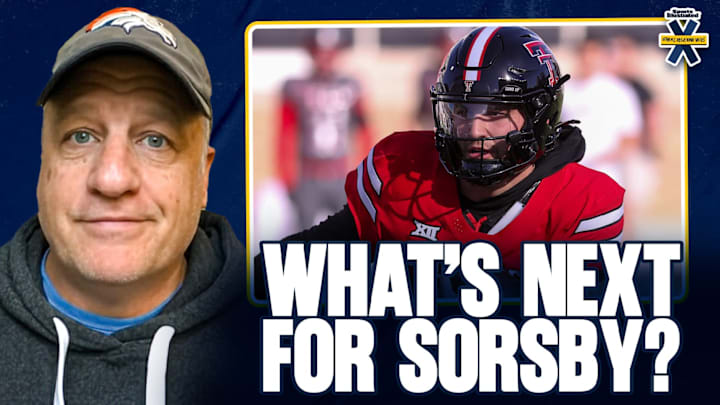
Um, we'll start with Brendan Soursby, Texas Tech, they're lawyering up in Lubbock.
He has hired, uh, noted NCAA nemesis, Jeffrey Kessler.
To try to get him out of a potential college career-ending jam.
Sosby's under NCAA investigation for allegedly making thousands of impermissible sports wagers, dating his two years at Indiana, and according to some reports, extending to his time at Cincinnati.
That includes betting on his sport and on his team, at least at Indiana, even though not betting against them or betting in the one game that he played during the one season we actually really know about.
So, there's a lot going on with Brendan Soresby and NCAA jurisdiction, NCAA jurisprudence, I should say.
Uh, hiring Kessler is certainly an upping of the ante, since he was one of the key architects of the House versus NCAA settlement that has completely changed the landscape.
Brian, can Kessler find a way to beat the NCAA again so Soursby can retain eligibility as a $5 million reportedly uh transfer in college football?
Are we gonna see Brendan Soresby play for the Red Raiders or not?
I, I, I still doubt it, and, you know, this might be the only thing that this, this entire story was missing was some more billable hours, right?
You know, the one truism in college athletics is, uh, always the lawyers and Frankly, if anybody could beat the NCAA again, it's definitely Jeff, Jeffrey Kessler.
I, I mean, he's, he's not only beaten them twice, uh, in some pretty landmark cases, but, um, you think back to going up against the NFL, uh, NBA, you know, and, and ushering in free agency in those sports.
If anybody could find some sort of labor way to, you know, labor law or whatever that can get Brendan Sours to be eligible, um, it, it's gonna be him.
And I think that's kind of the, The optimism there around Lubbock, I, I still don't think that anybody truthfully thinks that Brendan Soarsby is going to play this year.
You know, I think in terms of, yes, you could get a, a favorable local judge, that seems to be the, the trick nowadays when, when battling the NCAA, but, um, you know, it's still an uphill battle.
You know, it's pretty cut and dry in terms of, here are the NCAA rules around, uh, gambling, and, and I think that they've been pretty consistent in terms of applying that.
And, and we've certainly seen some past cases, whether it be Iowa State where guys have lost eligibility.
Um, we, we, we have other cases in terms of basketball that we've, uh, discussed numerous times in this show.
So, uh, it's an uphill battle.
That , that's for sure.
And, and in terms of where Texas Tech goes from here, um, it does kind of come down to can, can Jeffrey, uh, Kessler pull out a Merkel?
I'm not putting anything against it, but in terms of everything being pretty cut and dry, uh, I think it's still gonna be, uh, tough to see Brendan Scorsby take the field in Lubbock there.
Yeah, I think it'd be, I mean, it'd be a huge blow to, I think the sports credibility, if this, if, if somehow they're able to win in the courts, right?
This is a cut and dry rule, and also like, I think something that would be pretty consistent across any sports league, like, if you bet.
On your sports league, you cannot play here anymore.
That seems like a pretty, pretty reasonable, uh, reasonable rule, uh, that he broke and has to live with the consequences of.
I'm probably more interested in potential challenges to this, uh, ghost transfer policy that the NCAA, uh, has adopted.
They have been very, uh, diligent in, in putting on.
A really, really strong penalties.
Uh, if you try to have a player transfer into your program outside of a portal window, this is after, um, you know, last year we had like the Jake Bretzlaf situation, a couple others that guys transferred outside windows, and then she said, all right, if, if I just unenroll in my current school and I enroll somewhere else, and nobody recruits me, then I'm all set to go.
Um, that seems like where maybe Texas Tech can try to put.
The NCAA and the courts and potentially have some success.
I just don't know who that player is and can they get out of their contract at their current school.
I mean, certainly Texas Tech has the money, uh, to, to make it interesting if, if they, if they so choose.
So that to me is probably the, the more intriguing legal battle, uh, even though I'm sure we'll we'll start at least with the, the Hail Mary to get sources on the field in some form this year, even if it's with a suspension of some kind.
Yeah, that's, all right, that's an interesting next step, right?
The, the, we've, we've got to exhaust uh Sosby's attempts to get eligible first, I guess, and then, uh, then, yes, what does Texas Tech do?
And do they try to, to ghost the NCAA so to speak.
That, I think, I mean, that rule comes with a lot of teeth, the way it's at least drawn up.
But boy, I think the legal challenges would be immediate.
To that, you know, it's basically, that, that's gonna, gonna, uh, conjure up restraint of trade, and, uh, you know, saying that, that you're just not allowing free movement for players, uh, at a time when they should be able to move, simply because you had this two-week period or whatever the time frame was back in January.
Things changed from January to June.
Um, so that, that may well be where this ends up.
Uh, and if so, that'll be a fascinating argument.
Uh, as for, as for this, no, I, I agree with you.
I think that, uh, The, the amount of time, energy, money, and effort the NCAA has spent.
On Gambling, uh, education for players.
First of all, making sure they know what the rules are, and then secondly, trying to make them understand the penalties, and then, if need be, ways to, to get help if you are in a, a situation like that.
Like the, this is like the most plowed ground imaginable for the NCAA .
And if you can't enforce this rule, At this point, then what exactly are they gonna be able to do?
So, I, I don't think there's any way the NCAA doesn't go down fighting if they have to.
I'm not sure it'll even come to that, but we'll see.
So, but that does kind of bring me to this next point.
Uh, Sosby's is a far bigger deal than the basketball players we have talked about at the smaller schools, uh, who are ensnared in the gambling scandal in the last couple of years.
This is obviously a different situation.
Sosby is not accused of tanking games, of, you know, manipulating his own performance, of doing anything actually criminal, other than maybe gambling underage, which is a misdemeanor.
Um, but it does talk to the, the uneasy proximity between College kids.
College athletes and the amount of gambling that goes on on college campuses, and the ease with which they're able to do it.
I mean, everything I have heard.
Is that A huge percentage of your average college campus is betting all the time on stuff.
It may not be big bets, but, but they are doing it, and we are putting athletes, obviously, in the same dorms, in the same classes, at the same parties, with all of these people that are gambling.
Is there any way to untangle the connected threads and either deregulate and say, Go ahead, or is this, does the bright line need to be drawn there?
I mean, how do we handle this situation?
Kevin, you got any thoughts on that?
Yeah, I think it's gonna be, you know, largely impossible, right?
Sports betting is rather ubiquitous, as you said on college campuses, but just generally speaking, right?
I, I think.
All of us have probably witnessed in some form, fans going crazy right behind us or around us that are, uh, yelling about, you know, a 3 made 3 by a guy to win a prop bet.
I think it was at the Big 10 tournament and I, like, was sitting in the stands with the, with, with, with the coach's family and, like, right next to them is some guy who's, like, sweating out a guy.
Hitting a 3rd 3 in the final 2 minutes of the game, like, this is, this is where we're at.
It's not simple, it's, and, and it's, it goes far beyond just, hey, like, we're gonna bet on the game and bet on the result.
I mean, we heard it with Sosby.
Sosby was going to Reds games and betting every single ball on every single strike, like, he was just enjoying the rush.
Yeah 2 bucks, 5 bucks.
It wasn't, it wasn't about the money, it was about the rush and I don't think we can undo the kind of gamification of that.
I, I think what really probably needs to happen, and, and, and I know that the NCAA, uh, took a lot of heat when they initially tried to, um, deregulate, essentially the gambling market outside of, you know, betting on college sports, betting on your own sport.
I think that's probably where we need to be, and then make it as strict a penalty as possible, if you cross that line.
Like, hey, we understand you're probably gonna bet, if Brendan Swordsby wants to go sit at the Reds game and bet on balls and strikes.
More power to him.
You wanna blow your NIL money, like, we can't, we, we shouldn't be in a position to stop you.
And quite frankly, the NCAAA doesn't have the resources to be chasing down those, those incidents.
But there needs to be a strongest possible line.
You cannot bet on your school, you cannot bet on your sport.
If you, again, I, I don't think it's a huge deal if a college baseball player at, uh, I, I don't know, Illinois wants to bet on college basketball in Texas.
That doesn't seem like the craziest thing in the world to me.
It does seem like the craziest thing if the college baseball player in Illinois is talking to the.
Illinois basketball team and betting on the Ilia that night, right?
And so that, that, those, those are the types of things to me that, that I think need to be cracked down on heavily and, and uh scrutinized incredibly heavily, but I do think probably it has to lean more towards deregulation because there's just no world where we put the toothpaste back in the tube on the gambling side of things in, in , in, in our current society, I think.
Yeah, I mean, it's, it's everywhere, right?
You know, you can turn on an NBA game and you can turn on an NFL game wherever, you know, you're, you're not only the ads, but, you know, it's part of the broadcast now, you know, the over-unders and this, this parlay here, you know, you got analysts talking, you, you really can't escape it, you know, nowadays, and I think that's, that's reflected in the, in the data, you know , the NCAA did a survey, um, you know, a year or two ago, and, you know, like 60% of, you know, kind of college-aged students, just the general population.
You know, had either experienced or bet themselves.
Um, and, and that's, that's a concerning number.
And hopefully, you know, I think the larger college athletics world has woken up to the issues here, uh, and the intertwining of gambling and sports at this point, and some of the perils that comes with that.
I, I'm more hopeful that maybe this can serve as a, as a story that can wake up, you know, college presidents, that this is going on on their campus and they need to do something about it.
It's, it's great that these athletes are getting the education.
Are, are the kids themselves, you know, in the general public, are they getting educated, you know, that maybe it's, it's not the greatest thing in the world to be betting every pitch and every ball and every strike, um, when you go to the game or, or worrying about, uh, things that, that are happening, uh, you know, in, in your athletic events.
I think that, that would, that would be more hopeful for, for me if there's gonna be some, some changes broadly, um, you know, to the actual journal, uh, higher education community to say this, this is a bigger issue on campus than just college athletics.
I think You know, credit to the NCAA.
They, they've been, they have been out ahead of him.
You know, Charlie Baker, this is kind of one of his big priorities.
And I think early in your tenure, you're thinking, all right, you're scratching your head.
Why, why is he making this kind of one of his, his big stands?
But, um, you know, truthfully, it's something that, uh, a lot of administrators have talked to him about.
Uh, a lot of people.
said, you know, hey, this is, this is a big issue, and, uh, they, they were out ahead of the curve on this, and uh you kind of hope that the consistent refrain, some of these stories, some of the messaging, some of the education can, can start to break through, because it's definitely, um, you know, a larger societal problem that uh we're we're gonna be dealing with for, for years to come.
If you go back to last fall, when the the NCAA actually voted to pass.
A rule that would allow, excuse me, athletes to bet on professional sports.
The timing, I think, was so catastrophically bad that that's what got them pushed back to the other side of it.
And they voted to rescind the rule.
That, I mean, this was one of the all-time.
Tone deaf NCAA moments, like, you know, we, we have these councils and committees that sit in.
Um, committee rooms and come up with this idea.
And meanwhile, the feds are investigating point shaving in college basketball.
Kind of a bad time for this.
Now, if you take the timing out of it, a lot of what was being argued for by NCAA enforcement and by college membership was exactly what we're talking about here.
There is no policing it adequately.
There is no way of stopping it.
It is everywhere on campuses, and to expect them to, the, the athletes to stay on the right side of that all the time was unrealistic and then absolutely unenforceable.
Like they, they were spending so much of their time chasing, you know, nickel dime, uh, infractions cases for somebody that bet $100 on an NFL game, or whatever the case may be.
And so, the, the, I think the logic behind it was not necessarily flawed.
The timing was terrible, the optics were terrible, but it's probably worth at least reconsidering from exactly the standpoint that you said, Kevin, is, is, if, if you can draw the absolute, you know , brightest of red lines of, like, he's, this is what you can't do.
You can't bet on your teams, you can't bet on your sport at your school, you, you know, those things you can't do.
And everything else, OK, we'll, we'll learn to live with it.
I don't know.
I'd still, it's , it's uneasy.
It's unsettling.
It would be ripe for abuse and problems, I think, but it might be the most realistic way to try to figure this thing out.
I wonder, I wonder, Pat, if there would be a way, and this is again, probably getting too in the weeds, but like, would there be a way of working with the sports books on something like this?
Maybe or like setting up accounts essentially, like I, I mean that that would feel a little, it would be a little weird.
Like, hey, like, go through the school to get your gambling account, but, like, could , could you do something where, like, OK, like, if you're a college athlete, like, it, it, it will block you from betting on college sports in the, like, all these apps have incredible amounts of control, and again, what's what's crazy about this to me is, like, it seems that I have to imagine FanDuel, DraftKings, wherever he was betting, had had evidence that Brendan Soarsby was gambling on things, you know, for, for years, and, like, they're they're not obligated to send that into the NCAA obviously, but, like, They have ways of tracking this pretty well if they want to, and I wonder if maybe there's a, maybe there's a work that could be done between the NCAA and the books to, to, to help mitigate a little bit of this.
That, that you've just given rise to a new, uh, job path in college athletics, the assistant athletic director in charge of setting up gambling accounts for the players.
It'd be the ultimate like through the looking glass moment.
I love that.
Yeah, I mean, your, your point is well taken, right?
Is, is, now, it would be very, very big brothery, you know, that, that like the school and the, and the gambling companies are going to combine to tell you what you can and can't bet on.
And by the way, we are running an introductory special if you wanna get down on the NBA playoffs, you know, uh, this would be.
It's fascinating.
I mean, look, they, here's what they, uh, they just got to explore all the options and figure out what, where this thing is actually, where the line is going to be between What's enforceable, what's not enforceable, what, what really matters most, and how many problems you wanna take on with it.
So it makes you long for the days of where, you know, the, the, uh, the black bag was, you know, passing the casino chips over to guys to , to pay them under the table, right?
And, you know, the, the other problem too, Kevin, to, to your point, like the, the issue that I, I think the NCAA has been pretty proactive, but like the issue too is like a lot of these kids, and I, I, I think we're probably on the verge of another scandal if you, if you ask me in terms of like the Prediction markets and stuff like Calci and all that, like that's completely unregulated and, you know, like there's no monitoring of, of that.
So like if, if you're talking about some of these athletes, and this is obviously a case involving, uh, a state in Texas that does not have, you know, legal gambling, but, you know, you can do through these prediction markets like, um, you know, like there's, there's a lot of issues, you know, at hand beyond just this little kind of limited case itself.
Yeah, I mean, yeah, there's the, the, the, the, the prediction markets are the, the kind of that next frontier and it shows how far.
Wagering is ahead of people trying to get their arms around wagering, uh, you know, uh, from a regulatory standpoint .
So, again, next frontier, one other source bethought here, this is interesting to me.
Um, because there's been a lot of talk already about him being going into the NFL supplemental draft, and, you know, possibly being taken as like a second-round pick.
And the way that supplemental draft works, if you put yourself in, there's, the, the teams have a chance to, to draft you, but they have to decide what round pick they would want to use, and a lot of teams would pass completely, but if somebody says, yeah, you know what, I'll, I'll use a 2nd-round pick on Soresby.
I've talked to people in the NFL and Who cover the NFL and they think he's, he's super highly uh regarded there.
He's got big-time arm talent, and a lot of the other uh qualities you want in a prospective NFL quarterback.
One quality you don't want is a quarterback with a gambling problem.
And I wonder if there needs to be a bit of a history lesson here.
You guys are much younger than I am.
Have you heard of Art Schlier?
Of course, I have not.
OK.
Well, let me tell you about Art Schlier, Kevin.
Um, superstar quarterback at Ohio State, late 70s, early 80s.
1 problem, he kept ending up at Scioto Downs horse track gambling, uh, got in some trouble while he was in college.
Didn't stop the NFL first-round pick, number 4 overall pick.
How did that work out?
Total disaster.
His complete his life, it's a very sad story.
I mean, an absolute 25 year run, uh actually, no, now, like 40-year run of arrests and issues and going to prison, gambling addict who never got himself under control.
And in the NFL for, you want your quarterbacks to be, basically to be nerds, right?
You want them to do nothing but think football, act football, uh, you know, the, the days of the Jim McMahon quarterback who, you know, is, is a party boy, not very easy to sustain anymore.
It's one of the reasons I think Fernando Mendoza was attractive.
He's a boring guy.
Uh.
You'd have to do a lot of homework on Brendan Soarsby to to come to a realization, a, a belief that we are spending money on somebody who's not the next Arch Schlier.
Because if he's checked himself into a residential gambling facility, and if he was doing the kind of wagering that he's alleged to, doesn't matter the dollar amounts, but the, the amount of times he was willing to completely flout rules that could make him ineligible, while he was being paid a good sum of money.
I think there's a red flag there.
I don't know, but I, I, again, the NFL.
They like talent.
I get that.
I understand that, but man, oh man, this seems like it's uh fraught with peril there.
I don't know.
Would you guys draft Brendan Sorsby in a supplemental draft?
You know, I, I'm sure he's gonna get strong consideration.
And I, I think the, the first round talk is, is probably a little bit, uh, too rich, you know, in terms of, yes, he is that kind of quality talent, if, if you will, uh, as, as a potential, you know, kind of back half of the first round if this was, if he were entering, uh, this past draft, for example, um, and, and actually going through the entire process, you know, I, I think a lot of teams are gonna be doing quite a bit of homework on it, you know, that, that our quarterback needed, you know, somebody, somebody like the Cardinals, and yes, I know they just drafted Carson Beck, but saying, all right, maybe do, do we take another shot, you know, As a, as a potential guy in the supplemental draft, Should that be the route that he goes through?
And I, I think there are going to be some timing considerations involved in that, uh, in terms of ultimately what, what he wants to do.
But, uh, the NFL's attitudes toward gambling is, is a little bit different, you know, nowadays than it was.
You know, you got Calvin Ridley, you know, he, he got caught up in a similar scandal, uh, in, in terms of betting.
He's back in the league, got, got paid a free agent contract after that.
Um, Jason Williams was, was caught betting on that.
And, um, you know, the NFL does have some pretty hard and fast rules, but, uh, I think You know, Brendan sources be going to, to rehab, you know, probably expressing, uh, quite a bit of contrition, you know, this, this was when he was younger, maybe he just was, uh, kind of caught up in the moment and you can kind of potentially buy that, you know, if, if the talent is gonna win out.
So I, I think he's gonna get pretty strong consideration of, of going through the supplemental draft and, um, you know, probably not, uh, a 1st or even 2nd round pick at this point, but, uh, for some of those quarterback needy teams, I, I think it's gonna be an intriguing prospect, especially at this part in, in, in the draft, you know, kind of, kind of ecosystem.
Uh, to where he could be taken where it's not so prohibitive, but, uh, you also got to keep in mind that he's not only kind of battling, uh, the perceptions outside, he's also battling the other 2027 guys that he's gonna be battling with in terms of, all right, am I really gonna give up a first-round draft pick or a second, even a second round draft pick when you know those 2027 quarterbacks that he's gonna be potentially competing with, um, the Arch Mannings, the, the, the Lenora Sellers of the world could are gonna be pretty attractive for a lot of those teams to get, go and get a guy, especially in the back half of the first round.
Yeah, I think the challenge is just like the information component, right?
Like, this is stuff that, like, is gonna take a little bit of time to wrap your head around, and you'd wanna have a normal pre-draft process where you could talk to him and go through, OK, why were you doing this?
Talk to everyone he's ever spent time with, roommates, coaches, OK, like, I don't know, is he sitting in the facility betting, uh, betting on FanDuel, like, like, what, like what, what is the extent of this problem?
Right?
Because I think, look, it's, it's not new for guys to have vices around the league, many of them do, uh, many of them probably casino gamble quite heavily.
Uh, there's more access to that than ever before, in addition to, obviously, the sports book in your pocket that everybody has now.
So, I, I think.
It's probably less, oh man, like, this guy's gonna lose all his money or this guy's gonna be in trouble with the law.
It's like, all right, like, why was he doing this?
Is this something that's going to continue?
Like, where, where, where is, where is his life headed, and like, how does he, how does he spend his time off the football field, and those are the things that, like, I think they're gonna need answers on quickly, if you're gonna make the investment, but I do think.
You know, if you can get a potential first rounder in the 2027 draft for the cost of, let's say, a third round pick, and have him in camp for a year and try him out essentially, and if it's, oh, OK, we swung and missed on a third round pick, we swung and miss on a third round pick, and, and we go try to draft a quarterback in the 1st and 27, and if we think he's great, well, we gotta, we gotta steal, and we hope he, you know, we hope he keeps his head on straight and stops gambling, at least on football.
Yeah, I, I, I wish the best for the young man.
I just, I would approach with, with caution if I were an NFL franchise.
As you said, if, if, if you can, if you can get him for a quote-unquote bargain draft price, and then just see how it goes, sure, OK.
But I would, I would need a lot of reassurance before I'm spending any pick on, on Brendan Soresby.
So, all right, uh, uh next money issue.
NCAA tournament expansion.
We've discussed it before.
Uh, new reports last week that it's basically a done deal, just needs to go through a couple of committees.
Nobody is surprised.
This was inevitable.
Um, if either of you want to support it, go ahead.
If not, uh, we'll move on.
Anybody, anybody wanna say this is great?
No takers.
No, I'm good.
OK, yeah.
All right, failing that, let's at least try to explain it.
Kevin, what's this gonna look like when it's actually implemented if we got 76 teams, and the bigger question, which programs will get the extra bids?
So, my understanding is that the plan is to essentially have a 1st 12 instead of a 1st 4.
half of those games, uh, would be from the automatic qualifier bucket.
So, essentially, instead of a couple of teams at the very bottom being 16 seeds, now you'd have all 416 seeds being 8 playing games, 8 playing teams, and then, uh, Two of the 15 seed games would be as well.
So, um, the impact of that essentially moves every automatic qualifier, mid-major, down a seed line, right?
If you were a 13, now you're probably a 14.
If you were a 15, now you might be a 16, or you're at least gonna have to go play in Dayton or Boise or wherever else they decide to, to, to hatch this, this, uh, this extended tournament.
So, Um, that, that's the impact on that end, uh, and then there'll be 12 at-larges that play in that field, so basically, I, I think it's 8 new at-larges that you would, you would add to the field.
Um, I, I, I mapped this out back in March.
There's an article up on SI, I've tweeted out a bunch, it, it gets incredible engagement every time I do.
Yeah, I mean, it's pretty ugly, right?
The last 4 in this past year was Oklahoma, uh, who lost 9 straight games at one point this season, Auburn, which lost 16 regular season games, uh, San Diego State, who is, you know, a perennial NCAA tournament team, but, you know, it was just OK.
Uh, and then Indiana, who completely collapsed down the stretch, got bludgeoned by Northwestern in the Big 10 Tournament in a must-win game.
They're sneaking in without much drama at this point.
And then the, the other 4 , I, I mocked out using the Winds above bubble tool, and those 4 were a really bad Oklahoma State team, uh, uh, middling Virginia Tech, uh, Cal, and then the best one is that the last team in based on the, the web was Arizona State and Bobby Hurley.
So, if that is the group that you wanted to see in the tournament, you're welcome.
Yeah, I mean, it seems that the argument from some of the few that support this is, oh, this is the only way that mid-majors can get at large bids.
It's gotten too big, there's no chance.
I just, I find it very, I find it very hard to believe that this is going to add substantial mid-major representation to the field.
The goalposts will keep moving.
Maybe one extra gets in a year, maybe two, I would guess, I'll say it's one from, like, the good mid-major leagues, right, the new Pac-12, maybe the Atlantic 10 steals a second bid here and there , and then every couple of years, you'll get an Indiana State or, uh, I don't know, this year would.
It would have been a good example.
I mean, Miami, Ohio, obviously got in.
Someone, someone like that, maybe if Miami, Ohio's had 3 or 4 losses, they might have snuck in this way .
So, there is a door that opens for, for teams that wouldn't have gotten in otherwise, but for the most part, this is gonna be a, a handout of bids to, to the power leagues that uh now can get even more meddling teams into the dance and in exchange, the uh automatic qualifiers now don't get like the full.
Uh, big dance experience without winning a game.
And I think that to me is the most disappointing part, is that there's gonna be a lot of teams, I mean, think about like, Sienna from this year, like, Sienna with 5 players would have had to go, uh, play a play, play a play-in game that, let's say they win, now they go play on 36 hours' notice against Duke, like, best of luck to them, uh, I just, that that that part to me stinks about it more than anything.
I am curious though if if those 16 seeds do end up at Sienna's random case aside, like are are a little bit stronger than than we would normally see against some of those number #1 seeds, maybe that is.
The case and we do see some, some closer games, uh, you know, in terms of those 116 matchups or, or even, you know, for others down the bracket.
I'm more curious about some of the kind of second-order effects from this expansion.
We, we really haven't seen this kind of like schedule Palooza, you know, this, this time of year where, we're, we're trying to see athletic administrators, coaches trying to get games and, and, and put together some of their schedules.
Like, I, I'm not seeing an uptake, uptick in terms of, uh, hey, uh, you know, I, I'm willing to go on the road and play one of those mid-majors now because I, I know I got a.
A little bit of extra slack in , in the schedule.
You know, I'm not really seeing some of those issues.
I'm gonna be, you know, you mentioned Arizona State.
Like, I, I, I actually anticipate once this move gets announced and things become official, athletic directors are going to probably be thinking ahead next season in terms of, all right, even if we sneak into the tournament, I, I don't want the precedent of having to fire my coach, you know, after, after going to the making the NCAA tournament.
Maybe it's the first time in 3 or 4 years when I know I want to get a guy out and I, I know who my candidate is.
I, I would anticipate.
More, more firings either mid-season, you know, or kind of the early kind of February-ish, uh, possibly before, uh, conference tournaments as well.
Like, I, I know coaches are like, you know, thinking, all right, this is gonna be great, you know, it'll be much easier to make the NCAA tournament, keep my job, get my raises, get my bonuses.
Um, I, I don't think they're necessarily thinking too far ahead in terms of, all right, well, yeah, the, the pressure is gonna be on too.
And if somebody wants you out, and it's probably gonna end up happening earlier, uh, rather than later in this new cycle that we're gonna see as part of this expansion.
So yeah, Kevin, out of the out of the 8, at largest that you mentioned, 7 are from power conferences.
7 were power conferences.
You could argue that New Mexico would have gotten 1 over like the Arizona State, so then it'd be 2.
But again, that's like Mountain West and Pac-12, not exactly, not exactly helping the little guy.
New Mexico's got like a $4 million NIL budget.
So absolutely, yeah, and San Diego State clearly has, has been a power team for a long time.
So, yes, it does, it helps nobody other than the people that the, the mediocre.
Uh, programs that want to be helped.
And here's the thing.
Uh, Indiana fans hated their team.
Auburn fans were very disappointed with their team.
Oklahoma fans do not care.
Oklahoma State fans, uh, I mean, fine, they might have been OK.
Virginia Tech, not all that thrilled.
Cal might have been the only fan base that's like, hey, that'd be pretty cool if we got in the tournament.
I don't think anybody else is gonna be like, yeah, we're going dancing.
So, you are not even, you're not even making the fans themselves that happy.
And the stuff that we're getting, the, the, the Seth Greenberg disingenuous telethons, you know, of, of, uh, what, more kids get an opportunity, and that's bad.
It's not that hard to earn an opportunity as it is, and I'm sorry, this is not just a let's get everybody we possibly can in sort of situation.
We are trying to reward the best teams.
We're not trying to reward teams that lose 9 straight games.
We're not trying to reward teams that lose 16 games in a regular season.
That's not, you know, that, you, you go and tell me that like, again, the, the like the, the, the kids at Indiana would have felt great going to the tournament.
They're like, oh, all right, we're going.
Great, fine.
Uh, there, it to me, just like every, I have not heard a good argument.
I don't think there is a good argument, so miss me with all the arguments, please.
I'm not, I'm not here for it.
Uh, but this does make me think, fellas, um, About the, the dovetailing of the expansion of the basketball tournament with the likely expansion of the football tournament to up to 24 teams.
And I, you know, the finances are not.
Like, it doesn't just blow you away what the potential revenue numbers, I think increasing could be the, for the basketball tournament.
Football is TBD.
I would imagine they're gonna make a lot more money if they end up with 24 teams.
But my, my theory here, guys, is that The college sports establishment is truly shook by the house uh settlement, and the fact that the House settlement has ballooned into Very quickly into something much bigger than expected.
In terms of payroll.
You know, we've gone, we've blown past 20.5% very quickly.
It's supposed to go up 4% next year, but, but the, the salaries are going up way faster than that.
And combining these, taking these terribly unpopular ideas.
And saying we got to do it because we need the money to pay the players and to keep our Olympic sports afloat, and we have seen.
A lot of Olympic sports suddenly move on to the chopping block here in this spring.
We've seen tennis teams getting cut all over the place.
Pittsburgh looks like they're de-emphasizing swimming after their best year of swimming in school history.
That is yet to be fully clarified, but their head coach, their very successful head coach, just up and resigned, said that he was told they were going in a new strategic direction after 2026, 2020207.
That sounds like look out to me.
Is there a case to be made?
If, if these folks would actually just come out and make it, is there a case to be made that would be palatable to people?
If we're we're making these unpopular expansions to save the Olympic sports.
That's exactly what we're doing here.
If we don't do it, we're going to wipe out the golf team.
We're going to wipe out the soccer team, the wrestling team, whatever.
Would that be a potential PR window for them?
Is it, first of all, is it a real motivation?
And secondly, should they play the card, Brian?
No, it's not a real motivation, but that's a, it'd be a hell of a better marketing and PR strategy than they currently have right now, because it's, uh, oh, you know, the, the waffling and oh, we might need some more money like.
That doesn't resonate with anybody.
It doesn't resonate with coaches, certainly doesn't resonate with fans who don't want this, like, uh, you know, like you, you could definitely, if you could lay out the case, which that's, that's the most frustrating thing about everything, right?
Whether it's college football playoff expansion, NCAA tournament expansion, like the Indiana State's getting in the world, like that's not gonna float the boat in terms of, all right, getting, getting the regular fans that, that invest actually time and money into watching college basketball is, is.
It's not gonna get them fired up, you know, and same in, in football.
Everybody, you know, like we always talk about Iowa, that seems like that that's the trademark team in terms of, look at Iowa, they could get into the college football playoff.
Like, is, is that really exciting fans down in the SEC to go see Iowa play some extra games?
I don't even know if Iowa fans are, uh, thrilled in, in most years to see their team play, uh, you know, a few more times like that.
It it just doesn't make any sense.
And like, at least if They had presented this as say, all right, we're gonna save Olympic sports.
We're gonna have, uh, a lot of this money is gonna be earmarked towards additional scholarship support or, um, you know, resources for an Olympic program.
That, that's why we're doing this.
Like that, that would be a much better case, uh, than they have currently made, which, you know, they, they frankly haven't made any, uh, good cases.
So, um, you know, kudos to the powers that be for, for ramming this through without, you know, some, some good rationale and Um, you know, frankly, if, if they did make that case, which it, it, it's false, you know, like this is, uh, again, you know, you talk about those tennis programs going away or, uh, swimming programs, these are institutional choices.
Um, these programs are always gonna be losing money, uh, these, these are, you know, essentially, um, you know, to promote the greater good of the school, and, uh, you know, it's a money losing effort, um, and it's, you know, the Drive for more revenue is never about those sports.
It's all about, all right, how, how can we better invest in more football, more basketball, more men's and women's basketball now, um, in, in terms of making money, and, uh , you know, you, you wish that were the case that the powers that be would come around to at least, uh, providing a good rationale, even if it's, let's say it's, it's false at this point, um, but, but they haven't, and that, that's probably the most.
A disappointing thing in terms of the entire expansion debate is, uh, that they haven't given a good reason.
Right?
To, to me, the expansion is, is much more about avoiding this sort of permanent underclass within the power four, right?
It's OK, we've got these giant leagues now, we've got, you know, significant powers at the top of each of them.
Uh, why, why should Arkansas stay invest?
Why, why, why should Arkansas believe it can compete?
Well, there's a 2014 football playoff now.
Arkansas may never be top four, but they could be top 24, right?
Iowa may never be top four, but they could be 24, right?
Uh, you know, DePaul basketball might never quite crack the 68, but 76 all of a sudden feels a little more attainable, and we're spending some money.
Like, like, like, to me, that, that is what this.
All is.
It's not even that it's going to be this gigantic windfall, and again, it would be nice if someone could, could lay out, hey, we need to do this to fund some of these other choices that we haven't been able to make.
That would be, that would be great, but it doesn't seem like that's really what this is.
That, that to me is what's frustrating.
It is, it is trying to create some feigned hope and belief within these programs, and I don't know, we, we can't keep expanding it forever.
So, at some point, like, like, That there's no 96 team NCAA tournament, doesn't, it doesn't work.
There's no 48 team college football playoff, it doesn't work.
Like, we're pushing all the buttons now, and we're hoping it magically creates a little bit more stability in the, the, the ecosystem.
I'm skeptical that it will, but it'd be nice if everybody would just come out and say why they're doing this.
It would be, absolutely.
And again, a little more transparency with the financials, always good, uh, especially how much are you spending on your players.
I would like to know.
The, uh, the other part of this too, the, the, the, the part that clearly, People are not interested in undertaking is cost containment.
Uh, certainly not for, not for their revenue sports, right?
If they're gonna contain costs, it's gonna be pit de-emphasizing swimming and cutting their staff in half or whatever the case may be, uh, training table, trips, whatever.
You, you know, those things are gonna go.
There's no interest , like, like, Alabama just gave a massive new contract to a fairly unpopular football coach.
Caitlin DeBoer did get him in the playoffs.
They also got absolutely dump trucked by Indiana in the playoffs.
Uh, he has not won an SEC championship.
He's lost many regular season games.
They may, he may well end up being worth the money, but he's not worth the money now.
Got an $87 million contract.
They're gonna pay the staff everything they feel like they need to pay the staff.
They're gonna pay buyouts that are huge buyouts.
They're gonna keep doing the things they've been doing because they feel like that they just are not gonna even touch fiscal responsibility with the revenue sports.
That becomes the other sports problems, which is part of my problem with this.
Uh, along those lines, looking for other revenue instead of looking at cost containment.
We have, it's a totally separate issue, but the Duke Amazon thing is interesting.
Duke is cutting a deal with Amazon to show 3, games that they say the money will be.
Largely, partially earmarked for NIL for players.
It's pretty, pretty savvy move, I think.
Although I , I wonder what the conferences that control their media rights, particularly the ACC, but then also the teams they're playing against, uh, are getting out of the deal.
But this is another matter here.
Big 12.
Private capital deal been talked about, talked about, talked about.
We have a conference that's gonna do it, approved a five-year agreement with Redberg Capital Partners.
Uh, strategic partnership that Uh, let's see here.
It's a, as I said, 5-year deal and we'll provide $12.
5 million dollar capital infusion, which ain't very much, frankly, to help create more commercial revenue for the conference.
16-team conference, 16-school conference.
Now, the school, the league's 16 schools also will have access to up to $30 million each.
That's closer to a real number.
A line of credit.
Keywords, line of credit has to be paid back, double digit interest rate over time.
Uh, Brian, tell me what, uh, what do we have here?
And who's, who is this a good idea?
Is it a bad idea?
There's risk involved.
Who out of the big 12 teams, schools do we see possibly jumping in on this?
You know, it's funny, you know, this, this prior story we're just talking about in this story, you know, it makes me think of some athletic directors, you know, going to Jimmy Sexton and saying, no, I can't pay your client 2 extra million dollars.
Because I gotta save a swimming program and, and just the world that that exists is where we're at and I, I mean this is kind of, you know, that pursuit of, of more money, you know, and, and certainly some schools have tried to deal with, you know, this, this frank, frankly, you know, $20 million plus recurring revenue.
Hit to their, their, uh, issue, you know, expenses, um, you know, and, and, and trying to find creative ways when, uh, you know, cutting expenses does not seem to be one of them, and, and this is certainly part of that, you know, and, you know, we, we all knew , certainly when, when Utah announced their deal a couple of months ago with, with Otra Capital , um, that was kind of gonna open the floodgates, and, uh, the Big 12 has been down this road before.
They've, they've kind of been Uh, negotiating this for, for a long time and trying to get something over the, over the line, and I, I would be surprised, you know, uh, to see more than say 2 or 3 schools in the Big 12 actually take up this offer, you know, certainly, uh, you, you mentioned that, you know, the, the, the, uh, you know, interest rate, uh, in terms of this, this payday loan, if you will, um, you, you can go to your administration, uh, whether it's, you know, the school itself, raising some bonds, uh, that sort of thing, even the donors, um, you know.
If you want to avoid, uh, paying certain, certain percentages, um, and which a lot of these schools are gonna do, you know, like I, I don't think Texas Tech is necessarily gonna say, oh, great, another $30 million when we can go to, uh, Cody Campbell and, uh, top up that way, if you will.
So I, I think that's gonna be, um, of interest, you know, this is certainly an option for some of those schools that, uh, maybe there are some short-term issues, maybe there's some capital needs that they have, uh, in the immediate, uh, considerations that they, they want to kind of get, get over the line, um, you know.
Their donor base is not necessarily on board with yet, um, that they think they can kind of push off, uh, you know, the actual, uh, getting the dollars and cents into the bank accounts, uh, earlier.
Um, there's a way to do that.
And, um , you know, I, I don't think this is obviously the first of, of its kind, probably it's not gonna be the last of its kind, but, um, it is gonna be interesting to see which schools ultimately take it up.
I, I, I, I don't think it's going to be some, all right, yes, all 16 schools are, are signed up.
They're, they're getting the $30 million checks and, and away we go.
This is much more limited.
And, you know, truthfully, this is probably even more so, not necessarily about the overall dollar figures, it's about having access to the, the folks at Red Bird, um, Weatherford Capital is another one involved in this one, just like their, their operator experience, you know, how, how can we, uh, go to our stadium and provide additional revenue in terms of premium seating options.
Maybe, uh, they have connections in the, in the, the ticketing world or, or whatnot.
That's more of the, I, I think the, uh, ultimate emphasis in, in terms of this deal and why the, the Big 12.
Office has pushed it so more, so, so far, uh, as well.
And let's face it, you know, when those media rights, uh, come up, you know, Redbird Capital is another one and that's in, you know, heavily invested in a lot of media companies as well.
Um, maybe there's some, some doors to be opened there down the road, um, you know, where you're kind of thinking, not only the, the next 4 or 5 years, uh, but maybe it's more of a 5, 1015 year, uh, time horizon where you're thinking, all right, just getting in bed with these guys, um, could be potentially beneficial for the conference at, at, at large.
Yeah, if I was a, um, all the way up to a governor in the state, if I was running a university administration beyond athletics, I would need some serious answers as to how Red Bird Capital is helping me, if I'm allowing my athletic department to take a $30 million high interest rate loan.
Like that, that feels really dicey to me, uh, uh, particularly again.
It it would imply to me that there are fewer levers to pull to get more money, um, right?
$30 million is not so much cash that, like, it couldn't be done through the school or through a bank, or through, uh, the state, state funding, like, again, like, this is what we do when we build stadiums, and like, this is, this is all stuff that has been done in the past.
So, if I'm, again, I, I would need some serious answers how Red Bird is helping me get to the finish line before I'm allowing my athletic department.
To sign off, sign off on this deal and how we're paying it back, because Again, if, if this is just like, cover some costs, we've got big problems here, right?
This needs to be a clearly targeted investment towards future revenue, and again, $30 million is a lot of money.
Let's not like trivialize it, but it's, it's not so much money that, like, it's, it's, it's not the thing that's allowing you to, like, do the mixed use entertainment district around your stadium or something like that, right?
It's, it's, it's a small sliver of something like that, that uh schools are hunting for giant paydays down the road.
Right .
Exactly.
That's, yes, if you're, if you're adding a $600 million entertainment district around a stadium like Nebraska, and that, that's, it's not all that money is going for.
But that, that's a whole different price point than, than what $30 million is going to do for you.
And I would think, uh, you know, somewhat Brian's point that Like the, the, a friendly local bank that the, the CEO or president of is, is one of your boosters could probably get you a better interest rate for a, for a line of credit if you need one than that.
So, I remain skeptical of public or private equity in all these situations, but I understand why people are looking at every avenue possible.
One league that cannot cry poverty.
Big 10.
Financial report, Whoa baby, came out and uh the league distributed $1.37 billion to its 18 members, easily the most for one year for any conference.
Uh, the interesting thing to me.
Yeah, well, congratulations to the athletic directors who now get to splurge with that money.
Uh, uh, but in the, the GMs for your football and basketball teams.
But the interesting thing to me is that less than a year ago, The league nearly sold 10% stake.
In itself for 2.4 billion to a not private equity, but a private capital venture.
Uh, think about that.
Think about the amount of money they're making.
They nearly gave away 10% for not much more than that, less than double what they made in a year.
So, uh, it's another brilliant Tony Pettitti plan that went awry because the rest of the league said, enough members of the league said, no, we're not gonna do it.
But it does give rise.
That dollar figure jumps off the page and it does, uh, further, I guess.
Increase the question whether the Big 10 has the ways and the means to continue to separate from the SEC and everyone else.
Kevin, what do you, what do you think?
Yeah, I mean, look, I, I think the Big 10 is the most sort of professional national sports league among college sports and in college sports right now .
Let's be like, like, the SEC is the SEC, the brands are incredible, but if the Big 10 was trying to do its own thing.
It would make much more sense as a national sports enterprise than what the SEC is.
That is how the league has positioned itself now with, with, you know , really over, well over a decade of realignment dating back to Maryland and Rutgers, and now with the West Coast corridor, uh, it, it does feel like.
There's a little bit of separation.
Um, doesn't mean that the SEC won't catch up.
I think a lot of this will end up being sort of, as TV deals get staggered, the SEC will top the Big 10, and the Big 10 will get its new TV deal, and it will be better than the SEC and they will consistently kind of jockey back and forth.
But if you're winning the money and you're winning the championships, like, it's hard to argue with where the Big 10 is positioned right now.
And and so I, I think right now it does feel that they have the leg up and Uh, it, it, it does probably add a little bit of pressure to Greg Sankey and, and the SEC to, like, how do we respond to this?
We cannot allow ourselves to be viewed as anything but the best.
And this re-emphasizes too, just, you know, the Big 10 is in major markets, you know, that, that the SEC is not, you know, and, and, uh, there's certainly some, some overlap in terms of the SEC and the ACC footprint that, uh, certainly detracts from them and, uh, vice versa, and you know I, I think at the end of the day, this is kind of, uh, you know, big, large state schools, you know, kind of finally coming around in, in the Big 10 to realizing that the power that they have, you know, they, they're massive alumni bases when they are giving.
Maybe it's small amounts, but it can, it can certainly add up in ways that, uh, some of the SEC schools that are just, you know, frankly, in smaller states, uh, have, have smaller alumni bases, you know, just, just cannot do.
And, uh, as much as, you know, the, the car dealerships throughout the South, uh, provided some advantages, uh, you know, back in the day in terms of paying players and, and building rosters and whatnot, I don't know what you're talking about.
Yeah, yeah, but, you know, like that, that's been evened out a little bit, and, uh, we, we have.
See the power, uh, in the Big 10, and this was, you know, to, to Kevin's point about realignment, like this is why Kevin Warren went after schools and major media markets, you know, they are in the top 3, DMAs out there.
They are, uh, you know, controlling, um, you know, some major media properties at this point.
And, uh, you know, this is, uh, this is frankly what the Big 10 is now.
And I think that delta, uh, of over $300 million in terms of what the SEC distributed.
And what the Big 10 distributed, you know, it's not just, um, you know, having two extra schools to feed, you know, that the Big 10, uh, has that great advantage.
This is something that, uh, I think is probably concerning to a few folks out there in the SEC and say, we, we care a little bit more about some of these sports and, and being behind in the muddy.
Um, having to deal with that is going to be an interesting thing, shaping the rest of the sport these next couple of months and next couple of years.
It does takes me back to Nick Saban.
I don't know it was last year.
I think maybe it was, you know, saying.
Basically, the, the SEC's advantages from a football standpoint, certainly has always been the talent.
But when the money shifts things, the talent will go where the money goes.
And now, just having the talent in your backyard doesn't necessarily guarantee keeping them.
And then, Uh, winning with them.
So, it is a, a change in dynamic here because the Big 10, for the reasons you guys illuminated.
I mean, bigger alumni bases, generally speaking, richer alumni bases, richer, uh, cities and areas that you're in, bigger media markets.
Those are built-in advantages.
The SEC overcame all of that.
For a long, long, long, long time, by having the best players.
But if the best players are willing to leave the South.
For the money elsewhere, as Saban said, if you follow the money, then the money, that becomes a bigger issue for the SEC.
I am not writing the epitaph for the SEC, but it's a continuing trend that, that we will talk about, uh, extensively here.
All right, guys, just two more things uh here.
First thing I wanna hit on, uh, as we've made mention of at the beginning, and, uh, people know, I attended the Kentucky Derby for the 39th consecutive year here, and the scene was incredibly, I mean, it was awesome.
It was a very dramatic race.
Uh, but the, the scene that I think really kind of got everybody was the video of the winning trainer, Cherie Deveau of the horse Golden Temple, Temple, who became the first female trainer to win a race, and her watching her horse come down the stretch.
Uh, from way back.
There's, we're rolling the video now on the YouTube channel here.
Kent, thank you.
Watching Cherie Deveau watch her horse, jumping up and down, fist pumping, slapping the wall she was leaning on, jumping up on the wall, basically kicking her legs, screaming for her horse to come home, and then he wins, and she is just saying, oh my God, oh my God, oh my God, and then collapsing in joy, basically into her friends and family.
One of the great scenes you're gonna see.
I mean, just awesome.
And here's what I, here's my humble plea.
I want football and basketball coaches to be more like Cherie Deveau.
I want them to enjoy winning so much that they basically black out and lose their minds.
It's OK, man.
You can enjoy winning.
And That, all right, yeah, there are, there are caveats to this, obviously, and this is incredibly dramatic, and it kind of came out of nowhere, right?
It wasn't like she was watching her horse pull away and win by 5 lengths, but There's nothing wrong with spontaneous joy.
We have coaches, and they're great coaches, and a lot of them are great people, but have turned coaching into almost a joyless enterprise while they're actually doing it.
And I would just love to see them enjoy.
I would love to see Jimmy Valvano run across the court looking for somebody to hug.
Jay Wright is a great coach, and I like Jay Wright a bunch.
When you win the championship on a 27 ft shot and just go, bang.
I'm sorry, I'd like a little more.
I'd like a little bit more.
Rick Pitino's an emotional guy.
When you watch Dylan Darling of all people drive and score at the buzzer to win an NCAA tournament game, I would like more than for him to just turn on his heel and walk over and shake hands with Bill Self.
It's OK.
Jump, yell, hug somebody.
It's all right.
The football coaches , especially, it feels like it's, it's showing weakness if you actually have any emotion, or if you enjoy yourself.
So that's my humble plea.
Guys, can we get it?
Can anybody be happy?
Can , can we at least show you're happy out there?
Is it possible?
I mean, I think about the national championship game in basketball this year and then the, the stories afterwards, you know, Matt Norlander from CBS did a did a nice story with Dusty May, and he was like, yeah, I didn't, didn't really get to enjoy it, had to, to move to the portal, uh, we had to do Zooms.
You didn't have to do zooms, like, I, and again, I, I don't, I don't, like, I understand this is how you're wired, this is how you succeeded, but like, If any college basketball player in the portal is not considering Michigan cause they took 48 hours to celebrate winning the championship, or they didn't get a text at 12:01 when the portal opened, like, come on guys, like, it isn't that serious.
It will never be that serious.
And if you can't have your staff or someone in that world communicate, uh, to these players, or to their representatives, hey, like, We're interested, like, we'll we'll give you a call in a couple of days, when we're done winning the championship and celebrating the championship and being with our players and being, you know, present with our players, like, that, that, that, that should, that's probably not the guy you want in your locker room anyway.
If that kid didn't, isn't isn't OK with that, you probably don't want him there.
So, yeah, I, I 100% agree with you.
I think it's, it's true both in the moment and especially now in kind of this championship era, like, again, It's not always about the next thing, it's not always about the next challenge.
I understand that, and, and, and, and I think we as we as writers sometimes do fall into that trap of, oh, you know, how, how, how, how are we doing it next year?
How, how, like, I don't know, man, like, this is the crowning achievement of your life.
If you like, Dusty May, Sherry Devoe, like, that this is the greatest, this should be the greatest moment of their life.
If they're thinking about anything other than soaking in the greatest moment of their life, we've done something wrong, we should want all of them to enjoy the, the, the, the moment, the way that the way that she did in that whole box that it was incredible scene, and, yeah, it's cer certainly in a great moment there over the weekend.
Yeah, I was kind of thinking like, uh, I, I know she's in the Commonwealth now, but, uh, you know, that was, that was a New Yorker kind of reaction in terms of the celebration and You know, you, you play to win the game, right?
Like that, that's the whole point is to win the game.
It's like there should be some, some celebration around that, like that, that, that is the thing that kills me.
And yes, it's probably, you know, part of their, their, their driving force in terms of, you know, trying to not have the highs be too high and the lows be too low, you know, you always hear coaches talk about that and trying to stay even keeled and set an example for their players, but like, on certain moments, like, like, Let it out, feel it.
Like that, that, that is the reason that we are all sports fans .
That is the reason we got into these professions is, is not because necessarily we, we like the day to day grinder jumping on Zooms with, uh, 18 year olds asking for $4 million.
Like this, the reason we, we Got into it.
It was, was to experience those wins and, uh, you would, you would hope maybe in terms of the perspectives that these coaches would have, uh , they, they would open up a little bit better.
So, uh, kudos to your point and certainly making, uh, making more derbies than, uh, either Kevin and I have been alive.
I'm sure that's also another feather in your cap there, Pat.
Yeah, well, it just means I'm old.
But I, again, I, I am, I am rooting for coaches to enjoy themselves a little bit when you win a big game.
It's OK.
Do it.
Doesn't mean you're a bad coach or a bad person.
Uh, but speaking of maybe not bad people, but very bad decisions, close with this.
Uh, Michigan State had a meth lab in a classroom building that came out.
WXYZ, uh, police arrested a man for allegedly operating a meth lab inside a building on the campus.
Zin Tong was found inside Wells Hall on Sunday with several chemicals, including acid and butane.
The chemicals caused more than $20,000 in property damage to the building.
This is like Walter White come to life here in Wells Hall.
If you watched Breaking Bad, uh, this definitely was a bad break for, for the Spartans and for, uh, people associated with the, the lab there.
Uh, my question for you guys, I, I mean, I assume this will not be a great career move for Zin Tong.
But, They can't be the only ones, can they?
I mean, we can't have, I don't believe that Michigan State is the only university with a meth lab out there.
So, I want to know if the Spartans were not alone, what other schools are most likely to have a covert meth lab set up in a classroom building?
Kevin, you've got a suspect, I'm sure.
I mean, I, I, I don't feel great about any of these, but I do think, I mean, some of these, these directional Midwest campuses, like, I, I bet, I bet it's all over the Mac.
I bet it's all over the Mac.
Um, that could be, I mean, that could be the new branding.
I mean, look, we've, we've, we've got action, we've got, we've got meth, like, we're , we're rocking and rolling, so.
I'm trying to think, yeah, I'm trying to hashtag there.
Awesome trying to think if we got the, if we got this in front of Vince Gilligan, uh, the creator of Breaking Bad, uh, what, what, what, where would he place it?
Like, obviously New Mexico would be the kind of natural thing New Mexico State, obviously, uh, he, he knows those areas well, um, you know, that, that would be the kind of natural, uh, focus where you'd go, but like.
Could, could you think about like some athletic director, you know, dreaming, dreaming up the Walter White scandal in terms of like, all right, I gotta find the NIL dollars somehow, you know, and that leads them down this path, you know, like there's, there's the show right there, you know, I'm, I'm just kind of thinking of.
Uh, which ADs, which, which schools, you know, and Kevin, Kevin's got a good one with, with the Mac there.
Like, I'm also thinking like cer certain like remote college towns in the south, maybe, you know, or you're, you're thinking like that that maybe there's the, there's the, uh, the place that you could go.
I don't know.
It, uh, it definitely would make I would watch the show, you know, if Fin Skelling wants to sign up for this on a college location, um, sign me up.
No, I, I mean, I think you hit on it exactly.
Look, Walter White needed the money to fend for his family because he was gonna die of cancer, he thought.
So, I mean, if, if you need the money for your athletic department, you, you set it up, you set up shop and you get going.
I, you know, I think you gotta look Appalachian, you gotta, you gotta be like West Virginia, Ohio University.
Uh, there's some spots out there.
Speaking of assistant ADs.
I mean, that's, let's put somebody in charge of the, the meth lab.
What, what school would Saul Goodman be, the AD at?
That would be another question.
There you go.
Better Call Saul to be your AD.
Oh my, there's a thought, Marshall.
Oh boy, there he is.
Hire, hire Saul Goodman.
Uh, all right, this, we, this is all in jest, everybody out there, we're not suggesting that, you know, your school should start a meth lab, or even by pointing, make, uh, saying their names that we think that, you know, you are a meth-centric area.
Just having fun here.
Uh, that's enough for this show.
Thank you all for watching, and , uh, we will be back next week with something.
I have no idea what.