%20%20--%3E%0A%3Csvg%20version%3D%221.1%22%20id%3D%22Layer_1%22%20xmlns%3D%22http%3A%2F%2Fwww.w3.org%2F2000%2Fsvg%22%20xmlns%3Axlink%3D%22http%3A%2F%2Fwww.w3.org%2F1999%2Fxlink%22%20x%3D%220px%22%20y%3D%220px%22%0A%09%20width%3D%2239px%22%20height%3D%2240px%22%20viewBox%3D%220%200%2039%2040%22%20enable-background%3D%22new%200%200%2039%2040%22%20xml%3Aspace%3D%22preserve%22%3E%0A%3Cpath%20fill%3D%22%23FFFFFF%22%20d%3D%22M38.5%2C7H28.2v26h10.3V7z%22%2F%3E%0A%3Cpath%20fill-rule%3D%22evenodd%22%20clip-rule%3D%22evenodd%22%20fill%3D%22%23FFFFFF%22%20d%3D%22M26.1%2C25.5c0%2C5.8-4.1%2C7.5-12.9%2C7.5C3.9%2C33%2C0%2C31.2%2C0%2C25.2v-1.1h11.6%0A%09v2.4c0%2C0.7%2C0.1%2C1.4%2C1.2%2C1.4c1%2C0%2C1.2-0.4%2C1.2-1.3v-0.9c0-1.6-0.9-1.6-3.5-2.2C2.2%2C21.7%2C0%2C19.7%2C0%2C15.3v-0.9C0%2C9.3%2C5.5%2C7%2C12.9%2C7%0A%09c10.2%2C0%2C12.8%2C2.6%2C12.8%2C7.4v1.8h-11v-2.9c0-0.6-0.4-1.1-1.2-1.1c-0.6%2C0-1.2%2C0.4-1.2%2C1.1v0.9c0%2C1.5%2C0.9%2C2%2C3.3%2C2.5%0A%09c8%2C1.6%2C10.5%2C3.3%2C10.5%2C7.5V25.5z%22%2F%3E%0A%3C%2Fsvg%3E%0A)
Hell of the North: Paris-Roubaix
Hell of the North: Paris-Roubaix
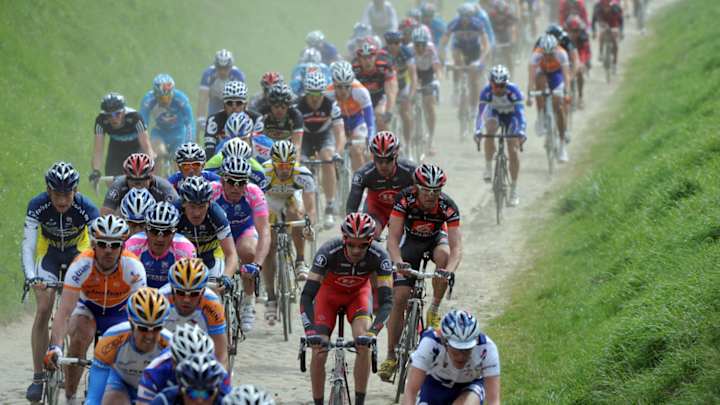
Even when the weather isn’t foul – it hasn’t rained hard on race day in a decade - the peloton’s passage over cobbled sections raises a microclimate of its own: a veil of dirt and grit that enters the riders’ mouths and nostrils and etches itself in every exposed centimeter of skin.
Tom Boonen sprints for the second of his record-tying four wins in this race, in 2008. That sprint finish in the Roubaix velodrome kicked off the sublime rivalry between Boonen and Fabian Cancellara, seen here digging for second. Between them, “Tommeke” and “Spartacus” have won the seven of the last nine editions of this race.
Spectators throng to corners, where riders are forced to slow down, and crashes often occur. Hushovd took himself out of contention, and all but handed the race to Boonen, with some sloppy cornering in ’09.
Eddie (the Cannibal) Mercxk, a son of Belgium and probably the greatest rider, ever (11 grand tours, 19 “monuments” among scores of other wins), outsprinted Keraan Van Springel to win Paris-Roubaix in ’68.
Roger de Vlaeminck never won a grand tour, but was the finest classics racer of his era. Like Boonen, he won Paris-Roubaix four times (and finished second another four times!) “The Gypsy” was one of just three riders to win all five “Monuments.” He won 11 of the classics in all, second only to Merckx's nineteen.
Henri Pelissier, 1919 winner, holds the records for the slowest victory – 12 hours and 15 minutes on roads still devastated by World War I, described at the time by Victor Breyer, cycling editor for Le Vélo: "Shell-holes one after the other, with no gaps, outlines of trenches, barbed wire cut into one thousand pieces; unexploded shells on the roadside, here and there, graves. Crosses bearing a jaunty tricolour are the only light relief."
Il Campionissimo, a champion of champions, Coppi won his first race at the age of 15. His reward: 20 lire and a salami sandwich. Despite a career interrupted by WWII, Coppi won five grand tours and nine Monuments, including Paris-Roubaix, in 1950.
Like many others, Bernard Hinault (pictured here in the Tour de Suisse) loathed Paris-Roubaix, calling it "connerie" – stupidity – despite winning it in 1981 in what the British paper the Guardian described as “a wet, miserable cowshitbath of a race suffering multiple punctures and crashes and winning by sheer force of will and bloody mindedness from a six-man group including that giant of the Classics” de Vlaeminck.
Not all cobbles are created equal. Paris-Roubaix rates the difficulty of each secteur of pave. Among the most difficult: the jutting, irregular stones awaiting riders in the Forest of Arenberg. The race is not decided there, but Arenberg is where the group containing the winner is often selected.
The Guardian on those storied cobbles: “The dense granite setts are roughly laid, as if thrown carelessly from a helicopter and beaten down roughly with the back of a spade. These are rural roads with a workaday purpose, not the elegant cobbled boulevards of Paris or the well driven cobbled routes of Flanders. And these fields are scarred with history.”
Shadows thrown by the trees lend the Trouee d’Arenberg a sinister aspect. This section of the race was closed in ’05; abandoned coal mines were causing sections to sink. Souvenir seekers remove cobbles, increasing the danger.
More on the Forest of Arenberg: bad things have happened here. Sprinting for position in 1998, Johan Museeuw crashed, then nearly lost a leg to gangrene. In ’01, Philippe Gaumont broke his femur at the start of the Trouee. “My knee cap completely turned to the right,” he recalled, “a ball of blood forming on my leg and the bone that broke … And the pain, a pain that I wouldn't wish on anyone.”
After snatching victory in the Tour of Flanders on April 6, Cancellara was the favorite going into Sunday’s Paris-Roubaix. Every time he’s won that race, the 33-year-old Swiss Time Machine has followed it up with a win in The Hell of The North. This year, though, he finished third.
So swiftly and assertively did Spartacus drop the hammer on his rivals in the 2010 edition of Paris-Roubaix that he was later accused of riding a bike with a concealed motor.
Even when Boonen finds himself less fit than Cancellara -- Magic Johnson to his Larry Bird; Shakespeare to his Marlowe -- his confidence never flags. As he said at a press conference two days before the start of this year's race, “I’ve still beaten him more than he’s beaten me.”
 Add us as a preferred source on Google