%20%20--%3E%0A%3Csvg%20version%3D%221.1%22%20id%3D%22Layer_1%22%20xmlns%3D%22http%3A%2F%2Fwww.w3.org%2F2000%2Fsvg%22%20xmlns%3Axlink%3D%22http%3A%2F%2Fwww.w3.org%2F1999%2Fxlink%22%20x%3D%220px%22%20y%3D%220px%22%0A%09%20width%3D%2239px%22%20height%3D%2240px%22%20viewBox%3D%220%200%2039%2040%22%20enable-background%3D%22new%200%200%2039%2040%22%20xml%3Aspace%3D%22preserve%22%3E%0A%3Cpath%20fill%3D%22%23FFFFFF%22%20d%3D%22M38.5%2C7H28.2v26h10.3V7z%22%2F%3E%0A%3Cpath%20fill-rule%3D%22evenodd%22%20clip-rule%3D%22evenodd%22%20fill%3D%22%23FFFFFF%22%20d%3D%22M26.1%2C25.5c0%2C5.8-4.1%2C7.5-12.9%2C7.5C3.9%2C33%2C0%2C31.2%2C0%2C25.2v-1.1h11.6%0A%09v2.4c0%2C0.7%2C0.1%2C1.4%2C1.2%2C1.4c1%2C0%2C1.2-0.4%2C1.2-1.3v-0.9c0-1.6-0.9-1.6-3.5-2.2C2.2%2C21.7%2C0%2C19.7%2C0%2C15.3v-0.9C0%2C9.3%2C5.5%2C7%2C12.9%2C7%0A%09c10.2%2C0%2C12.8%2C2.6%2C12.8%2C7.4v1.8h-11v-2.9c0-0.6-0.4-1.1-1.2-1.1c-0.6%2C0-1.2%2C0.4-1.2%2C1.1v0.9c0%2C1.5%2C0.9%2C2%2C3.3%2C2.5%0A%09c8%2C1.6%2C10.5%2C3.3%2C10.5%2C7.5V25.5z%22%2F%3E%0A%3C%2Fsvg%3E%0A)
Keegan Bradley Is Still Haunted by the Ryder Cup
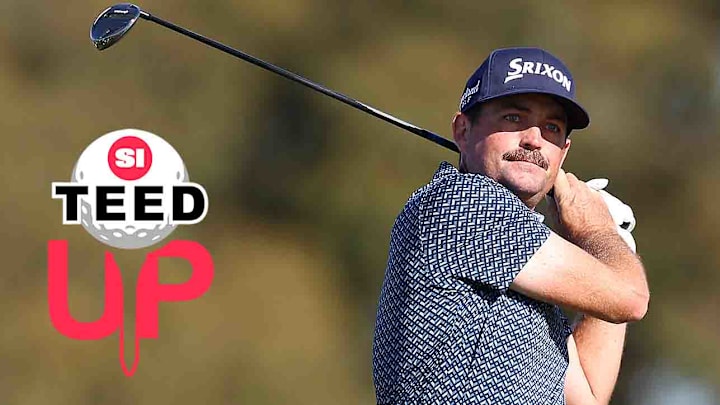
We’re a month into the new year, and the PGA Tour’s first signature event awaits this week at Pebble Beach, one of the game’s all-time venues. The Masters, believe it or not, is just 59 days away.
And the U.S. Ryder Cup was more than four months ago.
Not that Keegan Bradley is counting.
Forget the notion that time heals all wounds. Or that the Ryder Cup is a friendly exhibition. For the U.S. captain, the 15–13 defeat at Bethpage still stings. And it’s having an impact on him getting his own golf game back on track in a new year.
“It’s definitely weird for sure ... yeah, it is weird,” he said in a recent interview. “I’m trying to navigate, really, my entire life after the Ryder Cup and then also my playing life.
“The Ryder Cup takes so much out of you. And being the captain takes 10 times really. So yeah, I’m trying to navigate a world where that’s not the reality any more. It’s tough.”
Bradley wasn’t nitpicking any decisions all these months later, not that he hadn’t already. He’s made it clear that he takes the blame for the U.S. defeat, even though there is so much more to a team loss to consider than a captain who isn’t hitting a shot.
And, of course, one could easily argue that Bradley should have been hitting shots. He was playing good golf throughout 2025 and almost assuredly would have been on any other team given the same circumstances. But he chose not to pick himself, and now has to pick himself up.
His game has not been as sharp since he tied for seventh at the Tour Championship days before finalizing his team.
He finished 13th out of 20 players at the Hero World Challenge, missed the cut at the Sony Open in Hawaii and tied for 43rd at the Farmers Insurance Open. A busy stretch awaits now with Pebble Beach, the Genesis Invitational and the Arnold Palmer Invitational (all signature events) followed by the Players Championship.
“It’s been a tough time,” Bradley said. Asked if that was due to the loss, he said: “Yeah, it’s tougher. You think about a lot of decisions, a lot of things. It’s not like I’m just going to get over it, you know? It’s something that I’ll have to live with the rest of my life.”

It seems fair to ask Bradley if he is being a bit hard on himself.
“I mean, it's brutal. It's really, it's, like, it's brutal,” Bradley said. “It's like the memories and little things that come up and, when you find something from the Ryder Cup or a shirt or something, and it brings you back. It's tough. And seeing the guys I haven't seen, like, every week, I've seen a few more guys. So, the memory, everything kind of rushes back. Like, what we were doing at this time last year, right? So it’s tough.”
One of his assistants at Bethpage, Brandt Snedeker, is the captain for this year’s U.S. Presidents Cup team—where Bradley finds himself 12th in the standings.
He said he’s prepared to offer any help that he can give. Bradley will also be part of selecting the next U.S. Ryder Cup captain and could quite possibly have a role as an assistant at the Presidents Cup if he is not playing.
But Bradley isn’t yet able to look too far ahead.
“I’m still navigating the life of being a losing Ryder Cup captain as well, you know?,” he said. “It’s something that I never thought I was going to have to deal with. Not losing, but being the captain.”
As for earning a spot on the 2027 U.S. Ryder Cup team, Bradley said even that is a struggle to consider at this point.
“To be honest with you, I’d thought I’d be thinking about it a lot more,” he said. “It’s too raw. Hopefully next year when things ramp up again, I’m there and I’m in the picture.”
A deep dive into LIV Golf’s new OWGR accreditation
In the aftermath of finally receiving Official World Golf Ranking accreditation last week, the LIV Golf League leaned into hurt feelings over a points reduction instead of celebrating the credibility it gives the league and the new pathways it opens for its players.
Look at none other than Australia’s Elvis Smylie, who won LIV Golf’s season-opening event in Saudi Arabia by holding off two-time major champion Jon Rahm—and then moved up from 134 to 77th. With four more events on the LIV schedule prior to the Masters—including this week’s tournament in Australia—Smylie, with another win or several high finishes, is in position to qualify for his first Masters by getting into the top 50 by early April.
He’s all but assured of getting a PGA Championship invite by remaining in the top 100 and would also be in position to qualify for the U.S. Open (top 60) and British Open (top 50) via qualifying cutoffs this spring.
That was going to be nearly impossible for him otherwise.

When the decision came down last week, the LIV Golf League focused on the “unprecedented” decision to give points only to players in its fields who finish among the top 10 and ties, with many LIV supporters decrying the unfairness of it all rather than focusing on some of the opportunities presented its players. Yes, that is unprecedented. And so is LIV’s field structure, which the OWGR referenced in its statement.
“The Board’s overriding aim was to identify an equitable way of ranking the best men’s players in the world, including the top performing players in LIV Golf, while taking account of the eligibility standards that LIV Golf does not currently meet and the fact that it operates differently from other ranked tours in a number of respects,” it said.
It then went on to specifically address them, citing the various aspects that have been debated and discussed for the last four years.
Whether you agree or not, the OWGR’s decision to limit points did not come with some sort of outlier gymnastics. As it will this week in Adelaide, it is adding up the performance points via strokes-gained World Ranking and giving the field performance points which it then applies. It is doing so as it would for any other 57-player tournament that has LIV’s field of players.
The big difference—and this appears to be the penalty OWGR is levying for lack of compliance—is only awarding 70% of the available points. So in the case of Riyadh, it gave a total of 75 of 108 available points and stopped at ties for 10th.
If the decision to only award 75 was the answer, then spreading them among players beyond 10 would actually hurt someone like Smylie. There would be fewer points awarded to the top 10. The winner’s share would drop down to around 20 instead of 23 if they went 15 places. And it would be even less if the points were spread out to 20th.
So yes, players outside of the top 10 are hurt, but the bottom line is to make your move up the OWGR, you are going to need to consistently be in the top 10 and probably the top five.
How the OWGR math will apply
Some of this, also, will take some time to sort itself out. Bryson DeChambeau has just nine OWGR counting events in the ranking period because none of his LIV events counted. His divisor is 40 and it will take a long time for him to get there in actual tournaments.
(Think of it this way: if a player has 40 total OWGR points, that is divided by the number of events played to come up with the average, but OWGR puts in play a minimum because playing so few events would greatly skew the average. A player with 40 points and 40 events would have an average of 1 point, which is approximately 138th in the world now.)
Rahm, by finishing second, moved up 30 spots to 67th. Most agree that he is far better than the 67th player in the world but if he keeps posting top 10s on LIV Golf and adds in success in the majors, he will at least move within range of where he should be. Peter Uihlein went from 199th to 154th by finishing third and now, at least, can strive for the top 100. David Puig can still dream of the Masters. His fourth-place tie saw him move up to 87th from 95th.
Thomas Detry actually lost ground in finishing seventh, going from 62nd to 63rd. That’s because Detry played a full schedule of PGA Tour and DP World Tour events over the past two years and has a divisor of 52—the maximum. The 3.67 points he earned did not help increase his average points.
The downside, of course, is that not earning any points has a chance to hurt a player’s OWGR. DeChambeau, who tied for 17th, remained at 33rd in the OWGR.
Sounding off on being left out of the WM Phoenix Open
PGA Tour player Dylan Wu took to social media after failing to get into the WM Phoenix Open as an alternate. Having finished fifth at the PGA Tour’s Qualifying Tournament in December, Wu earned fully exempt status, which means he will be assured of a place in every full-field event during the FedEx Cup season, as well as seven tournaments in the fall—except the event at TPC Scottsdale.
The Tour spelled this out last year and the explanation is in the player handbook stipulating that if any full-field event did not accommodate every player through the Lifetime Member Category—11 exemption categories—that the field would be expanded.
The lone exception was the WM Phoenix Open, likely due to the fact that is a popular event (69 of the top 100 in the Official World Golf Ranking entered) and accommodating every exempt player was going to be problematic.
As it was, the tournament went to 123 players due to Brooks Koepka’s appearance. Daylight is an issue at the tournament, as not all players finished the first and second rounds on time.
“Only fully exempt player on Tour not to get in the event. I guess #playbetter,” he wrote on X. “Full field PGA Tour events don’t include players with ‘full status.’”
Bummer to not get into WMPO this week in my backyard. Waited around as first alternate all day. Only fully exempt player on Tour to not get in the event. I guess #playbetter 🤷♂️. Full field PGA Tour events don’t include players with “full status” @acaseofthegolf1 @Daniel_Rapaport
— Dylan Wu (@dylan_wu59) February 6, 2026
Wu’s comment was unfortunate because it showed a lack of understanding of the situation. Yes, it’s unfortunate that someone who qualified via Q School did not get into a full field event. But last year, players who were not among the DP World Tour top 10 did not make it either. That means Korn Ferry Tour and Q School—some 30 potential players.
From page 3 of the player handbook, covering “Expansion of Field Regulation”:
- Full-Field Events (with the exception of the WM Phoenix Open) will expand to include all exempt categories (i.e., through Life Members).
- Opposite Events will expand to include Nos. 111-125 through the FedEx Cup Fall.
Wu’s Q-School category is the sixth on the priority ranking list that goes through 11 including PGA Tour University and exemptions for players who use a top 25/50 all-time money category. None of those players were getting in Phoenix, either.
There are 19 full-field weeks on the Fed Ex schedule, meaning Wu will get in 18 of them. He’ll also get in seven of the eight fall events (because the Japan tournament is a limited field). And he can qualify for signature events.
When the Tour announced that it was cutting back to 100 fully exempt players (down from 125) and to 20 Korn Ferry graduates (from 25) along with exempting 10 from the DP World Tour and five from Q School, it also said that it would get all of those players—and beyond—into regular events.
Simulations showed that Phoenix, whose field size was reduced to 120 this year, would be a problem and so it capped the field with no additions.
More Golf from Sports Illustrated
 Add us as a preferred source on Google
Bob Harig was a senior writer covering golf for Sports Illustrated. He has more than 25 years experience on the beat, including 15 at ESPN. Harig is a regular guest on Sirius XM PGA Tour Radio and has written two books, “DRIVE: The Lasting Legacy of Tiger Woods” and “Tiger and Phil: Golf’s Most Fascinating Rivalry.” He graduated from Indiana University where he earned an Evans Scholarship, named in honor of the great amateur golfer Charles (Chick) Evans Jr. Harig, a former president of the Golf Writers Association of America, lives in Clearwater, Fla.
Follow bobharig