%20%20--%3E%0A%3Csvg%20version%3D%221.1%22%20id%3D%22Layer_1%22%20xmlns%3D%22http%3A%2F%2Fwww.w3.org%2F2000%2Fsvg%22%20xmlns%3Axlink%3D%22http%3A%2F%2Fwww.w3.org%2F1999%2Fxlink%22%20x%3D%220px%22%20y%3D%220px%22%0A%09%20width%3D%2239px%22%20height%3D%2240px%22%20viewBox%3D%220%200%2039%2040%22%20enable-background%3D%22new%200%200%2039%2040%22%20xml%3Aspace%3D%22preserve%22%3E%0A%3Cpath%20fill%3D%22%23FFFFFF%22%20d%3D%22M38.5%2C7H28.2v26h10.3V7z%22%2F%3E%0A%3Cpath%20fill-rule%3D%22evenodd%22%20clip-rule%3D%22evenodd%22%20fill%3D%22%23FFFFFF%22%20d%3D%22M26.1%2C25.5c0%2C5.8-4.1%2C7.5-12.9%2C7.5C3.9%2C33%2C0%2C31.2%2C0%2C25.2v-1.1h11.6%0A%09v2.4c0%2C0.7%2C0.1%2C1.4%2C1.2%2C1.4c1%2C0%2C1.2-0.4%2C1.2-1.3v-0.9c0-1.6-0.9-1.6-3.5-2.2C2.2%2C21.7%2C0%2C19.7%2C0%2C15.3v-0.9C0%2C9.3%2C5.5%2C7%2C12.9%2C7%0A%09c10.2%2C0%2C12.8%2C2.6%2C12.8%2C7.4v1.8h-11v-2.9c0-0.6-0.4-1.1-1.2-1.1c-0.6%2C0-1.2%2C0.4-1.2%2C1.1v0.9c0%2C1.5%2C0.9%2C2%2C3.3%2C2.5%0A%09c8%2C1.6%2C10.5%2C3.3%2C10.5%2C7.5V25.5z%22%2F%3E%0A%3C%2Fsvg%3E%0A)
Pioneering woman takes on PGA Tour

Confession: I have never met Brittany Lincicome, and my knowledge of women’s golf probably isn’t where it should be. My primary duties over the last 23 years have been to cover the men, and though a vast majority of this week’s focus will be on the British Open, Lincicome’s participation at the PGA Tour’s opposite-field event is worth examining.
She’ll become the sixth woman ever to compete against the big boys, although most of the big boys will be overseas, which is surely a good thing for Lincicome. Babe Didrikson Zaharias is the only female golfer to make a cut on the men’s tour – she did it in 1945 against fields weakened considerably by World War II. At the Barbasol Championship, where Davis Love III and Billy Horschel are the headliners, Lincicome will not find a better opportunity to make it to the weekend (tee times).
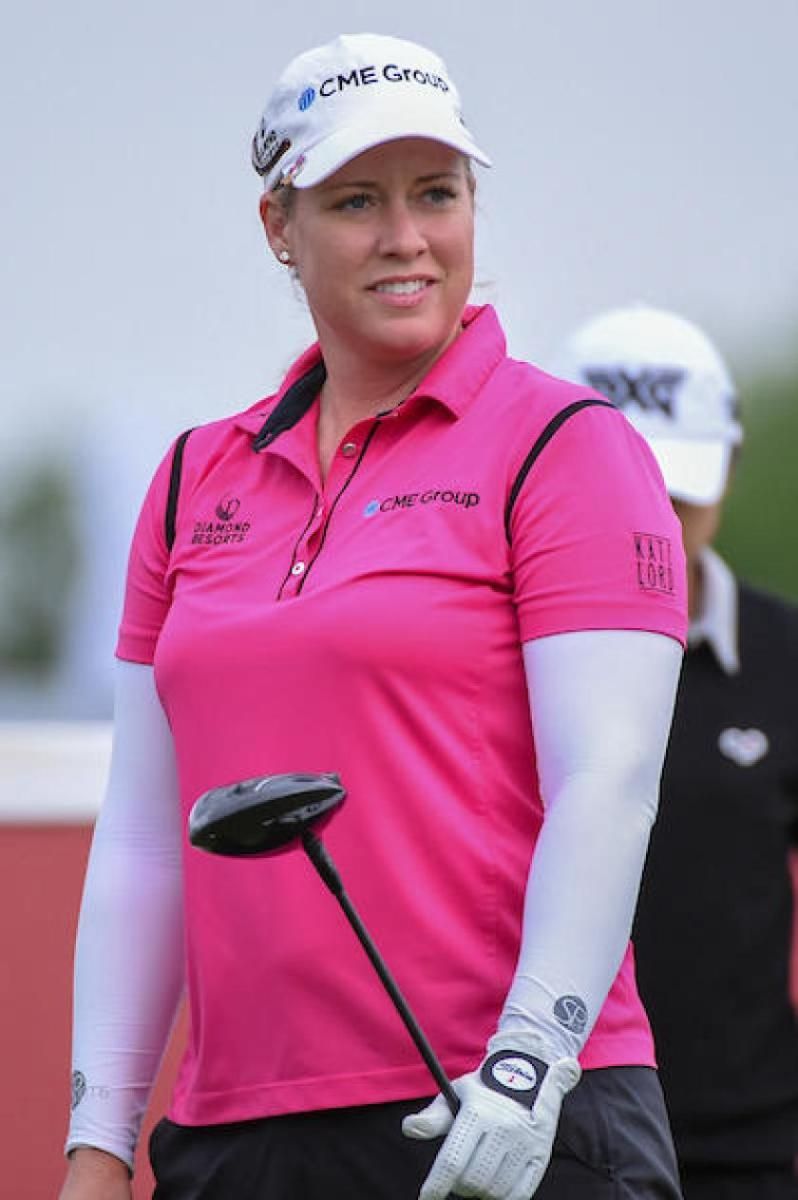
© GOLFFILE/KEN MURRAY
Brittany Lincicome will be only the 6th woman in history to play on the PGA Tour when she enters the Barbasol Championship, which begins Thursday at Keene Trace Golf Club in Nicholasville, Ky.
Good thing? Bad thing? Cross-gender golf has been absent for quite a while – Michelle Wie stopped trying after an embarrassing performance at the John Deere Classic in 2006. That said, Wie probably inspired some young girls to take up the game. Many thought of her as an attention seeker, which is not a felony. At least she had the guts to try.
My daughters don’t know Brooks Koepka from Brooks Robinson, but they know Michelle Wie. Sadly, almost to the point of parental shame, neither had ever heard of Annika Sorenstam, the only woman in the modern era who clearly was worthy of playing on the PGA Tour. Not that a couple of teenage girls serves as an actual barometer, but their inability to identify Sorenstam, perhaps the best female golfer who ever lived, reminds me of a match I once covered against my will.
Style beats Substance, 5 and 4. There’s no need to wait until 11
o’clock to catch the highlights. They’re all over Twitter.
If you had told me back in 1995 that Sorenstam would become the first woman since Zaharias in 1945 to play on the PGA Tour, I would have asked you to check your scorecard. The girl about whom I wrote a feature for Golf World magazine 23 years ago was undoubtedly the shyest person I’ve ever profiled.
Her eyelids fluttered when she spoke about herself. Sorenstam conceded that she purposely missed putts as an amateur to avoid the attention given to a tournament winner. It was a remarkably candid statement from someone so bashful, but at that point, no sensible journalist could envision her having a successful career, much less winning 72 LPGA events, including 10 major titles and entering the World Golf Hall of Fame before her 33rd birthday.
Sorenstam was John, Paul, George and Ringo all rolled into one, so dominant in her field that she ran out of things to accomplish. The point of diminishing returns arrived far too soon, so she retired to start a family, but not before augmenting her legacy by playing in the 2003 Colonial, which had a pretty strong field (Kenny Perry won the tournament) and a golf course which suited her style of play.
Because very few people questioned her validity as a contestant in a men’s tournament, Sorenstam generated enormous attention. And because she performed so admirably under the most intense pressure imaginable, her 71-74/missed cut was the biggest golf story of the year – a feel-good tale that produced victory in defeat.
Curiosity beats Verbosity, 7 and 6. Other than the final day of the
1999 Ryder Cup, the energy of the galleries and overall atmosphere at Colonial were more potent than any I’ve experienced at a golf tournament. Inside the ropes that Thursday morning in Fort Worth, I was among the thousands gathered around the 10th tee who truly sensed that they were witnessing something special. At the same time, I privately dreaded the possibility that Sorenstam would succumb to the moment and
hit a terrible shot to start her round, crumbling to the point where
she might regret her decision to play.
“Wherever the first drive goes – and it can go anywhere – I am going to find it and hit it again,” Sorenstam said.
She found it in the center of the fairway, 255 yards from where she’d struck it — with a 4-wood, no less — and played as well from tee to green as anyone in the field. Sorenstam missed the cut because she putted miserably, but in May 2003 and now, it’s a moot point.
Sorenstam inspired people not only with her brilliance but with a staunch resolve to attempt things far outside of her comfort zone. I prefer to use words such as bravery and courage only to describe soldiers, firefighters and handicapped children. Annika Sorenstam was in the very next group when it came to toughness. By taking on the challenge at Colonial 15 years ago, she made it much easier for all of those who would follow. No other female golfer ever will have to deal with that intensity.
I’m not so sure any other female golfer could.
John Hawkins is a longtime sportswriter who spent 14 years covering the PGA Tour for Golf World magazine. From 2007 to 2011, he was a regular on Golf Channel’s “Grey Goose 19th Hole.” Email: johnhawkinsgolf@gmail.com
 Add us as a preferred source on Google
A worldview optimist trapped inside a curmudgeon’s cocoon, John Hawkins began his journalism career with the Baltimore News American in 1983. The Washington Times hired him as a general assignment/features writer four years later, and by 1992, Hawkins was writing columns and covering the biggest sporting events on earth for the newspaper. Nirvana? Not quite. Repulsed by the idea of covering spoiled, virulent jocks for a living, Hawkins landed with Golf World magazine, where he spent 14 years covering the PGA Tour. In 2007, the Hawk began a seven-year relationship with Golf Channel, where he co-starred on the “Grey Goose 19th Hole” and became a regular contributor to the network's website. Hawkins also has worked for ESPN, Sports Illustrated, Golf Digest and Golf.com at various stages of his career. He and his family reside in southern Connecticut.