%20%20--%3E%0A%3Csvg%20version%3D%221.1%22%20id%3D%22Layer_1%22%20xmlns%3D%22http%3A%2F%2Fwww.w3.org%2F2000%2Fsvg%22%20xmlns%3Axlink%3D%22http%3A%2F%2Fwww.w3.org%2F1999%2Fxlink%22%20x%3D%220px%22%20y%3D%220px%22%0A%09%20width%3D%2239px%22%20height%3D%2240px%22%20viewBox%3D%220%200%2039%2040%22%20enable-background%3D%22new%200%200%2039%2040%22%20xml%3Aspace%3D%22preserve%22%3E%0A%3Cpath%20fill%3D%22%23FFFFFF%22%20d%3D%22M38.5%2C7H28.2v26h10.3V7z%22%2F%3E%0A%3Cpath%20fill-rule%3D%22evenodd%22%20clip-rule%3D%22evenodd%22%20fill%3D%22%23FFFFFF%22%20d%3D%22M26.1%2C25.5c0%2C5.8-4.1%2C7.5-12.9%2C7.5C3.9%2C33%2C0%2C31.2%2C0%2C25.2v-1.1h11.6%0A%09v2.4c0%2C0.7%2C0.1%2C1.4%2C1.2%2C1.4c1%2C0%2C1.2-0.4%2C1.2-1.3v-0.9c0-1.6-0.9-1.6-3.5-2.2C2.2%2C21.7%2C0%2C19.7%2C0%2C15.3v-0.9C0%2C9.3%2C5.5%2C7%2C12.9%2C7%0A%09c10.2%2C0%2C12.8%2C2.6%2C12.8%2C7.4v1.8h-11v-2.9c0-0.6-0.4-1.1-1.2-1.1c-0.6%2C0-1.2%2C0.4-1.2%2C1.1v0.9c0%2C1.5%2C0.9%2C2%2C3.3%2C2.5%0A%09c8%2C1.6%2C10.5%2C3.3%2C10.5%2C7.5V25.5z%22%2F%3E%0A%3C%2Fsvg%3E%0A)
One Big Idea for the PGA Tour’s Future Will Be Popular With Players
PALM HARBOR, Fla. — There will be a good deal of conjecture and debate as to what the future PGA Tour schedule will look like, how it might change the competitive landscape and how many tournaments will be affected.
But while nothing is decided and plenty can still change, one aspect to Brian Rolapp’s March 11 remarks at Tour headquarters is resonating with players: larger fields with 36-hole cuts.
The new PGA Tour CEO outlined six “themes” that he is striving for and one of them was very specific: a doubling of signature events that will also see 120-player fields, up from the 72–75 that were initiated in 2023.
“I would guess you’re not going to see too many objections to that,” said Matt Kuchar at the Valspar Championship last week. “Certainly if you’re in the top 50 [in FedEx points], I see the appeal of 70-man events. It makes for an easy week, easy practice runs, all that.
“But when you look at the big picture of putting on the best competition, I think everybody would probably agree that 120-man fields is very much a proper competition. Having a cut is a big part of what we do. I don’t think you’ll see too many people have any real opposition to that.”
In 2022, partly in response to LIV Golf, the PGA Tour somewhat hastily came up with its signature event model which was implemented in 2023 and has evolved into eight signature events with fields of 80 players or fewer and a qualification process that sees all players from the top 50 in the previous year’s FedEx Cup points list automatically qualify for all of them. Only three—the Genesis, Arnold Palmer and Memorial—have a 36-hole cut. The tournaments also have lucrative $20 million purses with the winner’s share ranging from $3.6 million to $4 million.
The idea behind the limited-field events was to reward the stars with lucrative tournaments in a PGA Tour world that doesn’t allow appearance fees. It was also meant to bring the top players together more often.

That will still be part of the new mandate. Rolapp said he wanted the signature event model to “at least” double, which suggests 16 or more tournaments with fields of 120 players. That’s some 40 players or more per tournament. How that impacts purses and scheduling is to be determined.
But if the Tour is to follow Rolapp’s vision of a core schedule of 21 to 26 events that includes the four majors, the Players and playoff events, you can envision those signature events as a big part of the Tier 1 slate he suggested.
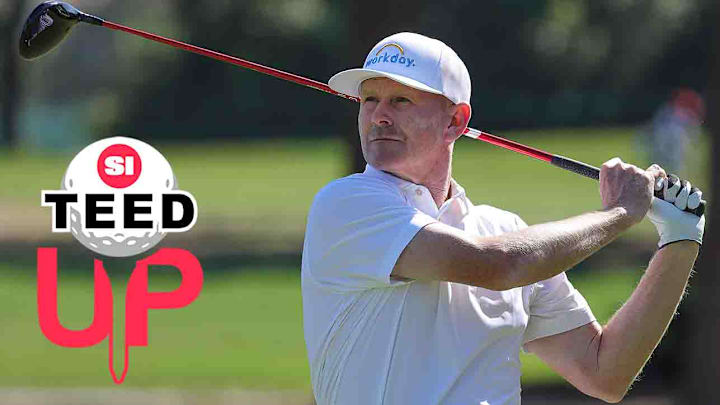
“I think one of the things that makes the PGA Tour great is iron sharpening iron,” said nine-time Tour winner Brandt Snedeker. “You need guys out here playing, you need full field events because it pushes everybody to get better. If you have a really select few of only 60, 70 guys, I feel like that those guys from 70 to 120 can still win tournaments out here, can still push those guys to get better. I think having cuts is super important. I think there’s something to be said for that.
“When you’re not playing great out here, making a cut on Friday means something. It’s really hard for guys to stay engaged if you don’t have a cut necessarily after Friday. I think it makes the product better. I think it makes the play better. I think it will make those guys push even harder and make everybody a better product for us on Tour and will actually make those guys play harder, which is great.”
Part of the argument in favor of the no-cut events was keeping star players around for the weekend.
“I don’t care what anybody says, nobody wants to watch the best players in the world play bad golf,” Snedeker said. “If they’re going to miss a cut on Friday, nobody’s going to want to watch them shoot 75 or 76 on the weekend. So sometimes missing the cut is not the worst thing to happen.”
Said veteran Nick Taylor: “I think you lose some of those stories when you have 70-man fields. There’s a lot of great players every week who can win and can be up there. So I think what we’re going for is a little bit more true competition. The cut line is drama on Friday and it adds something. People want to see the leaders, but it means something to see guys grinding out and trying to make the cut, too. So I think that’s important for our game.”
The hard part is figuring out how it all works. What tournaments “elevate” to that status? Will all of the purses be $20 million or is a reduction coming? How will players earn their way into them?
The Jon Rahm saga continues
Jon Rahm continues to make as many headlines off the course as he is making on the course.
Give credit to the two-time major champion for his continued fine play on the LIV Golf League. Although he didn’t win Sunday in South Africa, he shot a final-round 63 to force a playoff won by Bryson DeChambeau.
It was his fifth top-five finish in five events that have seen him win in Hong Kong and now rack up three second-place finishes. With LIV Golf now getting Official World Golf Ranking points, Rahm has climbed from 97th at the start of the year to 28th with the Masters looming in just more than two weeks.
But Rahm’s dispute the DP World Tour continues to resonate, especially after his decision to drop his appeal of fines that dated to September 2024. It puts in peril his ability to be a member of the tour and thus spotlights the possibility that he will not be eligible to play for Europe at the 2027 Ryder Cup.
Rahm addressed the issue (first reported by Golf.com) Saturday at the South Africa event. And he did so in a measured, reasoned tone that was different from the “extortion” comments he made two weeks prior in Hong Kong.
To be clear, Rahm simply feels that being fined for playing in events he was never going to play is wrong, and that the deal offered to him—and accepted by eight other LIV players—is outside of the tour’s rules because it is asking him to play two more DP World Tour events than is required.
“We keep trying to talk with them and negotiate with them what the best outcome is for both of us,” Rahm said. “I’ve already told them, and I can say it again. They offered us a deal that I don’t think was right, but if they changed it for me to play a minimum of four events—I don’t think it’s right that they’re requiring people to play more golf than is already required for the agreement they have with them, then I would sign with them. What that means is that our signing fines get paid for and I get released to play LIV Golf this year.
“It doesn’t seem like it should be a very difficult decision for them, but apparently me playing those two extra events is where they’re drawing the line, and I told them I’m not willing to play. I’ve never played more than four events for the DP World Tour. I think the most I played one year was five, and that’s for special circumstances.”

Rahm also said noted that he did not need conflicting event releases to play PGA Tour events when he was a member of the PGA Tour. That is true and remains the case. But from the beginning of LIV Golf, the DP World Tour made clear it would apply its media release rules for those who played in LIV events.
That obviously meant there would be issues as those who compete in LIV tournaments have no choice—they are contracted to play those tournaments and when they conflict with a DP World Tour event, it meant they’d be in violation.
A U.K. arbitration panel ruled in the DP World Tour’s favor in the spring of 2023, and thus the tour has fined LIV players who remain members for competing in conflicting events. Rahm’s are said to total more than $2 million through last year, a sum that LIV Golf had been paying through 2025.
The deal the DP World Tour offered would waive fines and releases for 2026 provided appeals are dropped, previous fines are paid and a player adds two events to the required six.
Rahm has balked at the latter stipulation but eight of his LIV colleagues agreed to it and sources indicate that the DP World Tour is unwilling to bend its rules for him, even if it means no Ryder Cup.
Every LIV player who was in violation and returned to the tour at some point paid his fines, agreed to the new stipulations or both. To cave would be mean chaos.
Meanwhile, it will be interesting to see how this plays out. Rahm might have played the Scottish Open in July because it is a co-sanctioned event and doesn’t have a LIV conflict. But later in the year, tournaments such as the Irish Open, the BMW PGA Championship and the Spanish Open are events he’d be expected to play to meet his minimum.
But without accepting the deal, or paying the fines and dealing with releases going forward, he won’t be permitted to play.
A key Masters qualifying cutoff is this week
This is the last week that players not otherwise exempt can earn an invitation to the Masters via the top 50 in the Official World Ranking that becomes official on March 30.
LIV Golf played its last event prior to the cutoff in the South Africa and the five-tournament run proved to be too few for players who are not already in the Masters. Thomas Detry had three top-10 finishes in LIV events (thus earning points) but only made it to 57th.
Elvis Smylie, who started the year ranked 134th, jumped to 77th after his victory at the season-opening Riyadh event but managed just one more top-10 finish and is at 79th.
David Puig is 75th, Tom McKibbin is 97th (but in the Masters already) and Laurie Canter is 99th and thus along with anyone in the top 100 would be in line for an invite to the PGA Championship in May.

Tyrrell Hatton is 30th in the OWGR and is in line to be in all four of the majors this year.
Pierceson Coody is a name to watch this week in Houston as he is battling to make the top 50 after starting the year at 96th. He dropped from No. 51 to 52 after a tie for 55th at the Valspar. A missed cut at the Players Championship had him drop out of the top 50 as he had climbed to 44th after the Phoenix Open.
The U.S. Open takes players among the top 60 in at two points in late May and Adam Scott, who is not yet exempt, sits at 52. Jordan Spieth, who won the 2015 U.S. Open, is also not exempt after his 10-year exemption expired last year. He is 59th after a tie for 11th at the Valspar.
More Golf from Sports Illustrated
 Add us as a preferred source on Google
Bob Harig was a senior writer covering golf for Sports Illustrated. He has more than 25 years experience on the beat, including 15 at ESPN. Harig is a regular guest on Sirius XM PGA Tour Radio and has written two books, “DRIVE: The Lasting Legacy of Tiger Woods” and “Tiger and Phil: Golf’s Most Fascinating Rivalry.” He graduated from Indiana University where he earned an Evans Scholarship, named in honor of the great amateur golfer Charles (Chick) Evans Jr. Harig, a former president of the Golf Writers Association of America, lives in Clearwater, Fla.
Follow bobharig