%20%20--%3E%0A%3Csvg%20version%3D%221.1%22%20id%3D%22Layer_1%22%20xmlns%3D%22http%3A%2F%2Fwww.w3.org%2F2000%2Fsvg%22%20xmlns%3Axlink%3D%22http%3A%2F%2Fwww.w3.org%2F1999%2Fxlink%22%20x%3D%220px%22%20y%3D%220px%22%0A%09%20width%3D%2239px%22%20height%3D%2240px%22%20viewBox%3D%220%200%2039%2040%22%20enable-background%3D%22new%200%200%2039%2040%22%20xml%3Aspace%3D%22preserve%22%3E%0A%3Cpath%20fill%3D%22%23FFFFFF%22%20d%3D%22M38.5%2C7H28.2v26h10.3V7z%22%2F%3E%0A%3Cpath%20fill-rule%3D%22evenodd%22%20clip-rule%3D%22evenodd%22%20fill%3D%22%23FFFFFF%22%20d%3D%22M26.1%2C25.5c0%2C5.8-4.1%2C7.5-12.9%2C7.5C3.9%2C33%2C0%2C31.2%2C0%2C25.2v-1.1h11.6%0A%09v2.4c0%2C0.7%2C0.1%2C1.4%2C1.2%2C1.4c1%2C0%2C1.2-0.4%2C1.2-1.3v-0.9c0-1.6-0.9-1.6-3.5-2.2C2.2%2C21.7%2C0%2C19.7%2C0%2C15.3v-0.9C0%2C9.3%2C5.5%2C7%2C12.9%2C7%0A%09c10.2%2C0%2C12.8%2C2.6%2C12.8%2C7.4v1.8h-11v-2.9c0-0.6-0.4-1.1-1.2-1.1c-0.6%2C0-1.2%2C0.4-1.2%2C1.1v0.9c0%2C1.5%2C0.9%2C2%2C3.3%2C2.5%0A%09c8%2C1.6%2C10.5%2C3.3%2C10.5%2C7.5V25.5z%22%2F%3E%0A%3C%2Fsvg%3E%0A)
At the PGA Championship, Everyone Is on the Clock
NEWTOWN SQUARE, Pa. — A surprise main character has emerged at the PGA Championship at Aronimink Golf Club: the concept of time.
Time first came onto the scene at the tournament on Thursday, when Garrick Higgo was hit with a two-stroke penalty after arriving at his tee time a minute late. An understandably frustrated Higgo provided some glorious post-round quotes about the matter.
“I was obviously there on time, but late,” Higgo said.“I was late. I mean one second is tough. One second is tough to define.”
How much did those strokes matter? Higgo would have been tied for the lead after his round on Thursday without the extra two strokes. After shooting a six over 76 on Friday, he missed the cut by a single stroke, despite showing up seven minutes early for his second round.
You might think this week’s clock drama would end there, but no. On Friday, the group of Justin Thomas, Keegan Bradley and Cam Young was warned for slow play, and put on the clock for a potential penalty if their pace didn’t pick up. Slow play is a recurring problem and one that fans are quick to call out, but seeing the rule enforced at a tournament, let alone a major, is quite rare—especially at a major where basically every round on the course was taking well north of five hours.
Thomas was not pleased.
“The hard part to me with the whole pace of play thing is that you, there’s so much that goes into golf and there’s so much that goes into hole to hole in terms of, ‘Are you hitting it close, are you able to tap it in?’” Thomas said. “Or you have to mark it, stuff like that, to where, are you holding the group up or are you not, to where it’s very hard to make that call. And we just didn't agree with it, to be honest.”
But just as we are all subject to the unhalting march of time, so too is every group at the PGA Championship battling time in one sense or another. There are a few bottlenecks at Aronimink which have forced long delays for players between shots. The group of Jon Rahm, Rory McIlroy and Jordan Spieth on Friday arrived at the tee box of the par-3 8th only to find that the group of Xander Schauffele, Brooks Koepka, Tyrrell Hatton in front of them was still waiting to tee off, as the group of Ludvig Åberg, Rickie Fowler, Bryson DeChambeau in front of them had yet to finish up on the green.
I started a stopwatch to see just how long the wait would be, and by the time Rahm, McIlroy and Spieth were able to start their own walk to the green, it read 11 minutes and 34 seconds. Considering I didn’t think to start timing the affair until at least two or three minutes into the wait, some of the best players in golf had time to watch two episodes of Bluey at the 8th tee on Friday.
“We were on the 8th green when they were having a look for the ball, so I think that's what definitely delayed us in the middle of that round,” McIlroy said. “There are a few bottlenecks on this course, with the 8th green, the 10th green beside each other, you've got 16 green and 9 tee and 17 tee right there. So there's a few little parts of the course that you can sort of get jammed on.”
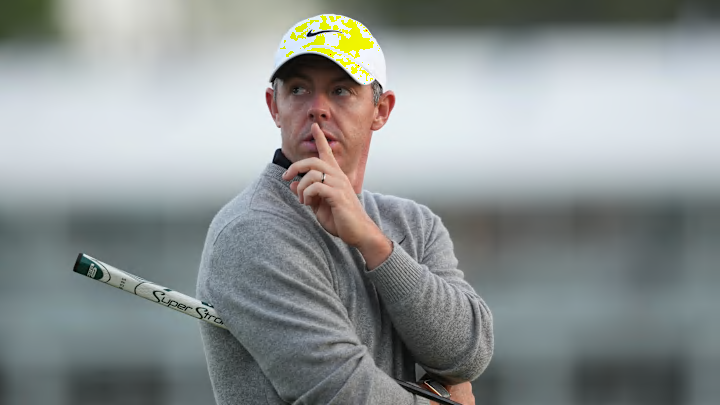
Rory McIlroy chilling on the 10th tee box at Aronimink.
— Golf Channel (@GolfChannel) May 15, 2026
Caption this 👇 pic.twitter.com/FHnAjaBLuJ
At one point, McIlroy decided he would simply take a seat and wait for the wait to pass, becoming a bit of a meme in the process. It’s a credit to these pros that they’re able to stay locked in through the long delays, or if they are briefly unlocked, that they are able to lock back in so quickly without seeing their round fall apart. NFL coaches freeze a kicker to make him wait an extra 40 seconds before making a big play—imagine if they could call 20 timeouts in a row.
Time could once again play a huge factor on Saturday

It’s quite possible the clock will cause even more chaos this weekend. Alex Smalley and Maverick McNealy are your 36-hole co-leaders at four under, but the field behind them is extremely bunched—19 other players are within three strokes of the lead at one under or better.
To put that in perspective, last year, Jhonattan Vegas was the solo leader at eight under after two rounds, with just five players—including eventual winner Scottie Scheffler—within three strokes. In 2024, it was Xander Schauffele, who would go on to win the tournament, leading heading on Friday night at 12 under, with six players within three strokes of the lead.
What does that have to do with the clock? Anyone who has been watching the action at Aronimink, especially those on the grounds, have witnessed the vast changes in both wind and temperature throughout the day. Depending on which hole you are playing and what time you are playing it, the conditions of the moment might demand two very different approaches on what would seem like the same shot. Usually, this difference is at least mitigated in part by players going off in order of their scores. In 2025, a lightning delay forced the third round to be played in threesomes from split tees, meaning the six players within three of the lead all teed off from No. 1 within an 11-minute period. In 2024, due to a fog delay, players within three shots of the lead teed off across 22 minutes.
With so many players in striking distance on Saturday, the first player to tee off from within three shots of the lead will be Jon Rahm, who at one under begins at 12:50 p.m. ET. It will be nearly two hours until leaders McNealy and Smalley hit their opening shots. Should conditions change quickly, the clock could once again play a huge factor in how this tournament turns.
More Golf from Sports Illustrated
 Add us as a preferred source on Google
Tyler Lauletta was a staff writer for the Breaking and Trending News team at Sports Illustrated. Before joining SI, he covered sports for nearly a decade at Business Insider, and helped design and launch the OffBall newsletter. He is a graduate of Temple University in Philadelphia, and remains an Eagles and Phillies sicko. When not watching or blogging about sports, Tyler can be found scratching his dog behind the ears.
Follow tylerlauletta