%20%20--%3E%0A%3Csvg%20version%3D%221.1%22%20id%3D%22Layer_1%22%20xmlns%3D%22http%3A%2F%2Fwww.w3.org%2F2000%2Fsvg%22%20xmlns%3Axlink%3D%22http%3A%2F%2Fwww.w3.org%2F1999%2Fxlink%22%20x%3D%220px%22%20y%3D%220px%22%0A%09%20width%3D%2239px%22%20height%3D%2240px%22%20viewBox%3D%220%200%2039%2040%22%20enable-background%3D%22new%200%200%2039%2040%22%20xml%3Aspace%3D%22preserve%22%3E%0A%3Cpath%20fill%3D%22%23FFFFFF%22%20d%3D%22M38.5%2C7H28.2v26h10.3V7z%22%2F%3E%0A%3Cpath%20fill-rule%3D%22evenodd%22%20clip-rule%3D%22evenodd%22%20fill%3D%22%23FFFFFF%22%20d%3D%22M26.1%2C25.5c0%2C5.8-4.1%2C7.5-12.9%2C7.5C3.9%2C33%2C0%2C31.2%2C0%2C25.2v-1.1h11.6%0A%09v2.4c0%2C0.7%2C0.1%2C1.4%2C1.2%2C1.4c1%2C0%2C1.2-0.4%2C1.2-1.3v-0.9c0-1.6-0.9-1.6-3.5-2.2C2.2%2C21.7%2C0%2C19.7%2C0%2C15.3v-0.9C0%2C9.3%2C5.5%2C7%2C12.9%2C7%0A%09c10.2%2C0%2C12.8%2C2.6%2C12.8%2C7.4v1.8h-11v-2.9c0-0.6-0.4-1.1-1.2-1.1c-0.6%2C0-1.2%2C0.4-1.2%2C1.1v0.9c0%2C1.5%2C0.9%2C2%2C3.3%2C2.5%0A%09c8%2C1.6%2C10.5%2C3.3%2C10.5%2C7.5V25.5z%22%2F%3E%0A%3C%2Fsvg%3E%0A)
There’s Likely Only One Modern Hope for the Hall of Fame’s Forgotten Position
In this story:
Leading up to the Baseball Hall of Fame class announcement on Jan. 20, we’ll be examining the cases of notable candidates. Up next is a quartet of second basemen: Chase Utley (3rd year on ballot), Dustin Pedroia (2nd), Howie Kendrick (1st) and Daniel Murphy (1st).
Next week, members of the BBWAA will decide whether or not to do something they’ve done just five times in the past 64 years: elect a second baseman into the Hall of Fame.
Since Jackie Robinson was voted into Cooperstown in 1962, only five players who spent significant time at second base have been elected by the writers into the Hall of Fame. Other second basemen have earned entry during that span via the Veterans Committee, including Jeff Kent this year, long after their careers came to an end. But in over half a century, just five were deemed worthy by the writers who covered the sport while they were still playing—and none who have debuted since 1989.
It’s an impressive list of five names (this is the Hall of Fame, after all): Joe Morgan (elected in 1990), Rod Carew (‘91), Ryne Sandberg (2005), Roberto Alomar (‘11) and Craig Biggio (‘15). But the fact that so few players at an up-the-middle position have made it to baseball’s Mecca presents an interesting hurdle for the quartet of second basemen that are on this year’s ballot.
Those four—Chase Utley, Dustin Pedroia and first-year candidates Howie Kendrick and Daniel Murphy—have impressive résumés. But are they good enough to merit serious Hall consideration? If not, we may have to wait until Jose Altuve retires to induct another second baseman since Robinson Cano’s chances were presumably killed by his positive PED test. Let’s dive in.
Player | Hits | HR | SB | Slash Line | WAR |
|---|---|---|---|---|---|
Chase Utley | 1885 | 259 | 154 | .275/.358/.465 | 64.6 |
Dustin Pedroia | 1805 | 140 | 138 | .299/.365/.439 | 51.8 |
Howie Kendrick | 1747 | 127 | 126 | .294/.332/.424 | 35.0 |
Daniel Murphy | 1572 | 138 | 68 | .296/.341/.455 | 20.8 |
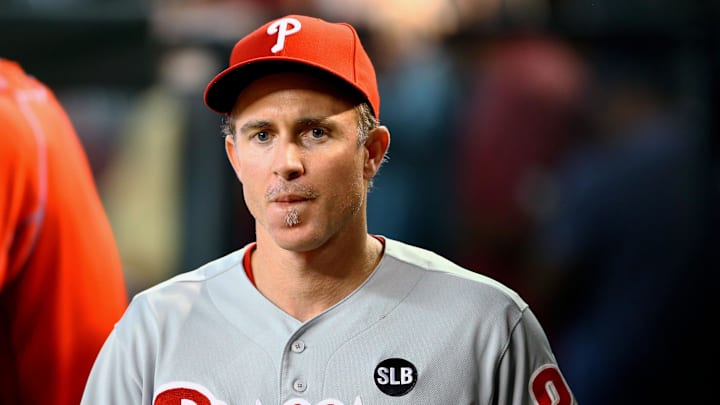
Utley is something of an analytics’ darling. As part of a core of marquee players that included Jimmy Rollins and Ryan Howard, he helped spearhead a mid-2000s run that saw the Phillies thrive. In the nine-year span from 2003 (Utley’s rookie season) through ‘11, Philadelphia averaged 90.9 wins per year, made the playoffs five times, won the National League pennant twice and won the World Series in ‘08. While Utley never got the recognition in the form of accolades as the best player on any of those squads (Howard and Rollins were the NL MVPs in ‘06 and ‘07, respectively), he was steadily outstanding throughout this period.
From 2005 to ‘09, only Albert Pujols put up a higher WAR among hitters than Utley’s 39.7. During this span, he led all second basemen in home runs (146), runs scored (553) and RBIs (507) by healthy margins. He did everything well, but no one thing best: for his career, the only stats he ever led the league in for a full season were runs scored (‘06) and a three-year run in which he led the majors in getting hit by pitch (‘07 to ‘09). He earned MVP votes in all five seasons—though, in keeping with his status as a perpetual bridesmaid, he never finished higher than eighth.
Part of why Utley’s recognition didn’t line up with his production is the fact that he played during the dawning of the advanced statistics age. WAR existed during Utley’s heyday, but it wasn’t a common term among everyday fans and likely wasn’t something voters of the time embraced wholeheartedly. To wit: in the five-year span mentioned above, Utley finished in the top five among NL hitters in WAR in each season. His MVP finishes during that time: 13th, seventh, eighth, 14th, eighth.
Dustin Peroia’s Case
While Utley lacks the type of trophy case and awards haul that his Hall of Fame case needs, Pedroia has plenty of accolades to tout. A second-round draft pick out of Arizona State in 2004, he debuted briefly in ‘06 and was hitting leadoff in the World Series for the Red Sox by the end of his rookie season in ‘07. Pedroia hit .283/.349/.483 during that postseason run, which Boston capped with a World Series sweep of the Rockies, and was the runaway choice in the American League Rookie of the Year voting.

The diminutive spark plug followed that up with arguably the best individual season of his career in 2008. He led the majors in hits (213) and doubles (54), fell .002 shy of Joe Mauer for the batting title and had a career-best .869 OPS. He finished first among an underwhelming group of MVP candidates (hey, it still counts), receiving 16 of 28 first-place votes. To underscore just how big of a disconnect there was between awards voters and WAR at the time: that season’s AL WAR leader (Nick Markakis, who makes his first appearance on the Hall of Fame ballot this year) didn’t receive a single vote for MVP.
Like Utley, Pedroia was one of a collection of All-Star standouts during Boston’s modern dynasty. From 2007 to ‘17, the Red Sox made the playoffs six times and won two titles. He made four All-Star teams, won four Gold Gloves and hit .302/.368/.443, consistently producing at the top of the lineup in front of heavy hitters like David Ortiz, Kevin Youkilis and a slew of others that helped keep the Red Sox near the top of the sport for so long.
Boston put together one of the most dominant seasons of the 21st century in 2018, winning 108 games and going 11–3 in the postseason en route to another World Series, though Pedroia wasn’t a part of it. He underwent knee surgery after the ‘17 campaign that essentially ended his career, as he appeared in just nine games over two subsequent seasons and officially retired in ‘21.
Second Basemen With a Tougher Road to Cooperstown
Then, there’s Kendrick and Murphy, two bat-first players who terrorized opposing pitchers with a line drive approach and got better with age. Kendrick was a solid regular for nearly a decade with the Angels, then thrived in more of a utility role the last few years of his career, culminating with his heroics in Game 7 of the 2019 World Series with the Nationals, when he hit the go-ahead two-run homer in the seventh inning. Kendrick only made one All-Star team and never hit 20 home runs in a season, but he hit .320 with a 125 OPS+ over his final four years, and is one of 15 players who played at least half their games at second base and finished their careers with more than 1,500 hits, 350 doubles and a .290 batting average (alongside Pedroia and Murphy).
Murphy made his first All-Star team at 29 and fully broke out at age 31, posting a career season with a .347/.390/.595 slash line in his first year with the Nationals. That earned him a runner-up finish in the 2016 National League MVP voting along with a Silver Slugger award. He made his third All-Star team in ‘17, but injuries robbed him of any productivity after that. Murphy’s finest hour came during the ‘15 postseason, when he hit .328/.391/.724 with seven homers in 14 games, helping lead the Mets to their most recent World Series appearance.

We Should Have Another Keystone Enshrined Soon
Of this group, Utley and Pedroia have by far the best chances at eventual enshrinement.
The five second basemen voted in since 1962 have résumé edges on this group. Morgan, Sandberg and Alomar accumulated far more accolades (each made at least 10 All-Star appearances) and had longer careers. Carew and Biggio each reached the 3,000-hit mark and spent time at other positions (Carew at first base, Biggio at catcher and outfield). Based on JAWS, a look at a player’s Hall of Fame worthiness developed by FanGraphs’ Jay Jaffe, Utley ranks 12th among second basemen, just behind Hall of Famers Frankie Frisch, Robinson and Sandberg. Pedroia ranks 20th, while Kendrick and Murphy are outside of the top 50.
Last year, in his second time on the ballot, Utley gained 39.8% of the vote, up from 28.8% the year before. This year, he has surged to 69.1% so far (per Hall of Fame voting tracker Ryan Thibodaux), making his chances at getting into Cooperstown quite promising (even if he falls short this year). Pedroia is also riding a wave of support, up to 26.1% this year, more than doubling his final mark from 2025 (11.9%). Kendrick and Murphy, meanwhile, are very likely to be one-and-done on the ballot.
When Utley is eventually enshrined in baseball’s most hallowed ground, it will be a momentous occasion. Not just for a player who was often overshadowed during his prime, but for a position group the Hall has a habit of overlooking when it comes time to count the ballots.
More MLB on Sports Illustrated
 Add us as a preferred source on Google
Nick Selbe is a programming editor at Sports Illustrated who frequently writes about baseball. Before joining SI in March 2020 as a Breaking and Trending News writer, he worked for the Orange County Register, MLB Advanced Media, Graphiq and Bleacher Report. Selbe received a bachelor’s in communication from the University of Southern California.
Follow NickSelbe