
Will Clark's Hall of Fame Case Is Stronger Than His Career Numbers Suggest
In this story:
Will Clark never reached 300 home runs, collected 2,500 hits or won a Most Valuable Player Award. For some Hall of Fame voters, those omissions are enough to dismiss his candidacy.
But baseball's most recognizable milestones don't always provide an accurate reflection of a player's greatness.
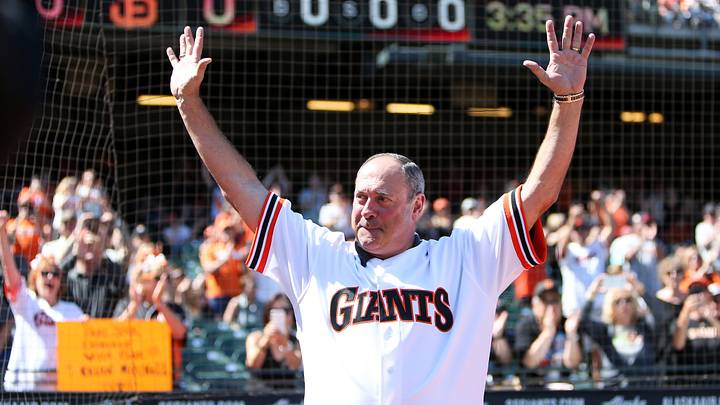
The former San Francisco Giants first baseman was among the game's most accomplished hitters during his prime, combining a picturesque left-handed swing with an intensity that made him one of the National League's most formidable competitors.
His career statistics tell an impressive story. His medical history suggests they might have been considerably better.
An Elite Hitter During His Prime

Clark finished his 15-year career with a .303 batting average, 2,176 hits, 284 home runs, 1,205 RBIs and a .880 OPS.
He also accumulated approximately 56.5 wins above replacement and a 137 OPS+, meaning his offensive production was 37 percent better than the league average after adjusting for ballpark and era.
According to the Society for American Baseball Research, Clark's 28.2 WAR (Wins Above Replacement) in his prime years (1987-1991) rank him first among all Major League first basemen and sixth behind Barry Bonds, Wade Boggs, Cal Ripken Jr., Rickey Henderson, and Ozzie Smith. Clark led all big-leaguers in those five years with a 153 OPS+ (On-Base Plus Slugging Percentage adjusted for ballpark factors). He was named to the MLB All-Star team in five of his first seven seasons. In four of the seasons between 1987 and 1991, he was among the top five vote-getters for National League MVP.
His finest season came in 1989, when he batted .333 with 23 home runs and 111 RBIs, finishing second to teammate Kevin Mitchell in National League MVP voting.
That October, Clark dismantled Chicago Cubs pitching in the National League Championship Series, batting .650 and earning MVP honors.
Few players of his generation could match that combination of offensive precision and postseason excellence.
Injuries Took Their Toll
What makes Clark's accomplishments impressive is the physical adversity he endured.
His injury problems began in 1986, when a hyperextended left elbow cost him 47 games during his rookie campaign. The damage would trouble him throughout his career.
During his years with the Texas Rangers, persistent ailments increasingly disrupted his availability.
In 1995, Clark fractured his left elbow but continued playing. Two years later, a sprained wrist, fractured finger and torn tissue beneath his right heel contributed to another abbreviated season.
His difficulties continued in Baltimore.
Clark underwent surgery in August 1999 to remove bone chips from his left elbow. He appeared in only 77 games that season.
The injuries weren't merely inconvenient interruptions. They deprived Clark of opportunities to accumulate statistics while forcing him to compete through considerable discomfort.
What Might Have Been?
Clark appeared in 1,976 games across 15 seasons, averaging approximately 132 games annually.
Supposed he had averaged 150 games per season while maintaining his actual career production rates.
Over 2,250 games, his projected totals would have reached approximately 2,478 hits, 323 home runs and 1,372 RBIs.
Those hypothetical figures wouldn't guarantee Hall of Fame induction, but they would present voters with a substantially different statistical resume.
The calculation isn't perfect. It assumes consistent production over additional games and doesn't distinguish injury-related absences from other missed time.
The shortened 1994 and 1995 seasons also affected Clark's opportunities to pad his statistics.
The argument becomes even more intriguing considering that he remained an accomplished hitter near the end of his career.
In 2000, Clark found the fountain of youth when he was traded to the St. Louis Cardinals at the trade deadline deal with the Baltimore Orioles. He went on a torrid pace the second he put on the birds on the bat, as he batted .345 with 12 home runs and 42 RBIs in just 51 games. He capped off the season by hitting .345 with two home runs and five RBIs in eight postseason games as the Cardinals fell to the New York Mets in five games in the NLCS.
He retired following the season despite showing he could still contribute at an exceptionally high level.
Cooperstown Should Consider the Entire Career
Clark's detractors have legitimate arguments. His career totals fall below the traditional standards for Hall of Fame first basemen, and his overall value trails the position's established Cooperstown benchmarks.
But consider this.
Perhaps the strongest argument for Clark's induction emerges when his accomplishments are measured against players who already have plaques in Cooperstown.
Hall of Famers Orlando Cepeda, Tony Perez and Gil Hodges each enjoyed distinguished careers, but all three finished with fewer wins above replacement than Clark's 56.5.
Cepeda, a former Giants star, accumulated approximately 50 WAR with a 133 OPS+, while Perez recorded 54 WAR and a 122 OPS+, Hodges finished with approximately 44 WAR and a 120 OPS+.
Clark's 137 OPS+ surpassed all three, illustrating his superior offensive production to league and ballpark conditions.
Even Fred McGriff, who entered Cooperstown in 2023, finished with fewer career WAR than Clark, despite hitting 493 home runs.
These comparisons don't diminish the accomplishments of those enshrined. Perez and McGriff finished with substantially greater counting statistics, while Hodges and Cepeda possessed their own compelling credentials.
They do, however, expose an inconsistency worth debating.
If Cooperstown has recognized first basemen with comparable or lesser overall statistical value, why should Clark's candidacy be dismissed so readily?
He earned six All-Star selections, two Silver Slugger Awards and a Gold Glove while helping transform the Giants into a National League contender.
His exceptional peak, sustained offensive excellence and ability to persevere through injuries deserve consideration alongside his statistical limitations.
When Clark appeared on the writers' Hall of Fame ballot in 2006, he received just 4.4 percent of the vote.
That brief consideration hardly seems proportionate to his accomplishments.
Injuries diminished Clark's career totals. They shouldn't diminish the greatness of the player who produced them.
 Add us as a preferred source on Google
