
Randy Johnson’s Path To Mariners Immortality Started With A Trade Nobody Could Fully Grasp
In this story:
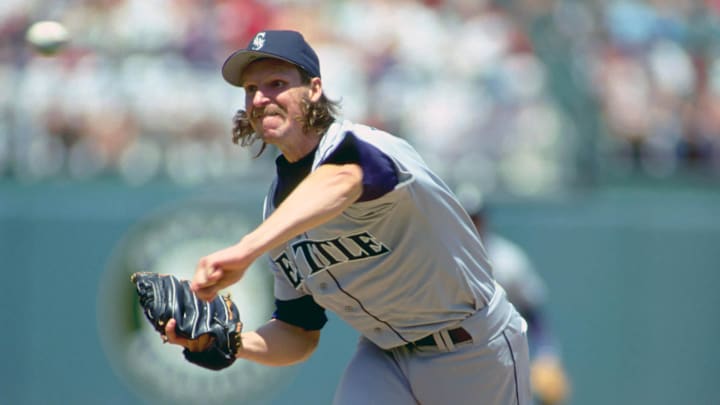
The Mariners didn’t know they were trading for immortality on May 25, 1989. They knew they were trading their best pitcher for possibility. On that day, the Mariners sent Mark Langston to the Montreal Expos and got back three young pitchers: Randy Johnson, Brian Holman and Gene Harris. It’s almost comically undersized compared to what the deal became. What Seattle really acquired wasn’t just a 25-year-old left-hander with control problems. The Mariners acquired the beginning of one of baseball’s most intimidating transformations.
It feels worth revisiting as the Mariners celebrate Johnson and retire No. 51. Before the towering mythology of the Big Unit, there was a deal nobody could fully understand in real time. Montreal thought it was getting the safer answer for a pennant push. Seattle, whether by patience, scouting conviction or a little bit of luck, got the arm that would help change the franchise’s ceiling.
Johnson wasn't polished when he arrived in Seattle. He was 6-foot-10, left-handed, uncomfortable to look at, and probably even more uncomfortable to stand in against. But he was also wild enough to make the entire experience feel like a dare. The fastball and the intimidation was there. What was missing was the command that could turn spectacle into dominance.
Seattle had room for developing that. Montreal did not.
A look back at some of The Big Unit’s best moments 😤 pic.twitter.com/bCliKuEOZg
— Seattle Mariners (@Mariners) May 1, 2026
Randy Johnson Became The Mariners’ Ultimate Patience Reward
The Expos were chasing something more immediate. Langston was already one of the better left-handed starters in the sport, and Montreal wanted a proven arm. The Mariners were in a different place entirely. They were 19-28 and far away from even thinking about a championship. They needed talent, time and a future worth believing in. Johnson became all three.
He didn’t stop being wild overnight, which is part of what makes the story better. Johnson still led the league in walks multiple times with the Mariners. There were still stretches where hitters probably felt afraid and strangely encouraged at the same time.
Then it all came together. Johnson spent 10 seasons with the Mariners, went 130-74 with a 3.42 ERA, piled up 2,162 strikeouts, made five All-Star teams, won the 1995 AL Cy Young Award and threw the first no-hitter in franchise history. He became one of the faces of the team that helped yank Seattle baseball into a different era of relevance.
It's gonna be a memorable night 🙌
— Seattle Mariners (@Mariners) May 2, 2026
Stream tonight’s Randy Johnson Number Retirement Ceremony live on Mariners TV. Not signed up yet? Watch with a 7-day free trial.
⚾️ https://t.co/o2PoeYzBMc pic.twitter.com/AZj7dyftgE
Not bad for the “control issues” guy. And that’s why calling the Langston deal lopsided almost undersells it. Lopsided makes it sound like Seattle simply won a trade. This was bigger than that. This was the Mariners turning a short-term roster problem into a Hall of Fame origin story. Langston was excellent, and the move made sense for Montreal’s moment. But Seattle got the player who would become part of the franchise’s spine.
That doesn’t happen often. When it does, it tends to look obvious only after the fact. With Johnson’s No. 51 heading into permanent franchise space, the trade feels even heavier. It was not just the deal that brought the Big Unit to Seattle. It was the deal that gave Mariners fans a front-row seat to the making of him.
Before Randy Johnson became inevitable, he had to become possible. The Mariners were the team willing to live through the difference.
 Add us as a preferred source on Google
Tremayne Person is the Publisher for Mariners On SI and the Site Expert at Friars on Base, with additional bylines across FanSided’s MLB division. He founded the Keep It Electric podcast in 2023 and covers baseball with a blend of analysis, context, and a little well-timed side-eye just to keep things honest. Tremayne grew up a Mariners fan in Richmond, Va., and that passion ultimately led him to move to Seattle to cover the team closely and become a regular at home games. Through his writing, he connects with fans who want a deeper, more personal understanding of the game. When he’s not at T-Mobile Park, he’s with his dog, gaming, or finding the next storyline worth digging into.
Follow TremaynePerson